HE LOST HIS 11-YEAR-OLD SON DURING A PSYCHOTIC EPISODE — NOW DAVID CARMICHAEL SAYS HE UNDERSTANDS WHAT LINDSAY CLANCY MAY HAVE FACED
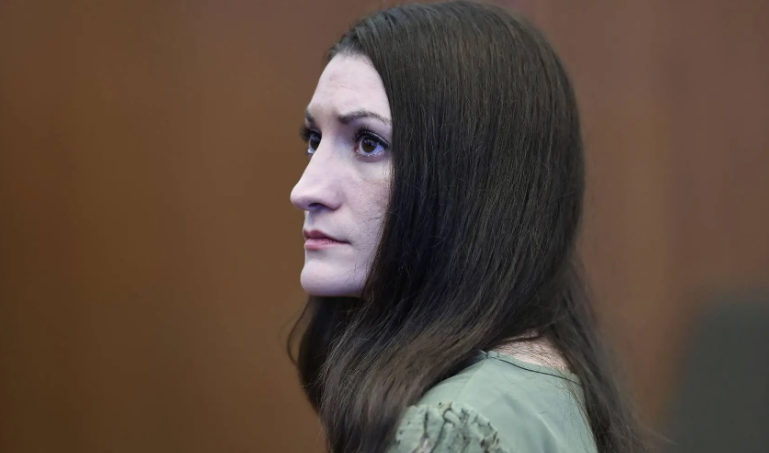
HE LOST HIS 11-YEAR-OLD SON DURING A PSYCHOTIC EPISODE — NOW DAVID CARMICHAEL SAYS HE UNDERSTANDS WHAT LINDSAY CLANCY MAY HAVE FACED
Three weeks.
That is how quickly David Carmichael says his life changed in July 2004.
Before that, he described himself as a father with no history of mental illness.
Then came sleep deprivation, anxiety and what he describes as a drug-induced psychosis.
In the end, his 11-year-old son, Ian, was dead.
And more than two decades later, Carmichael has found himself drawn into another family’s unimaginable tragedy — the case of Massachusetts mother Lindsay Clancy.
 A Father, a Psychosis and an Unthinkable Act
In July 2004, Carmichael was in Ontario, Canada, when he took the life of his son Ian.
He was subsequently charged with first-degree murder.
But in 2005, a Canadian court found Carmichael not criminally responsible by reason of mental disorder — a legal finding meaning he was not held criminally responsible for his actions because of his mental state at the time.
Carmichael has said the episode occurred after he began taking the antidepressant Paxil, also known by its generic name paroxetine.
His account has since become central to the advocacy work he has pursued for years.
He argues that prescription medications played a role in what happened to him and has become an outspoken critic of the way potential psychiatric-drug risks are communicated to patients.
But his story is not simply one of a medication and a crime.
It is the story of a father who survived something he says he could never have imagined himself capable of doing.
 Two Decades Later, Another Case Hits Close to Home
That history has taken on new significance because of the Lindsay Clancy case.
Clancy, a former Massachusetts labor-and-delivery nurse, was accused of causing the deaths of her three children in January 2023.
Her defense argued that she was suffering from severe postpartum mental illness and was not criminally responsible.
Prosecutors presented a very different picture, arguing that her actions were deliberate and that she remained legally responsible for what happened.
After weeks of testimony, the jury failed to reach a unanimous verdict.
A mistrial was declared on September 4, 2026.
Now prosecutors must decide whether to retry the case. A court hearing is scheduled for September 29.
Why Lindsay and Patrick Clancy Turned to Him
Long before the trial began, David Carmichael became someone Lindsay Clancy and her husband, Patrick, could turn to.
That connection is extraordinary.
Carmichael is not simply someone commenting from the outside.
He is a man who has personally experienced a catastrophic episode of mental illness, lost his child and then lived through the criminal-justice and mental-health systems that followed.
In a recent interview with East Idaho News, Carmichael spoke publicly about his connection to Lindsay and about the similarities he believes exist between their stories.
His perspective does not determine what happened to Lindsay.
But it offers a rare glimpse into how someone who has lived through a similar legal defense understands the terrifying possibility that a person’s perception of reality can become profoundly distorted.
The Question at the Center of Both Cases
At the heart of the Clancy case is a difficult legal question:
Can someone be held criminally responsible when a severe mental disorder allegedly prevents them from understanding the nature or wrongfulness of their actions?
That question was central to Carmichael’s case more than 20 years ago.
It is also why his story has resonated so strongly during the Clancy proceedings.
But the two cases are not legally identical.
Carmichael’s Canadian case resulted in a finding of not criminally responsible.
Clancy’s Massachusetts case ended in a mistrial, meaning there was no verdict on whether she was criminally responsible.
Any future prosecution would have to address the evidence and legal standards applicable to her case.
A Life Rebuilt From Tragedy
Carmichael’s life after Ian’s death has been marked by years of treatment, legal proceedings and advocacy.
He eventually received an absolute discharge from the Ontario Review Board in 2009.
He later became a prominent advocate focused on prescription-drug safety and has repeatedly spoken publicly about his experience.
His efforts have included writing about psychiatric medications and the parallels he sees between his case and the Clancy case.
For Carmichael, however, the past can never simply become the past.
Every time another parent becomes involved in a case where mental illness is at the center, his own history comes rushing back.
Now the Clancy Case Enters Its Next Chapter
The jury’s deadlock did not resolve the central questions surrounding Lindsay Clancy.
Instead, it left both sides facing another uncertain chapter.
The prosecution has not yet announced whether it will seek a retrial.
Clancy’s defense continues to argue that severe mental illness should be central to understanding what happened.
And David Carmichael remains one of the people watching from a uniquely personal position.
He knows what it means to wake up after an episode and face an act that seems impossible to reconcile with the person you believed yourself to be.
He knows what it means to lose a child.
And he knows what it means to stand before a court while everyone tries to answer one devastating question:
How could this happen?
More than 20 years after Ian’s death, Carmichael still does not have an answer that can undo what happened.
What he does have is a story — one he now believes may help others understand the darkest moments of the human mind.