Odell Beckham Jr. Plane Dispute Escalates as Passengers Deplane and Police Warn of Arrest
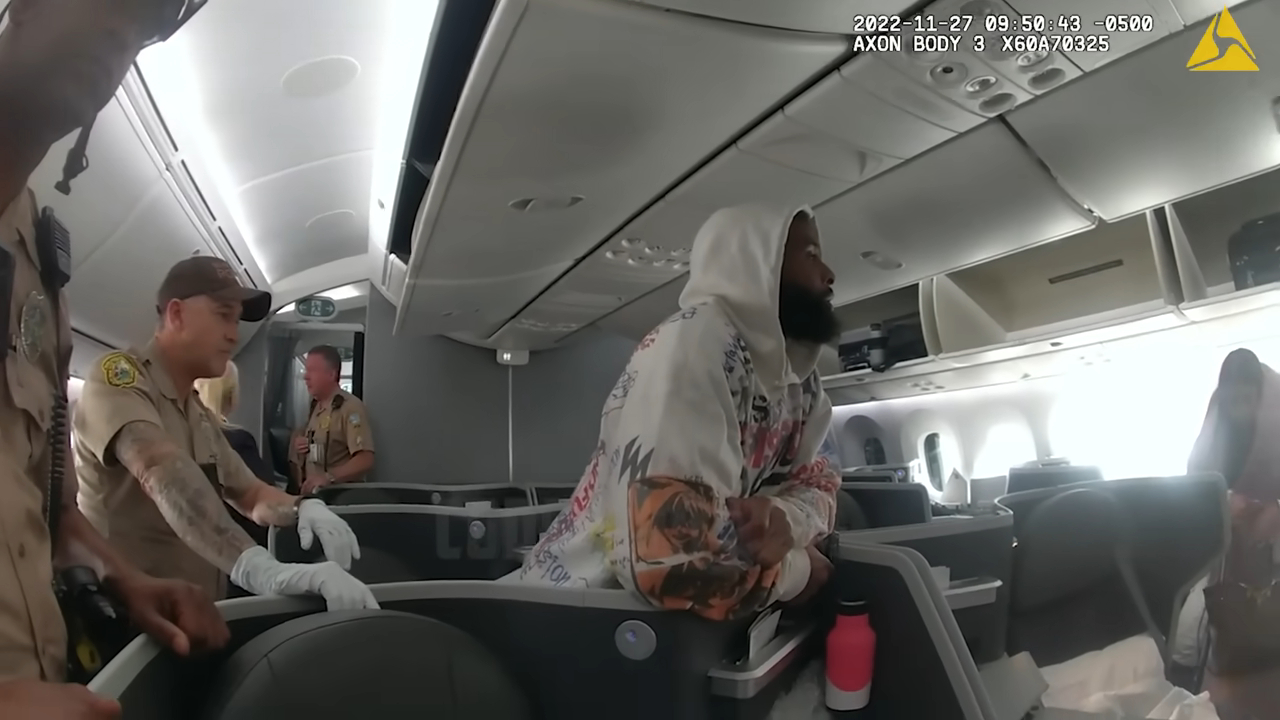
What began as a medical concern aboard an American Airlines flight in Miami had now turned into a full-scale disruption involving police, airline staff and an entire cabin of passengers.
Odell Beckham Jr. had initially drawn attention after flight crew members said they had difficulty waking him before departure. Emergency personnel later found him responsive and did not identify an obvious medical emergency, but the airline remained uncomfortable allowing him to continue on the flight.
By the time a police supervisor explained that the captain had made the final decision, the situation had become unavoidable: Beckham would have to leave the aircraft.
The problem was that he did not immediately agree to go.
As a result, passengers were told to deplane first.
And that was when the confrontation became far more public.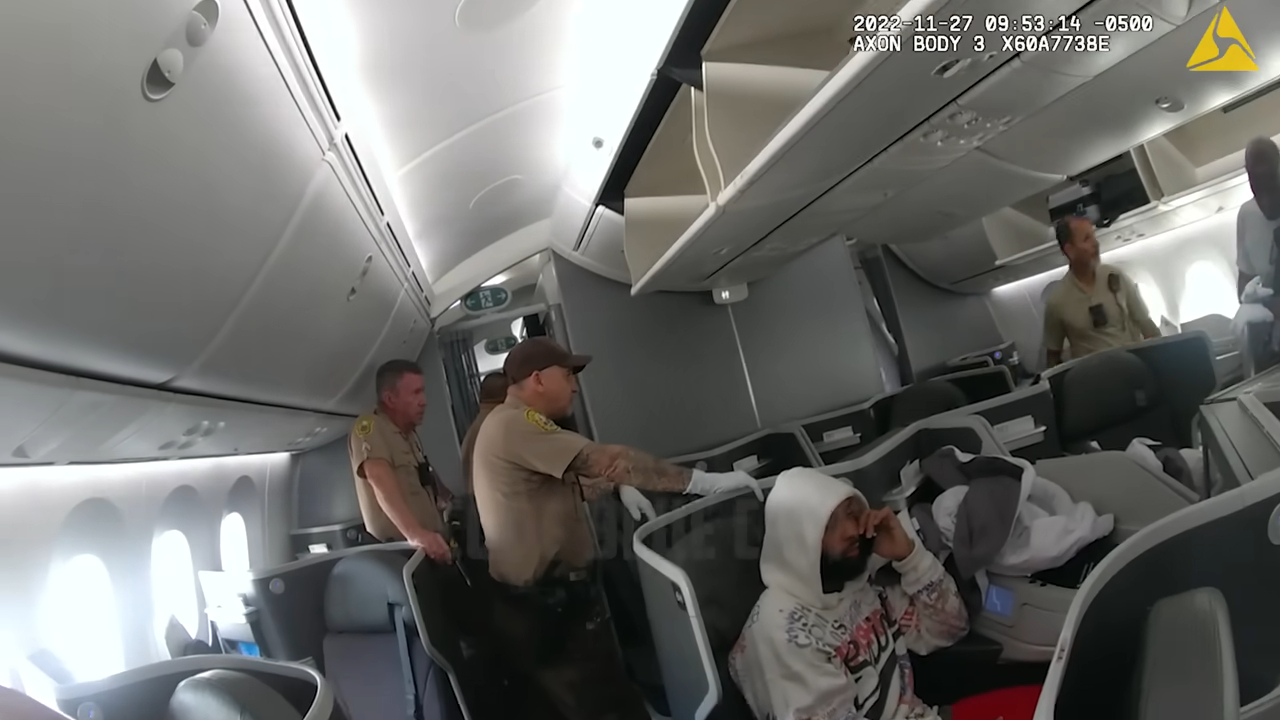
Beckham Exchanges Words With a Passenger
As travelers began filing off the aircraft, frustration was clearly building.
Some passengers had now been forced to interrupt their own travel plans because of a dispute involving one person who had been asked to leave.
During the deplaning process, Beckham responded directly to one passenger.
“I would never ever in my life get off the plane for you specifically,” he said.
He added, “Maybe everybody else.”
The exchange quickly became heated.
Beckham continued responding as the passenger moved through the cabin, while another remark in the footage referenced waiting approximately 40 minutes.
At one point, Beckham told the departing traveler to “enjoy the cheese board on the way home.”
He also maintained that the situation could have been handled much more simply.
“All you have to do is wake me up,” he said.
The exchange illustrated how much the incident had changed.
What began with concerns about whether Beckham was conscious enough to fly had become a dispute affecting every traveler around him.
And police were now preparing for the possibility that asking him to leave might not be enough.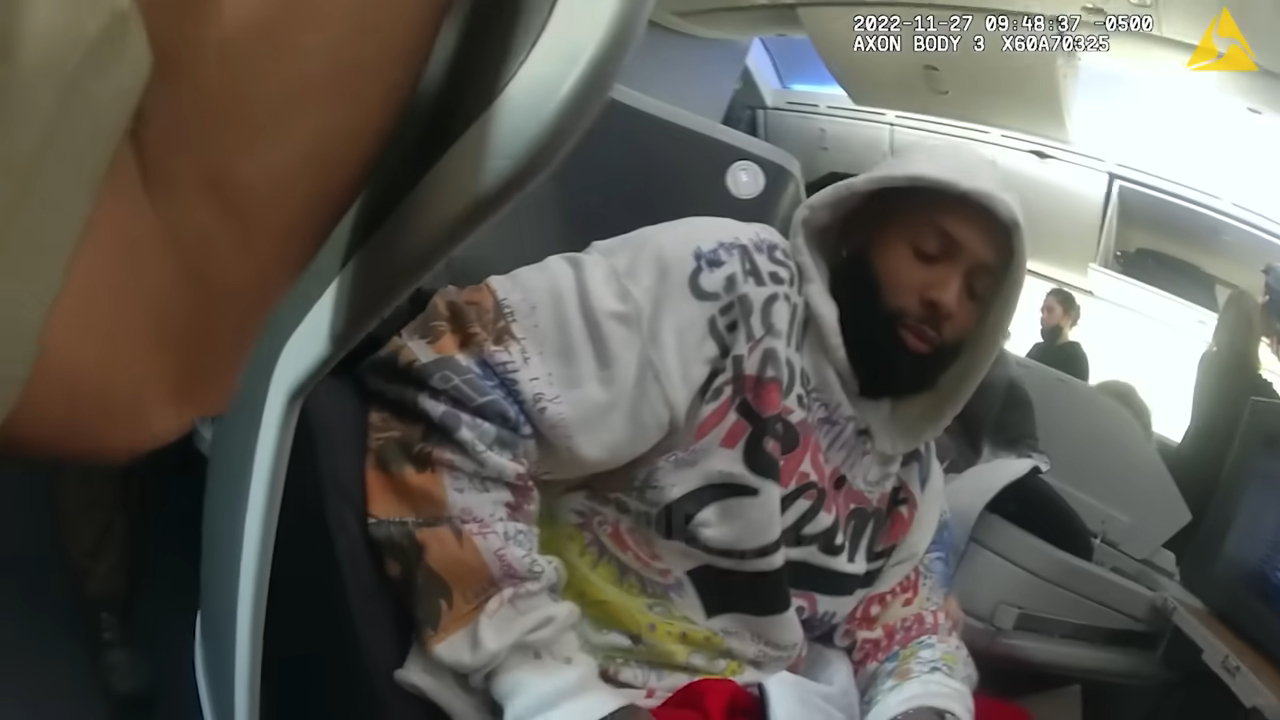
Police Discuss a Trespass Warning and Possible Arrest
Once the aircraft was being cleared, officers discussed what would happen if Beckham continued refusing to exit.
One officer said that, for safety reasons, Beckham would be given “another opportunity” to leave voluntarily.
If he still refused, police could move to the next step.
The officer mentioned issuing a trespass warning.
And if Beckham remained on the aircraft after that warning, the consequences could become substantially more serious.
“He’ll be subject to arrest,” the officer said.
The distinction was important.
Until then, officers had repeatedly emphasized that removing Beckham from the flight was the airline’s decision rather than theirs. The captain had authority over who remained aboard, while police were there to help carry out that decision safely.
But once a passenger had been formally told to leave and refused, the matter could move into law enforcement territory.
The goal still appeared to be avoiding that outcome.
Officers continued trying to persuade Beckham to cooperate voluntarily rather than turning the incident into an arrest.
Why the Crew Was So Concerned
As the situation continued, police explained the reasoning behind the airline’s decision.
The concern was not simply that Beckham had been difficult to wake.
The crew had apparently worried about what could happen if the same condition returned after takeoff.
An officer explained that staff feared the possibility of a medical emergency occurring while the aircraft was in the air.
That created a safety and liability issue for the airline.
According to the conversation captured in the footage, crew members had initially struggled to wake Beckham when trying to get him to fasten his seatbelt before departure. By the time paramedics arrived, he was responsive, but airline staff still did not know what had caused the earlier episode.
From the crew’s perspective, allowing a passenger to begin a multi-hour flight after such an unexplained event carried risk.
Medical personnel later offered to conduct basic checks.
They discussed taking Beckham’s blood pressure, evaluating his level of consciousness and checking his blood sugar.
The intention appeared to be relatively limited: confirm that he was medically stable and gather basic information rather than treat him for a confirmed emergency.
Meanwhile, officers continued encouraging Beckham not to let the disagreement become something larger.
One officer told him that the situation was “not worth it.”
That warning would ultimately prove unnecessary.
Beckham eventually agreed to leave.
After the Plane Empties, Beckham Walks Off
Once the other passengers had been removed, the tense standoff finally began to resolve.
Beckham ultimately exited the aircraft voluntarily.
Police escorted him through Miami International Airport and helped direct him toward the area where he could arrange transportation and deal with his belongings.
The footage shows officers speaking calmly with him as they walked through the terminal.
At one point, the conversation turned to his checked luggage.
Because the bags were already loaded and the flight was continuing to Los Angeles, Beckham was told that his luggage would likely travel to Los Angeles without him.
He could retrieve it later or have someone collect it there.
According to an officer later describing the incident, Beckham had eventually “came off voluntarily.”
That ended the immediate confrontation.
There was no dramatic physical removal from the aircraft.
But the dispute was far from over in public.
Almost immediately, competing versions of what had happened began circulating.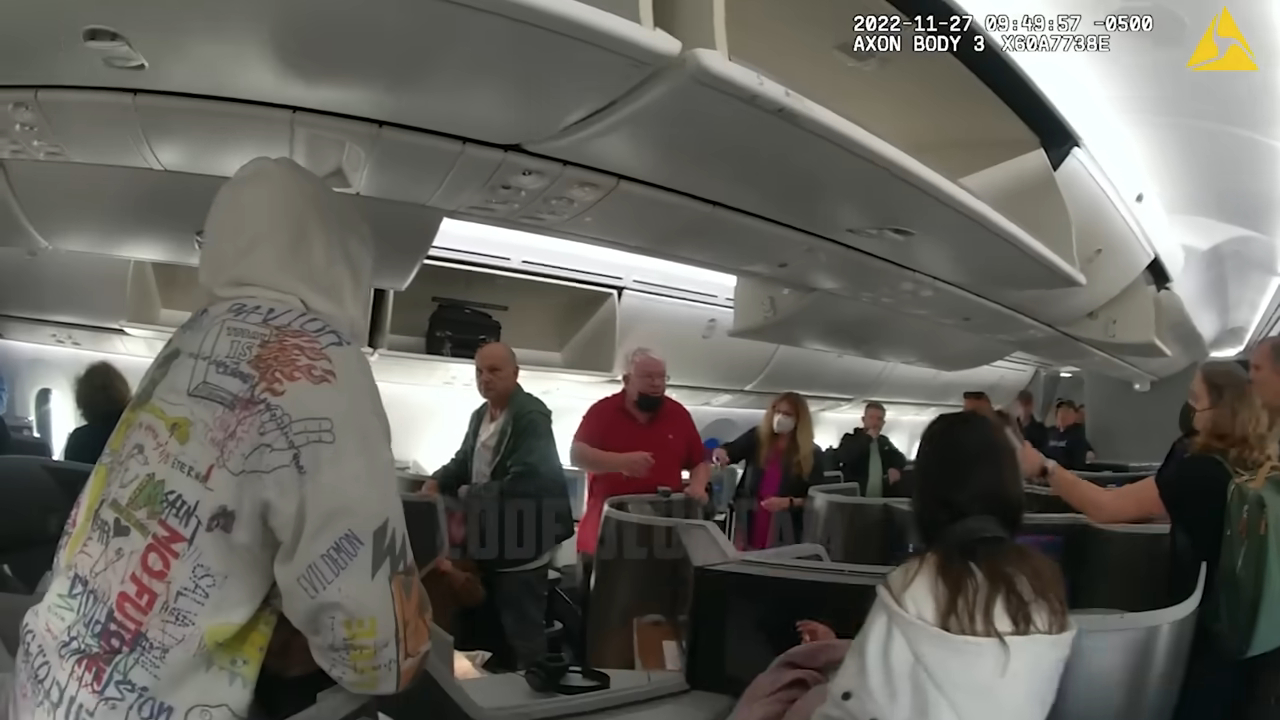
Beckham’s Attorney Pushes Back
According to the narration accompanying the footage, several people who said they had been aboard the flight complained on social media about the delay.
American Airlines also issued a statement regarding the incident.
Beckham himself responded indirectly on Twitter, writing:
“Never in my life have I experienced what just happened to me. I’ve seen it all.”
His attorney then presented a much different interpretation of the confrontation.
According to the attorney’s account summarized in the transcript, Beckham had not been creating problems before the dispute.
The attorney said Beckham had fallen asleep, was eventually awakened and was told to fasten his seatbelt or leave the aircraft.
According to that version, Beckham complied once awake, but airline staff later told him it was already too late and that he still had to get off.
The attorney further argued that Beckham was never disruptive or combative.
Instead, he blamed what he described as an overzealous flight attendant who allegedly wanted to demonstrate authority over the NFL star.
That account stood in sharp contrast to the concerns described by airline personnel and police during the incident.
The crew had described an initially unresponsive passenger whose unexplained condition made them uncomfortable proceeding with a long flight.
Beckham’s side portrayed the episode as an unnecessary escalation after he had already awakened and was capable of continuing the trip.
According to the closing narration, Beckham was believed not to have received a citation and was released following the incident.
In the end, there was no arrest.
But the consequences of the confrontation were significant nonetheless.
An entire aircraft had been emptied, passengers had been delayed, police had discussed the possibility of trespassing and arrest, and Beckham had been escorted out of the airport gate area after being removed from the flight.
The central question remained disputed afterward: was the airline responding appropriately to a legitimate safety concern, or had a situation involving a sleeping passenger been allowed to escalate far beyond what was necessary?
That disagreement would shape the public debate long after the aircraft finally left Miami.