A 9/11 Officer Spent 13 Hours Buried Beneath the World Trade Center. Then He Heard Voices Above Him
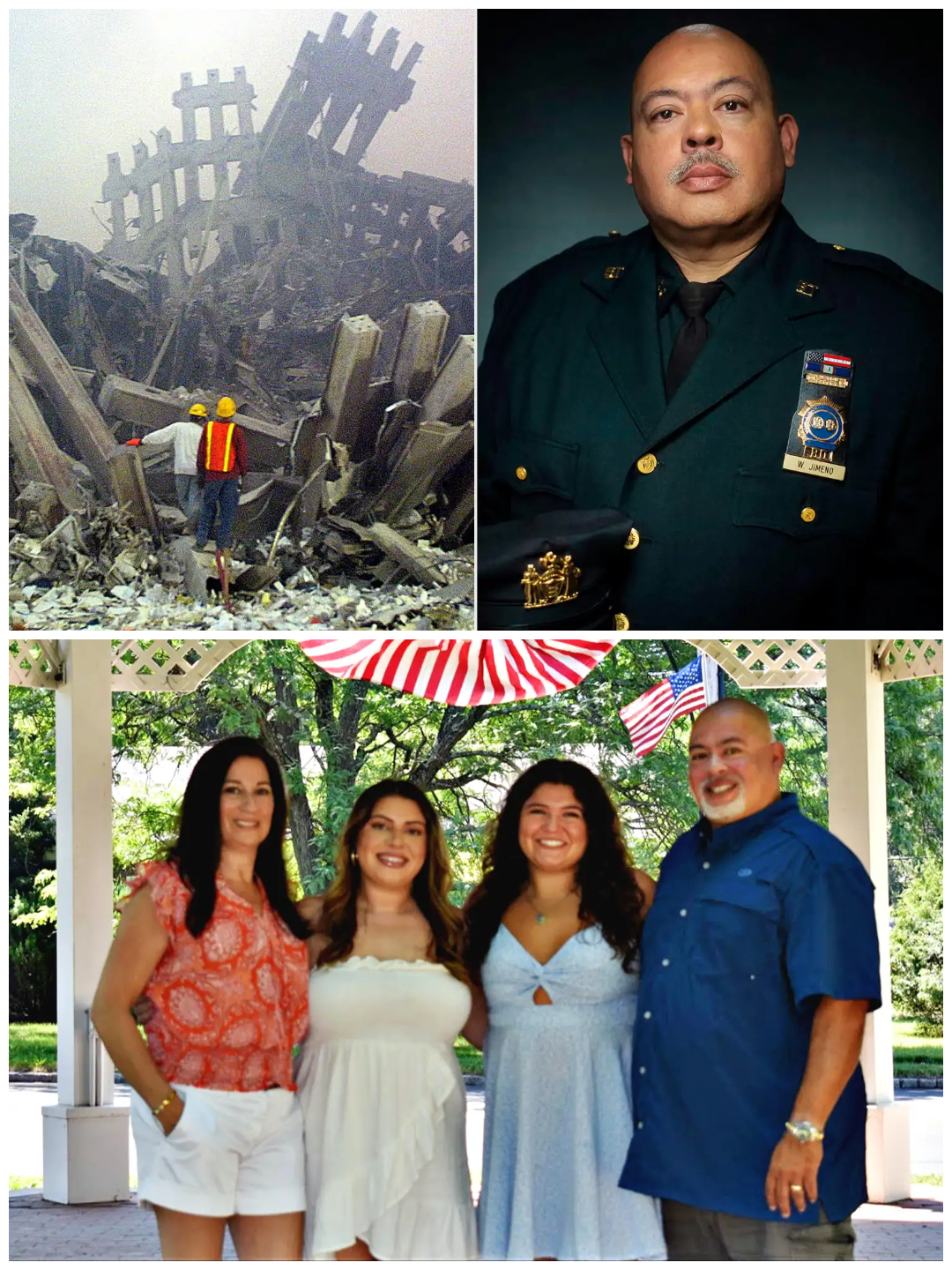
By nightfall on September 11, 2001, much of the world had already watched the Twin Towers disappear.
Will Jimeno had not.
He was underneath them.
For roughly 13 hours, the 33-year-old Port Authority police officer remained trapped beneath an enormous field of twisted steel and concrete at the World Trade Center, badly injured and unable to free himself.
Above him, rescue workers were searching a landscape so devastated that finding anyone alive seemed increasingly unlikely.
Jimeno could not see them.
He could only wait, call out and hope somebody eventually heard him.
Twenty-five years later, he is recounting what happened inside that darkness — including the moment when a sound from somewhere above suddenly changed everything.
It was a voice.
And the men calling out identified themselves as United States Marines.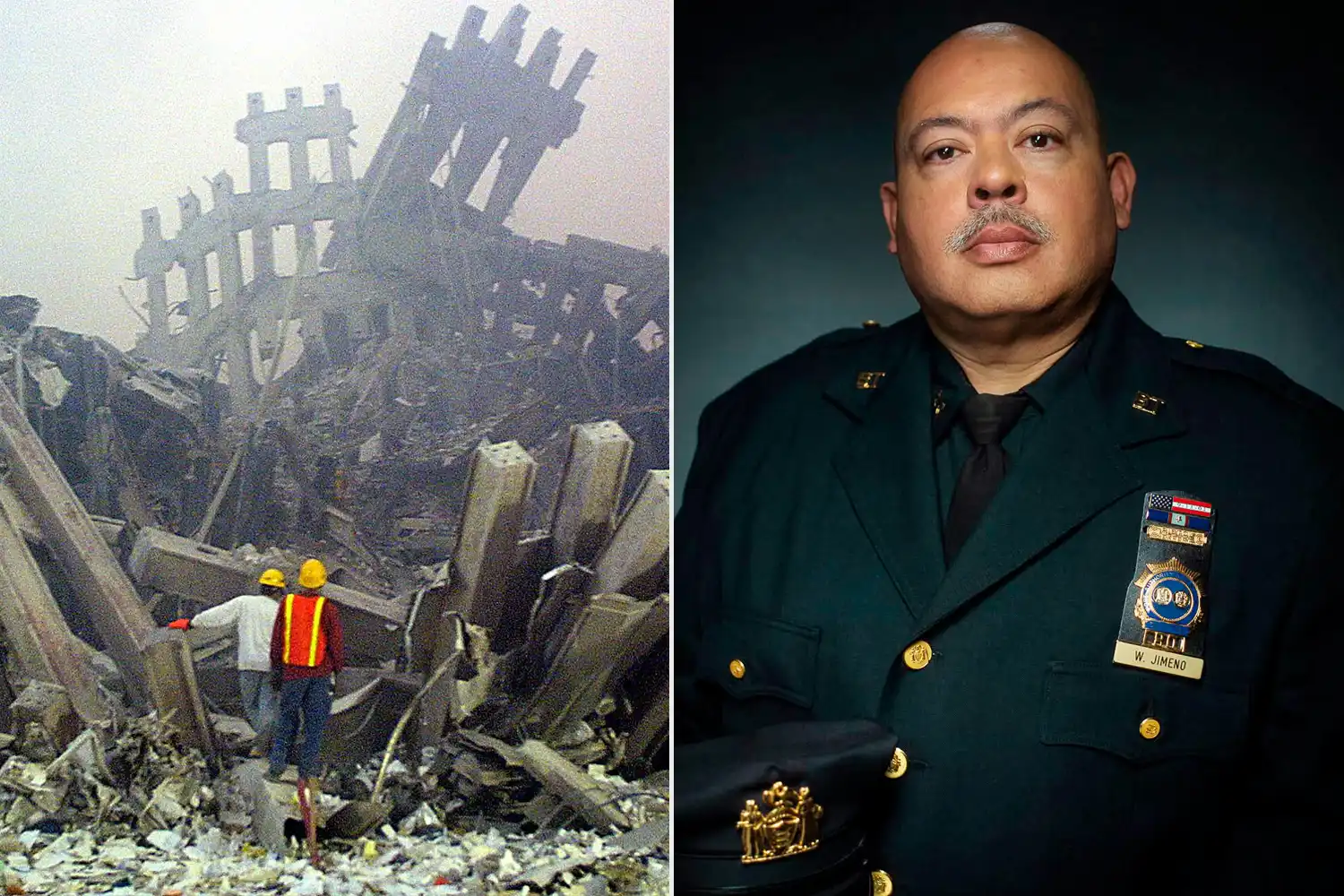
Five Officers Went In. Only Two Would Come Out Alive
Jimeno was a relatively new Port Authority Police Department officer when hijacked planes struck the World Trade Center on the morning of Sept. 11.
He joined other officers responding to the complex as evacuations were underway.
Jimeno was part of a five-man group led by Sgt. John McLoughlin and including officers Dominick Pezzulo, Antonio Rodrigues and Christopher Amoroso.
Then the South Tower began to collapse.
The men ran for cover near a freight elevator inside the concourse.
Rodrigues and Amoroso were killed in the collapse. Jimeno, McLoughlin and Pezzulo survived the initial impact, but Jimeno and McLoughlin were pinned beneath the wreckage. Pezzulo, who remained mobile, tried desperately to free them.
Then the North Tower came down.
More debris crashed into the area.
Pezzulo was fatally injured.
Jimeno was still alive.
So was McLoughlin.
But they were now buried beneath roughly 30 feet of wreckage with almost no way of knowing what remained above them.
Then Darkness Set In
For hours, Jimeno tried to survive inside the confined space.
His leg was crushed and trapped. At one point, he attempted to use his service pistol like a hammer to break the concrete around him, but he could not free himself.
As evening approached, the small void containing Jimeno and McLoughlin became completely dark.
Around 8 p.m., according to Jimeno’s own later account, something finally broke through the silence.
He heard someone shouting.
“U.S. Marines!”
The voices belonged to former Marines Jason Thomas and Dave Karnes.
Neither man had begun that morning as part of an organized rescue team assigned specifically to Jimeno.
Thomas had been out of the Marine Corps and was on Long Island when he learned what had happened. He put on his old Marine uniform and headed toward Manhattan to help.
Karnes, another Marine veteran, independently made his way to Ground Zero.
The two eventually met amid the wreckage and began moving across the debris with flashlights, calling into openings and searching for signs of life.
Eventually, somebody answered.
It was Jimeno.
After so many hours beneath the World Trade Center, rescuers had finally found the trapped officers.
Finding them, however, was only the beginning.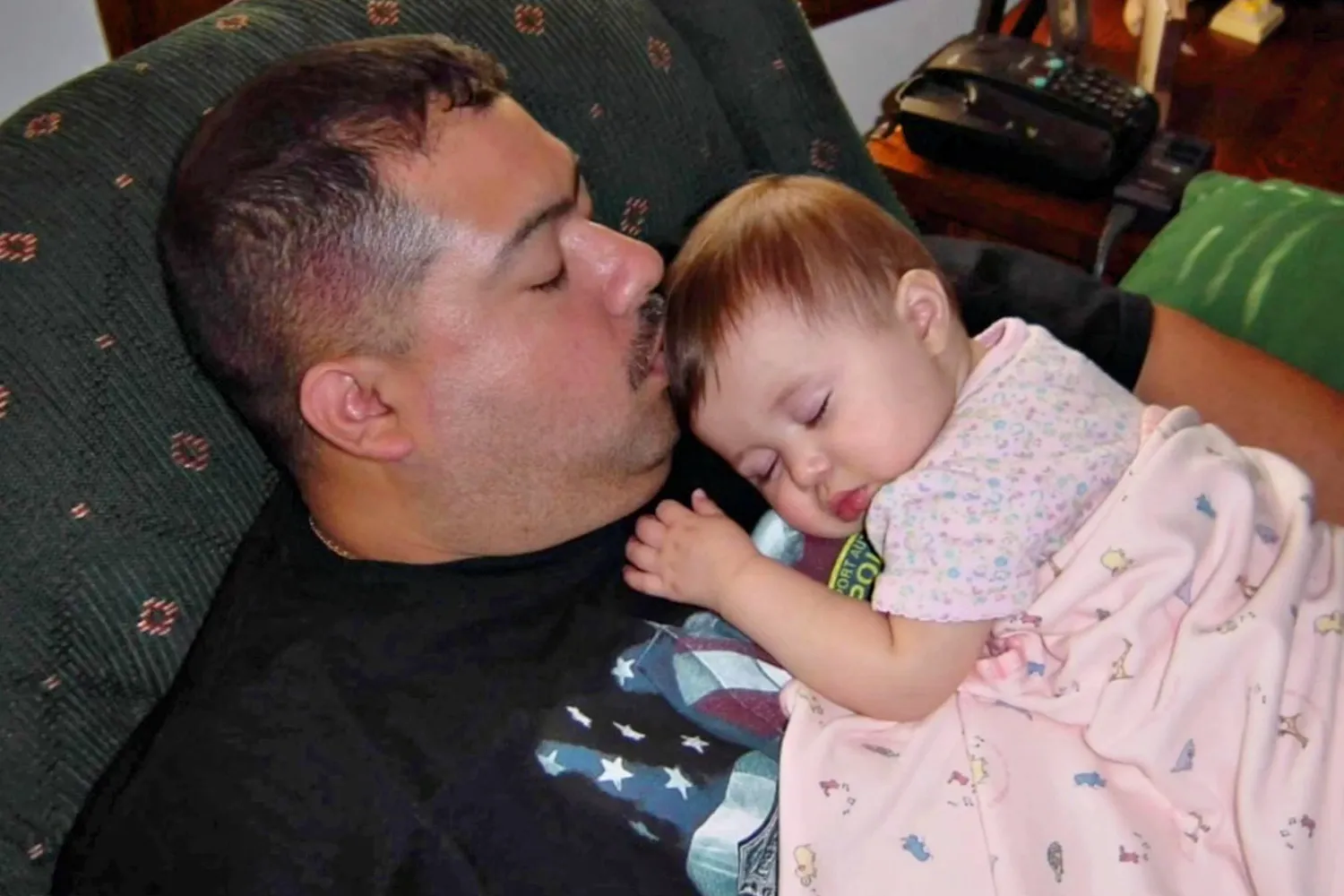
“Hold On, We’re Going to Work on You”
Once Jimeno’s position was located, additional rescuers had to make their way through an extraordinarily dangerous environment to reach him.
Jimeno later recalled that New York City police officer Scott Strauss was among those who descended into the hole, along with Paddy McGee and paramedic Chuck Sereika.
Strauss reached him and gave him a straightforward promise:
They were going to work on getting him out.
Jimeno was so overwhelmed that he began hyperventilating. Strauss gave him water and told him he needed to focus so he could help the rescuers help him.
Then came the extraction.
The National September 11 Memorial & Museum says Strauss and the rescue team crawled across hot steel and squeezed through narrow, smoke-filled areas to reach the trapped officers. Removing Jimeno took more than three additional hours.
The process was agonizing.
Jimeno has recalled screaming from the pain as rescuers worked to free his damaged body from the concrete holding him down.
But after approximately 13 hours beneath the rubble, he was finally lifted out alive.
McLoughlin remained trapped longer and was rescued several hours later.
Jimeno would become one of only about 20 people pulled alive from the wreckage of the collapsed World Trade Center.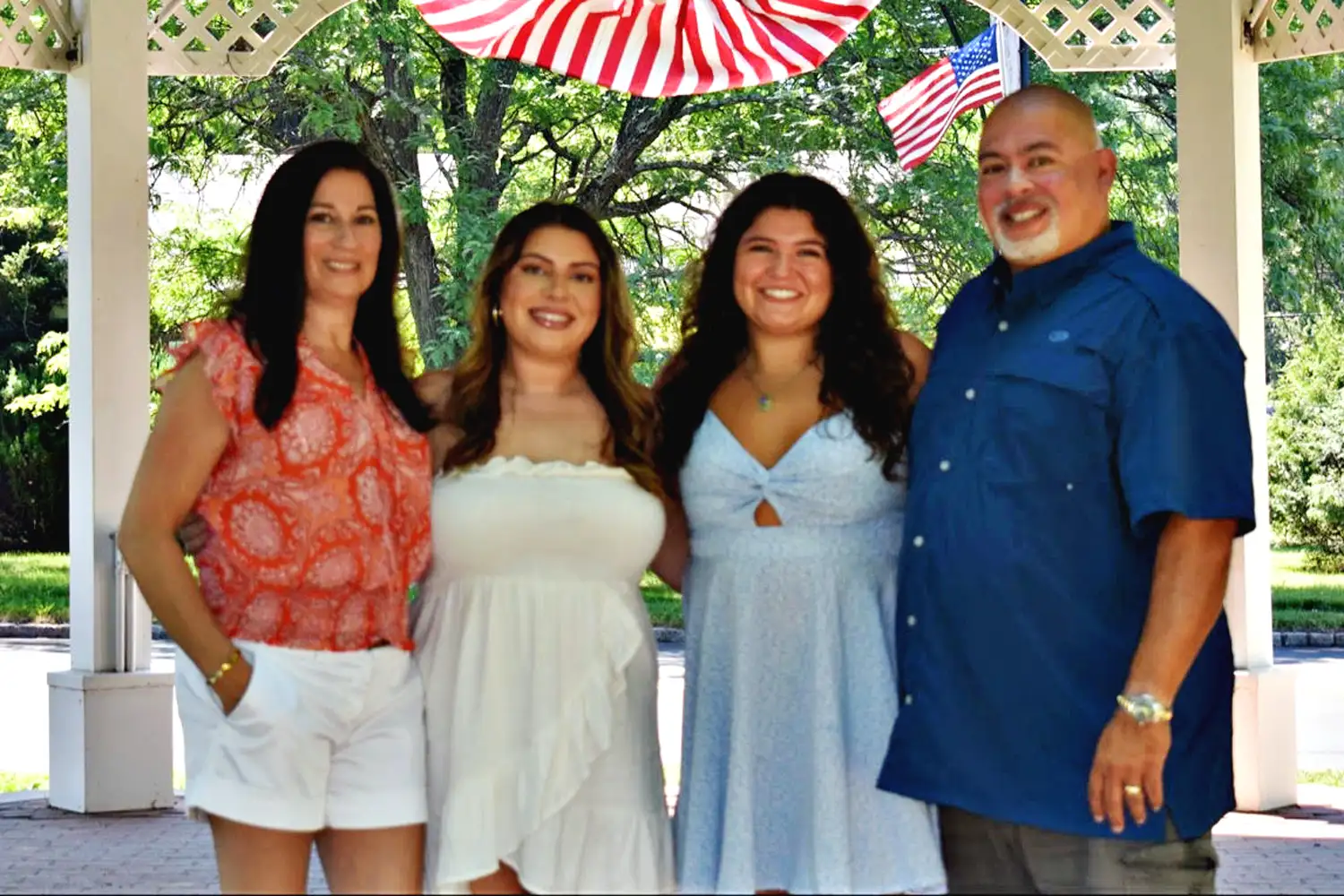
His First Question Was About What He Couldn’t See
Emerging from the hole did not immediately bring Jimeno relief.
For all those hours underground, he had never fully seen what had happened above him.
Now it was nighttime.
Jimeno looked around at the open sky and devastation where the buildings had stood.
He asked a firefighter a simple question:
“Where is everything?”
The answer was devastating.
“It’s all gone, kid.”
Jimeno told PEOPLE that this was the moment he finally cried.
He had not cried when he was injured. He had not cried as fellow officers died around him.
But seeing that the buildings themselves were gone made him think about how many people must still be inside the wreckage.
“That’s the first time I cried,” he recalled.
There was another shock waiting at Bellevue Hospital.
Jimeno remembered arriving to find medical staff ready — but remarkably few patients.
He asked where everybody was.
The answer, as he recalled it, was essentially that he was one of the people they had.
The scale of what that meant was difficult to comprehend.
Surviving the Rubble Was Only the Beginning
Jimeno’s body had suffered catastrophic damage.
He said he flatlined twice that night.
Doctors had to make long surgical incisions in his injured left leg because the muscles were dying. He eventually underwent eight surgeries, including skin graft procedures using tissue from his right leg.
The damage never fully disappeared.
Twenty-five years later, Jimeno says his left leg remains partially paralyzed and sometimes does not function properly at all.
Yet while he was lying in the hospital, another date was approaching.
His wife, Allison, was pregnant.
On Jimeno’s 34th birthday, still using a wheelchair during his recovery, he was there for the birth of their daughter Olivia.
The man who had spent hours wondering whether he would ever leave the rubble alive now had the chance to watch another child enter his family.
Today, Olivia is grown and works for the Department of Veterans Affairs. Jimeno has also watched his older daughter Bianca grow up and has spoken with gratitude about the family life he nearly lost beneath the towers.
Twenty-Five Years Later, He Is Still Telling the Story
Physical survival did not mean that Sept. 11 simply ended when Jimeno left the hospital.
He later struggled with post-traumatic stress and has spoken openly about the psychological toll of what he experienced.
Therapy and eventually telling his story became part of his recovery.
His ordeal was dramatized in Oliver Stone’s 2006 film World Trade Center, with Michael Peña portraying Jimeno and Nicolas Cage playing McLoughlin.
Now, as America marks the 25th anniversary of the attacks, Jimeno is again describing the day in his own words. In an Aug. 25, 2026 podcast interview, he revisited the collapse, the hours underground, his rescue and the long recovery that followed.
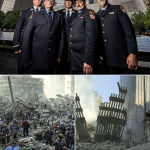
For most Americans, the images of September 11 exist above ground: the burning towers, streets covered in dust and the empty skyline afterward.
Jimeno experienced a part of that day almost no one could see.
For 13 hours, his world was a dark space beneath 30 feet of wreckage.
Then, somewhere above him, he heard men calling into the darkness.
“U.S. Marines!”
He answered.
And that answer led rescuers to one of the few people who would emerge alive from beneath the World Trade Center.