Seven Months After Nancy Guthrie Vanished, Why Has No Suspect Been Publicly Named?
Seven months after Nancy Guthrie disappeared from her Arizona home, investigators are not starting from nothing.
They have surveillance video.
They have blood evidence.
They have ransom messages.
They have biological material recovered during the investigation.
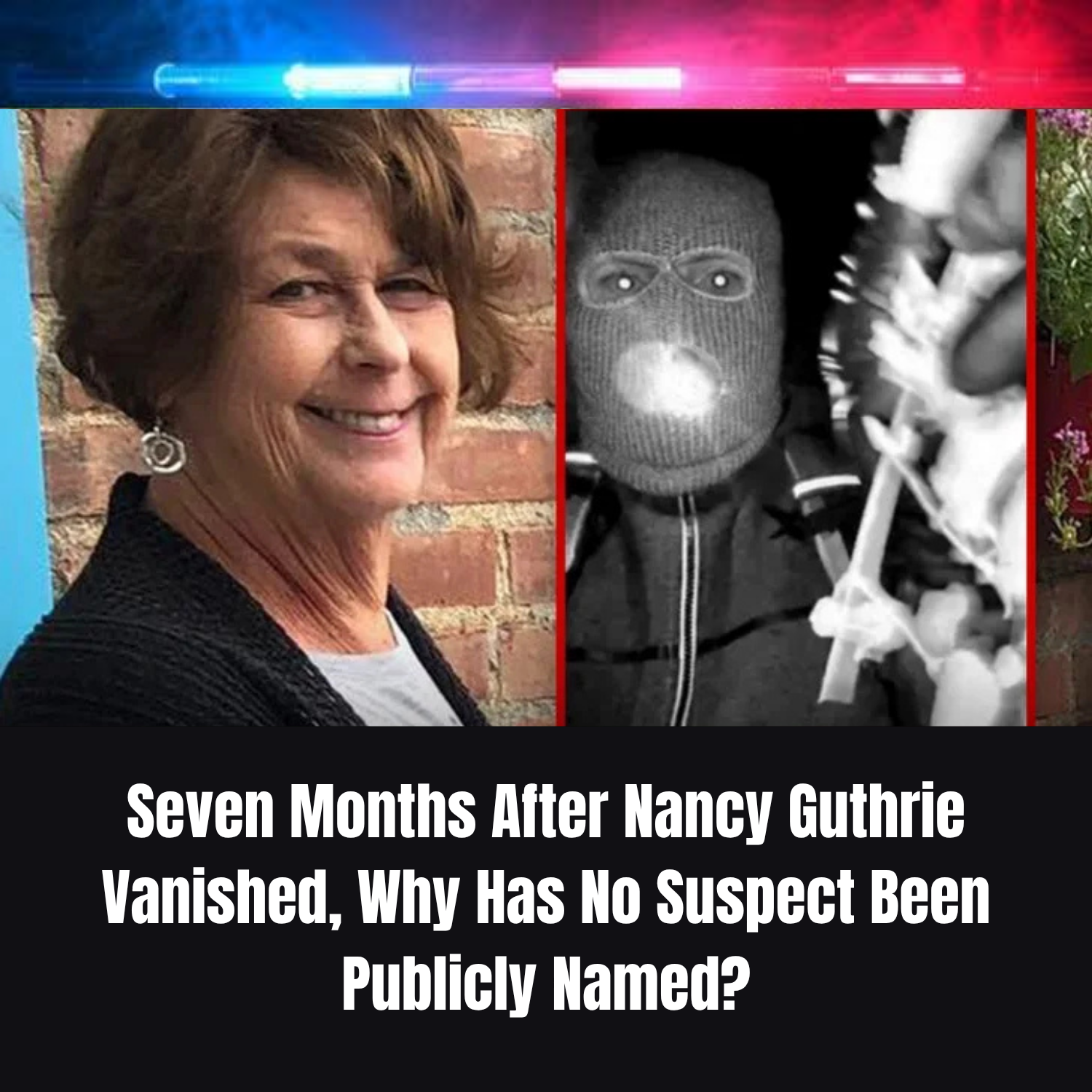
They even have images of a masked, apparently armed person outside the 84-year-old woman’s home around the time she vanished.
What they still do not have — at least publicly — is a name.
No suspect has been publicly identified in the disappearance of Nancy, the mother of Today co-anchor Savannah Guthrie. No arrest has been announced. And Nancy herself has never been found.
That makes the case increasingly difficult to understand from the outside.
How can investigators have so many pieces of evidence and still be unable to publicly say who they believe took her?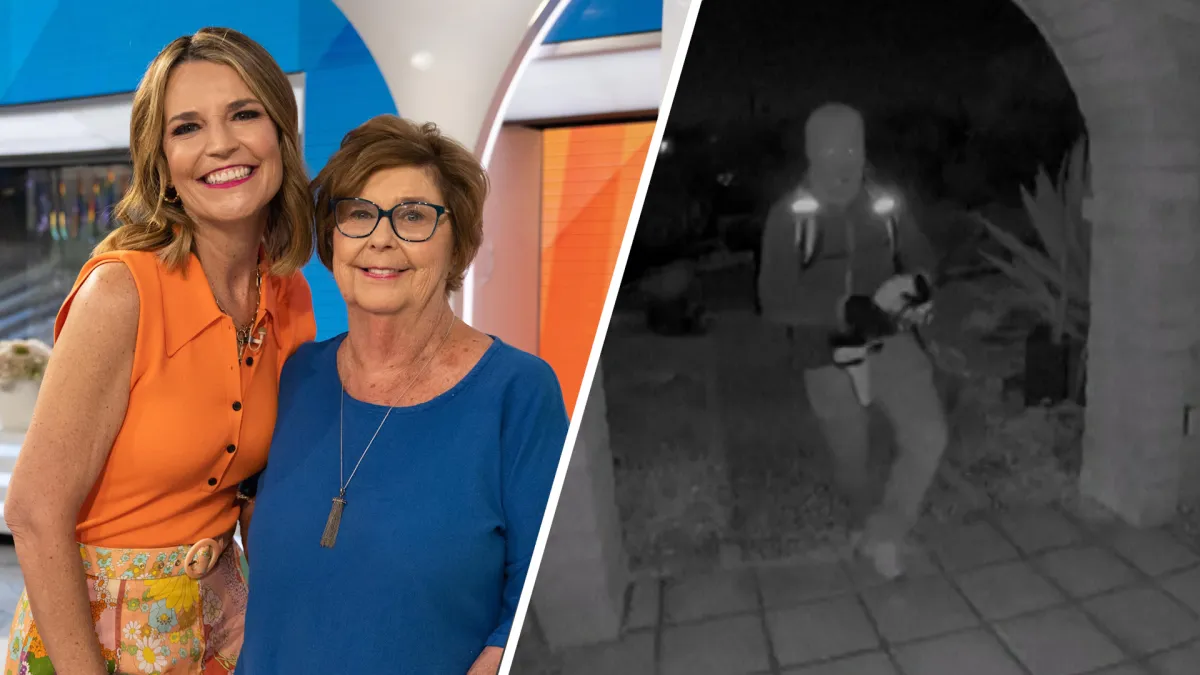
Nancy Was Last Seen the Night Before She Disappeared
Nancy was last seen by family on the evening of Jan. 31, 2026, after spending time with relatives.
By the next morning, something was wrong.
She had failed to appear at church, something considered unusual enough to alarm her family.
When authorities began examining her Tucson-area home, the circumstances quickly suggested that she had not simply decided to leave.
Nancy had difficulty walking, used a pacemaker and required daily medication for a heart condition.
Evidence at the residence included blood later identified as Nancy’s.
Her disappearance was eventually treated as a kidnapping-for-ransom investigation.
Then investigators recovered something far more dramatic: images from her own doorbell camera.
A Masked Person Appeared at 1:47 A.M.
At approximately 1:47 a.m. on Feb. 1, surveillance footage captured a person outside Nancy’s home.
The individual wore a balaclava, gloves and a backpack.
A handgun appeared to be visible around the person’s waist.
Perhaps most importantly, the video appeared to show the person noticing the camera and attempting to interfere with it.
The individual first tried covering the lens and then apparently used material from around the property to obstruct the camera.
Another surveillance video from the surrounding area later showed a man carrying a backpack attempting to climb a wall shortly afterward.
The images offered investigators something missing-person cases rarely provide so early:
A possible suspect captured near the scene.
But the face was concealed.
And seven months later, authorities still have not publicly attached a name to that figure.
The Ransom Notes Made the Case Even Stranger
Within days of Nancy’s disappearance, messages began arriving that claimed to be connected to her abduction.
Authorities received multiple communications during the investigation, including apparent scams and extortion attempts.
But investigators eventually concluded that at least some ransom messages appeared credible.
One note sent shortly after the abduction demanded millions of dollars in Bitcoin.
It contained details that appeared designed to prove the writer had knowledge of what happened inside Nancy’s home — including references to objects and damage at the property that had not initially been made public.
The demand reportedly began at $4 million and threatened to rise to $6 million if payment was not made within the specified deadline.
Then came a second message.
This one claimed Nancy had died shortly after being taken, supposedly from a heart-related problem, and said she had been buried somewhere in nature.
That claim has never been publicly verified.
Nancy’s remains have not been found.
The ransom notes therefore created another mystery rather than solving the first one.
Were they written by the person seen on the surveillance footage?
Was more than one person involved?
Did the writer actually know where Nancy was?
Or were parts of the messages designed to mislead investigators?
DNA Seemed Like It Might Break the Case
Early in the investigation, forensic evidence generated hope that detectives might quickly identify whoever had been outside Nancy’s home.
Investigators recovered gloves and other items while searching the area.
DNA was obtained from one glove that initially appeared potentially significant because investigators believed it resembled the gloves worn by the masked person in surveillance footage.
But that lead later collapsed.
Testing ultimately connected DNA from a recovered glove to a restaurant worker rather than the person investigators were seeking.
Another potentially important item — a hair recovered from Nancy’s home — also failed to produce a usable suspect profile.
By late July, investigators said the hair testing had produced no result pointing to the abductor.
That left a much more complicated DNA problem.
Authorities have said biological evidence recovered from the residence includes a mixed DNA sample involving as many as four people.
Multiple laboratories have been examining evidence connected to the case.
Untangling a mixed sample, however, can be dramatically more complicated than matching a clean DNA profile to a single individual.
And publicly, investigators have not announced a breakthrough from that evidence.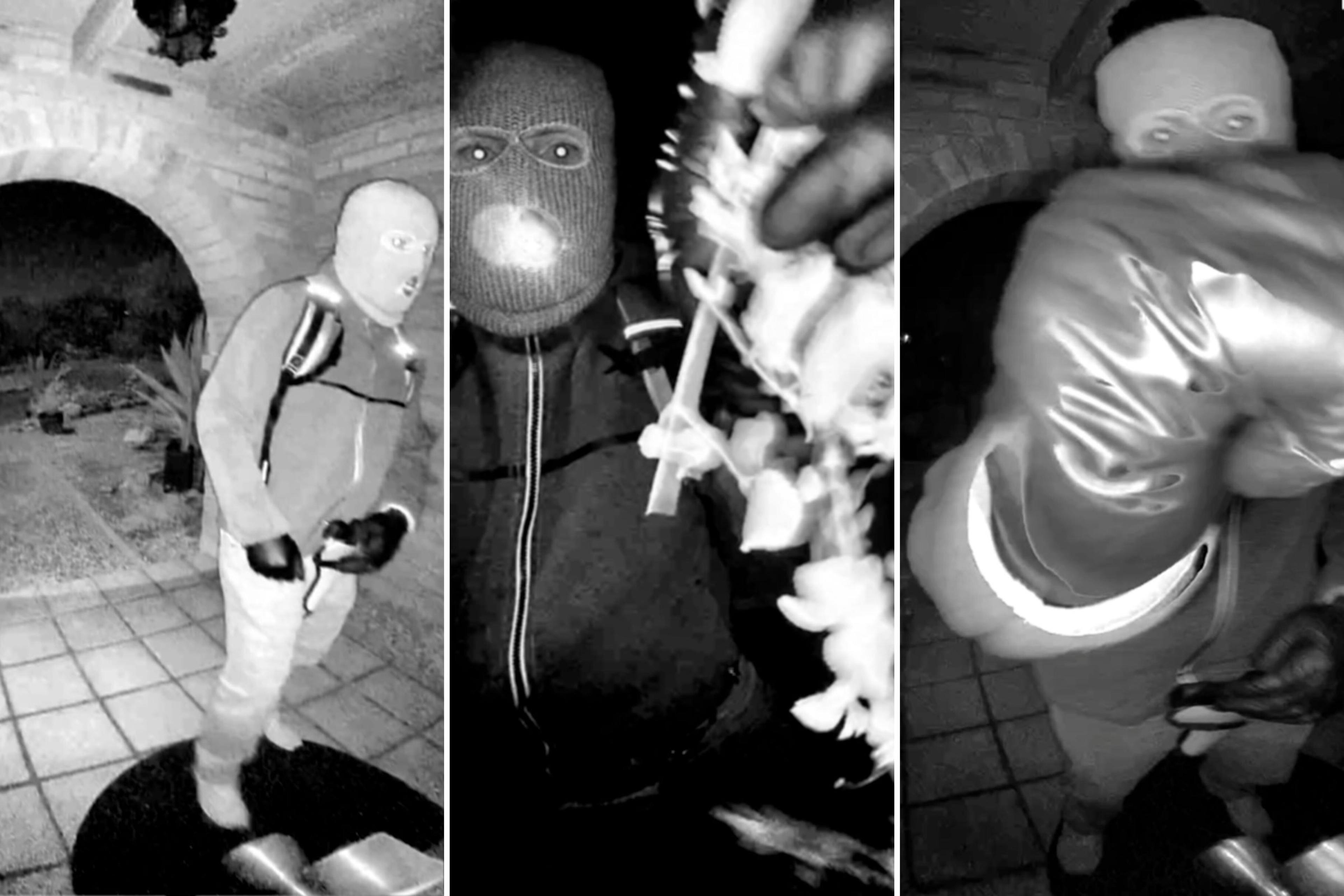
Thousands of Videos, but Still No Public Name
Investigators have also pursued what may be the largest evidence pool in the case: video.
Detectives collected surveillance footage from homes, businesses, intersections and other locations around Tucson.
The goal was essentially to build a digital map.
If investigators could identify the suspect arriving near Nancy’s home, determine how the person traveled and then track the same individual or vehicle leaving the area, they might reconstruct the abduction almost minute by minute.
But that kind of investigation can mean reviewing thousands upon thousands of individual video files.
A single vehicle may appear on one camera, disappear for several blocks and then show up on another.
Lighting changes.
License plates may be unreadable.
Cameras point in different directions.
And the suspect seen at Nancy’s home deliberately concealed identifying features.
The existence of a video clue is not the same thing as having an identifiable person.
Savannah Brought Her Mother Back Into the Spotlight
On Sept. 10, more than seven months after the disappearance, Savannah made a rare reference to her mother during Today.
The moment came while the hosts were discussing an upcoming trip to Ireland.
Savannah explained that the trip carried personal meaning because of her mother’s Irish family roots in Galway.
The brief comment drew attention because Savannah has spoken only selectively about the case while the investigation continues.
A month earlier, as the disappearance reached six months, Savannah and her siblings had made a far more direct appeal.
They described living in continuing anguish and begged anyone with information to come forward.
The family has offered up to $1 million for information leading to Nancy’s recovery.
Yet even that enormous incentive has not publicly produced the person investigators are seeking.
Why Would Police Keep a Suspect’s Identity Secret?
There is another possibility that should not be overlooked.
The fact that authorities have not publicly named a suspect does not necessarily mean they have no investigative targets.
Police routinely withhold names while gathering evidence.
Naming someone too early can alert that person, compromise surveillance, influence witnesses or create legal problems if investigators cannot establish probable cause.
Detectives may also have several persons of interest without enough evidence to determine which one — if any — is responsible.
In Nancy’s case, investigators have questioned people and examined multiple leads without announcing an arrest.
That distinction matters.
Public silence is not necessarily investigative silence.
Seven Months Later, the Mask Is Still the Mystery
The case now contains an unusual amount of publicly known evidence for a disappearance that remains completely unresolved.
There is a masked person at the house.
There is Nancy’s blood.
There are ransom notes.
There is surveillance footage from the neighborhood.
There is DNA evidence, although some of it has produced dead ends or remains scientifically difficult to interpret.
And there are thousands of tips.
Yet the most basic questions remain unanswered.
Who walked onto Nancy Guthrie’s property that morning?
Did that person act alone?
Where was Nancy taken?
Who wrote the ransom messages?
And if the claim that she later died was true, where is she now?
For seven months, investigators have accumulated pieces of the puzzle without publicly identifying the person at its center.
That is what makes Nancy Guthrie’s disappearance so haunting.
The public has already seen the masked figure authorities want identified.
What no one outside the investigation seems to know is the name behind the mask.