What Changed After 12 Years That Made Police Accuse Aliza Sherman’s Own Lawyer?

For more than a decade, the murder of Aliza Sherman seemed stuck in the same place.
Investigators had surveillance video.
They knew why the 53-year-old Cleveland Clinic nurse was downtown.
They knew she was supposed to meet her divorce attorney shortly before she was attacked.
And they knew that attorney, Gregory Moore, had already drawn police attention for reasons unrelated to the killing.
But year after year, no murder charge came.
Then, in May 2025, everything changed.
A grand jury indicted Moore — the lawyer Sherman had trusted to guide her through a difficult divorce — on aggravated murder, conspiracy, multiple murder counts and kidnapping charges.
He pleaded not guilty.
Now, more than 13 years after Sherman was killed, the case is finally moving toward trial.
And the central question is no longer simply who investigators suspect.
It is this:
What changed after 12 years that finally convinced prosecutors they could charge the man who had been inside the story from the beginning?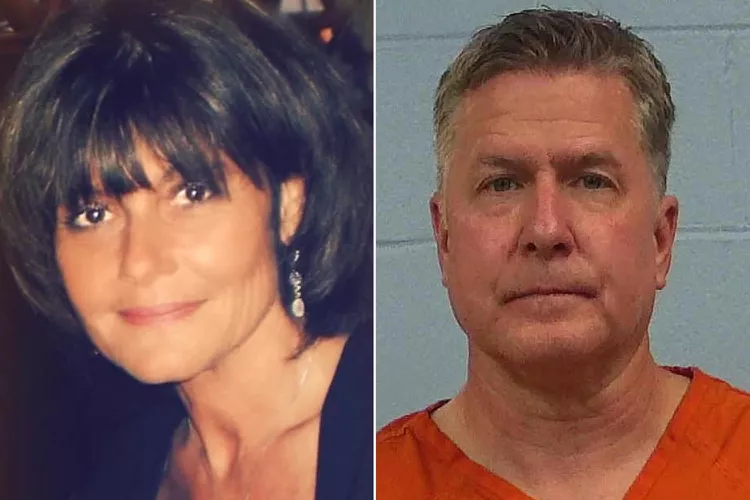
She Went Downtown to Meet Her Lawyer
On March 24, 2013, Sherman traveled to downtown Cleveland for what should have been another step in her divorce case.
Her divorce trial was approaching, and Moore had arranged to meet with her near his law office.
She never made it inside.
Surveillance footage captured a figure approaching Sherman from behind.
She was stabbed repeatedly.
Remarkably, Sherman was still able to call police herself.
A passerby also found her and called for help.
She was rushed to a hospital but died from her injuries.
From the beginning, the timing stood out.
Sherman was killed just as her divorce case was finally moving toward trial after repeated delays.
That fact would later become one of the most important parts of the prosecution’s theory.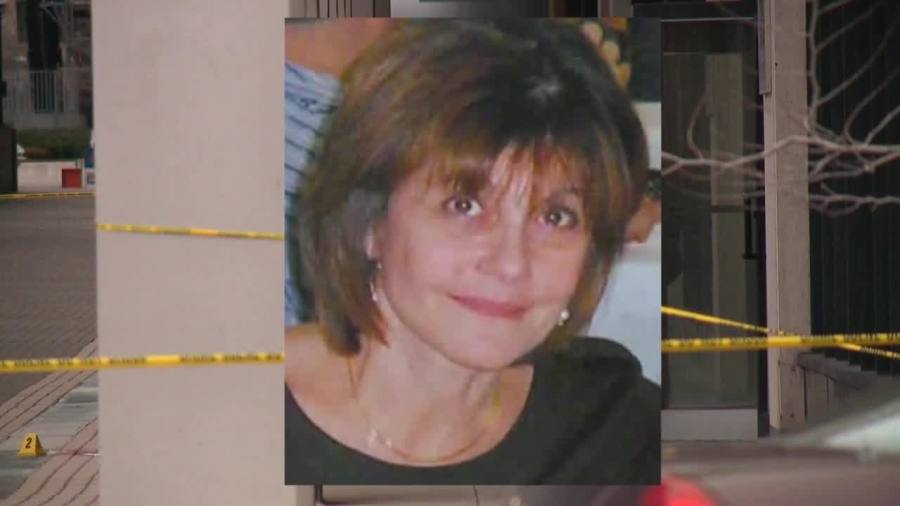
Her Lawyer Was Already Connected to a Different Kind of Delay
Moore did not suddenly appear in the investigation in 2025.
Years earlier, authorities had already investigated him over bomb threats made to Ohio courthouses on days when he had cases scheduled.
Prosecutors said those threats were used to delay court appearances.
Moore eventually pleaded guilty to charges including inducing panic and falsification and served jail time.
The falsification case also involved statements he made to detectives investigating Sherman’s death.
That history would later become extremely important.
According to the murder indictment, prosecutors believe Moore had developed a pattern of using extreme measures when he was not prepared to proceed in court.
By early 2013, investigators were already examining cellphone activity connected to the earlier courthouse threats.
And unlike some previous proceedings, prosecutors now allege that another delay in Sherman’s divorce case was becoming increasingly difficult to obtain.
Prosecutors Say There Was a Larger Plan
The murder indictment does not simply accuse Moore of personally attacking Sherman.
It alleges a conspiracy.
Prosecutors claim Moore and at least one unnamed individual agreed to participate in a plan involving Sherman shortly before her divorce trial.
Their theory is that Moore was unprepared for the proceeding and wanted Sherman to become unavailable to attend it through serious physical harm or death.
The indictment does not publicly identify the alleged co-conspirator.
That leaves one of the biggest mysteries in the case unresolved.
Did prosecutors believe Moore was the person captured in the surveillance footage?
Did someone else physically attack Sherman?
What role did the unnamed individual allegedly play?
Those questions are likely to become central as the case moves through trial.
The Biggest Change Came Years Later
For years after Sherman’s death, Cleveland police continued investigating without obtaining a murder indictment.
Then the case effectively received a new set of eyes.
Cold-case investigators took a deeper look at the evidence and spent thousands of hours revisiting the case.
They reexamined old records, digital evidence and cellphone activity using techniques that were either unavailable or less advanced when Sherman was killed.
One area became especially important:
Moore’s cellphone activity.
Instead of relying on one dramatic new clue, investigators appear to have rebuilt the case by combining older pieces of evidence and analyzing them together.
That is often how modern cold cases move forward.
The breakthrough is not always a new witness or a DNA hit.
Sometimes it is a better understanding of evidence that has existed for years.
Old Phone Records Became New Evidence
At a 2026 hearing over whether the case should be dismissed because of the long delay, prosecutors revealed that investigators had uncovered additional purchase records and cellphone-related evidence they believe connected Moore to both the earlier courthouse-threat investigation and the Sherman case.
Prosecutors have also indicated that they intend to rely heavily on cellphone evidence at trial.
That includes personal and business phone records, law-office records and location information involving people connected to the case.
The significance of those records has not yet been decided by a jury.
But they help explain why investigators may have viewed the case differently in 2025 than they did in 2013.
The evidence did not necessarily change.
The ability to reconstruct it may have.
The Defense Says Time Hurt the Case, Not Helped It
Moore’s attorneys argue that the 12-year delay created the opposite problem.
They say time has damaged his ability to defend himself.
Witnesses have died.
Memories have faded.
Some electronic records were no longer available because companies had exceeded their retention periods.
One important unavailable witness is Sherman’s estranged husband, Sanford Sherman, who died in 2024.
The defense has sought records involving Sanford and has pointed to him as an alternative investigative theory.
He was never charged with Sherman’s death.
Moore’s lawyers asked the judge to dismiss the case because of the long delay before indictment.
The request was denied.
The judge concluded that the defense had not shown enough actual prejudice to justify throwing out the prosecution and that the state had provided a legitimate explanation for the years of continued investigation.
The Defense Says Its Witnesses Contradict the Indictment
There is another potentially important issue heading into trial.
Moore’s attorney has said the defense has witness testimony that he believes directly contradicts allegations contained in the indictment.
Exactly what those witnesses will say has not been fully revealed publicly.
That creates a major test for the prosecution’s reconstructed timeline.
Investigators may have spent years piecing together cellphone activity and old records.
But jurors will also hear the defense’s interpretation of that evidence.
And if witnesses challenge the prosecution’s version of events, the case could ultimately depend on which timeline the jury finds more believable.
The Fight Continued Until the Final Days
Even in the days before the scheduled Sept. 14 trial, both sides were still fighting over evidence.
The defense sought more time, arguing that material was still being produced shortly before trial.
Prosecutors opposed another delay.
One dispute involved hundreds of pages of records tied to a BlackBerry that prosecutors say Moore used around the time of the earlier courthouse bomb threats.
The state argued that the defense should not have been surprised by records connected to Moore’s own device.
The defense, meanwhile, continued challenging searches, cellphone evidence and aspects of the prosecution’s case.
Moore remains presumed innocent.
A jury, not investigators or prosecutors, will ultimately decide whether the evidence proves the charges beyond a reasonable doubt.
The Person Inside the Story All Along
That is what makes the Sherman case so unusual.
The 2025 indictment did not identify a stranger uncovered through a sudden DNA match.
It pointed back to someone who had been there from the beginning.
The man who arranged the meeting.
The lawyer whose office Sherman was waiting outside.
The attorney whose cellphone activity had already drawn scrutiny in another investigation.
For 12 years, those facts existed without a murder charge.
Then cold-case investigators went back through the digital trail, combined evidence gathered over years and presented a new case to a grand jury.
Now Gregory Moore is preparing to face jurors.
And after more than a decade, the question is finally moving from a cold-case file into a courtroom:
Did new technology reveal something investigators had missed for years — or has the state built a murder case around evidence the defense says tells a very different story?