She Vanished at 15. For Nearly 50 Years, Even Her Name Was a Mystery
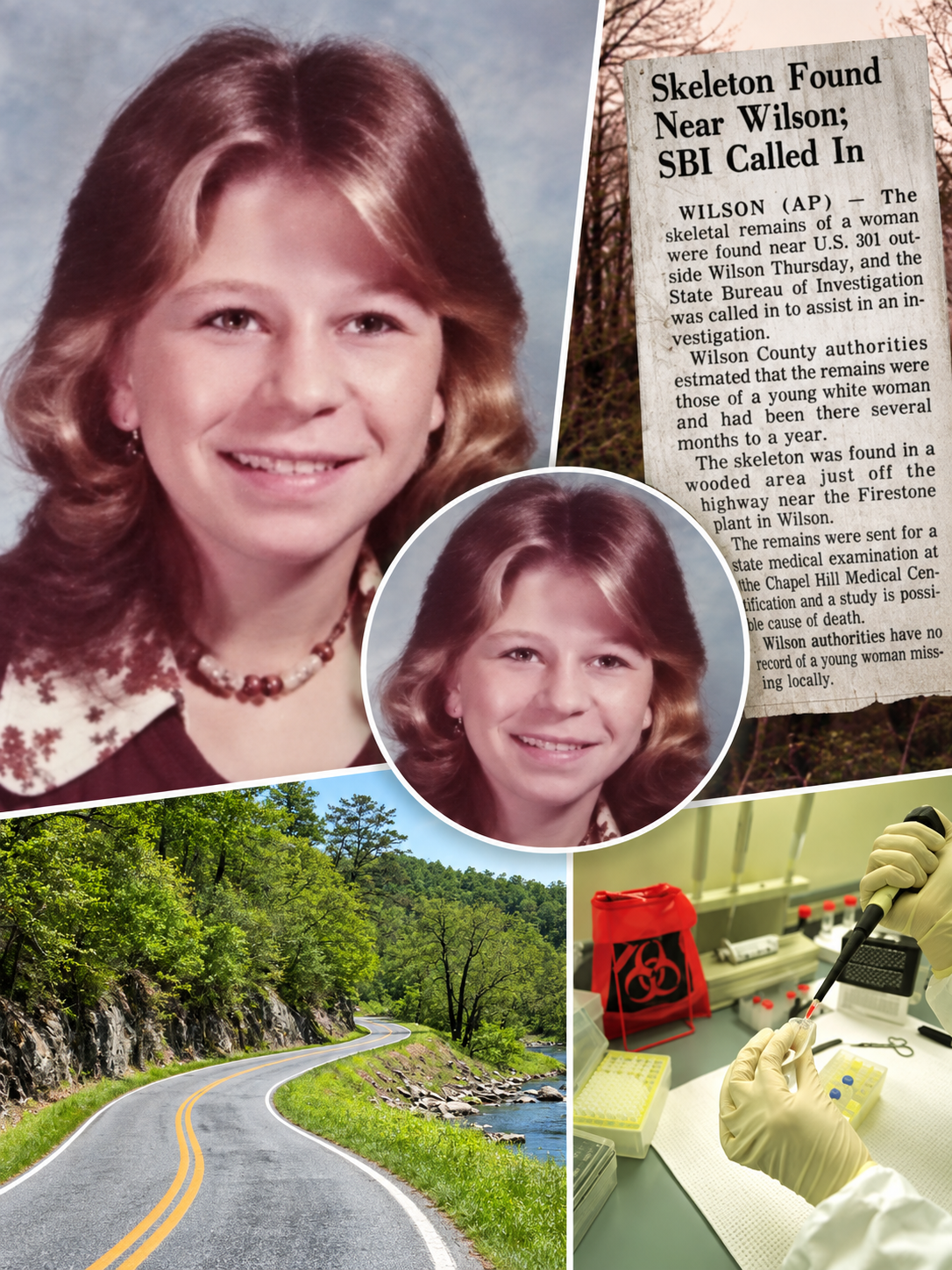
For almost half a century, investigators in North Carolina had a body but no name.
They knew the remains belonged to a young female.
They knew she had been found in the woods near a tire manufacturing plant.
They knew enough about the circumstances to suspect that something terrible may have happened to her.
What they did not know was who she was.
Then, nearly 49 years after the remains were discovered, modern DNA technology finally provided an answer.
The girl was Cindy Marcell Blizzard.
She had been only 15 years old when she disappeared from her home in Maryland in 1977.
Investigators had finally solved one mystery.
But another remained.
How did a 15-year-old girl who vanished from Maryland end up dead hundreds of miles away in North Carolina?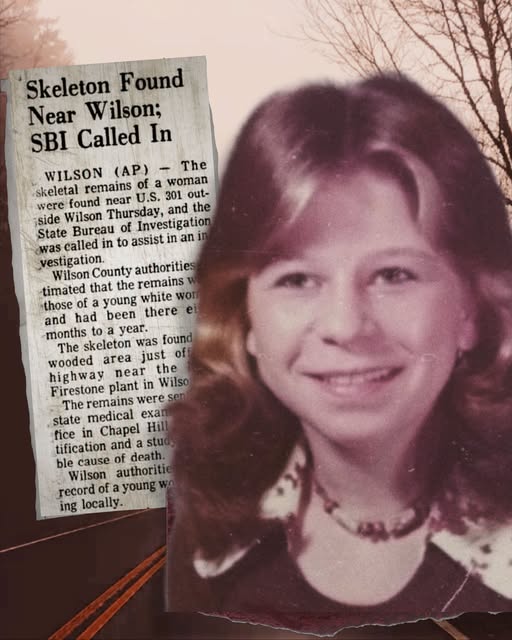
Cindy Left Home in the Spring of 1977
Cindy lived in Monkton, Maryland, a community in Baltimore County.
In the spring of 1977, authorities say the 15-year-old ran away from home.
Public information about what happened immediately afterward is remarkably limited.
There is no widely released timeline showing where Cindy went after leaving Monkton.
Investigators have not publicly explained how she traveled south.
There is no confirmed account detailing who she may have been with during the final months of her life.
For her family, she simply disappeared.
At the same time, more than 300 miles away, another mystery was about to begin.
Remains Are Found Near a North Carolina Factory
On December 29, 1977, skeletal remains and clothing were discovered in a wooded area near the Firestone plant in Wilson, North Carolina.
Investigators from the Wilson County Sheriff’s Office and the North Carolina State Bureau of Investigation responded.
The condition of the remains made identification difficult.
A medical examiner estimated that the victim was a white female somewhere between approximately 16 and 23 years old.
Investigators also believed she had been dead for at least six months and possibly as long as two years.
Those estimates were reasonable based on the science available at the time.
But one of them created an important obstacle.
Cindy was only 15.
If investigators were searching missing-person reports primarily for someone believed to be 16 or older, a 15-year-old runaway from another state would have been much harder to connect to the unidentified remains.
Police compared dental information with missing-person cases.
Nothing matched.
The young woman remained unidentified.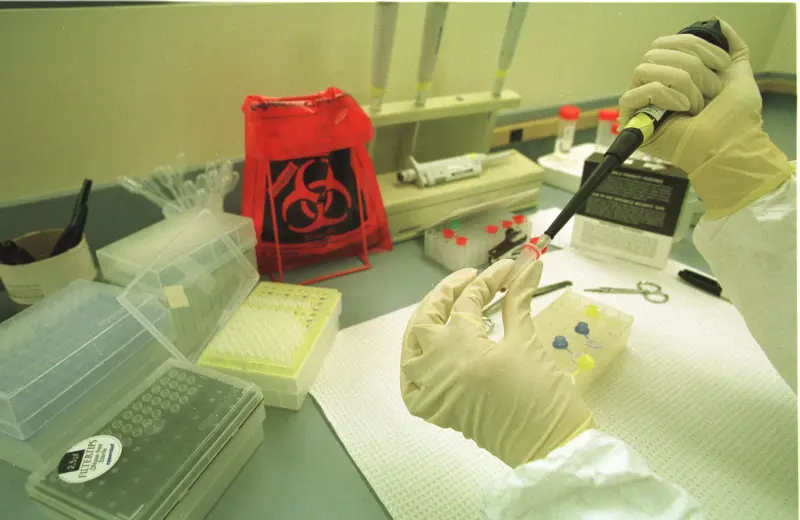
Two Mysteries Existed at the Same Time
For decades, Cindy’s disappearance and the unidentified remains in North Carolina existed as separate cases.
In Maryland, Cindy was a missing teenager.
In North Carolina, investigators had an unidentified young woman.
No one had been able to prove they were the same person.
That gap illustrates one of the greatest problems faced by investigators before modern national databases and advanced DNA testing.
Today, information can move between states almost instantly.
In 1977, connecting a runaway teenager in Maryland to skeletal remains discovered months later in North Carolina depended heavily on physical descriptions, dental records, paperwork and investigators recognizing a possible connection.
No connection was made.
Eventually, the Wilson County case went cold.
The unidentified girl remained without her name for more than three decades.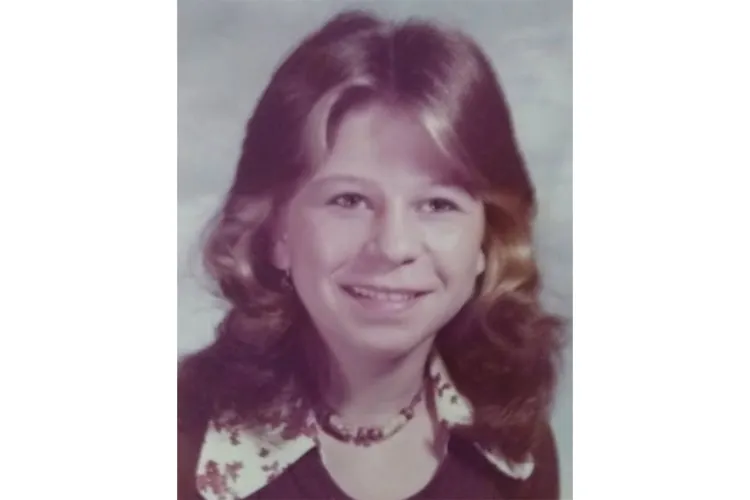
Investigators Tried Again in 2010
The first major attempt to use modern forensic science came in 2010.
A state anthropologist reopened the unidentified-remains case and submitted the victim’s teeth for DNA testing.
This time, investigators were able to develop DNA profiles.
Those profiles were entered into national systems, including databases used to compare missing people and unidentified remains.
It seemed like the kind of technological step that might finally reveal her identity.
But there was still no match.
The case stalled again.
Another 14 years would pass before investigators returned to the evidence with even more powerful technology.
A Bone Sample Changes Everything
In 2024, the North Carolina SBI’s Cold Case Investigative Team reviewed the case again.
Special Investigator Andy Murr began examining what could still be done with evidence preserved from the unidentified girl.
Working with the Office of the Chief Medical Examiner, investigators determined that the remains were a candidate for advanced forensic DNA testing.
This time, they used a bone sample.
Scientists extracted genetic material and developed what is known as an SNP profile.
Instead of comparing only a limited number of markers used in traditional forensic DNA databases, this kind of testing can examine hundreds of thousands of genetic markers across a person’s genome.
That makes something else possible:
forensic genetic genealogy.
Investigators do not necessarily need the victim herself to already exist in a criminal or missing-person database.
Instead, genetic information can help identify possible biological relatives.
Researchers can work outward from those family connections, building genealogical links until investigators arrive at a person who fits the unknown individual’s age, sex, location and timeline.
In this case, the trail eventually led back to Maryland.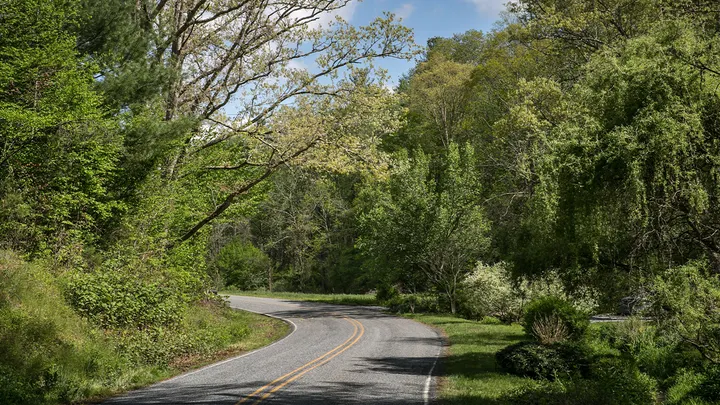
The DNA Points to a Missing 15-Year-Old
Genealogical research produced a potential connection to a teenager who had vanished in 1977.
Her name was Cindy Marcell Blizzard.
She had been 15 when she ran away from Monkton that spring.
Investigators followed the lead.
With assistance from multiple agencies, including law enforcement in Maryland and federal investigators, they located possible relatives and collected reference DNA samples.
Those samples were compared with the genetic profile developed from the remains.
The result finally gave investigators what they had been missing since December 1977.
The unidentified young woman found in the North Carolina woods was Cindy.
Nearly 49 years after her disappearance, she had her name back.
But Identification Did Not Solve Her Death
The DNA breakthrough answered who.
It did not answer what happened.
The medical examiner has not determined exactly how Cindy died, and the manner of her death remains officially undetermined.
Investigators, however, say the circumstances surrounding the location and recovery of her remains raise the probability that foul play was involved.
They are treating the case as a homicide investigation.
No suspect has been publicly identified.
And the most important part of Cindy’s 1977 timeline remains almost completely blank.
How did she get from Monkton, Maryland, to Wilson, North Carolina?
Did she travel voluntarily with someone?
Was she hitchhiking?
Did someone offer her a ride?
Where did she stay after leaving home?
Who was the last person known to see her alive?
And what happened before her remains were left in the woods near the Firestone plant?
Those questions are now at the center of the investigation.
Someone May Still Remember Cindy
Nearly five decades create an obvious challenge.
People who knew Cindy in 1977 are now much older.
Some witnesses may have died.
Businesses have disappeared.
Vehicles are gone.
Memories fade.
But identifying Cindy gives detectives something they did not have before: a real person whose final months can now be investigated.
Instead of asking the public about an unidentified Jane Doe, investigators can ask about a 15-year-old girl from Maryland.
Someone may remember Cindy talking about traveling south.
Someone may remember seeing her with another person.
A friend from 1977 might know something that seemed insignificant at the time.
Even an old photograph, letter or story could potentially help reconstruct her movements.
One Mystery Ends. Another Begins Again.
For 49 years, the case centered on one question:
Who was the girl in the woods?
Modern DNA science finally answered it.
She was Cindy Marcell Blizzard.
She was 15.
She had disappeared from Maryland months before the remains were discovered in North Carolina.
But giving Cindy her name back has exposed an even bigger mystery.
Investigators can now place the beginning of her story in Monkton and its tragic end in Wilson.
What remains missing is everything in between.
Cindy is no longer an unidentified Jane Doe.
Her family and investigators finally know where she ended up.
Now, nearly half a century later, they are trying to answer the question DNA alone cannot solve:
Who was with Cindy during her final days — and what happened to her?