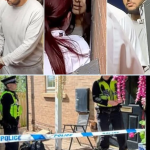
JON VENABLES FACES FRESH PAROLE BATTLE AS JAMES BULGER’S FAMILY DEMANDS PUBLIC HEARING

JON VENABLES FACES FRESH PAROLE BATTLE AS JAMES BULGER’S FAMILY DEMANDS PUBLIC HEARING
More than three decades after the murder of two-year-old James Bulger, Jon Venables is at the centre of a new parole battle — with James’s family calling for greater transparency over the process.
Venables, who was 10 when he and Robert Thompson abducted and killed James in Merseyside in 1993, is facing another parole review. The case has once again brought James’s family into a fight over how much of the process should be visible to the public.
In August 2026, the Parole Board confirmed that it had received an application from James’s mother, Denise Fergus, and her husband, Stuart Fergus, asking for Venables’ parole hearing to be held in public.
A separate application was also submitted by legal representatives for James’s father, Ralph Bulger, and his brother, Jimmy Bulger.
The applications argue that the case is exceptional because of its history, Venables’ later convictions, repeated recalls to custody and the complex issues surrounding anonymity, risk assessment and release arrangements.
 DENISE FERGUS WANTS THE PROCESS OUT IN THE OPEN
According to the Parole Board, Denise and Stuart Fergus argue that a public hearing could improve understanding of the parole process and help address misinformation surrounding the case.
They also say that transparency would allow James’s family and other victims to better understand how evidence, risk and potential release arrangements are assessed.
The application further argues that Venables should have to face his offending through a public process, particularly in light of his subsequent serious offences as an adult.
However, the request remains an application.
The Parole Board has not announced that Venables’ hearing will be public.
Under the Board’s rules, the decision must balance arguments for transparency against issues including privacy, safety, anonymity and the ability of evidence to be given properly. Parts of a hearing can also potentially be held in private where necessary.
 WHY VENABLES’ IDENTITY REMAINS PROTECTED
One of the most complicated issues surrounding the case is Venables’ lifelong anonymity.
Venables and Thompson were children when they committed the crime, and courts subsequently imposed protections preventing their identities from being publicly disclosed.
Those protections have remained a major issue whenever Venables has returned to the parole system.
The debate is therefore not simply about whether the public should be allowed to watch a hearing. It also involves how the authorities can provide greater transparency while continuing to protect legally protected information.
The Parole Board itself has recognised that anonymity and personal safety can be relevant considerations when deciding whether a parole hearing should be opened to the public.
THIS IS NOT A DECISION TO RELEASE VENABLES
The latest development should not be confused with a decision to release Venables.
A public-hearing application concerns how the parole process will be conducted, not whether the prisoner will automatically be released.
The Parole Board assesses whether continued detention remains necessary for public protection and considers evidence about risk and behaviour.
Venables has previously been refused parole. The latest process represents another review rather than an automatic route to freedom.
The Board’s current public-hearing page lists the case among pending applications, meaning a final decision on whether the hearing will be opened to the public has not yet been published.
A CASE THAT CONTINUES TO HAUNT JAMES BULGER’S FAMILY
James Bulger was just two years old when he disappeared from a shopping centre in Bootle in February 1993.
His murder became one of the most closely followed criminal cases in modern British history.
For Denise Fergus and the rest of James’s family, the parole process has continued to reopen painful memories decades later.
Their latest application argues that greater transparency could help victims and the wider public understand how decisions are reached in a case involving such an extraordinary history.
Whether that argument succeeds will now be for the Parole Board to determine.
For the moment, the central questions remain unanswered: Will the hearing be opened to the public? And what decision will eventually be reached about Venables’ future?
Neither outcome has yet been decided.
What is certain is that, more than 30 years after James Bulger’s death, his family is once again asking for a greater role in — and greater visibility over — the process surrounding the man convicted of his murder.