SERIAL KI//ER OR POSSIBLE MISCARRIAGE OF JUSTICE? THE LUCY LETBY DEBATE CONTINUES
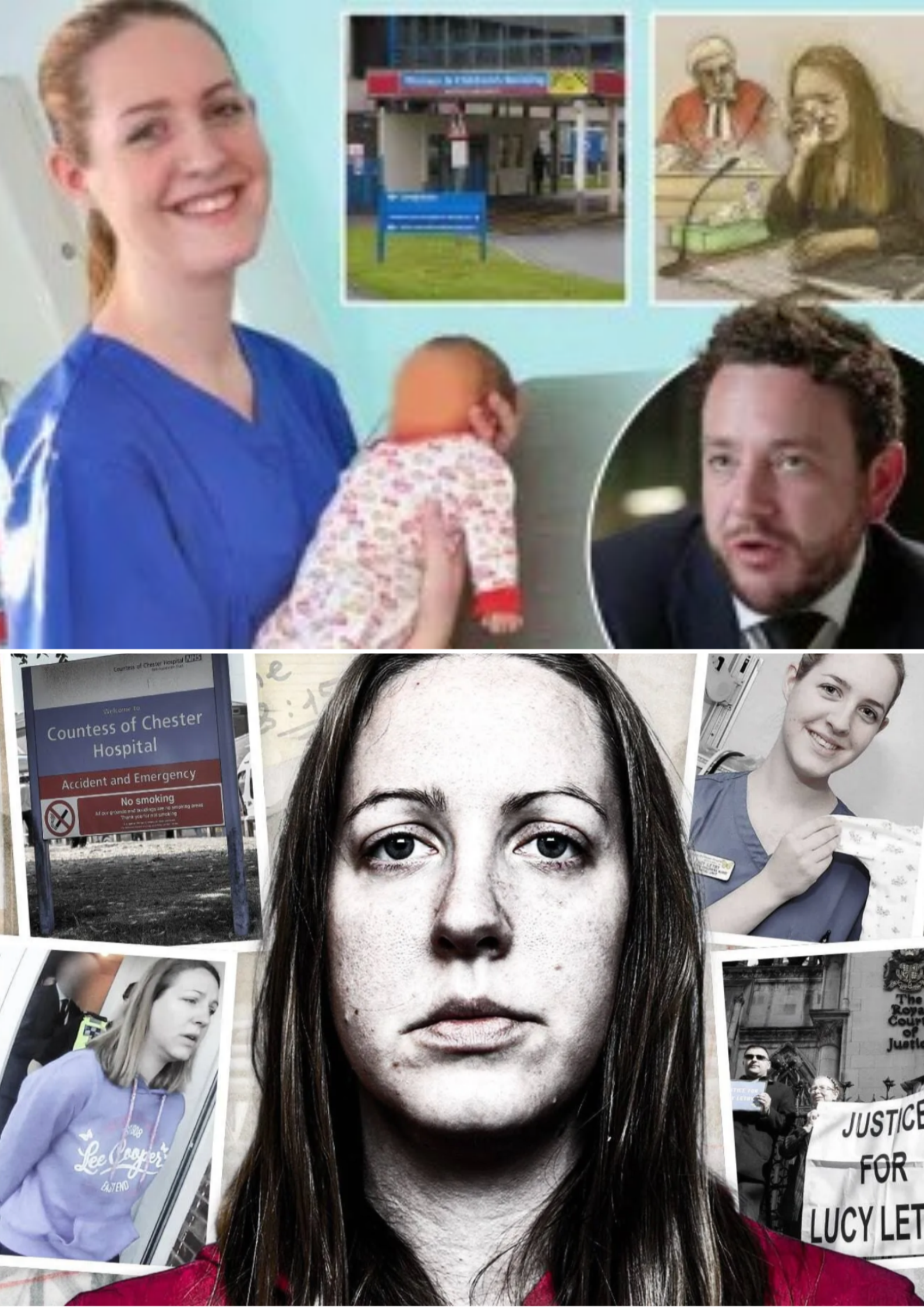
SERIAL KILLER OR POSSIBLE MISCARRIAGE OF JUSTICE? THE LUCY LETBY DEBATE CONTINUES
Lucy Letby remains one of Britain’s most closely watched criminal cases, with her convictions facing continued scrutiny as new expert evidence is considered by the Criminal Cases Review Commission.
The former neonatal nurse was convicted in 2023 of murdering seven babies and attempting to murder six others at the Countess of Chester Hospital in Cheshire.
In 2024, she was convicted of an additional count of attempted murder involving another baby, bringing the total to seven murder convictions and seven attempted-murder convictions. She received whole-life orders and remains in prison.
Letby maintains her innocence.
Her case has nevertheless generated an unusually intense debate over the medical and scientific evidence presented at her trials.
 QUESTIONS OVER THE MEDICAL EVIDENCE
A number of doctors, scientists and statisticians have publicly questioned aspects of the evidence used to establish how some of the babies died or became critically ill.
Among the most prominent challenges have concerned two babies whom prosecutors said were deliberately poisoned with insulin.
Experts working with Letby’s defence have argued that the laboratory evidence could have alternative explanations and that the babies’ medical conditions needed to be considered differently.
A panel of international medical experts has also argued that some of the collapses and deaths could have resulted from natural causes or medical complications rather than deliberate poisoning. These arguments are now among the material being considered in the ongoing CCRC review.
However, these challenges remain arguments advanced by experts supporting the defence, rather than findings that have overturned any conviction.
The distinction is important.
Letby’s convictions remain legally valid, and her previous appeal applications have not resulted in the convictions being quashed.
 TWO EXPERTS WITHDRAW FROM HER DEFENCE TEAM
The debate intensified in September 2026 when two experts who had previously contributed to Letby’s defence case withdrew from her team.
Engineering expert Helen Shannon and bioengineering professor Geoff Chase said they continued to stand by their assessment that it was “very unlikely” that two babies had been poisoned with insulin.
However, they said they could not support some other arguments subsequently being advanced by the defence.
In a letter to the CCRC, they described some of those arguments as inconsistent with available evidence, science and established physiology.
Letby’s barrister, Mark McDonald, rejected the suggestion that the development undermined the wider case.
He said the defence had evidence from experts in insulin, endocrinology and laboratory medicine that, in his view, raised fundamental questions about the scientific evidence relied upon at trial.
The dispute demonstrates how sharply divided the expert debate surrounding the case remains.
WHAT ABOUT THE HOSPITAL?
Another major issue concerns the conditions inside the Countess of Chester Hospital’s neonatal unit.
The babies involved were medically vulnerable, and the unit was experiencing significant pressures during the period covered by the criminal cases.
Doctors raised concerns about an unusual increase in collapses and deaths.
The Thirlwall Inquiry, established to examine what happened at the hospital, published its final report on September 15, 2026.
But the inquiry’s findings need to be understood in their proper context.
It was not an appeal court, and its job was not to determine whether Letby was guilty or innocent.
Instead, it examined hospital management, safeguarding, clinical governance and the experiences of the families involved.
THIRLWALL INQUIRY FINDS MAJOR MANAGEMENT FAILURES
Lady Justice Kathryn Thirlwall concluded that there had been profound failures in management, governance and safeguarding at the hospital.
Her report said there had been a “complete failure to protect babies” and found that some collapses and deaths could have been prevented had appropriate safeguarding procedures been followed.
The inquiry also found that senior management failed to respond adequately when doctors raised concerns and that there was a prolonged delay in involving the police.
However, the inquiry did not overturn the criminal convictions.
Nor did it conclude that Letby was wrongly convicted.
Instead, it examined how hospital authorities responded to concerns and what lessons should be learned to prevent similar failures in the future.
THE INSULIN QUESTION
The insulin evidence remains one of the most debated parts of the case.
Letby’s defence has argued that the blood-test results relied upon by prosecutors should be reconsidered.
But the Thirlwall Inquiry examined those issues and did not find evidence that the relevant testing equipment was improperly calibrated or that the testing process itself was defective.
The inquiry also considered alternative explanations involving infection, including concerns about pseudomonas bacteria in the neonatal unit.
It found no evidence that pseudomonas played a role in the deaths examined by the inquiry.
Those findings have therefore become an important counterpoint to some of the arguments being circulated by Letby’s supporters.
THE CCRC IS STILL REVIEWING THE CASE
The Criminal Cases Review Commission, the independent body responsible for investigating potential miscarriages of justice in England, Wales and Northern Ireland, is currently reviewing Letby’s convictions.
The CCRC received a preliminary application in February 2025.
Additional expert reports and submissions were submitted throughout 2025 and into January 2026.
The commission has stressed that its role is not to decide whether Letby is innocent or guilty.
Instead, it considers whether new evidence or legal arguments create a real possibility that a conviction would not be upheld by an appeal court.
If the CCRC considers that threshold met, it can refer a conviction back to the Court of Appeal.
As of September 2026, no decision to refer Letby’s convictions back to the Court of Appeal has been announced.
A CASE STILL DIVIDING PUBLIC OPINION
The result is an unusual situation.
On one side are the jury verdicts, the subsequent court proceedings and the continuing legal validity of Letby’s convictions.
On the other are medical and scientific experts who have questioned particular aspects of the evidence and a defence team seeking to have those issues examined through the legal system.
The Thirlwall Inquiry has added another layer to the debate by documenting serious failures inside the hospital — while stopping short of making any finding that Letby was innocent.
The recent withdrawal of two defence experts has added further complexity.
Those experts continue to question the insulin evidence involving two babies, while distancing themselves from other arguments being advanced on Letby’s behalf.
WHAT HAPPENS NEXT?
For now, Lucy Letby remains in prison serving 15 whole-life orders.
Her convictions have not been overturned.
The CCRC’s review continues, and it will ultimately decide whether the material submitted by her legal team warrants referral to the Court of Appeal.
Until then, the competing interpretations of the medical evidence remain part of an ongoing legal and scientific debate — rather than a judicial finding that the convictions were either proved correct beyond further question or shown to be a miscarriage of justice.
The case therefore remains open to scrutiny, but its legal position is clear:
Lucy Letby remains convicted of seven murders and seven attempted murders, while her defence continues to seek a further examination of the evidence.