LUCY LETBY CASE: THE SCIENCE, THE VERDICT AND THE QUESTIONS THAT REFUSE TO GO AWAY
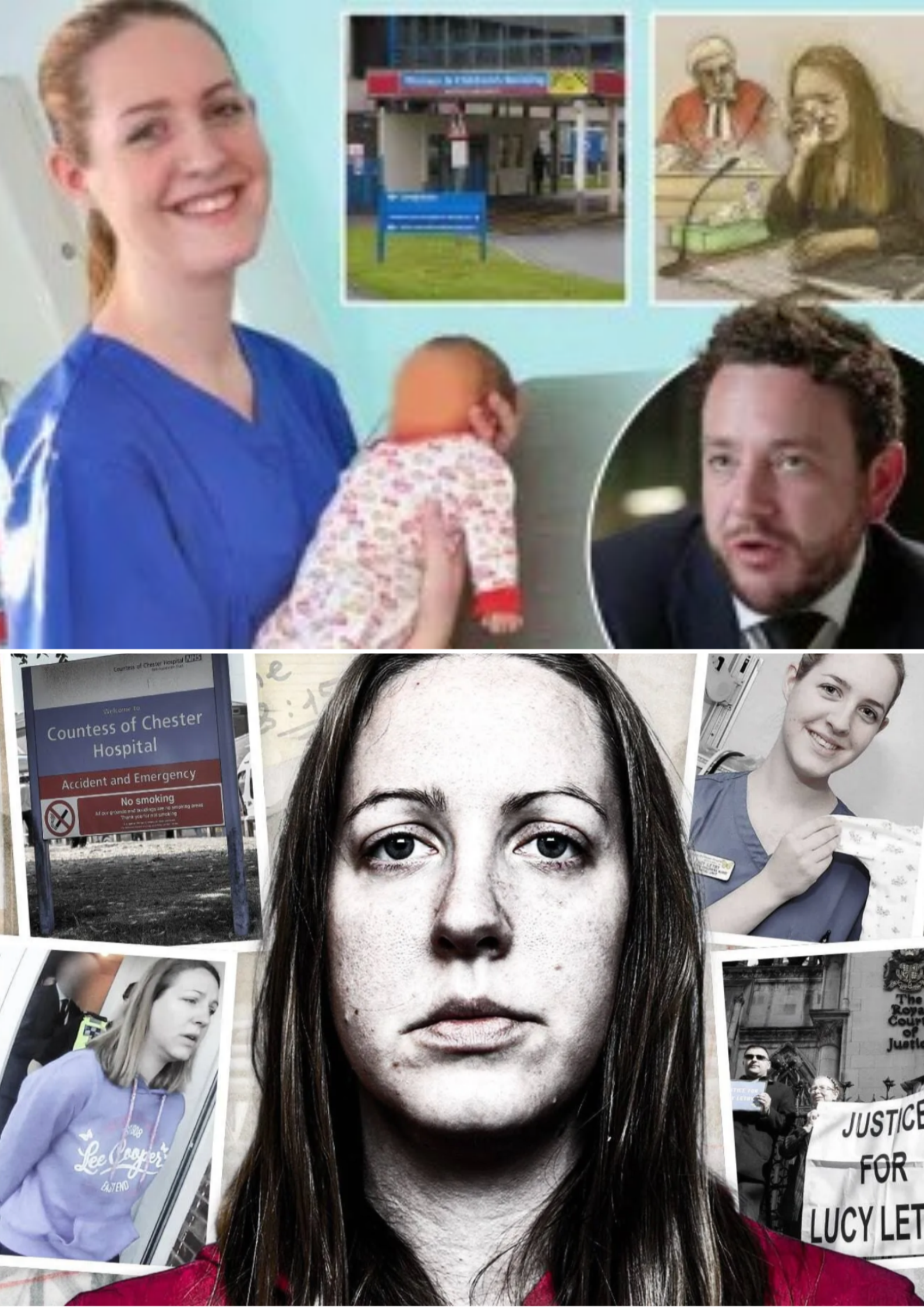
LUCY LETBY CASE: THE SCIENCE, THE VERDICT AND THE QUESTIONS THAT REFUSE TO GO AWAY
CHESTER, ENGLAND — More than three years after Lucy Letby was convicted of murdering babies at the Countess of Chester Hospital, one of Britain’s most closely watched criminal cases remains the subject of an intense scientific and legal debate.
Letby, a former neonatal nurse, was convicted in 2023 of murdering seven babies and attempting to murder six others. A retrial in 2024 resulted in a further attempted-murder conviction, bringing the total to seven murders and seven attempted murders.
She is serving 15 whole-life orders and continues to maintain her innocence. Her applications for permission to appeal were rejected by the Court of Appeal in 2024.
But the case has not disappeared from the courts.
The Criminal Cases Review Commission (CCRC) is examining new material submitted on Letby’s behalf to determine whether there is a real possibility that her convictions would not be upheld if the case returned to the Court of Appeal. The CCRC stresses that it does not decide whether someone is innocent or guilty.
At the same time, new disagreements among experts involved in the defence have added another layer to the debate.
 TWO EXPERTS WITHDRAW FROM LETBY’S DEFENCE TEAM
In September 2026, chemical engineering expert Helen Shannon and bioengineering professor Geoff Chase withdrew from Letby’s defence team.
The two experts had previously produced a roughly 100-page report challenging the prosecution’s interpretation of evidence concerning two babies who were alleged to have been deliberately poisoned with insulin.
Shannon and Chase said they continued to stand by their assessment that it was “very unlikely” that the two babies had been poisoned with insulin.
However, they said they could not support other arguments subsequently being advanced by Letby’s defence team.
In a letter to the CCRC, the experts said some of those arguments had fundamental problems and were inconsistent with available evidence, established science and physiology. They said continuing to associate themselves with arguments they considered scientifically unreliable raised serious professional and ethical concerns.
Their departure immediately became a major point of discussion surrounding Letby’s case.
But Letby’s barrister, Mark McDonald, rejected the suggestion that the development undermined the wider defence.
He argued that the defence case does not depend on one expert or one report and said other international specialists had raised fundamental concerns about the scientific evidence presented at trial.
McDonald also said the defence had evidence from experts in insulin, endocrinology and laboratory medicine that, in his view, challenges the conclusions reached by the prosecution’s experts.
 THE INSULIN EVIDENCE
One of the most significant scientific disputes concerns two babies identified during the trials as Baby 6 and Baby 12.
The prosecution case was that Letby deliberately administered insulin to the infants, causing dangerous drops in blood sugar.
The original trial evidence formed an important part of the prosecution’s case.
But subsequent experts working for the defence questioned whether the laboratory results and clinical circumstances necessarily demonstrated deliberate insulin poisoning.
Shannon and Chase have maintained their view that poisoning was very unlikely in those two cases.
That does not, however, mean a court has accepted their interpretation.
Their conclusions are part of new material being considered by the CCRC, which must independently assess all of the evidence before deciding whether the case should be referred back to the appellate courts.
WHAT ABOUT THE OTHER EVIDENCE?
The debate surrounding Letby’s convictions is not limited to insulin.
Her defence has raised questions about the interpretation of medical events surrounding babies who collapsed or died while she was working at the neonatal unit.
Some defence experts have argued that extremely premature and medically vulnerable babies could experience sudden deterioration because of natural disease, complications or problems with medical care.
They have also pointed to staffing pressures and weaknesses within the neonatal unit.
Those arguments remain disputed.
The original juries heard extensive medical evidence before reaching their verdicts, and the convictions remain legally valid.
The CCRC is now considering whether the new evidence and arguments reach the threshold required for a possible referral.
THE HOSPITAL’S FAILURES ARE A SEPARATE QUESTION
The debate became even more complicated after the publication of the Thirlwall Inquiry report in September 2026.
The independent inquiry examined what happened at the Countess of Chester Hospital before and during the period in which Letby was working on the neonatal unit.
Lady Justice Kathryn Thirlwall found serious failures in management, governance and safeguarding.
Her report described dysfunctional management, a gulf between hospital leadership and clinicians, and a failure to properly understand safeguarding responsibilities.
She concluded that concerns about Letby were not acted upon quickly enough and that safeguarding procedures should have been invoked once there was suspicion that babies might be being deliberately harmed.
The inquiry also concluded that some babies could have been protected or survived had hospital leaders acted sooner.
According to the report, three babies might have survived and seven others could have been protected if appropriate action had been taken earlier.
Thos