LUCY LETBY CASE: DOCTOR WHO HELPED CONVICT HER NOW SAYS HE IS ‘NOT CERTAIN’ MURDERS WERE COMMITTED
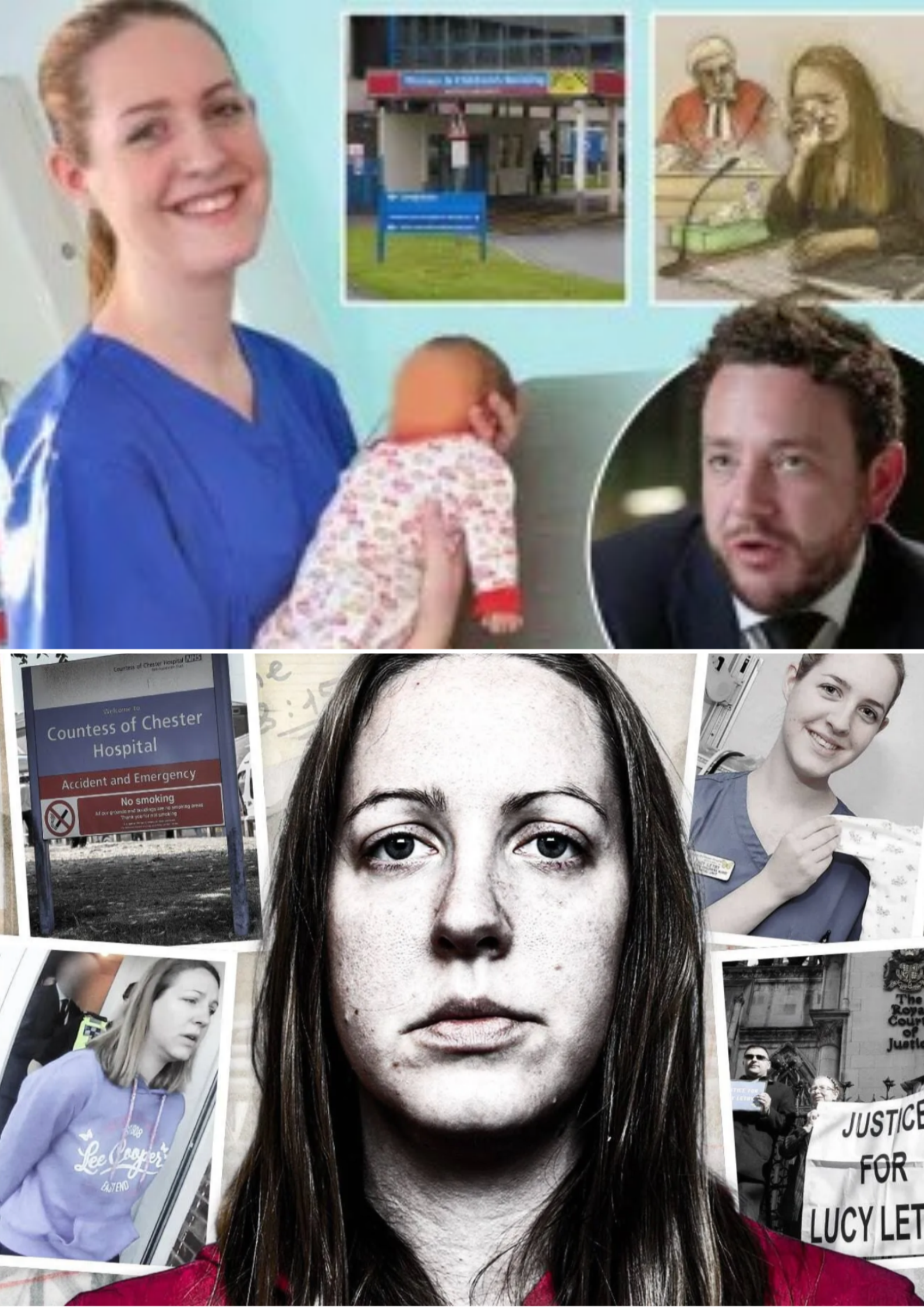
LUCY LETBY CASE: DOCTOR WHO HELPED CONVICT HER NOW SAYS HE IS ‘NOT CERTAIN’ MURDERS WERE COMMITTED
A retired paediatrician whose evidence helped convict Lucy Letby has stunned the public by admitting he is no longer certain that she murdered the babies — and saying a retrial could now be “the most appropriate thing for everyone.”
Dr John Gibbs was one of the consultants working at the Countess of Chester Hospital during the period covered by the criminal case.
He was among the doctors whose evidence helped prosecutors build the case against Letby, the former neonatal nurse who was convicted across two trials of murdering seven babies and attempting to murder seven others.
But in a new interview with The Sun, Dr Gibbs said that he was no longer certain Letby was responsible for the deaths.
Asked directly whether he remained certain that she had killed the babies, he answered: “No.”
His comments have added a dramatic new development to an already intensely contested case.
 ‘A VERY SMALL CONCERN’
Dr Gibbs did not say that he had concluded Letby was innocent.
Instead, he described holding “a very small concern” that there may not have been deliberate harm at all.
“If it wasn’t Letby, do I think someone else was harming them? No, I don’t,” he told The Sun.
He added that he believed there was now enough new material to justify reconsidering the convictions.
The retired doctor said a retrial could be “the most appropriate thing for everyone.”
He also acknowledged the profound distress that renewed questions about the case could cause the families of the babies involved.
However, he argued that concern for the families should not prevent new evidence from being examined.
 WHAT CHANGED?
Dr Gibbs’ comments came shortly after the publication of the Thirlwall Inquiry’s final report, which examined what happened at the Countess of Chester Hospital before and after concerns about babies collapsing and dying.
The inquiry found serious failures in hospital management, governance and safeguarding. Its official website describes the report as identifying “profound failure of management, governance and safeguarding.”
The inquiry itself was not a retrial of Lucy Letby and did not overturn her criminal convictions.
However, its findings have intensified scrutiny of how concerns about the neonatal unit were handled.
The inquiry’s findings also documented Dr Gibbs’ own earlier concerns.
By April 2016, the report says, his suspicions had begun to coalesce around the possibility that Letby could pose a danger and that some of the deaths might not have been natural.
He later told the inquiry that he regretted not going to police earlier.
 ‘I WISH WE HAD BEEN BRAVE ENOUGH’
Just days before his latest comments, Dr Gibbs spoke to the BBC following publication of the inquiry report.
He described the findings as “grim reading” and said he wished the consultants had been brave enough to follow their suspicions and escalate the matter to police earlier.
That earlier position is significant because it shows how dramatically the public debate around his evidence has developed.
At the time, Dr Gibbs and other doctors were concerned about a series of unexplained collapses and deaths on the neonatal unit.
The Thirlwall report found that concerns were not escalated quickly enough.
NEW QUESTIONS ABOUT THE SCIENCE
Dr Gibbs is not the only person raising questions about aspects of the evidence.
In September 2026, two experts who had been working with Letby’s defence withdrew from her legal team over concerns about the scientific credibility of some arguments being advanced on her behalf.
Chemical engineering expert Helen Shannon and bioengineering professor Geoff Chase said they continued to stand by their assessment that it was “very unlikely” that two babies had been poisoned with insulin.
However, they said they could not support other arguments being advanced by the defence because they considered them inconsistent with available evidence, science and established physiology.
Letby’s barrister, Mark McDonald, has maintained that new evidence from experts in insulin, endocrinology and laboratory medicine fundamentally undermines aspects of the scientific evidence relied upon at trial.
The disagreement illustrates why the scientific evidence remains a major part of the ongoing legal debate.
LETBY’S CONVICTIONS REMAIN IN PLACE
Despite Dr Gibbs’ change in certainty, Lucy Letby’s convictions have not been overturned.
She was convicted in 2023 of murdering seven babies and attempting to murder six others.
At a second trial in 2024, she was convicted of another attempted murder, bringing the total number of attempted-murder convictions to seven.
She is serving 15 whole-life orders.
Her appeals have been unsuccessful, while the Criminal Cases Review Commission has been examining material submitted on her behalf.
The CCRC has not announced that Letby’s convictions have been quashed or that a retrial has been ordered.
POLICE INVESTIGATION INTO OTHER ALLEGATIONS
Separately, Cheshire Constabulary has previously investigated additional allegations involving other babies.
In January 2026, the Crown Prosecution Service announced that it would not charge Letby with further offences after reviewing evidence relating to nine babies.
Police said at the time that the decision did not affect or undermine her existing convictions and that a separate investigation into possible corporate and gross-negligence manslaughter at the hospital remained ongoing.
That distinction is important.
The existence of continuing investigations or criticism of hospital management does not, by itself, establish that Letby’s convictions were unsafe.
NO CONFIRMED ‘HIDDEN PRESSURE’
Dr Gibbs’ latest comments have inevitably prompted speculation about why his position has changed.
But there is currently no reliable public evidence that he was subjected to secret pressure, coercion or behind-the-scenes influence that forced him to change his mind.
What is documented is that the case has faced renewed scrutiny following the Thirlwall Inquiry, new expert analysis and continuing legal challenges.
Dr Gibbs himself has pointed to what he considers potentially compelling new evidence rather than identifying any secret pressure as the reason for his change of position.
A CASE THAT REMAINS DEEPLY DIVISIVE
The latest intervention from a doctor who once gave evidence supporting the prosecution is likely to intensify public debate over one of Britain’s most controversial criminal cases.
For the families of the babies, however, the renewed dispute comes with enormous emotional consequences.
Dr Gibbs acknowledged that reality while maintaining that new evidence should still be examined.
The legal position remains unchanged: Lucy Letby remains convicted and imprisoned for the murders and attempted murders for which juries found her guilty.
At the same time, one of the doctors whose evidence helped establish the prosecution case is now publicly saying that he is “not” certain she committed the murders.
Whether that change of view will have any impact on Letby’s ongoing legal challenges remains to be determined.