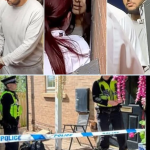
DNA BREAKTHROUGH LED TO DAVID BOYD’S CONVICTION MORE THAN 30 YEARS AFTER NIKKI ALLAN’S MURDER

DNA BREAKTHROUGH LED TO DAVID BOYD’S CONVICTION MORE THAN 30 YEARS AFTER NIKKI ALLAN’S MURDER
SUNDERLAND, England — More than three decades after 7-year-old Nikki Allan was murdered, advances in forensic science helped investigators reopen the case and build the evidence that ultimately led to David Boyd’s conviction.
Boyd was convicted of Nikki’s murder in May 2023, more than 30 years after the little girl disappeared from the Wear Garth flats in Sunderland.
His application for permission to appeal his conviction and sentence was later refused in October 2024, leaving his life sentence in place.
 NIKKI DISAPPEARED IN 1992
Nikki Allan was seven years old when she disappeared on the evening of October 7, 1992.
She was known to Boyd, who lived in the same area and was the boyfriend of her babysitter.
Prosecutors said Boyd led Nikki toward the abandoned Old Exchange building, where she was attacked and killed.
Her body was later discovered in the basement.
The murder launched a major investigation, but the case would remain unresolved for decades.
THE FIRST INVESTIGATION ENDED WITHOUT A CONVICTION
The original investigation focused on another local man, George Heron.
Heron was charged with Nikki’s murder but was acquitted in 1993.
With no conviction secured, the case remained one of the area’s most enduring unsolved murders.
Nikki’s family continued to live with unanswered questions as investigators later returned to the evidence with the benefit of advances in forensic science.
DNA HELPED REOPEN THE CASE
A major development came when forensic examination of evidence from the original investigation produced a DNA link to Boyd.
The discovery contributed to a huge reinvestigation of Nikki’s murder.
Investigators examined hundreds of DNA samples, reviewed more than 1,000 witness statements and worked through thousands of documents as they reconstructed the events surrounding Nikki’s disappearance and death.
The renewed investigation eventually resulted in Boyd being prosecuted for the murder more than three decades after Nikki was killed.
DNA evidence can be particularly important in historic investigations because improvements in forensic techniques can allow investigators to obtain or interpret information that was not available when the original case was investigated.
 BOYD CONVICTED IN 2023
On May 12, 2023, Boyd was convicted of Nikki Allan’s murder.
He was subsequently sentenced to life imprisonment, with a minimum term of 29 years, subject to the relevant credit for time already spent in custody.
The conviction finally brought a legal conclusion to a case that had begun in 1992.
But Boyd later sought permission to challenge both his conviction and sentence.
In October 2024, that application was refused, leaving the conviction and sentence in place.
Under England and Wales’ criminal appeals system, a defendant convicted in the Crown Court must obtain permission before an appeal can proceed. If permission is granted, the Court of Appeal can uphold a conviction, overturn it or order a retrial.
A FAMILY WAITED MORE THAN 30 YEARS
For Nikki’s family, the case was never simply a legal investigation.
It was the loss of a seven-year-old girl whose life ended before she had the chance to grow up.
For decades, her relatives had to live without knowing who had killed her.
The eventual conviction came after years of unanswered questions, an unsuccessful original prosecution and a new investigation that examined evidence using modern forensic techniques.
THE LEGACY OF A 1992 MURDER
The Nikki Allan case demonstrates how historic investigations can be revisited as forensic technology develops.
Evide