‘GHOST PLATES’ EXPOSED: HOW ILLEGAL NUMBER PLATES ARE HELPING DRIVERS ESCAPE CAMERAS AND POLICE
‘GHOST PLATES’ EXPOSED: HOW ILLEGAL NUMBER PLATES ARE HELPING DRIVERS ESCAPE CAMERAS AND POLICE
A growing crisis involving illegal vehicle number plates is exposing major weaknesses in Britain’s road-camera system, with investigators finding that so-called “ghost plates” can make vehicles difficult for automatic recognition systems to identify.
A new investigation has revealed how easily some illegal number plates can be obtained in the UK — raising concerns among police, road-safety officials and families whose lives have been devastated by incidents involving vehicles carrying cloned or altered registrations.
The investigation comes as authorities increase efforts to tackle a problem that can range from avoiding parking and speeding penalties to concealing vehicles involved in serious organised crime.
 WHAT ARE “GHOST PLATES”?
The term “ghost plate” generally refers to an illegally altered registration plate designed to interfere with Automatic Number Plate Recognition, or ANPR, cameras.
Britain has one of the world’s largest networks of ANPR cameras. According to the BBC investigation, around 14,000 camera sites capture approximately 100 million number plates every day.
The technology normally uses infrared imaging to read the characters displayed on a vehicle’s registration plate.
Ghost plates are designed to interfere with that process.
Special reflective materials or transparent films can cause some or all of the characters to become difficult or impossible for conventional ANPR systems to read.
From the perspective of a person looking directly at the vehicle, the registration may appear normal.
To an infrared camera, however, parts of the plate can appear washed out or unreadable.
 A NEW CAMERA SYSTEM REVEALS THE SCALE
The extent of the problem became clearer after a new camera system capable of identifying ghost plates was tested on roads in southeast England.
At one test location near the Dartford Crossing, the technology detected an average of more than 1,000 suspected ghost plates a day over several months.
At another location near the M25, detections reportedly increased from around 1,000 per day to almost 2,000 per day.
Near Folkestone, close to the Eurotunnel, another test site was identifying more than 400 plates a day.
The figures do not mean that all of these vehicles were involved in criminal activity. But they demonstrate how frequently plates designed to interfere with conventional camera systems may be appearing on British roads.
CLONED PLATES CREATE A DIFFERENT PROBLEM
Ghost plates are only one part of the issue.
Another major problem is plate cloning.
A cloned plate copies the registration number belonging to a legitimate vehicle and places it on another vehicle.
That can create serious problems for innocent motorists.
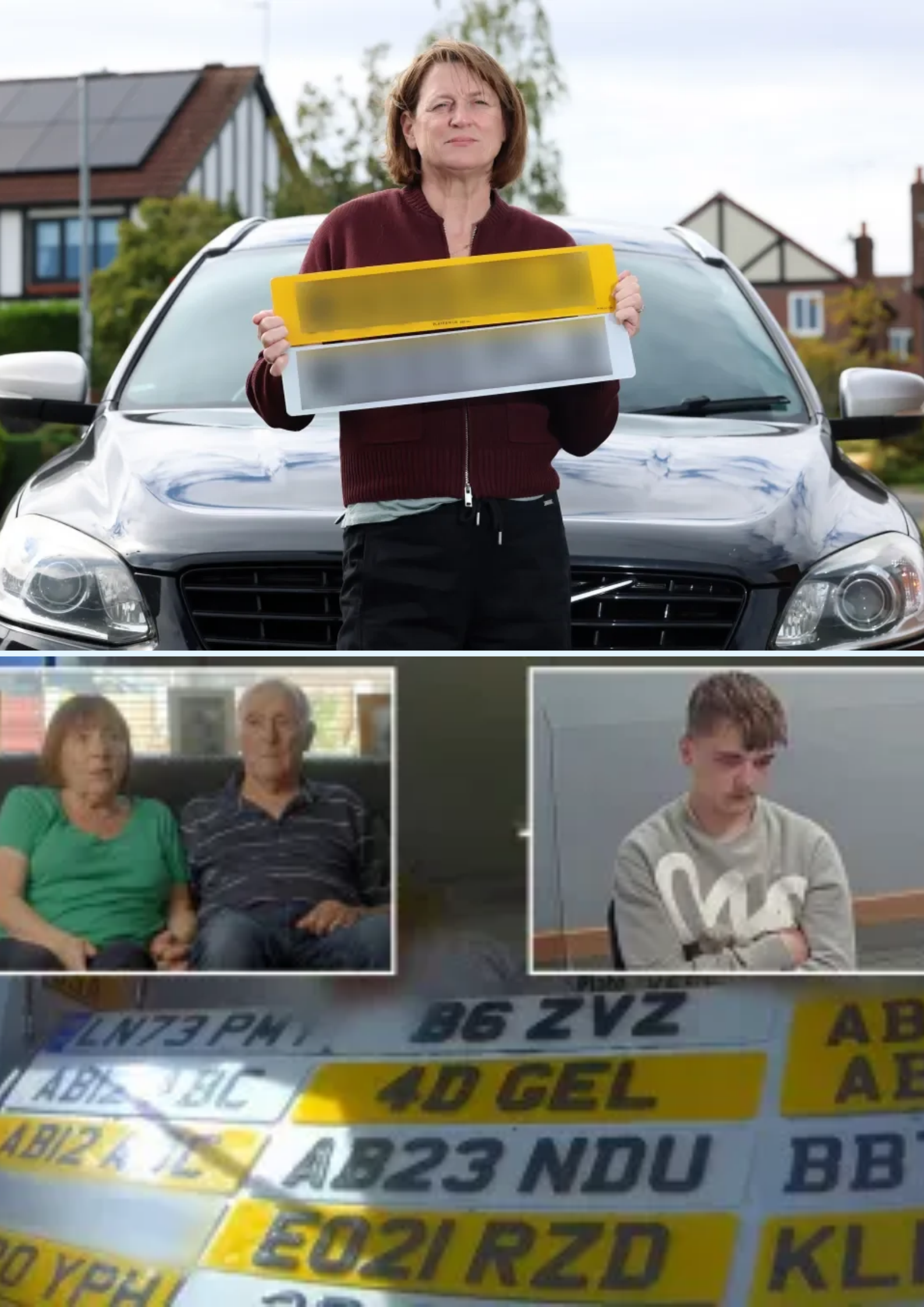
One example highlighted by The Sun involved a 90-year-old man named Trevor, who began receiving parking penalty notices despite living hundreds of miles away from the locations where the alleged offences occurred.
Images accompanying the notices showed another vehicle apparently carrying his registration number.
He reportedly received 13 notices totaling more than £1,800 before the situation was eventually resolved with help from his MP and Citizens Advice.
For victims of cloning, the problem is not simply financial.
They can suddenly find themselves having to prove that their vehicle was nowhere near the location of an alleged offence.
THE DEADLY CONSEQUENCES
The investigation has also highlighted cases where illegal or cloned plates were associated with extremely serious road incidents.
One example involved 81-year-old Graham Slinn, who was struck while crossing a pedestrian crossing in South Yorkshire in 2025.
The driver, 20-year-old Cain Byrne, was reportedly driving at around 80 mph and was later found to have been using cloned registration plates.
Police eventually identified him after examining hours of CCTV footage. He was sentenced to 11 years and six months in prison for offences including causing death by dangerous driving, driving while disqualified and driving without insurance.
Graham’s family later described the devastating effect his death had on them.
His daughter said the family had been preparing to celebrate her parents’ 60th wedding anniversary.
Instead, they were preparing for a funeral.
THE A66 TRAGEDY
Another case has brought the issue into even sharper focus.
Two police officers, PC Matthew Blades, 37, and PC Tom Clough, 38, died in a devastating collision on the A66 in Middlesbrough this year.
Five young men travelling in the other vehicle also died.
Police said the vehicle involved was believed to have been displaying cloned plates.
Investigators have linked the wider incident to concerns surrounding illegal registrations and dangerous driving, although the presence of cloned plates should not itself be treated as proof that it caused the collision.
The incident has become one of the cases cited in the wider debate over whether drivers may behave more recklessly when they believe cameras cannot identify them.
HOW EASY IS IT TO BUY AN ILLEGAL PLATE?
One of the most troubling findings from the investigation concerns how easily some people can obtain number plates without the documentation required by law.
Undercover reporters visited businesses and markets to investigate the supply chain.
At one market in Essex, investigators found that some sellers were willing to provide plates designed to interfere with camera systems.
In one case, a plate was reportedly purchased for £40 without identification or proof that the buyer was entitled to use the registration.
The transaction reportedly took only around eight minutes.
The investigation found that there are more than 34,000 businesses registered with the DVLA to supply number plates.
Yet enforcement resources remain limited.
According to the BBC investigation, only 23 percent of suppliers were audited over the previous five years, while just two suppliers had been prosecuted since 2020.
The DVLA has said it is strengthening compliance and enforcement.
POLICE SAY ILLEGAL PLATES ARE USED BY CRIMINALS
Law-enforcement officials say illegal registrations can be particularly attractive to criminals because they make vehicles more difficult to identify and trace.
Cloned plates can be placed on stolen vehicles or used to avoid enforcement cameras.
Ghost plates can interfere with systems used for speeding enforcement, congestion charges and clean-air-zone monitoring.
The National Roads Policing Coordination Centre has warned that illegal plates are also associated with organised criminal activity, including the movement of illegal goods.
During a West Yorkshire operation in July, police stopped 183 vehicles and made arrests for offences including dangerous driving, theft and breach of bail.
Fourteen vehicles were seized for offences including driving while disqualified or without insurance, while six cloned vehicles were also seized.
THE GOVERNMENT IS TESTING NEW TECHNOLOGY
Authorities are now attempting to close the gap.
The National Roads Policing Coordination Centre has been coordinating a national crackdown, supported by the Department for Transport.
Police have been testing specialist technology, including infrared goggles capable of revealing plates that appear normal to the human eye but behave differently under infrared light.
The government is also developing a national centre intended to improve intelligence-sharing between police forces and strengthen enforcement against illegal number plates.
Roads Minister Justin Madders has said the government is considering stronger action, including improved enforcement and technology.
The government is also consulting on stronger penalties and reviewing number-plate standards as part of its wider road-safety strategy.
WHY THE PROBLEM MATTERS
ANPR technology is an important tool for British law enforcement.
Every day, millions of vehicle registrations are captured by cameras across the country.
Those systems can help police locate stolen vehicles, investigate serious offences and enforce road laws.
But the effectiveness of the system depends on one basic requirement:
The camera has to be able to read the plate.
When drivers deliberately alter, conceal or clone registrations, that link between a vehicle and its official identity can break down.
For an ordinary motorist whose registration has been cloned, the consequences can mean months of anxiety and repeated attempts to prove they were not responsible for offences.
For police, the consequences can be even more serious when an untraceable vehicle is connected to dangerous driving or organised crime.
A SYSTEM UNDER PRESSURE
The latest investigations do not suggest that every driver using an illegal plate is involved in serious crime.
But they do reveal a significant enforcement gap.
Illegal plates can apparently be obtained relatively easily, while the number of businesses supplying plates vastly exceeds the resources available to inspect them.
Police and government officials are now trying to close that gap through stronger enforcement, new technology and better intelligence-sharing.
The central question is whether those measures can move quickly enough to keep pace with drivers who deliberately try to stay invisible.
For now, Britain’s road cameras may be watching millions of vehicles every day.
But investigators have discovered that some drivers have learned how to make their number plates disappear from the cameras that are supposed to identify them.