DAME ESTHER RANTZEN D!ES AT 86 — HER FINAL GOODBYE AND THE LEGACY SHE LEAVES BEHIND
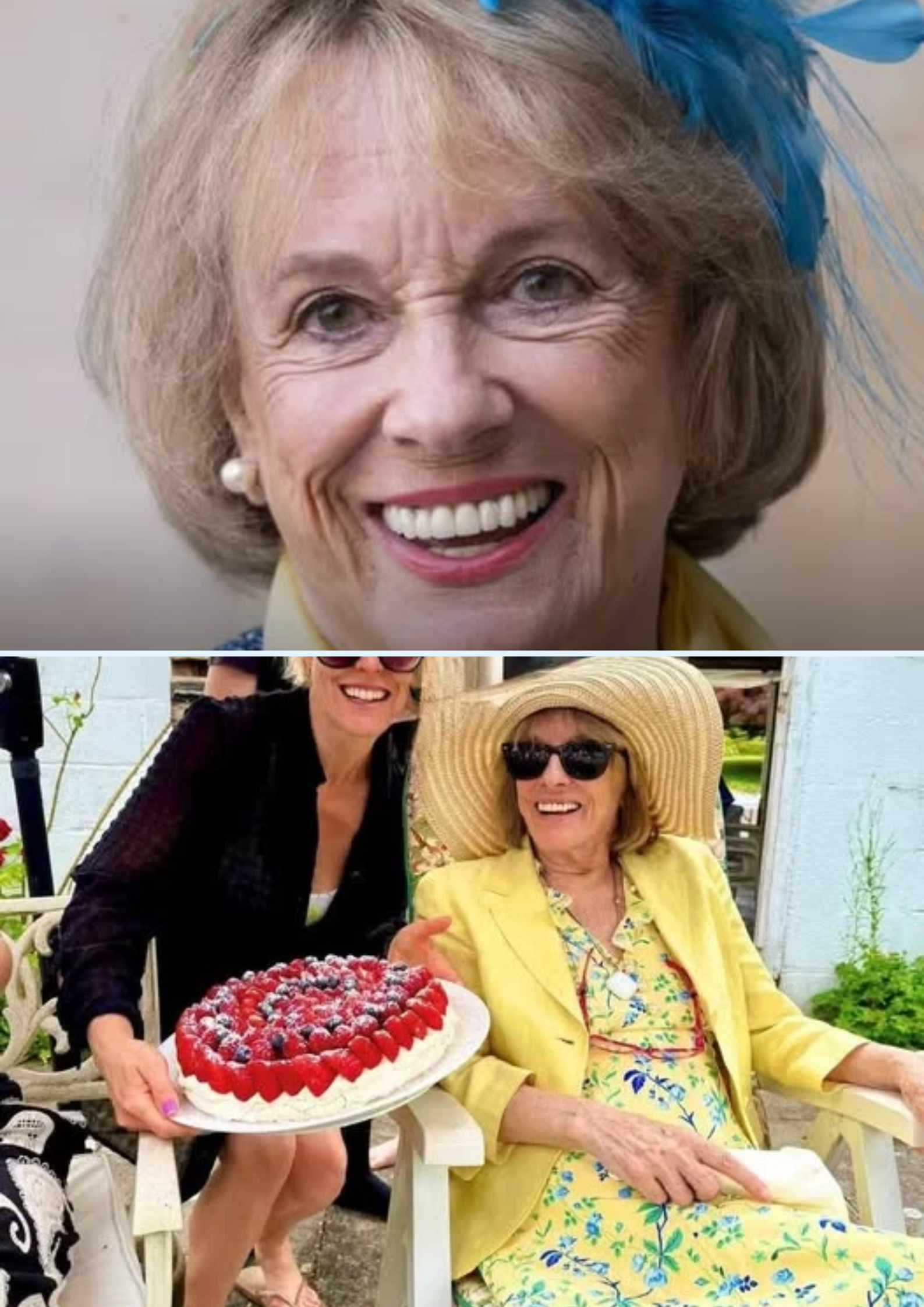
DAME ESTHER RANTZEN DIES AT 86 — HER FINAL GOODBYE AND THE LEGACY SHE LEAVES BEHIND
Dame Esther Rantzen, the much-loved British broadcaster and campaigner who devoted much of her life to helping children, older people and those facing the end of life, has died at the age of 86.
Her three children, Miriam, Rebecca and Joshua Wilcox, confirmed her death in a statement released on Wednesday.
“Our adored mother Dame Esther Rantzen died today,” they said, describing her as “our sunshine” and saying her legacy of compassion and understanding would live on through the charities she founded and the people whose lives she touched.
The family said they were grateful that their mother was “finally at rest” with her beloved husband, television producer Desmond Wilcox, who died in 2000.
But they said they would miss her “immeasurably.”
“She was the most wonderful mother to us three children and a cherished grandmother to her five treasured grandchildren,” they said.
The family also asked for privacy as they grieve.
 A FINAL MESSAGE FROM ESTHER
Alongside the announcement of her death, her children released a personal message Esther had written before she died.
It was intended as a farewell to her friends, colleagues and supporters.
In it, Esther apologized that she could not personally thank everyone who had supported her throughout her life.
She wrote that she had been “immensely lucky” to have enjoyed friendships and professional guidance that had helped her live what she described as a long and happy life.
She then asked those who wished to remember her to consider making a charitable donation.
Among the causes she named were Dignitas in Switzerland, Oakhaven Hospice in Lymington, which had cared for her, and Cats Protection.
Her final words carried the tone of someone saying goodbye while still trying to offer something back to the people who had followed her life and career.
“Sadly, all good things come to an end, as they say,” she wrote.
She ended by saying:
“Perhaps I will see you eventually, on the other side. I do hope so.”
 A THREE-YEAR BATTLE WITH LUNG CANCER
Rantzen announced in 2023 that she had been diagnosed with stage four lung cancer.
She spoke unusually openly about her illness, treatment and fears surrounding the final stage of life.
Rather than keeping her diagnosis private, she used her public platform to discuss what it meant to face a terminal illness and to question whether people in Britain should have greater control over the circumstances of their deaths.
She became one of the most prominent public advocates for changing assisted-dying laws in England and Wales.
Rantzen had joined the Swiss assisted-dying organisation Dignitas and had previously spoken about travelling to Switzerland if her condition became unbearable.
But in September 2026, she revealed that she had become too physically fragile to make the journey.
She said that when she was physically strong enough to travel, her life was not yet unbearable and she was still able to enjoy time at her home in the New Forest.
By the time her condition deteriorated sufficiently for her to consider the option seriously, she said she was no longer physically capable of making the trip.
She continued to speak publicly about the issue even as her own health declined.
HER CAMPAIGN FOR CHOICE AT THE END OF LIFE
Rantzen’s advocacy came at a time of intense debate in Britain over assisted dying.
She argued that people facing terminal illness should have greater choice over how they approach the end of their lives.
Her own experience gave the campaign a deeply personal dimension.
Earlier this month, after becoming too frail to travel to Switzerland, she spoke about her fear of dying badly rather than simply her fear of death.
She also criticized what she regarded as the difficult legal position faced by families and loved ones who might want to help someone at the end of life.
A parliamentary attempt to change the law was defeated in September, shortly before her death.
Rantzen remained publicly supportive of reform despite knowing that any change would come too late for her personally.
THE WOMAN WHO CHANGED BRITISH TELEVISION
Long before she became associated with the assisted-dying debate, Rantzen had already established herself as one of Britain’s most recognizable broadcasters.
She became nationally famous as the presenter of “That’s Life!”, the BBC consumer affairs programme that ran from 1973 until 1994.
The programme combined investigations, consumer reporting, humour and entertainment.
At its peak, it attracted audiences of more than 20 million viewers.
But “That’s Life!” was about more than consumer complaints.
Under Rantzen’s leadership, the programme increasingly tackled difficult social issues that were rarely discussed openly on mainstream television.
One of the most important was child abuse.
In 1986, an episode focusing on childhood sexual abuse generated an overwhelming response.
Children contacted the programme to talk about experiences they had often kept secret.
The scale of the response convinced Rantzen that Britain needed a permanent service where children could seek help privately.
That idea became Childline.
THE CREATION OF CHILDLINE
Childline was launched in 1986 as a free, confidential helpline for children and young people in distress.
It became one of the most important achievements of Rantzen’s life.
According to the NSPCC, which now operates Childline, the service has supported children more than six million times through counselling sessions since its creation. Its model has also been replicated internationally.
The organisation said Rantzen’s contribution was about more than creating a telephone service.
She helped give children a voice at a time when many forms of abuse were rarely discussed publicly.
The NSPCC described her empathy, energy and determination as central to Childline’s development.
Her legacy therefore extended far beyond television.
For generations of young people, Childline became a place where they could speak to someone when they felt unable to speak to anyone around them.
SHE ALSO FOUGHT LONELINESS AMONG OLDER PEOPLE
Rantzen’s campaigning did not stop with children.
In 2012, she launched The Silver Line, a free service designed to support older people experiencing loneliness and isolation.
The initiative reflected another issue that had become important to her: the need to ensure that vulnerable people were not forgotten simply because they were older.
Her charitable work supporting both children and older people was formally recognized when she was made a Dame in 2015.
She continued campaigning and fundraising well into later life.
Even after her cancer diagnosis, she remained publicly engaged with causes involving children, older people and people facing terminal illness.
A LIFE IN BROADCASTING
Rantzen began her BBC career in 1963 as a radio studio manager.
She later moved into television research before becoming an on-screen presenter.
After “That’s Life!” ended in 1994, she continued working in television, including presenting her own BBC Two programme, “Esther.”
She also appeared on programmes including “Strictly Come Dancing” and “I’m a Celebrity… Get Me Out of Here!”
She received numerous honours during her career, including an OBE, the BAFTA Richard Dimbleby Award for factual programming and a lifetime achievement award from Women in Film and Television.
But colleagues and friends frequently remembered something beyond the awards.
They remembered her ability to use television as a platform for people who might otherwise have gone unheard.
“SHE WAS OUR SUNSHINE”
In their final tribute, Rantzen’s children remembered her not primarily as a television star or campaigner, but as their mother.
They described her “endless capacity for joy,” her ability to comfort people through heartbreak and her “beautiful way with words.”
They also remembered her as a devoted grandmother to her five grandchildren.
Their statement reflected the tension between knowing that their mother had lived a long and remarkable life and the pain of losing her.
They said they had been “so lucky for so long,” but added that however much time they had with her, it could never have been enough.
The family also thanked the many people who had written to Esther, shared their experiences with her and worked alongside her throughout her career.
A LEGACY BUILT AROUND OTHER PEOPLE
Rantzen’s life was unusual because so much of her public career was built around other people’s stories.
She used television to investigate problems affecting ordinary families.
She created Childline after hearing from vulnerable children.
She established the Silver Line after recognizing the scale of loneliness among older people.
And in her final years, she used her own terminal illness to speak about the experiences of people facing the end of life.
The NSPCC said her work had changed countless lives and that Childline would remain a lasting testament to her vision.
Her death was followed by tributes from broadcasters, campaigners, charities and political figures.
British Prime Minister Andy Burnham said that through decades of campaigning, including the founding of Childline and The Silver Line, she had “changed countless lives” and given a voice to people who often went unheard.
“PERHAPS I WILL SEE YOU EVENTUALLY”
In the farewell message released after her death, Esther did not leave behind a long list of achievements.
Instead, she thanked the people who had shared her life.
She thanked them for the friendship, support, advice and laughter.
She suggested charitable donations rather than flowers or gifts.
And then she said goodbye.
“Sadly, all good things come to an end,” she wrote.
“Perhaps I will see you eventually, on the other side. I do hope so.”
Dame Esther Rantzen is survived by her three children — Miriam, Rebecca and Joshua Wilcox — and five grandchildren.
She is now reunited with her husband, Desmond Wilcox.
But through Childline, The Silver Line and the countless people who encountered her work, the voice of the woman who spent much of her life speaking up for others is likely to remain for generations to come.