LUCY LETBY CASE FACES NEW QUESTIONS AS MEDICAL EVIDENCE IS REEXAMINED — BUT HER CONVICTIONS STILL STAND
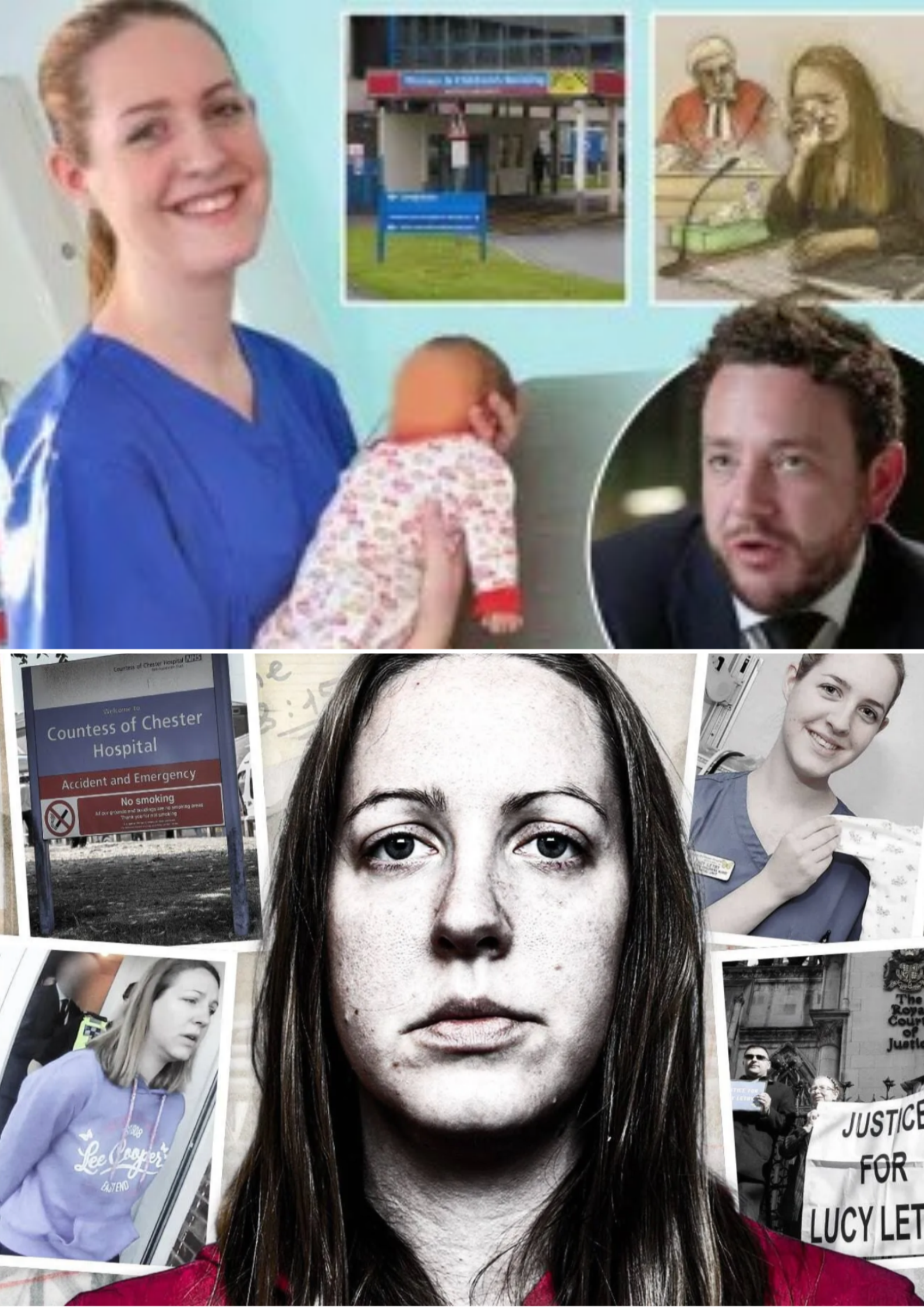
LUCY LETBY CASE FACES NEW QUESTIONS AS MEDICAL EVIDENCE IS REEXAMINED — BUT HER CONVICTIONS STILL STAND
More than three years after Lucy Letby was convicted of murdering seven babies and attempting to murder seven others, her case is once again at the centre of intense debate.
New medical evidence submitted on behalf of the former neonatal nurse is being examined by the Criminal Cases Review Commission (CCRC), while several experts have publicly questioned aspects of the scientific evidence that was presented at her trials.
At the same time, other experts have warned that some arguments being advanced by Letby’s defence are not scientifically credible.
The result is a case where major questions about the medical evidence remain contested — while Letby’s convictions continue to stand.
 LETBY CONTINUES TO DENY THE OFFENCES
Letby was convicted in 2023 of murdering seven babies and attempting to murder seven others at the Countess of Chester Hospital between June 2015 and June 2016.
She is serving 15 whole-life prison terms.
The Court of Appeal rejected her attempt to challenge the convictions in 2024, meaning the convictions remain legally valid.
However, her legal team subsequently submitted a substantial body of new material to the CCRC, arguing that important medical and scientific evidence used during the trials should be reconsidered.
THE CCRC IS NOW EXAMINING NEW EVIDENCE
The CCRC received a preliminary application on Letby’s behalf in February 2025.
Since then, the commission has received expert reports, further submissions and defence material.
In its February 2026 statement, the CCRC stressed that its role is not to decide whether Letby is innocent or guilty.
Instead, it investigates potential miscarriages of justice and can refer a case back to an appeal court if it concludes there is a real possibility that a conviction would not be upheld.
That process remains ongoing.
There has therefore been no official decision by the CCRC that Letby was wrongly convicted.
 INTERNATIONAL EXPERTS HAVE CHALLENGED PARTS OF THE PROSECUTION CASE
One of the most significant developments has involved a group of international medical experts led by Canadian neonatologist Dr Shoo Lee.
The group has argued that some of the babies’ collapses and deaths could have resulted from natural causes or inadequate medical care rather than deliberate poisoning or other intentional harm.
Their arguments have been submitted as part of the material being considered by the CCRC.
Particular attention has focused on two babies whose cases involved allegations that insulin had been deliberately administered.
Experts supporting Letby’s appeal have questioned whether the laboratory evidence was sufficient to establish deliberate insulin poisoning.
Letby’s barrister Mark McDonald has said that evidence from international specialists in insulin, endocrinology and laboratory medicine raises fundamental questions about the scientific basis of those convictions.
BUT NOT ALL EXPERTS AGREE
The picture is far from unanimous.
In September 2026, two scientists who had previously worked with Letby’s defence team withdrew from it.
Chemical engineering expert Helen Shannon and bioengineering professor Geoff Chase said they continued to stand by their assessment that it was very unlikely that two babies had been poisoned with insulin.
However, they said they could not support other arguments subsequently being advanced by the defence because, in their view, those arguments were inconsistent with available evidence, science and established physiology.
Their departure illustrates the continuing scientific disagreement surrounding the case.
It also means that claims circulating online that there is now a universal expert consensus proving Letby’s innocence would be inaccurate.
WHAT ABOUT THE “SUPPRESSED” RECORDS?
Claims have circulated online suggesting that hidden coroner records or undisclosed laboratory information definitively prove that the causes of death used in the prosecution were physically impossible.
Current reliable sources do not establish that claim.
The CCRC has confirmed that it has received extensive new expert material and is examining it, but it has not announced that previously “suppressed” records prove the convictions were unsafe.
The commission has also repeatedly emphasized that it must reach its own evidence-based decision independently.
Similarly, there is no reliable evidence that the Crown Prosecution Service is “terrified” of releasing hidden laboratory data.
Those descriptions should therefore be treated as speculation rather than established fact.
THE CPS HAS MADE A SEPARATE DECISION
Another recent development has sometimes been connected to the appeal debate.
In August 2026, the Crown Prosecution Service confirmed that its decision not to bring additional charges against Letby had been independently reviewed and upheld.
The review concerned six alleged attempted murders involving babies connected with the wider investigation.
After examining substantial evidence and material, the reviewing prosecutor upheld the original decision not to bring further charges.
That decision is separate from the CCRC’s examination of Letby’s existing convictions.
THE THIRLWALL INQUIRY ALSO CHANGED THE CONVERSATION
In September 2026, the Thirlwall Inquiry published its final report into the events at the Countess of Chester Hospital.
The inquiry identified profound failures in management, governance and safeguarding and examined why concerns raised by medical staff were not acted upon quickly enough.
However, the inquiry was specifically established to examine the hospital’s failures and the circumstances surrounding the babies’ care.
It was not an appeal hearing examining whether Letby was guilty, and the inquiry did not overturn her criminal convictions.
That distinction is important because some social-media posts have presented the inquiry’s findings as if they were a new judicial ruling on Letby’s guilt.
They were not.
A CASE STILL WAITING FOR ITS NEXT LEGAL STEP
For now, the most important unanswered question is what the CCRC will ultimately decide.
If the commission finds that new evidence creates a real possibility that the convictions would not be upheld, it can refer the case to the Court of Appeal.
If it does not, Letby’s existing convictions will remain in place.
The CCRC has not announced a final decision.
And until a court changes the position, Lucy Letby remains legally convicted of the offences for which she was sentenced.
WHY THE DEBATE CONTINUES
The extraordinary interest in the case comes from the clash between two very different interpretations of the same medical history.
The prosecution case resulted in convictions after lengthy trials.
On the other side, Letby’s defence team has assembled international experts who argue that important medical evidence was misunderstood or incorrectly interpreted.
Meanwhile, some experts who previously supported aspects of the defence have warned against arguments they believe go beyond what the available science can establish.
That leaves the case in an unusual position.
There are serious scientific questions being debated.
There is new evidence being examined.
But there is not yet a new court ruling clearing Lucy Letby.
For the families of the babies involved, the continuing debate is inevitably deeply painful.
For the legal system, the CCRC process represents the mechanism through which genuinely new evidence can be independently examined.
And for the public, the key question now is not what social-media claims say about the case, but what the evidence ultimately demonstrates.
The next significant chapter will depend on the CCRC’s assessment of the new material — and, if the case is referred, the judgment of the Court of Appeal.