Christa Pike May Not Fully Recover After Failed Execution, Attorney Says

Christa Pike May Not Fully Recover After Failed Execution, Attorney Says
NASHVILLE, Tenn. — Four days after Tennessee’s attempt to execute Christa Pike failed, the death-row inmate remains unconscious and on a ventilator — and her attorneys say they still do not know whether she will ever fully recover.
Pike, 50, has remained hospitalized under guard since the Sept. 30 execution attempt at Riverbend Maximum Security Institution. Doctors have been treating her after she received two doses of pentobarbital but did not die.
Her attorney, Assistant Federal Defender Stephen Ferrell, said Sunday that Pike has not regained consciousness, at least as far as he is aware.
“She may not fully recover,” Ferrell said, describing her prognosis as uncertain.
Doctors may need several more days before they can determine the extent of her injuries and what her long-term condition could look like.
Pike Remains Critically Ill
The latest update offers little certainty about what comes next.
Pike remains unconscious and dependent on mechanical ventilation while doctors work to treat the effects of the large amount of pentobarbital administered during the attempted execution.
Her attorneys have said she suffered significant injuries to both arms. Court documents filed after the execution described her arms as swollen, burned and blistered.
The defense has also raised questions about what Pike experienced during the procedure.
According to an emergency court filing, witnesses and attorneys heard Pike crying, whimpering and breathing heavily during the attempt. At one point, she reportedly said that her arm felt as though it was about to burst open.
Exactly what happened inside the execution chamber remains under investigation.
The Question of What Happened During the Execution
The failed procedure has already triggered a broader examination of Tennessee’s execution system.
Witnesses reported that Pike continued breathing and making loud snoring sounds long after the lethal injection drugs had been administered.
Eventually, the execution was abandoned and Pike was transported for emergency medical treatment.
Her attorneys have asked officials to preserve records, communications, photographs and video connected to the execution, arguing that the evidence could be critical to determining exactly what went wrong.
Tennessee Gov. Bill Lee has ordered an independent review of the state’s execution procedures and announced that the remaining scheduled execution for the year would not proceed.
The state’s corrections commissioner, Frank Strada, has also resigned following the failed execution.
Her Legal Future Is Now Uncertain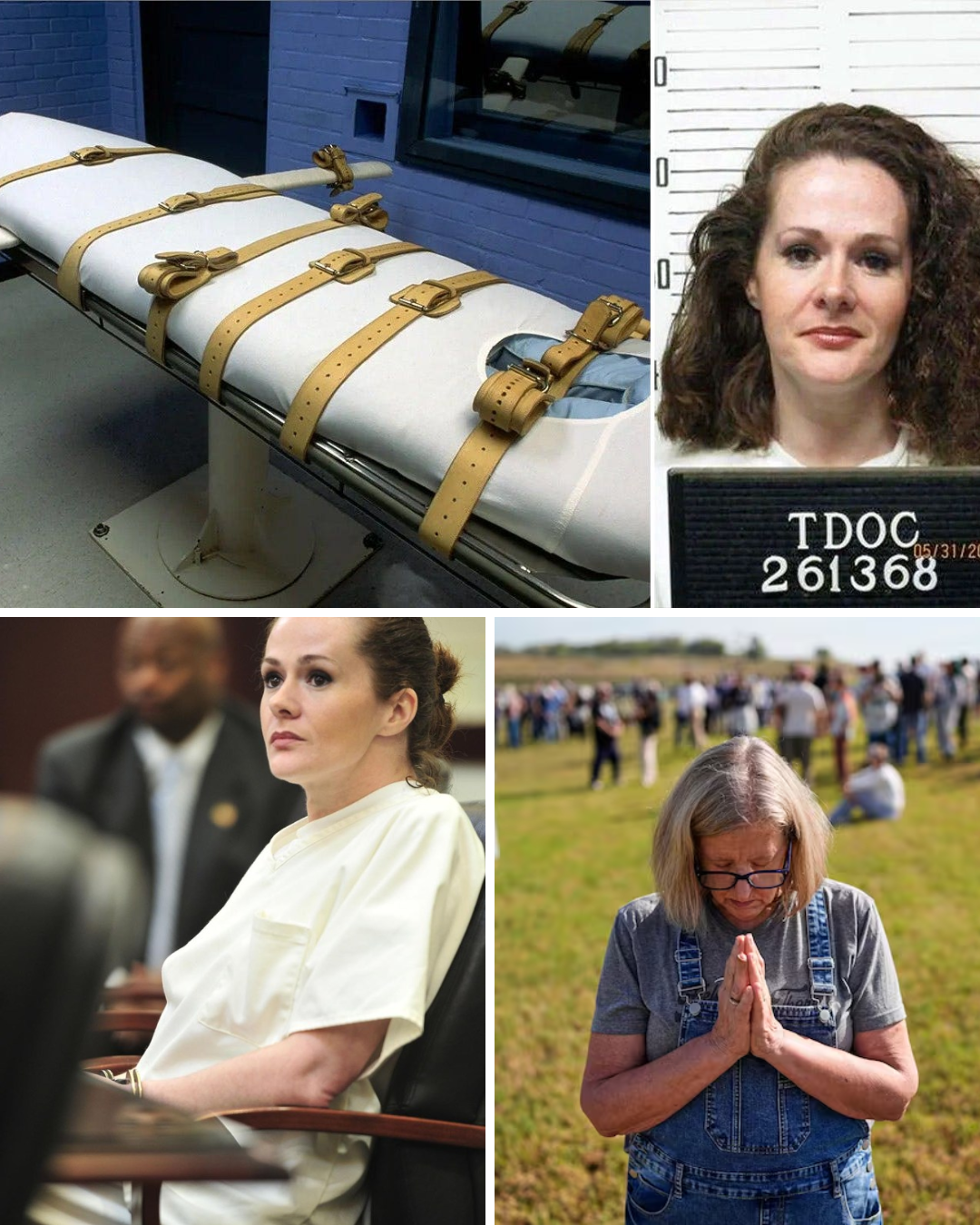
Pike’s medical condition could also have major consequences for the future of her death sentence.
Ferrell said her attorneys do not yet know whether she will recover sufficiently to participate in future legal proceedings.
“If she recovers, she may not fully recover,” he said, adding that questions could arise about her competence.
That distinction could become legally significant.
Under U.S. constitutional law, a person cannot be executed if they are mentally incompetent and unable to understand that they are being punished. Legal experts cited by the New York Post said a permanent brain injury could therefore fundamentally change the state’s ability to pursue another execution.
For now, however, no final medical prognosis has been established.
Attorneys Ask Tennessee for a Different Outcome
Pike’s legal team is asking Gov. Lee to commute her death sentence to life imprisonment.
The request comes after an execution attempt that attorneys had warned could create serious medical complications.
Before the execution, Pike’s lawyers had raised concerns about her medical history and difficulties with intravenous access. They argued that those issues could expose her to unnecessary pain and suffering during lethal injection.
Those wa