THEY WISHED I HAD NEVER BEEN BORN—THEN CHRISTMAS EXPOSED EVERYTHING

PART 1 — CONSIDER ME DEAD
At our Christmas party, my father looked at me in front of nearly two hundred guests and said:
“We wish you had never been born.”
The entire room went silent.
I smiled.
“Then consider me dead.”
Then I put on my coat and walked out.
Thirty minutes later, everything inside that house began unraveling.
And what they eventually discovered made them regret far more than what they had said to me that night.
It started because Dad wanted my money.
More specifically, he wanted me to give Camille the savings I had been sending home for years so she could buy a car that, according to him, “reflected her status.”
I said no.
I didn’t shout.
I didn’t argue.
I simply told him the money belonged to me, I had plans for it, and Camille was an adult.
My father’s jaw tightened.
Christmas lights glowed behind him, reflecting off the tall windows of the living room. Nearly two hundred people were scattered throughout the house—relatives, neighbors, Dad’s business acquaintances, people from church, old family friends.
Dad loved parties like this.
He loved an audience even more.
“You’ve always been selfish,” he said.
I almost laughed.
For nearly eight years, I had sent money home.
Tuition.
Utility bills.
Medical deductibles.
Camille’s books.
Camille’s rent.
The emergency repair on Mom’s car.
Part of the kitchen renovation Dad had insisted was “necessary for resale value.”
But there I was, standing in the house I had helped support, being called selfish because I had finally used the word no.
“Only useless people join the military,” Dad said.
A few conversations around us stopped.
“If you had any real ambition, you would’ve chosen a better path.”
Someone laughed awkwardly, assuming he was joking.
I stayed still.
That seemed to anger him more than if I had fought back.
Dad had always known what to do with resistance.
He knew how to shout over it.
He knew how to punish it.
He knew how to turn the rest of the family into witnesses until the person opposing him became isolated.
What he had never learned how to handle was silence.
So he went further.
Standing in the same living room where I had opened Christmas presents as a child, Dad looked straight at me and said:
“Your mother and I wish you’d never been born.”
The room froze.
A woman near the kitchen stopped with her glass halfway to her lips.
Someone dropped a napkin.
Mom kept one hand on Dad’s arm.
She said nothing.
Camille looked down at the floor.
I didn’t cry.
Instead, I smiled just enough to let Dad know I had understood every word.
“Then consider me dead.”
I picked up my coat.
And walked into the freezing Ohio night.
Snow had begun falling.
Tiny white flakes caught in my hair as I crossed the driveway toward my car.
For three seconds, I thought someone might follow me.
My mother.
Maybe Caleb.
Even Camille.
Nobody did.
The front door closed behind me.
Music gradually resumed inside the house.
That sound hurt worse than Dad’s words.
Because it told me that Christmas could continue perfectly well without me.
I sat in my car with the engine off.
My hands rested on the steering wheel.
Then my phone buzzed.
Mom.
I stared at her name until the call stopped.
Another call came.
Dad.
Then Camille.
I turned the phone facedown.
What Dad never understood was that I had spent years learning how to stay calm while people underestimated me.
I was thirty-two.
A cybersecurity analyst supporting the United States Army.
Dad dismissed it as “that computer thing.”
When I received the assignment in 2016, I called home because I was proud.
He laughed.
Told me it wasn’t “real military work.”
Then Mom asked for money.
Camille was still in school.
Tuition was expensive.
The family needed help.
So I helped.
Month after month, I sent money home.
Money I had intended to save.
Mom repeatedly told me she was putting part of it aside for my future.
“For your house someday,” she would say.
Or:
“Your father doesn’t need to know everything. I’m protecting some of it for you.”
I believed her.
That belief lasted longer than it should have.
Meanwhile, every one of Camille’s problems became someone else’s fault.
Failed exams.
Delays.
Another attempt.
Another excuse.
Dad talked about her future as though her success was already guaranteed.
“She’s going places.”
“She’ll have her own practice someday.”
“You’ll see.”
When people asked about me, he usually shrugged.
“She works with computers.”
And still, I kept sending money.
For years, I confused being needed with being loved.
Christmas night finally taught me the difference.
The next morning, I blocked all of them.
That should have been the end.
Instead, the rumors started.
Mom told relatives I had suffered some kind of “episode.”
Camille claimed I had become unstable and stormed out.
Dad began telling people I wasn’t mentally well.
At first, I ignored it.
Then he showed up outside my workplace.
He stood near the entrance to the parking lot wearing a heavy winter coat, shoulders squared like he had arrived to discipline a child.
“You embarrassed this family.”
I stared at him.
Security remained twenty yards away.
I kept my voice quiet.
“You need to leave.”
Dad stepped closer.
“You’re going to apologize to your mother.”
“No.”
“And you’ll stop this ridiculous nonsense.”
“No.”
His expression changed.
Then he said my coworkers deserved to know I was unstable before I caused a problem.
That changed everything.
My work required trust.
My security clearance depended on judgment and reliability.
And my father had just decided that because he could no longer control me inside the family, he would reach into the one part of my life he had always mocked.
“You should leave now,” I said.
Dad gave me a thin smile.
“What are you going to do? Call the Army on your father?”
He walked away.
Two days later, my younger cousin Caleb sent me a recording.
He included one message.
I thought you should know what they’re saying when you’re not there.
The audio was poor.
I could hear dishes clinking.
People talking in the background.
Then Mom’s voice.
She said she was finished trying with me.
Camille complained that I had ruined her celebration.
And then Dad spoke.
Clearly.
He said they all would have been better off if they had stopped after one child.
He called me a burden.
He said I had always been jealous of Camille.
Then he said something else.
“If she wants to act like she doesn’t have a family, we’ll show her what that means.”
I listened to the recording three times.
For years, I had been forced to explain what my family was like.
Now I didn’t have to explain anything.
I had evidence.
That Monday, I walked into the Judge Advocate General’s office.
The recording was secured on my phone.
I told the captain everything.
Christmas.
The insults.
The rumors.
Dad showing up at work.
His threat to my reputation.
She listened without interrupting.
When I finished, she folded her hands.
“This is serious.”
She explained what false allegations of instability could do to someone working in a sensitive position.
Then she asked me something nobody in my family had ever asked.
“What do you want?”
For a moment, I didn’t know how to answer.
I was used to explaining what everyone else needed.
Mom needed money.
Camille needed support.
Dad needed loyalty.
The family needed peace.
Nobody had ever asked what I needed.
Then I said:
“I want them to stop.”
The captain prepared a formal cease-and-desist notice.
Certified mail.
Email confirmation.
Every incident documented.
No more workplace visits.
No more interference.
No false statements regarding my mental or professional fitness.
For the first time, the institution Dad had spent years calling useless became the wall protecting me from him.
The letter was delivered.
My family went silent.
I thought it was over.
It wasn’t.
A few days later, Colonel Whitaker called me into a conference room.
He told me the security inquiry had confirmed the rumors were coming from people connected to my family.
The false accusations would not be held against me.
For the first time in days, I finally breathed normally.
Then he placed a folder on the table.
“There’s another issue.”
I looked at him.
During the inquiry, an unrelated verification request had surfaced from a local law firm.
Someone connected to my family—
a trainee—
had apparently been representing herself in ways that didn’t match her real professional status.
I didn’t need him to say the name.
Camille.
Colonel Whitaker opened the file.
He explained that the firm had already begun reviewing her records.
Her online claims.
Her stated qualifications.
For the first time since Christmas, I pictured Dad’s confident expression disappearing.
Then Colonel Whitaker turned the first page toward me.
And what I saw made me realize that Christmas night had only been the beginning.
At the top was a screenshot from Camille’s professional profile.
Under her photograph were three words:
Senior Legal Consultant.
I stared.
Camille wasn’t a senior legal consultant.
As far as I knew, she hadn’t even completed the professional qualifications required for the position she claimed to hold.
Whitaker pointed farther down the page.
Government contracting.
Regulatory compliance.
Security-clearance advisory.
Then I saw something that made my stomach tighten.
Under experience, Camille had listed:
Federal cybersecurity liaison — advisory support.
My department wasn’t named.
But several phrases sounded familiar.
Too familiar.
I had used them myself.
In conversations at home.
Years earlier.
I looked at Whitaker.
“Where did she get this?”
“That,” he said quietly, “is what several people would like to know.”
And for the first time, I realized Camille might not only have exaggerated her own career.
She might have built part of it using mine.
PART 2 — THE CAREER THAT WASN’T HERS
I barely slept that night.
Every conversation I had ever had at my parents’ house seemed to replay in my head.
The Thanksgiving when Camille had asked how government compliance reviews worked.
The summer barbecue when Dad had wanted to know whether private contractors hired cybersecurity consultants.
The Easter dinner when Mom had casually asked what certifications I had.
At the time, none of it had seemed important.
Families asked questions.
People got curious.
I had answered vaguely because my job required discretion.
But I had still answered enough.
Enough, apparently, for someone who understood how to turn fragments into credentials.
The next morning, I met Captain Elena Reyes from JAG again.
She was calm in the way competent people often are when everyone else feels as if a building is on fire.
“Your sister’s professional situation is being handled separately,” she told me. “Do not contact her employer. Do not contact her. Don’t post anything online.”
“I wasn’t planning to.”
“I know. I’m telling you because families make people do unpredictable things.”
That almost made me smile.
She slid a yellow legal pad toward me.
“What information did Camille have access to?”
“Nothing classified.”
“Good.”
“Mostly general descriptions. Things anyone working adjacent to government systems might know.”
“Did she ever have physical access to your work devices?”
“No.”
“Personal laptop?”
I hesitated.
“Years ago. Maybe.”
Reyes noticed.
“When?”
“2019. I stayed with my parents for two weeks after an apartment flood. My personal laptop was there.”
“Password protected?”
“Yes.”
“Shared cloud storage?”
“No.”
She nodded.
Then she asked about documents.
Bank records.
Tax files.
Résumé drafts.
Professional certificates.
That was when I remembered the black accordion folder.
Mom had insisted on keeping copies of important family documents “in case of emergencies.”
My college transcripts.
Old tax returns.
Certification paperwork.
Even copies of employment forms from my early career.
I felt cold.
“My mother had copies.”
Reyes stopped writing.
“Of what?”
“Almost everything.”
The legal pad remained still beneath her hand.
“Why?”
“Because I was twenty-four and apparently stupid.”
“No.”
Her answer came immediately.
“You trusted your mother.”
Something inside my chest shifted.
I hadn’t realized how badly I needed someone to make that distinction.
By Friday, the law firm had suspended Camille pending an internal review.
The news reached me through Caleb.
He texted:
Your dad is losing his mind.
Then another message:
Do not answer him. He keeps saying you destroyed Camille’s career.
I typed three different replies and deleted them all.
Finally:
I didn’t report Camille.
Caleb responded almost immediately.
I know.
That was all.
But it mattered.
The following Sunday, Dad violated the cease-and-desist.
Not directly.
He was smarter than that.
He called Aunt Melissa.
Melissa called Mom’s sister.
Mom’s sister called Caleb’s mother.
By lunchtime, a new story had formed.
According to Dad, I had used “military connections” to fabricate evidence against Camille because I was jealous.
By evening, someone had posted a vague statement on Facebook about “family members abusing government power to destroy innocent careers.”
No names.
Nothing explicit.
But everybody knew.
Captain Reyes documented it.
Dad received a second warning.
Then things got worse.
The law firm contacted Camille’s university.
The university confirmed she had completed coursework but had not obtained one credential she had repeatedly claimed.
A professional certification body found that a certificate number on her résumé belonged to someone else.
Two clients had been introduced to Camille as a qualified advisor when she was technically working under supervision.
Most of it had nothing to do with me.
Until investigators found a document Camille had submitted while applying for a contractor-facing role.
Three paragraphs described experience analyzing network vulnerabilities for military systems.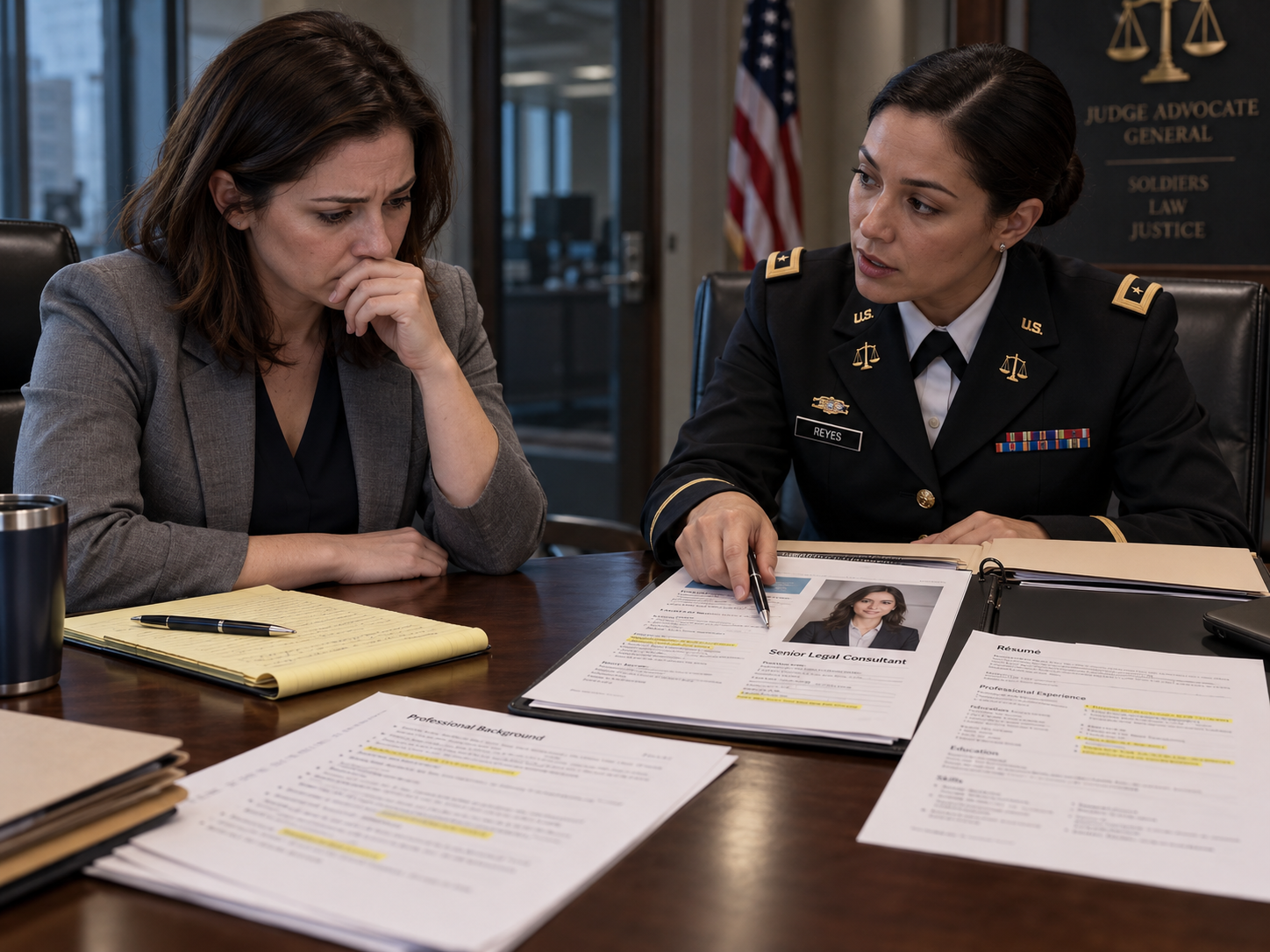
They were nearly identical to language from one of my old résumés.
Not the public version.
An old draft.
The version stored in that black accordion folder at Mom and Dad’s house.
I sat in Reyes’s office staring at the photocopy.
“That’s mine.”
“You’re sure?”
“I wrote this sentence.”
I pointed.
She leaned closer.
“Which one?”
I read it softly.
“‘Provided vulnerability assessment support across mixed legacy environments while coordinating corrective action with operational stakeholders.’”
“You remember writing that?”
“I remember hating it.”
For the first time, Reyes smiled.
Then I pointed to another paragraph.
“That entire section came from a certification packet I used years ago.”
The humor disappeared.
“Who had access?”
“My mother.”
“Your father?”
“Probably.”
“Camille?”
“If she wanted it.”
Reyes leaned back.
This was no longer a cruel Christmas argument.
It was no longer about a car.
It wasn’t even only about Dad trying to harm my reputation.
Years of information had moved through my family in ways I had never noticed because I had never imagined they would use it against me.
The next surprise came from my bank.
I had begun reviewing old transfers.
At first, I was only trying to understand how much money I had sent home.
The number made me sick.
Over seven years, between direct deposits, emergency payments, tuition assistance, rent support, medical bills, travel expenses, and random family emergencies, I had transferred approximately $86,000.
Eighty-six thousand dollars.
I stared at the total until the numbers blurred.
Then I remembered Mom’s promise.
She had repeatedly told me she was saving “at least a third.”
A house fund.
A future fund.
Something for me.
There should have been roughly twenty-five thousand dollars somewhere.
Maybe more.
I called the financial institution where Mom once told me the account existed.
No account had ever been opened in my name.
I searched old emails.
Eventually, I found one from Mom.
Don’t worry, sweetheart. I moved another $500 into your future account today.
Another:
Your savings are growing. Someday you’ll thank me for making sure you didn’t spend everything.
I sat on my living-room floor with my laptop in front of me.
One email became twelve.
Twelve became thirty-seven.
Dates.
Amounts.
Promises.
I created a spreadsheet.
By midnight, Mom had explicitly claimed to have placed $31,400 into savings for me.
There was no account.
No balance.
Nothing.
The following morning, I contacted a private attorney.
Her name was Miriam Cole.
She was in her late fifties, wore rectangular glasses, and had the deeply reassuring habit of reading everything twice before speaking.
She reviewed the transfers.
The emails.
The messages.
Then she asked:
“Did your mother ever tell you the money remained yours?”
“Yes.”
“Repeatedly?”
“Yes.”
“Did you send funds in reliance on that?”
“Yes.”
“Did you ever authorize them to spend the saved portion?”
“No.”
Miriam removed her glasses.
“This may be more complicated than a normal family gift.”
My stomach tightened.
“What does that mean?”
“It means we follow the money.”
So we did.
The process took weeks.
What we found hurt more than Christmas.
The money hadn’t vanished randomly.
Some of it had paid Camille’s tuition.
Some paid Camille’s apartment deposits.
Some paid for a failed business idea Camille abandoned after eleven months.
$8,000 helped renovate my parents’ kitchen.
$4,300 went toward a family vacation to South Carolina I hadn’t been invited to because, according to Mom, “you’re always working anyway.”
And $6,700 had gone toward Camille’s first luxury car.
The same Camille who now needed another vehicle that “reflected her status.”
I sat across from Miriam while the transaction list rested between us.
“So they were saving nothing?”
“Not from what we’ve identified.”
I swallowed.
“Mom lied every month.”
Miriam didn’t soften the truth.
“Yes.”
I looked toward the window.
For years, whenever I considered reducing the money I sent home, Mom had reminded me that part of it was still mine.
She hadn’t merely accepted help.
She had created the illusion that I was building a future while secretly using my future to finance Camille’s present.
My phone buzzed.
Caleb.
Your mom is asking everyone for your address.
I showed Miriam.
“Do not respond.”
“I won’t.”
Another message appeared.
Camille came home. She and Uncle Robert are screaming at each other.
Dad.
Robert Hayes.
The man who could reduce a room to silence simply by tightening his jaw.
The man who had told me I should never have been born.
Apparently, for once, someone else was screaming back.
Two days later, Camille called from a number I didn’t recognize.
I answered because I thought it was a contractor.
“Emily.”
I almost hung up.
Her voice broke.
“Please.”
I said nothing.
“Please don’t hang up.”
“You’re not supposed to contact me.”
“I know.”
“Then why are you?”
“Because Dad says you’re going to sue Mom.”
That surprised me.
Miriam had sent a preservation letter requesting financial records.
Nothing more.
“Did Dad tell you why?”
Silence.
“Camille?”
“I didn’t know about the savings.”
I closed my eyes.
“Did you know where your tuition came from?”
“Mom said they were helping.”
“Did you know who paid your rent?”
“I thought Dad did.”
“Your first car?”
Silence.
That answered me.
Then Camille whispered:
“I thought they had money.”
I almost laughed.
Not because it was funny.
Because it was exactly what Dad had wanted everyone to believe.
Robert Hayes, successful father.
Provider.
Family patriarch.
A man who spoke endlessly about responsibility.
But the numbers showed something else.
For years, I had quietly financed the image he performed in public.
Camille began crying.
“I didn’t know.”
“About the money?”
“No.”
A pause.
“About the résumé?”
Her crying stopped.
There it was.
I waited.
“I only borrowed some wording.”
“From documents you didn’t have permission to use.”
“Mom gave me the folder.”
My fingers tightened around the phone.
“When?”
“Years ago.”
“Why?”
“She said your career could help me figure out what employers wanted.”
“Did you copy my credentials?”
“No. Not exactly.”
“What does that mean?”
“I changed them.”
“You used a certification number that belonged to someone else.”
Camille said nothing.
“Did Mom give you that too?”
“No.”
“Then you knew.”
Her breathing became uneven.
“Emily, I was desperate.”
I had heard that sentence in different forms my entire life.
Camille was stressed.
Camille needed help.
Camille was overwhelmed.
Camille deserved another chance.
The entire family had been built around her desperation.
“What do you want from me?” I asked.
“I need you to tell the firm this is a misunderstanding.”
“No.”
“Please.”
“No.”
“They could end my career.”
“You created the information.”
“I didn’t think it would go this far.”
“Neither did I when Dad came to my workplace.”
Silence.
Then she said something I will never forget.
“Dad told me you’d never fight back.”
The room suddenly felt smaller.
“What?”
“He said you always forgive.”
A long pause.
“He said you’d be angry, but eventually Mom would cry and you’d come home.”
I stared at the wall.
Camille continued.
“He said that’s what you always do.”
That was when I finally understood the architecture of my family.
It wasn’t that they believed I was weak.
They believed my love made me predictable.
They had mistaken forgiveness for permission.
The call ended three minutes later.
I didn’t promise anything.
That evening, I forwarded Miriam a written summary.
Then I opened my old banking spreadsheet again.
At the bottom, I added one final line:
Total financial support sent to family: $86,214.
I stared at it.
Then another email arrived.
It was from Miriam.
We located something else. Call me when you can.
I called immediately.
She answered on the second ring.
“Emily, do you remember co-signing anything for your parents?”
“No.”
“Any home-equity paperwork?”
“No.”
“Vehicle financing?”
“No.”
“Personal loan?”
“No.”
There was a pause.
“Then we have another problem.”
My stomach dropped.
“What?”
“A loan application from three years ago contains your name.”
I stood.
“What kind of loan?”
“Forty-two thousand dollars.”
My voice came out barely above a whisper.
“I never borrowed forty-two thousand dollars.”
“I know.”
Another pause.
“The signature says you did.”
PART 3 — THE SIGNATURE
The loan application was dated March 18, 2021.
I knew exactly where I had been that day.
Virginia.
At work.
Hundreds of miles from Ohio.
The document listed me as a co-borrower on a private loan secured partly against business assets belonging to my father.
The stated purpose was “family property improvement and professional development expenses.”
Miriam traced the disbursement.
$42,000.
Within nine days, $18,000 moved toward renovations.
$12,500 went to Camille.
The rest covered several debts.
My signature appeared on page six.
It looked almost right.
Almost.
Whoever had copied it had used an older version—the way I signed my name before I began shortening the E in Emily.
I stared at it.
“That’s not mine.”
“I believe you.”
“How did this pass?”
“Possibly electronically. Possibly through inadequate verification. We’re obtaining the original records.”
I felt as though my entire childhood had been placed beneath a different light.
Every time Mom asked me to sign birthday cards for Dad.
Every photocopy.
Every document kept in the family folder.
Every piece of information I had assumed was safe because it was inside my parents’ house.
“Who submitted it?”
“We don’t know yet.”
I did.
Or at least, I knew who would claim not to know.
I went to work the next morning because routine was easier than sitting at home.
Colonel Whitaker found me shortly before lunch.
“You okay?”
It was the sort of question people asked when they already knew the answer.
“Family issue.”
He nodded.
“Need time?”
“No, sir.”
“Need work?”
I looked at him.
He understood.
“Plenty of that around here.”
For the next six hours, I buried myself in logs, reports, and vulnerability assessments.
Computers were comforting.
Systems lied less elegantly than people.
If something failed, it usually left evidence.
At 6:14 p.m., Captain Reyes called.
“Your father contacted the installation again.”
I closed my eyes.
“What did he say?”
“He claimed you had accessed private family financial records using government resources.”
I almost admired the desperation.
Almost.
“That’s false.”
“We know.”
“How?”
“Because your work systems are audited.”
Of course they were.
Every meaningful access.
Every authentication.
Every activity.
Dad had accused a cybersecurity analyst working in a controlled environment of using government systems for personal snooping.
He had chosen perhaps the easiest lie on Earth to disprove.
“What happens now?”
“His contact attempt has been documented.”
“Anything else?”
“Yes.”
Her voice hardened slightly.
“He referenced information from the cease-and-desist communication that was supposed to remain between counsel.”
“Meaning?”
“Meaning your father appears to be trying to provoke a response.”
I looked through the dark office window.
“Why?”
“People losing control often make the mistake of believing escalation will restore it.”
That sentence stayed with me.
Three days later, Miriam obtained the loan metadata.
The application had been submitted from an IP address registered to my parents’ home.
The contact email belonged to Dad.
The supporting documentation included one of my old tax returns.
The electronic signature verification used my Social Security number, birth date, previous address, and employment information.
Information stored in that black folder.
I thought the evidence would finally make me angry.
Instead, I felt grief.
Quiet.
Heavy.
Permanent.
My father hadn’t lost his temper one Christmas night and said something cruel.
My mother hadn’t merely mismanaged money.
This had been happening for years.
My identity, income, loyalty, career, and silence had all become family resources.
The phone call from Mom came through Miriam.
She wanted a meeting.
Miriam advised against seeing them alone.
So we met in her office.
Mom arrived first.
She looked smaller than I remembered.
Dad came three minutes later.
He wore a charcoal coat and the same expression he had worn outside my workplace.
Camille did not come.
Neither did Caleb.
Miriam sat beside me.
Dad’s attorney sat beside him.
For several seconds, nobody spoke.
Then Mom whispered:
“Emily.”
I looked at her.
She began crying.
There it was.
The mechanism Camille had described.
Mom cried.
I returned.
That had always been the pattern.
Except this time, I stayed in my chair.
Dad noticed.
“You’ve taken this too far.”
Miriam lifted one hand.
“Mr. Hayes, communications should go through counsel.”
“This is my daughter.”
“No,” I said.
Dad turned toward me.
I surprised myself with how calm I sounded.
“You said you wished I had never been born.”
Mom flinched.
“I was angry.”
“You didn’t say it.”
Dad stared.
“You stood there.”
Her face folded.
“That was wrong.”
“Yes.”
“I should have stopped him.”
“Yes.”
Dad leaned forward.
“So now you’re going to destroy this family over words?”
Miriam placed the loan application on the table.
“No,” she said. “We’re discussing this.”
Dad looked down.
Something flashed across his face.
Not confusion.
Recognition.
I saw it.
So did Miriam.
Mom’s crying stopped.
“What is that?”
Nobody answered.
She reached for the document.
Her eyes moved across the first page.
Then the second.
Then she saw my name.
“Robert?”
Dad remained silent.
Mom looked at him.
“What is this?”
“Business financing.”
“Why is Emily’s name on it?”
Dad looked toward his attorney.
That was the first time I saw genuine fear.
His attorney spoke carefully.
“We’re still reviewing the circumstances of the application.”
Mom stared at Dad.
“You told me Frank co-signed.”
Dad’s jaw tightened.
“Not now, Diane.”
Her expression changed.
“You told me your brother signed.”
“Diane.”
“You used Emily?”
Dad slammed his palm against the table.
“It was a temporary loan!”
Everyone went silent.
There it was.
Not denial.
Admission.
His attorney closed his eyes for half a second.
Dad realized his mistake too late.
He leaned back.
“I meant—”
Miriam’s voice was very soft.
“Mr. Hayes, I strongly recommend you allow your attorney to speak.”
Mom looked physically sick.
“Did she know?”
Dad said nothing.
Mom turned toward me.
“Did you know?”
“No.”
“Oh my God.”
She covered her mouth.
And for the first time in my life, my mother looked at my father as if she didn’t know him.
Dad turned on her immediately.
“Don’t start.”
“You forged her signature?”
“I handled what needed to be handled.”
“You forged our daughter’s signature?”
“Our daughter had money.”
I felt something inside me become perfectly still.
Dad looked at me.
“You were earning more than any of us.”
“That did not make my identity yours.”
“You benefited from this family.”
I almost laughed.
“Did I?”
His face reddened.
“You think you built yourself alone?”
“No. I think I spent eight years helping all of you.”
“Because that’s what family does.”
“Does family forge loan documents?”
Mom began crying again.
Dad pointed toward me.
“There. That tone. That’s exactly what changed when you joined the Army.”
I stared at him.
“No. What changed is that I finally learned documentation matters.”
His attorney asked for a recess.
The meeting ended twelve minutes later.
Mom remained behind after Dad walked out.
Miriam asked whether I wanted to stay.
I did.
Mom sat across from me.
Mascara had gathered beneath her eyes.
“I didn’t know about the loan.”
“I believe you.”
She looked relieved.
Then I continued.
“But you knew about the money.”
Her face crumpled.
“Emily—”
“You told me you were saving it.”
“I meant to.”
“For seven years?”
“I always thought we would replace it.”
“How much?”
Silence.
“How much did you intend to replace, Mom?”
She looked down.
“All of it.”
“With what?”
No answer.
That hurt worse than an argument.
“You knew I thought that money still existed.”
“Yes.”
“You let me keep sending more.”
“Yes.”
“Why?”
Her shoulders trembled.
“Because things were always happening.”
“With Camille.”
“With everyone.”
“Mostly Camille.”
She didn’t deny it.
I leaned back.
“Why was it always me?”
Mom wiped her eyes.
“Because you were capable.”
The answer was so immediate it almost sounded rehearsed.
“You didn’t need as much.”
There it was.
The family philosophy in seven words.
Camille needed help because she struggled.
I received less because I survived.
“You punished me for being responsible.”
“No.”
“Yes.”
I felt tears finally burn behind my eyes.
“You took from me because I didn’t fall apart when you did.”
Mom started crying harder.
“I’m sorry.”
“I believe you’re sorry.”
She looked up.
“Can you forgive me?”
I sat there for a long time.
Then I told her the truth.
“Someday, maybe.”
Her mouth trembled.
“But forgiveness will not put everything back the way it was.”
She nodded.
“I know.”
I wasn’t sure she did.
The next blow came two weeks later.
The lender opened a fraud investigation.
Dad’s business bank froze one credit line.
Vendors began asking questions.
His attorney contacted Miriam about settlement discussions.
Meanwhile, Camille’s employer terminated her.
Not simply because of résumé exaggerations.
Investigators discovered she had presented herself to two prospective clients as independently qualified to provide services she was not authorized to perform without supervision.
She called Caleb.
Caleb called me.
“She’s staying with Aunt Melissa.”
“Okay.”
“She’s a mess.”
I said nothing.
“She says Uncle Robert told her to embellish her résumé because everyone does it.”
That sounded like Dad.
“She also says he found the certification number.”
That did not surprise me either.
“What does Camille say she did?”
“She used it.”
I closed my eyes.
Accountability.
For once, not excuses.
“What does she want?”
“She said she doesn’t want anything from you.”
That surprised me.
Caleb continued.
“She said she knows she did this herself.”
I sat down slowly.
“She said that?”
“Yeah.”
For the first time, Camille sounded like someone I might eventually be able to speak to.
Not forgive yet.
Speak to.
Then Caleb said:
“There’s something else.”
Of course there was.
“Your dad has been telling people he’s going to expose you publicly.”
“For what?”
“He says you stole from the family.”
I actually laughed.
Caleb didn’t.
“I’m serious.”
“So am I.”
“He’s planning some kind of meeting.”
“What meeting?”
“The annual Hayes Foundation dinner.”
I froze.
Dad’s charity foundation.
A small local organization he had built around community scholarships and youth programs.
For years, those events had been the centerpiece of his public identity.
People praised him for generosity.
Leadership.
Family values.
Caleb lowered his voice.
“He’s telling everyone he’ll explain what really happened to your family.”
“When?”
“Saturday.”
I looked at the calendar.
Three days.
Dad was losing his business leverage.
His reputation inside the family.
His control over Camille.
Possibly his protection from the loan investigation.
So he was returning to the place where he had always been strongest.
A room full of people.
An audience.
Miriam listened quietly when I told her.
Then she asked:
“Are you planning to go?”
“No.”
“Good.”
My phone buzzed.
An email.
The sender was the Hayes Foundation.
The subject line read:
Notice Regarding Misappropriation of Family Funds.
I opened it.
Dad had sent it to donors.
Board members.
Relatives.
Local business owners.
Nearly three hundred people.
And halfway through the message, he named me.
Not indirectly.
Not vaguely.
My full name.
My profession.
And a claim that I had used “access to restricted federal resources” to initiate a campaign against my own family.
I handed the phone to Miriam.
She read it once.
Then again.
Her expression changed.
Dad had finally crossed the line in a way even he could not talk himself out of.
Miriam looked at me.
“Now we respond.”
PART 4 — THE ROOM WHERE HE LOST EVERYTHING
The Hayes Foundation dinner was scheduled for seven o’clock Saturday evening.
At 5:42 p.m., Dad received three documents.
The first came from Miriam.
A formal demand for retraction concerning defamatory statements.
The second came from the lender’s fraud counsel.
The third came from two members of the foundation board requesting an emergency review of financial records.
That final document had nothing to do with me.
At least not originally.
But Dad’s public accusation had caused board members to ask questions.
If he believed I had “misappropriated family funds,” what funds?
What accounts?
Why was a family financial dispute being discussed through a charitable organization?
One question became five.
Five became twenty.
And suddenly people were examining records nobody had examined closely in years.
I did not attend the dinner.
I went to dinner with Colonel Whitaker, his wife Laura, Captain Reyes, and two coworkers who had heard enough fragments of my Christmas disaster to insist I not spend Saturday alone.
We ate Italian food.
Whitaker refused to discuss work.
Laura told a story about accidentally setting a microwave on fire in graduate school.
For ninety minutes, I almost felt normal.
Then my phone lit up.
Caleb.
Call me.
I stepped outside.
Snow had begun falling again.
Just like Christmas.
Caleb answered immediately.
“You’re not going to believe this.”
“What happened?”
“The dinner is over.”
“It’s eight fifteen.”
“I know.”
“Why?”
“The board stopped him.”
I leaned against the brick wall.
“What?”
“Uncle Robert got onstage. Started talking about betrayal. Said families survive attacks from within.”
I closed my eyes.
Of course he did.
“Then Mr. Landon stood up.”
Thomas Landon.
A retired banker.
Foundation treasurer.
One of Dad’s oldest friends.
“He told Uncle Robert he couldn’t continue.”
“Why?”
“Because the board had voted forty minutes earlier to suspend him.”
For a moment, I forgot the cold.
“Suspended from what?”
“Everything.”
Caleb almost sounded breathless.
“The foundation.”
I stared at the falling snow.
“Why?”
“They found payments.”
My stomach tightened.
“What kind of payments?”
“Money leaving the foundation.”
I went completely still.
“How much?”
“They don’t know yet.”
The Hayes Foundation raised money for scholarships.
Small ones.
Usually $2,000 to $5,000 each.
Dad loved standing onstage beside graduating students, handing them checks while photographers took pictures.
He had once told me those ceremonies were proof he had “done something meaningful.”
“What were the payments for?”
“Some went to one of Uncle Robert’s business accounts.”
I couldn’t speak.
Caleb continued.
“Others paid vendors that apparently don’t exist anymore.”
“Are you sure?”
“I’m standing in the hallway listening to everyone argue.”
Then another voice came through the phone.
Camille.
“Give me that.”
The phone shifted.
“Emily?”
It was the first time I had heard her voice since our call.
“What’s happening?”
“Dad is blaming you.”
“Of course he is.”
“He says your lawyer triggered the audit.”
“My lawyer didn’t audit the foundation.”
“I know.”
That answer surprised me.
Then Camille said:
“I told them.”
“Told them what?”
“That Dad used foundation events to pay for things sometimes.”
I pressed the phone harder against my ear.
“What things?”
“He would say it was reimbursement.”
“For?”
“Hotel rooms. Dinners. A conference.”
“That might be legitimate.”
“Not Camille’s birthday party.”
Silence.
“You mean your birthday party?”
“Yes.”
I remembered it.
A ballroom.
Catered dinner.
Nearly a hundred guests.
Dad had told everyone the venue belonged to a friend who had “taken care of him.”
Camille’s voice shook.
“I found an old invoice this afternoon.”
“How much?”
“Eleven thousand eight hundred.”
My chest tightened.
“Paid by the foundation?”
“Yes.”
The entire story suddenly changed shape.
This wasn’t about me destroying Dad.
It wasn’t about Camille.
It wasn’t even about the forged loan.
Dad had built a system in which every boundary could be crossed as long as he believed the family name justified it.
My money.
My identity.
Foundation money.
Professional credentials.
Truth itself.
Everything belonged to Robert Hayes if he could convince himself he was protecting something important.
“Where’s Mom?”
“With Aunt Melissa.”
“Dad?”
“Locked himself in his office.”
Then Camille whispered:
“Emily, I’m sorry.”
I closed my eyes.
“For what?”
“All of it.”
I waited.
“For copying your résumé. For using the certification number. For letting Dad treat you like you were less important.”
Her voice broke.
“And for Christmas.”
I heard movement behind her.
People arguing.
Chairs scraping.
Camille continued.
“I should have said something.”
“Yes.”
“I was scared of him.”
“So was I.”
“I thought if I stayed on his side, he’d never turn on me.”
There it was.
The truth no one in our family had admitted.
Dad’s favoritism had never been love.
It was conditional protection.
Camille received more because she obeyed the role he gave her.
I received contempt because I eventually stopped performing mine.
“He turned on me anyway,” she whispered.
“I know.”
“What happens now?”
“I don’t know.”
That was the most honest answer I had.
The foundation hired an outside forensic accountant.
Within a month, several questionable transactions had been identified.
Some were legitimate expenses poorly documented.
Others were not.
Dad had used charitable funds to cover personal-event costs, travel, and expenditures tied to his business networking.
The exact legal consequences became complicated.
Lawyers became involved.
Records were subpoenaed.
Dad resigned before the board could permanently remove him.
His photograph disappeared from the foundation website.
The man who had spent decades curating the image of himself as a generous patriarch was now being investigated because he had tried to publicly humiliate the daughter he considered powerless.
But the hardest part for me wasn’t watching Dad fall.
It was deciding who I wanted to become when he did.
Miriam called one afternoon.
“We have a settlement offer.”
I looked up from my desk.
“From Dad?”
“Through counsel.”
The proposal included repayment related to the fraudulent loan, reimbursement of documented funds Mom had explicitly represented as savings held for me, legal fees, and a written retraction of the accusations Dad had made about my professional conduct.
In exchange, I would settle the civil financial claims without pursuing additional damages.
It was substantial.
Not everything I had ever sent home.
But most of the money Mom claimed she had been saving.
Plus protection against the loan.
“What about criminal issues?”
“Those are not entirely yours to control.”
I knew that.
“What do you think?”
Miriam paused.
“I think settlements are financial decisions. Forgiveness is emotional. Accountability is personal. Do not confuse them.”
I accepted.
Not because Dad deserved mercy.
Because I wanted my life back.
The retraction was humiliatingly specific.
Robert Hayes acknowledged that he had no evidence I misused government resources.
He acknowledged that statements questioning my professional stability were unsupported.
He confirmed that financial disputes involving the family were personal and unrelated to my employment.
The message went to everyone who had received his original accusation.
Three hundred people.
Dad hated every word.
I know because Caleb later told me he read the final version in the kitchen and threw a glass into the sink so hard it shattered.
For once, that reaction belonged to him.
Not me.
Mom moved out three weeks later.
She rented a small apartment ten minutes from Aunt Melissa.
She didn’t file for divorce immediately.
She said she needed time.
What mattered to me was that she stopped protecting him.
She began cooperating with the financial investigations.
Then, one morning, I received a letter.
Paper.
Handwritten.
From Mom.
I almost threw it away.
Instead, I opened it.
She did not ask me to come home.
She did not ask me to forgive Dad.
She did not tell me family was family.
She wrote about the first time she had taken money I thought she was saving.
Camille had been behind on tuition.
Dad had told Mom it was temporary.
They would replace the money within two months.
They didn’t.
Then another emergency came.
Then another.
Eventually, telling me the account still existed became easier than admitting what they had done.
Mom wrote:
Every time you trusted me again, the lie became harder to confess. So instead of becoming more honest, I became more dishonest.
I stopped reading for several minutes.
Then continued.
I told myself you were strong enough to recover from anything. I see now that I used your strength as permission to hurt you.
That line stayed with me.
Not because it repaired anything.
But because for once, Mom had named the crime accurately.
Not legal crime.
Emotional crime.
She had made my resilience responsible for her choices.
At the bottom, she wrote:
You do not owe me a relationship. If you ever choose one, I will accept whatever boundaries you need.
I folded the letter.
For two days, I did nothing.
On the third, I texted her.
Coffee. Public place. Saturday. One hour.
She replied:
Thank you.
No heart emoji.
No guilt.
No speech.
Just thank you.
Saturday, Mom arrived ten minutes early.
She looked nervous.
We sat near a window.
For the first twenty minutes, conversation was painful.
Then she asked about work.
Not what I earned.
Not whether I could help.
Just work.
I told her about a training program I had helped design.
She listened.
When I finished, she said:
“That sounds important.”
I looked at her.
She seemed to understand why those three words mattered.
Before leaving, Mom asked:
“May I hug you?”
I appreciated the question more than the hug.
“Yes.”
Her arms wrapped around me.
I didn’t feel healed.
Healing rarely arrives in dramatic moments.
Mostly, I felt tired.
But when we separated, I didn’t feel trapped either.
That was progress.
Camille took longer.
She lost her position.
Her professional association opened a disciplinary review.
She had to withdraw claims from her résumé and complete remedial requirements before applying elsewhere.
For the first time in her life, Dad couldn’t rescue her.
Neither could Mom.
Neither could I.
She worked for six months at the reception desk of a small insurance office.
One afternoon, she sent me a photograph.
Not glamorous.
Not dramatic.
Just her desk.
A coffee mug.
A stack of files.
Below it:
First paycheck I’ve earned without Dad arranging anything. Weird feeling.
I stared at the message.
Then replied:
Keep going.
Two words.
That was all I could give.
At the time.
Then March came.
Colonel Whitaker called me into the same conference room where he had first shown me Camille’s file.
For half a second, my stomach dropped.
He noticed.
“This is good news.”
“That room has ruined the phrase good news for me, sir.”
He laughed.
Then slid a document across the table.
A recommendation.
A leadership position supporting a new cybersecurity initiative.
More responsibility.
A significant promotion.
And relocation.
Washington, D.C.
I stared at the page.
“When?”
“If you accept, this summer.”
I should have been thrilled.
Instead, I thought of Ohio.
Mom.
Camille.
The legal mess.
The family house.
All the unfinished pieces.
Whitaker studied me.
“You know what’s funny about surviving a disaster?”
“What?”
“Sometimes people start thinking survival means they’re required to stay near the wreckage.”
I looked at him.
He nodded toward the document.
“You’re allowed to leave.”
That evening, I accepted.
PART 5 — THE FAMILY I CHOSE
Six months after Christmas, I stood inside an empty apartment outside Washington, D.C., surrounded by cardboard boxes.
Sunlight spilled across the hardwood floor.
My entire life fit inside one moving truck.
That should have made me sad.
Instead, it felt clean.
My phone rang.
Mom.
I answered.
“Did you get there safely?”
“Yes.”
“How’s the apartment?”
“Smaller than the pictures.”
She laughed.
“Isn’t everything?”
There was a pause.
Then she said:
“I’m proud of you.”
I looked out the window.
A year earlier, those words would have broken something inside me.
Now they simply landed where they belonged.
“Thank you.”
Mom had filed for divorce three months earlier.
Dad refused counseling.
Refused responsibility.
Refused every version of reality that did not place him at the center.
Eventually, Mom stopped waiting for him to become someone else.
The divorce became ugly.
Then practical.
Then quiet.
Dad sold the house.
The same house where he had told me he wished I had never been born.
The buyer repainted the living room.
Caleb sent me a picture from the real estate listing.
The dark red walls were gone.
Everything was white.
I stared at the photograph for several seconds.
Then deleted it.
I didn’t need a memorial.
Dad’s business survived, but smaller.
The lender dispute was resolved.
He repaid the fraudulent loan under the settlement structure while additional questions surrounding the foundation were handled by attorneys and regulators.
He was never sent to prison.
Life is rarely that cinematic.
But he lost what mattered most to him.
Control.
Public certainty.
The assumption that everyone would believe him automatically.
People began asking questions.
Board members stopped laughing at his jokes.
Family members stopped treating his anger like authority.
Some friends disappeared.
Others stayed but no longer obeyed.
And his daughters learned how to live without needing his approval.
That was consequence enough for me.
My new job was demanding.
The program involved teams from multiple installations, private contractors, and federal partners.
For the first several weeks, I worked twelve-hour days.
I loved it.
Nobody introduced me as somebody’s daughter.
Nobody compared me with Camille.
Nobody called it “that computer thing.”
I was simply Emily Hayes.
A cybersecurity professional who knew what she was doing.
One Thursday afternoon, I delivered a briefing to a room filled with senior officers and civilian leaders.
Forty-five minutes.
No notes for most of it.
Questions afterward.
Hard ones.
When it ended, a brigadier general approached me.
“That was one of the clearest risk presentations I’ve heard this year.”
“Thank you, sir.”
“Whitaker says you’re difficult to replace.”
“I assume he means expensive.”
The general laughed.
“No. He means good.”
I walked back to my office with that sentence repeating in my head.
Good.
Not useful.
Not convenient.
Not strong enough to exploit.
Good.
That night, I sat alone on my balcony with takeout Thai food and watched traffic move below.
My phone buzzed.
Camille.
I passed.
I stared at the message.
Then another arrived.
A photograph.
She had completed the professional remediation program required after the investigation.
No fake title.
No inflated qualifications.
No borrowed résumé language.
She had done it herself.
I called her.
She answered crying.
“Good crying?” I asked.
“Mostly.”
I smiled.
“Congratulations.”
“Thank you.”
For several seconds, neither of us spoke.
Then she said:
“I got an interview.”
“Where?”
“A small compliance firm in Columbus.”
“Good.”
“I told them everything.”
That surprised me.
“The résumé issue?”
“Yes.”
“All of it?”
“Yes.”
“And?”
“They said they care more about whether I understand why it happened than whether I can pretend it didn’t.”
I leaned back.
“That sounds promising.”
“Emily?”
“Yeah?”
“I know I already apologized.”
I waited.
“But I don’t think I apologized for the right thing.”
“What do you mean?”
She inhaled.
“I always thought Dad loved me more.”
There it was.
The oldest wound in our family.
“And I liked it.”
Her voice shook.
“I liked being the favorite.”
I said nothing.
“When he compared us, I knew it hurt you. I could see it.”
My throat tightened.
“I never stopped him because I was afraid if you became important too, I would become less important.”
That level of honesty hurt.
But in a clean way.
Like disinfectant.
Necessary pain.
Camille continued.
“I thought there was only enough love for one daughter.”
I looked toward the city.
“That’s what Dad taught us.”
“I know.”
“But you still participated.”
“I know.”
I closed my eyes.
That mattered.
No excuse.
No shifting blame.
Just acknowledgment.
“I’m trying to become someone you might want as a sister someday.”
I swallowed.
“Keep trying.”
“I will.”
We spoke for another twenty minutes.
Not about Dad.
Not about money.
About normal things.
Her terrible office coffee.
My new apartment.
A restaurant near her job.
For the first time since childhood, conversation with my sister felt like conversation instead of competition.
October arrived.
Then November.
By Thanksgiving, I had built something I hadn’t realized I was missing.
Friends.
Real ones.
Laura and Colonel Whitaker invited me to dinner.
Captain Reyes came too.
A coworker named Priya brought pecan pie.
Her husband burned the rolls.
Nobody cared.
At one point, I stood in the kitchen watching people argue cheerfully about whether mashed potatoes needed garlic.
I suddenly remembered the Christmas party.
Two hundred guests.
A beautiful house.
Expensive decorations.
And me feeling completely alone.
Now there were nine people around a small table, half the plates didn’t match, and someone had forgotten cranberry sauce.
I had never felt safer.
Whitaker raised his glass.
“To people who survive complicated years.”
Laura elbowed him.
“That is the least festive toast you could possibly make.”
Everyone laughed.
Then Reyes lifted her glass.
“To better boundaries.”
That earned louder laughter.
I raised mine.
“To not answering unknown numbers.”
Even Whitaker laughed at that.
Later that night, I received a text from Mom.
A photograph of her Thanksgiving table.
Aunt Melissa.
Caleb.
Camille.
Three neighbors.
Mom had cooked too much food.
Under the photo:
Thinking of you. No pressure to call. Happy Thanksgiving.
I smiled.
Then replied:
Happy Thanksgiving. Looks good.
No guilt.
No demand.
No obligation.
Just two separate lives touching gently at the edges.
Christmas approached.
Almost exactly one year after the party.
For weeks, I had wondered how the anniversary would feel.
I expected anxiety.
Anger.
Maybe grief.
Instead, on December 20, I received an envelope from an escrow office.
Final settlement disbursement.
The money Mom had falsely claimed to be saving for me, plus agreed reimbursement and fees, had been transferred.
I logged into my account.
For years, I had imagined that money buying a house.
Then I stopped believing I would ever see it again.
Now it was there.
Real.
Mine.
I closed the banking app.
The strangest thing was that recovering the money didn’t feel like winning.
Freedom had already happened months earlier.
The money was simply proof that boundaries could have consequences.
On Christmas Eve, snow began falling over Washington.
I left work early.
When I reached home, a package sat outside my door.
From Mom.
I carried it inside cautiously.
The box contained one thing.
A small wooden Christmas ornament.
I recognized it immediately.
I had made it when I was eight.
Uneven green paint.
Glitter peeling around the edges.
My name written across the back in crooked black marker.
Emily — 2002.
There was a note.
This was always yours. I should have understood that love works the same way. Merry Christmas. Mom.
I sat on the floor for a long time.
Then I hung the ornament on my tree.
At six, my doorbell rang.
Priya stood outside carrying two bottles of sparkling cider.
Behind her were Reyes and Laura.
Whitaker carried a giant aluminum tray.
“What is that?” I asked.
“Lasagna.”
“Why?”
“Because Laura said turkey twice in one month violates international law.”
Laura pushed past him.
“You own exactly four wine glasses. This is disturbing.”
“It’s one person.”
“Not tonight.”
Within thirty minutes, my apartment filled with noise.
Good noise.
Someone connected music.
Reyes rearranged my kitchen without permission.
Priya complained about the temperature.
Whitaker found a football game.
At seven fifteen, another knock came.
I opened the door.
And stopped.
Mom stood in the hallway.
Beside her was Camille.
For a second, nobody moved.
Mom held a casserole dish.
Camille held nothing.
Her hands were shaking.
“You said we could come between seven and eight,” Mom said carefully.
I had.
Three weeks earlier.
After thinking about it for days.
One Christmas dinner.
On my terms.
No Dad.
No discussions about money.
No rewriting history.
Anyone could leave at any time.
I stepped aside.
“Come in.”
Mom entered.
Camille hesitated.
Then whispered:
“Merry Christmas.”
“Merry Christmas.”
The evening was awkward for approximately eleven minutes.
Then Priya asked Camille what she did for work.
Camille looked at me.
I could see old fear flash across her face.
The fear of being measured.
Compared.
Judged.
Then she answered.
“I’m a junior compliance coordinator.”
No embellishment.
No title inflation.
No apology.
Priya smiled.
“That sounds exhausting.”
“It is.”
They started talking.
I watched from across the room.
Mom came to stand beside me.
“You okay?”
“Yes.”
She looked toward the tree.
Then saw the ornament.
Her eyes filled.
“You hung it.”
“Yes.”
She nodded.
Nothing more.
That was enough.
At dinner, nobody made a speech.
Nobody talked about last Christmas.
Nobody needed to.
Later, after everyone had eaten, Camille helped me wash dishes.
She handed me a plate.
“Can I ask something?”
“Depends.”
She smiled nervously.
“Do you ever miss him?”
I knew who she meant.
Dad.
I considered lying.
Then didn’t.
“Sometimes.”
She looked surprised.
“So do I.”
“That doesn’t mean we made the wrong decision.”
“I know.”
“Missing someone and trusting them are different things.”
She nodded.
A few minutes later, she said:
“He emailed me.”
I stopped drying the plate.
“When?”
“Yesterday.”
“What did he want?”
“To meet.”
“Are you going?”
“No.”
I looked at her.
“Why?”
Camille placed a glass carefully into the drying rack.
“Because the email was six paragraphs about what everyone did to him.”
I understood.
“No apology?”
“None.”
She gave a sad laugh.
“He said he hopes one day his daughters realize how badly they betrayed their father.”
I looked through the doorway.
Mom was laughing at something Reyes had said.
For years, I had waited for Dad to see me differently.
To respect my career.
To admit I mattered.
To apologize.
Eventually, I understood that freedom did not require his understanding.
“I used to think closure meant he would finally admit everything,” I told Camille.
“What do you think now?”
“I think closure means his refusal doesn’t control what happens next.”
She stared at me.
Then nodded.
“Yeah.”
At eleven thirty, Mom and Camille prepared to leave.
Mom hugged me only after asking.
Camille stood near the door.
Then she held out her hand.
I looked at it.
“What is this?”
“A peace treaty.”
I laughed.
Then hugged her.
She froze.
Only for a second.
Then hugged me back.
“I love you,” she whispered.
The words hurt.
But they also healed something.
“I love you too.”
After they left, I stood alone beside the Christmas tree.
Snow moved past the windows.
The apartment was quiet.
One year earlier, I had walked out of my parents’ house believing I had lost my family.
I was wrong.
I had lost a structure built on fear, obligation, comparison, and control.
Family itself had survived.
Some pieces changed.
Some disappeared.
Some had to be rebuilt from the foundation.
And some were people who had never shared my last name at all.
I picked up my phone.
There was one unread email.
Dad.
For several seconds, I stared at the sender.
Then I opened it.
The message was short.
You’ll regret what you did someday.
No Merry Christmas.
No apology.
No acknowledgment.
Just one final attempt to reach inside my life and make me responsible for his feelings.
A year earlier, I might have answered.
Explained.
Defended myself.
Tried to make him understand.
Instead, I deleted it.
Then I blocked the address.
I walked to the window.
Behind me, the little ornament I had made at eight years old turned slowly beneath the Christmas lights.
My name was still written on the back.
Emily.
Mine.
My money was mine.
My career was mine.
My identity was mine.
My future was mine.
And for the first time, my life belonged entirely to me.
The following spring, I used part of the recovered money as the down payment on a small townhouse.
Nothing extravagant.
Two bedrooms.
A tiny yard.
A kitchen that needed new cabinets.
When I signed the closing papers, the agent slid the keys across the table.
“Congratulations, Ms. Hayes.”
I looked down at them.
For years, Mom had told me she was saving my money so I could buy a home someday.
In the end, I still bought one.
Just not because my family had protected my future.
Because I finally did.
On moving day, Mom arrived carrying cleaning supplies.
Camille arrived with pizza.
Caleb brought a toolbox and absolutely no knowledge of how to use it.
By sunset, we had assembled one bookshelf incorrectly, scratched a wall, and lost six screws.
I stood in the kitchen laughing so hard my stomach hurt.
Mom leaned against the counter.
Camille sat on the floor.
Caleb insisted the bookshelf looked “structurally innovative.”
Then someone knocked.
Colonel Whitaker stood outside with Laura.
Behind them were Priya and Reyes.
More food.
More boxes.
More noise.
I opened the door wider.
For a moment, I saw both worlds together.
The family I came from.
The people I found.
The people who hurt me and chose to change.
The people who supported me without asking me to shrink.
Nobody was perfect.
Neither was I.
But nobody in that room required me to disappear so someone else could feel bigger.
That night, after everyone left, I sat on the floor of my new living room.
There was no furniture yet.
Only boxes.
My Christmas ornament rested on the mantel even though it was April.
I kept it there intentionally.
Not as a reminder of the night Dad told me he wished I had never been born.
As proof of everything that happened after I believed him.
Because sometimes the cruelest sentence someone ever says to you becomes the sentence that finally sets you free.
My father told me:
“We wish you had never been born.”
I answered:
“Then consider me dead.”
For a while, I thought those words had ended my family.
They hadn’t.
They had ended my role inside a family that only knew how to love me when I was useful.
And once that version of me was gone, something better finally had room to live.
Me.
Not the daughter who paid.
Not the sister who surrendered.
Not the employee defending herself against lies.
Not the child waiting for approval.
Just Emily.
Alive.
Free.
And finally home.