Grandma’s Silver Key Was Never About the Five Million Dollars
PART 1 — THE KEY EVERYONE THREW AWAY
After New Year’s, Grandma gave every one of us a silver key to a storage unit she claimed was worth five million dollars.
My family laughed.
They called her confused.
Senile.
Someone tossed a key toward the trash and joked:
“Who wants Grandma’s junk?”
I was the only one who kept mine.
And the moment I opened that storage unit, I understood something none of them did.
This had never really been about a gift.
Two days earlier, nobody believed there was anything worth fighting over.
We were all gathered in my parents’ living room after New Year’s.
Tinsel still hung from the staircase.
An unfinished puzzle covered half the coffee table.
Grandma Ruth stood near the center of the room wearing her winter coat, looking smaller than I remembered.
Then she began placing identical silver keys on the table.
One by one.
“These belong to my storage unit in Boise,” she said.
Everyone stared at her.
“Everything I own is inside.”
She paused.
“The total value is roughly five million dollars.”
For one second, the room was silent.
Then everyone started laughing.
Colin slapped his knee.
Jonah laughed so hard he nearly choked.
Someone muttered that Grandma was getting confused again.
Another person asked:
“Who wants a warehouse full of her old trash?”
One of the keys was tossed toward the garbage.
Grandma didn’t defend herself.
She didn’t argue.
She simply looked around the room slowly.
Almost as though she were memorizing exactly who everyone had chosen to become.
Then her eyes settled on me.
“You should keep yours.”
So I did.
Not because I believed there was five million dollars waiting in Boise.
I kept it because Grandma was the only person in that room who had ever made room for me without demanding that I become easier for everyone else to understand.
I had always been the quiet child.
The one who needed more time before answering.
The one who didn’t always understand jokes immediately.
The one who stood near the edges of loud rooms.
When I was seven, my parents sent me to live with Grandma.
It took years before I fully understood why.
I was “too much trouble” when other people were around.
Grandma never made me feel that way.
Her house in Boise smelled like lemon soap and old books.
She never rushed me.
She let silence exist without trying to fill it.
When I was young and confused about why I seemed different from everyone else, she once told me:
“Some children come into the world a little sideways.”
I looked at her.
“Is that bad?”
She smiled.
“Not wrong. Just different.”
Then she added:
“It’s the world that forgets to tilt with them.”
I never forgot that.
So after the New Year’s gathering, while everyone else went back to football scores, drinks, and conversation, I slipped the silver key into my bag.
The next morning, I drove seven hours from Spokane to Boise.
The storage facility looked completely ordinary.
Chain-link fencing.
A faded sign above the office.
Long rows of metal doors.
The manager, Paul, studied my key before looking at me.
“You’re the first one to come.”
I paused.
“The first?”
He nodded.
“Thought I might see a whole crowd.”
That was the first moment something felt different.
Grandma had given everyone the same chance.
I was the only person who had taken it.
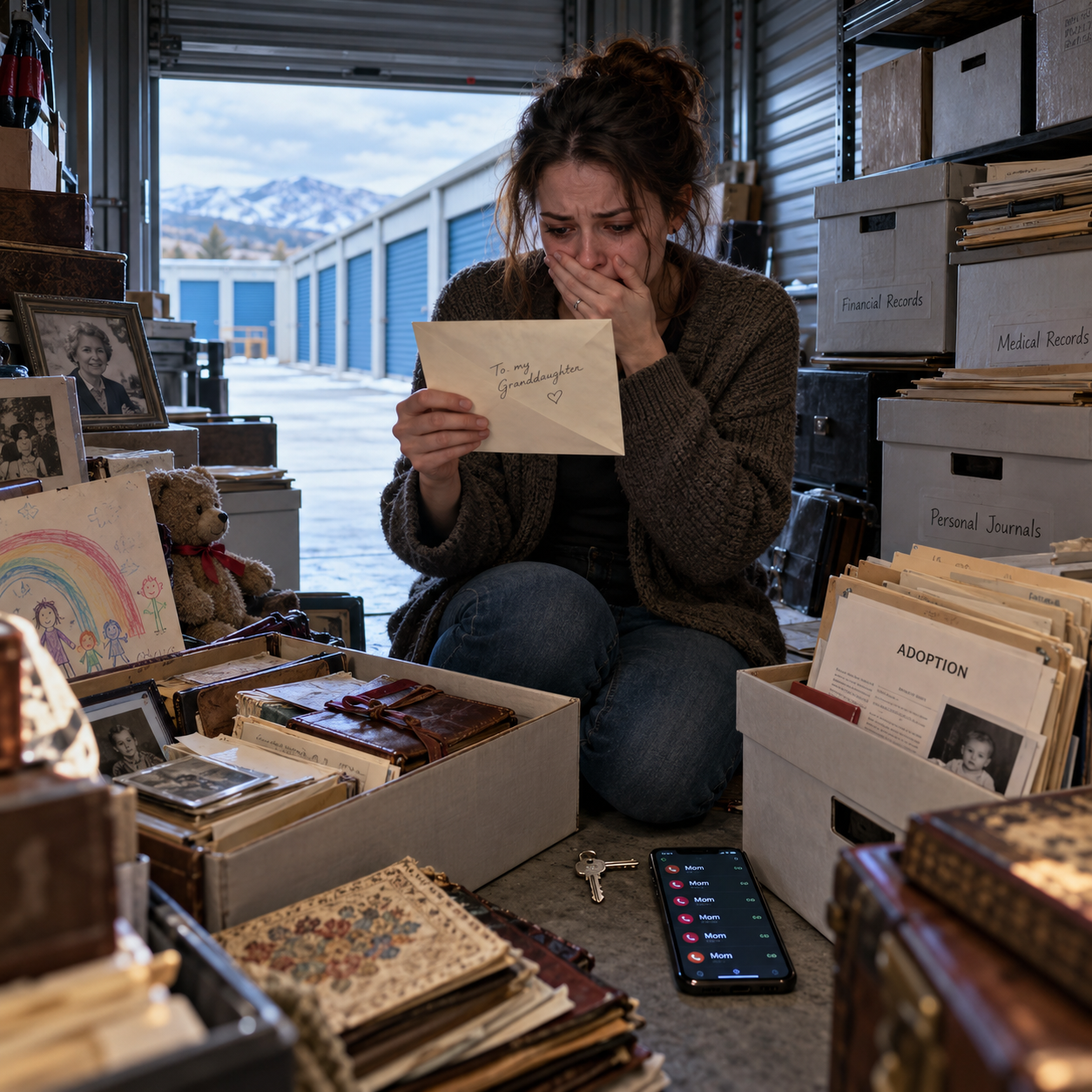
Paul led me to Unit 226.
The metal door rolled upward with a loud rattle.
I expected old furniture.
Boxes of clothes.
Maybe family photographs.
Instead, I found an archive.
Everything had been organized.
Everything was labeled in Grandma’s handwriting.
Financial records.
Journals.
Medical files.
School reports.
Childhood drawings.
Letters I had written her years earlier and completely forgotten about.
She had saved parts of my life my parents had discarded without a second thought.
Then I found the adoption paperwork.
My name was printed across the top.
My hands went cold.
The packet had been started when I was six years old.
I flipped through the pages.
There were handwritten notes in the margins.
My mother’s handwriting.
Then beneath the file, I found a small sticky note.
Grandma had written:
“They didn’t know what to do with her, so I did.”
I sat down on the concrete floor.
And for a long time, I couldn’t move.
Then I noticed another envelope.
Thick paper.
Unbroken seal.
My name written across the front.
Inside was a handwritten letter from Grandma.
And a formal legal directive prepared through an attorney named Lydia Rowan.
I had barely started reading when my phone rang.
Mom.
Then Jonah.
Then Colin.
Then Dad.
Call after call.
By the seventh one, I finally answered.
Mom didn’t even say hello.
“Did you open the unit?”
“Yes.”
Silence.
Then sudden chaos on her end.
I heard drawers opening.
Things being thrown around.
Then Mom shouted away from the phone:
“Check the trash!”
A pause.
“It has to be somewhere!”
They were searching for the keys they had mocked.
Jonah yelled from somewhere in the background:
“The trash truck already came!”
That was when the laughter ended.
And panic began.
Within twenty-four hours, they were threatening legal action.
They accused me of manipulating Grandma.
Taking advantage of her age.
Stealing something that supposedly “belonged to the family.”
And now we were sitting inside county court while their attorney tried to turn their regret into a legal argument.
He talked about fairness.
Confusion.
Grandma’s age.
Then the judge interrupted him.
“Where is your evidence of undue influence?”
The lawyer stopped.
My mother suddenly blurted:
“My daughter never would have gone there unless she already knew something!”
The judge raised one hand.
“This court deals in facts, not assumptions.”
Jonah’s smirk disappeared.
Beside me, Lydia stood.
She opened a leather portfolio.
Then removed the directive Grandma had prepared before her death.
Dad leaned forward.
Mom went completely still.
Lydia lifted the first page.
“Your Honor,” she said calmly, “Mrs. Ruth Carlile made her intentions unmistakably clear.”
The judge lowered his eyes to the document.
Across the courtroom, Jonah’s expression changed.
And that was when my family finally understood—
the silver key had never been the most dangerous thing Grandma left behind.
PART 2 — THE CONDITION THEY NEVER KNEW EXISTED
Lydia did not look at my family when she began reading.
She looked directly at the judge.
“Mrs. Carlile established the Ruth Carlile Living Trust eleven years before her death. The trust was amended twice, most recently eighteen months ago, after a complete independent cognitive evaluation.”
My mother shifted sharply.
Their attorney rose.
“Your Honor, we have concerns regarding the decedent’s capacity—”
Lydia placed another document on the table.
“Which is why Mrs. Carlile anticipated that argument.”
She handed copies forward.
Neurological assessment.
Mental competency evaluation.
A physician’s affidavit.
Two witness statements.
Video documentation.
Even the judge looked impressed.
My father whispered something to Mom.
She hissed back:
“She planned this.”
Of course Grandma had planned it.
She had spent decades being underestimated.
People mistook softness for weakness.
Patience for ignorance.
Age for confusion.
I knew better.
Grandma played chess with herself every Sunday evening because, according to her, most opponents became impatient before they became interesting.
The judge turned another page.
“Ms. Rowan, explain the significance of the keys.”
Lydia nodded.
“The keys were part of a conditional distribution procedure created by Mrs. Carlile.”
Jonah leaned toward his attorney.
“Conditional?”
The judge looked over his glasses.
“Mr. Carlile, you are not to interrupt.”
Jonah sat back.
Lydia continued.
“Every named family beneficiary was personally given a key. They were informed of the storage unit and its alleged approximate value. Each key opened the same exterior lock.”
Mom frowned.
“Alleged?”
I looked at Lydia.
That word bothered me too.
Lydia continued.
“The storage unit itself did not contain five million dollars in cash or property.”
Jonah actually laughed.
It burst out of him before he could stop it.
“I knew it.”
The judge’s expression hardened.
But Jonah was already turning toward me.
“You drove seven hours for some boxes.”
Colin smirked.
My mother leaned back as though a weight had been removed from her chest.
For three seconds, they believed they had won.
Then Lydia said:
“The storage unit contained the access instructions to assets valued at approximately five million dollars.”
The smile disappeared from Jonah’s face.
Lydia placed a sealed binder on the table.
“The assets themselves are held through investment accounts, municipal bonds, two residential properties, an agricultural parcel outside Meridian, and Mrs. Carlile’s remaining ownership interest in Carlile Precision Components.”
I stared at her.
I knew Grandma had investments.
I knew Granddad had once owned a machine shop.
But five million dollars?
No.
I had never known.
My father did.
I realized it by looking at him.
Not Mom.
Not Jonah.
Dad.
His eyes had already dropped to the floor.
“You knew,” I whispered.
His head snapped toward me.
The judge looked up.
I hadn’t intended to speak.
But suddenly every forgotten Christmas card, every discussion about Grandma “not understanding money anymore,” every complaint about how expensive her old house was to maintain rearranged themselves in my mind.
Dad knew.
Maybe not the exact amount.
But enough.
Lydia continued.
“Mrs. Carlile’s directive required each prospective beneficiary to visit Unit 226 within thirty days of receiving a key.”
Their attorney frowned.
“Everyone had thirty days?”
“Yes.”
“Then this proceeding is premature.”
“No.”
Lydia’s answer came so calmly that even he paused.
“The plaintiffs voluntarily destroyed or discarded their keys, then filed an emergency petition alleging theft before attempting to follow the trust procedure.”
The judge glanced toward my family.
“That is accurate?”
Their attorney hesitated.
“My clients believed—”
“Is it accurate?”
“Yes, Your Honor.”
The judge looked unimpressed.
Lydia opened the binder.
“But the more important point is that entry into the unit did not automatically transfer ownership.”
My heart tightened.
I hadn’t known that.
Lydia turned toward me for the first time.
“There were three conditions.”
I remembered Grandma’s letter.
I had only read the first page before the calls began.
Everything afterward had happened so quickly—lawyers, accusations, papers delivered to my apartment—that I had handed the entire packet to Lydia without finishing it.
“The first condition,” Lydia said, “was simple curiosity combined with respect. Would the beneficiary keep something Ruth gave them even if they believed it held no value?”
Mom’s cheeks flushed.
“The second was effort. Would the beneficiary travel to Boise without certainty of reward?”
The courtroom was utterly silent.
“And the third?”
The judge asked the question.
Lydia’s eyes briefly met mine.
“The third condition can only be discovered by someone who opens the archive.”
My stomach dropped.
Lydia reached into her portfolio and removed a sealed cream envelope.
On the front, in Grandma’s handwriting, were four words.
FOR THE ONE WHO CAME.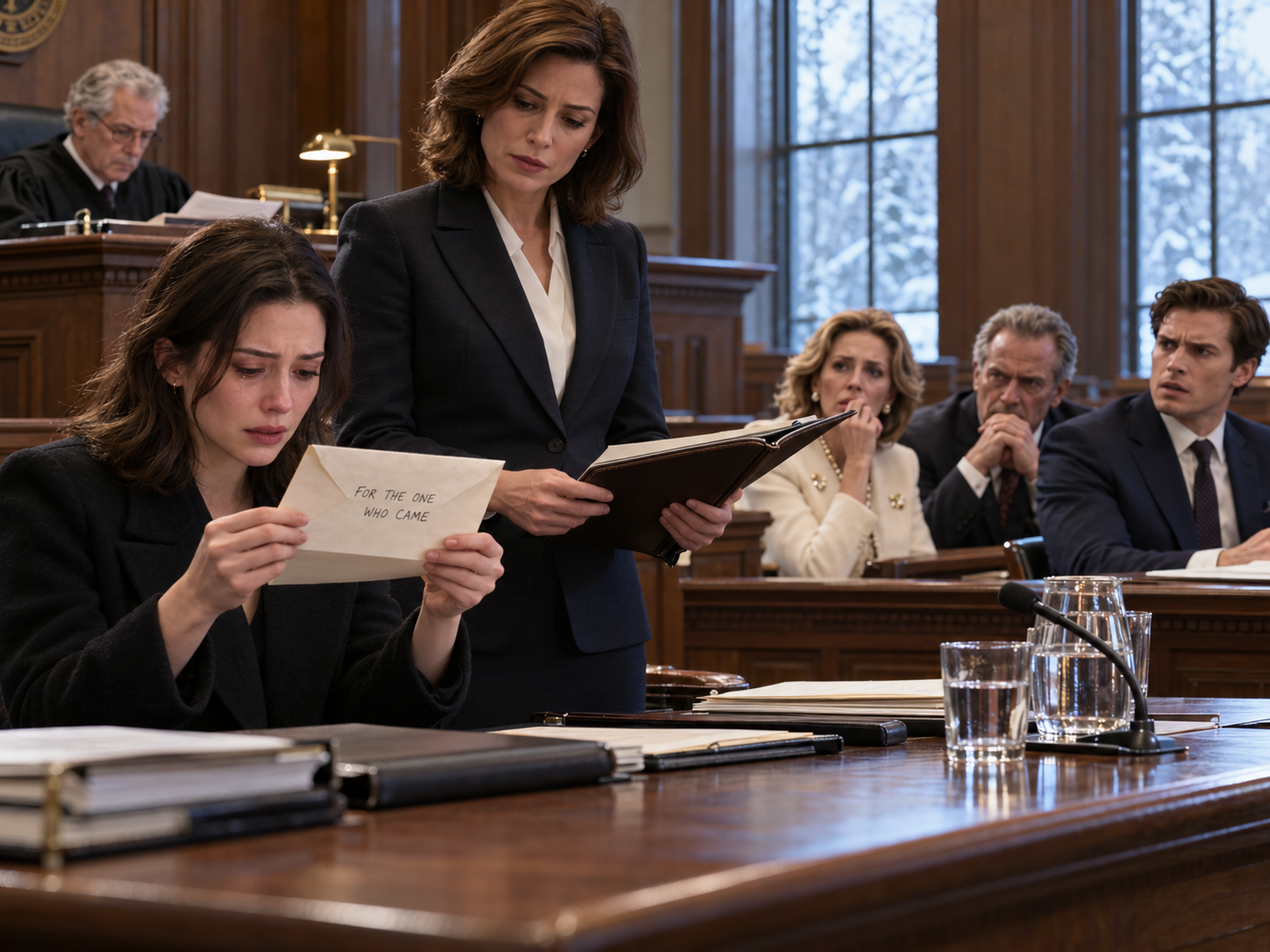
Lydia handed it to me.
My fingers shook.
“May I?”
I looked toward the judge.
He nodded.
I opened it.
Inside was a single folded sheet.
The handwriting was unmistakably Grandma’s.
Mara,
If you are reading this, then at least one person came.
I hope it was you.
But if it was not, then whoever arrived deserves to know the truth.
The money was never meant as a prize for guessing correctly.
I wanted to know whether my family could recognize value before someone told them the price.
My throat closed.
I continued.
There are things inside this unit more important than money.
Read the blue journals.
Read Eleanor’s file.
Read the adoption papers.
Then decide whether you still want anything from me.
If you do, contact Lydia.
But understand this:
I am not leaving my estate to someone simply because we share blood.
I am leaving it to the person willing to understand what our family did with that blood.
Love,
Grandma Ruth
I read the letter twice.
Then a third time.
I barely registered Lydia asking if I was all right.
One phrase had caught me.
Eleanor’s file.
Who was Eleanor?
I remembered seeing several boxes with names.
There had been too much to process.
The judge called for a brief recess.
The moment he left, my family exploded.
Mom stood first.
“This is ridiculous.”
Her attorney grabbed her arm.
“Please sit down.”
“No. My own mother has turned this into some sick game.”
Lydia closed her portfolio.
“Your mother created a lawful trust.”
“She was manipulating us!”
Jonah pointed at me.
“And she clearly knew Mara would go.”
I stood slowly.
“Why?”
He blinked.
“What?”
“Why did she know I would go?”
Nobody answered.
I looked at all of them.
“You’re saying Grandma designed this so I would win. Fine. Why was she certain I’d keep the key when none of you did?”
Colin scoffed.
“Because you were her favorite.”
Something inside me hardened.
“I lived with her because my parents sent me away.”
Mom flinched.
“That is not what happened.”
“Then what happened?”
“This is not the place.”
“You brought me to court.”
That silenced her.
Dad finally stood.
“Mara.”
He used the tone he had used when I was a child.
Slow.
Measured.
As though my emotions were something unstable he needed to contain.
“Your mother and I made difficult choices.”
“You put adoption papers together.”
Mom went white.
Jonah turned toward her.
“What adoption papers?”
There it was.
He didn’t know.
Neither did Colin.
My brothers had grown up in the same house where I had become a visitor.
Dad’s face tightened.
“You found those?”
“They were in the unit.”
Mom stared at me.
“You had no right to read them.”
For a moment I genuinely thought I had misheard her.
“My name is on them.”
“That was private.”
“My adoption was private from me?”
People across the courtroom were staring now.
Dad lowered his voice.
“We never completed it.”
“That is supposed to make it better?”
“You were difficult then, Mara.”
The words landed differently now that I was thirty-three instead of seven.
Not because they hurt more.
Because they hurt less.
I could finally hear how weak they were.
I looked at him.
“I was seven.”
His jaw moved.
No answer came.
Lydia stepped closer to me.
“Mara, we don’t have to discuss this here.”
But Mom was already crying.
Not quietly.
She had always cried beautifully.
Tears without ruined makeup.
Pain positioned perfectly for an audience.
“You think we wanted to send you away?” she asked. “You had meltdowns. You wouldn’t speak to people. You hid under tables. We had two other children.”
“You had three children.”
She closed her eyes.
I watched the sentence reach her.
Then Jonah said:
“Can we stop making this about Mara’s childhood? There are five million dollars at stake.”
I turned toward him.
And suddenly Grandma’s entire plan made sense.
Not the financial details.
The purpose.
She wanted us in one room.
Wanted money sitting invisibly between us.
Wanted to see whether we would finally tell the truth.
The judge returned ten minutes later.
Their request to freeze the trust was denied.
Their claim of immediate undue influence was dismissed without prejudice, meaning they could attempt a properly supported challenge later.
But before closing the hearing, the judge said something that changed everything.
“Ms. Rowan, this court sees no present basis to interfere with the trust administration. Ms. Carlile appears to have taken extraordinary precautions.”
Then he looked at my family.
“Disappointment is not evidence.”
Outside the courthouse, Jonah followed me down the steps.
“This isn’t over.”
I kept walking.
“Mara.”
I stopped.
Snow had begun falling.
Tiny flakes melted against the shoulders of his expensive coat.
He moved closer.
“If you take everything, you’ll destroy this family.”
I almost laughed.
Instead, I said:
“You threw your key in the trash.”
His face tightened.
“That doesn’t mean I deserve nothing.”
“No.”
I looked back at the courthouse.
“But maybe this was never about what we deserve.”
That afternoon, Lydia and I returned to Unit 226.
I found the blue journals.
Seven of them.
Years written across the spines.
And inside the first one, I found a photograph.
Two little girls stood beside a lake.
One was Grandma.
The other looked almost exactly like me.
On the back, Grandma had written:
Ruth and Eleanor.
Summer 1958.
She was the child nobody understood.
And then I understood why Grandma wanted me to read Eleanor’s file.
I just didn’t yet understand how much damage the truth was going to do.
PART 3 — THE GIRL OUR FAMILY ERASED
Eleanor was Grandma’s younger sister.
Nobody had ever mentioned her.
Not once.
Grandma had told stories about growing up poor, about picking apples for extra money, about the winter their pipes froze.
She had spoken about her parents.
Neighbors.
Teachers.
A dog named Franklin who apparently hated every mailman in Idaho.
Never Eleanor.
The blue journals explained why.
Eleanor had struggled with noise.
Crowds.
Unexpected touch.
Changes in routine.
She rarely spoke to strangers.
She loved numbers, maps, and birds.
At twelve, she could identify almost every bird in Idaho by sound.
At fourteen, her parents sent her away.
The official language in the records was clinical and cold.
Institutional placement.
Behavioral incapacity.
Family burden.
Grandma’s journal used different words.
They got tired of trying.
I sat inside Unit 226 reading until sunset.
Grandma had been sixteen when Eleanor disappeared from the house.
For months, their parents told neighbors Eleanor had gone to a special school.
Then they stopped mentioning her.
Grandma visited in secret.
She saved bus fare.
She brought books.
Cookies.
Colored pencils.
Eleanor died at twenty-seven from pneumonia after years of living in institutions.
A preventable infection, Grandma believed.
Nobody from the family had been with her except Ruth.
The last entry about Eleanor had been written when Grandma was seventy-nine.
I have spent sixty years wondering whether I should have fought harder.
Maybe that is why I never stopped fighting for Mara.
I closed the journal.
My vision blurred.
Suddenly Grandma’s patience with me had a history.
She hadn’t simply understood me.
She had recognized something.
Not a diagnosis.
Not a label.
A pattern.
A child standing at the edge of a family that found difference inconvenient.
Under the journals was another folder.
MARA — AGE 4–8.
School notes.
Evaluations.
Letters from teachers.
A developmental specialist’s recommendation that my parents pursue additional testing and support.
One letter had been marked in red pen by my mother.
WE ARE NOT DOING THIS.
I stared at it for several minutes.
Then came a second note.
From Dad.
Ruth, please stop encouraging this. Mara needs discipline, not labels.
Another.
We cannot organize our entire household around one child.
Another.
Jonah and Colin deserve a normal childhood too.
I felt physically sick.
Paul found me sitting outside the storage unit after dark.
He brought me coffee from the office.
“You okay?”
“No.”
He sat a careful distance away.
I appreciated that more than he knew.
After a while, he said:
“Your grandmother came here a lot.”
I looked at him.
“You knew her?”
“Eight years.”
He smiled faintly.
“She reorganized this unit every spring whether it needed it or not.”
That sounded exactly like Grandma.
“Did she tell you about the keys?”
“Some of it.”
“What?”
Paul rubbed his hands together against the cold.
“She said she was building a lighthouse.”
I frowned.
“A lighthouse?”
“She said money’s dangerous in families because everyone thinks it’s treasure. She wanted hers to be a lighthouse instead.”
“That doesn’t make sense.”
“Didn’t to me either.”
He shrugged.
“She said eventually someone would.”
Before leaving, I called Lydia.
“I don’t know if I want the money.”
She was silent.
Then:
“Good.”
I almost laughed.
“Good?”
“Your grandmother told me that if the first thing the person said after reading the archive was ‘How soon can I get the money?’ I was to slow the process down.”
“What if I said I didn’t want it?”
“She said that would mean you were finally ready to understand it.”
I closed my eyes.
Of course.
Grandma was still three moves ahead.
The next morning, Lydia met me at Grandma’s house.
I had not been inside since the funeral.
Everything looked smaller.
The kitchen curtains.
The hallway.
The wooden table where I had done homework.
I touched the back of my old chair.
For years, this had been the only place where I never felt like a problem requiring management.
Lydia placed a folder on the table.
“The five million dollars is not yours.”
I nodded.
Oddly, I felt relieved.
“Not yet,” she added.
I looked up.
“The trust gives you authority to determine its distribution.”
“What?”
“You are the successor trustee.”
I stared at her.
“I don’t know how to manage five million dollars.”
“You wouldn’t manage it alone. There are advisors.”
“No, Lydia. I mean why me?”
“Because Ruth did not want to create another inheritance fight. She wanted to create a decision.”
She opened the folder.
Grandma had divided the estate into two categories.
The first was personal property.
Her home.
Her belongings.
Family heirlooms.
Those were modestly valued and could be distributed among relatives at my discretion.
The second contained the bulk of the estate.
And Grandma had left instructions.
Not commands.
Options.
I could distribute portions to the family.
I could maintain the assets.
Or I could fund a charitable project Grandma had already legally established.
The Eleanor House Foundation.
My chest tightened.
Its stated mission:
To provide housing, advocacy, educational assistance, and respite services for children and young adults whose neurological or developmental differences placed them at risk of family instability or institutional abandonment.
I stopped reading.
“She built this because of Eleanor.”
“And you.”
I looked up.
Lydia’s expression softened.
“Ruth told me Eleanor was the wound. You were the second chance.”
I cried then.
Not dramatically.
No collapse.
No shouting.
Just quiet tears falling onto Grandma’s kitchen table.
Lydia waited.
Grandma would have waited too.
When I could speak again, I asked:
“How much did she intend for the foundation?”
“That is your decision.”
“I hate that.”
“I suspect she knew you would.”
I laughed through the tears.
Then the front door opened.
I froze.
Mom walked in.
Dad followed.
Behind them came Jonah.
“How did you get in?”
Dad lifted a key.
“It’s still my mother’s house.”
“No,” Lydia said. “Technically, it belongs to the trust.”
Mom ignored her.
She looked around the kitchen.
Then at the documents.
“You’re really doing this.”
“Doing what?”
“Taking over.”
Something hot rose inside me.
“I opened a storage unit.”
“You knew she preferred you.”
“Mom—”
“She did.”
Her voice cracked.
“She always took your side.”
Lydia stood.
“This conversation may be better handled privately.”
“No,” I said.
I wanted to hear it.
Maybe I needed to.
Mom looked at me.
“When you were little, every disagreement became Ruth telling me I wasn’t patient enough. That I needed to understand you better. That I needed to change routines, change schools, explain things differently.”
“You’re angry because Grandma asked you to parent me?”
Her face twisted.
“You think it was that simple?”
“I think I was seven.”
“So do I!”
She slammed her hand against the counter.
“I remember exactly how old you were.”
The sound stunned all of us.
Mom’s shoulders sagged.
“I remember sitting on the bathroom floor after you screamed for three hours because we changed the curtains.”
My childhood memory surfaced.
Blue curtains disappearing.
Yellow ones replacing them.
The whole room suddenly wrong.
“I didn’t know why you were screaming,” she whispered. “I didn’t know why you stopped talking for two days after we moved your bed.”
“You could have listened to the specialist.”
“I was scared.”
“You wrote no.”
“I know.”
“You told Grandma I needed discipline.”
“I know.”
“You tried to have her adopt me.”
Mom looked away.
That was answer enough.
Dad stepped forward.
“We thought you would be happier with her.”
“You mean you thought you would be happier without me.”
“Mara.”
“Say it.”
Dad’s mouth tightened.
Jonah looked uncomfortable now.
Good.
For once, let him be uncomfortable.
Dad finally said:
“We were drowning.”
“And I was the child you pushed off the boat.”
Mom covered her mouth.
Dad went pale.
Nobody spoke.
Then Jonah ruined whatever honesty might have come next.
“How much are we getting?”
I stared at him.
Mom turned around.
“Jonah.”
“What? We’re all thinking it.”
“No,” I said. “You are.”
He leaned both hands against the table.
“Grandma had five million dollars. Dad spent years handling repairs on this house. Mom took her to appointments. Colin helped with taxes. I fixed her roof.”
“You charged her.”
His head jerked.
“What?”
I had found the invoice.
Three times the market rate.
From Jonah’s construction company.
“She paid you twenty-two thousand dollars for a roof that two contractors estimated at less than nine.”
“That’s business.”
“She was your grandmother.”
“And now suddenly you’re Mother Teresa because you kept a key?”
“No.”
I closed the folder.
“I’m the trustee because she chose me.”
He laughed bitterly.
“There it is.”
“What?”
“The quiet little victim finally gets power.”
The words should have hurt.
Instead, something settled in me.
I stood.
“You should leave.”
“This is a family house.”
“It belongs to the trust.”
His eyes narrowed.
“You sound just like Lydia.”
“Good.”
Mom whispered my name.
But Jonah grabbed the folder.
Lydia moved instantly.
“Put that down.”
He pulled it away from her.
Papers spilled across the table.
One fell onto the floor.
Jonah bent.
Picked it up.
Read.
His face changed.
“What is Eleanor House?”
Nobody answered quickly enough.
He read farther.
Then looked at me.
“You’re giving our inheritance to strangers?”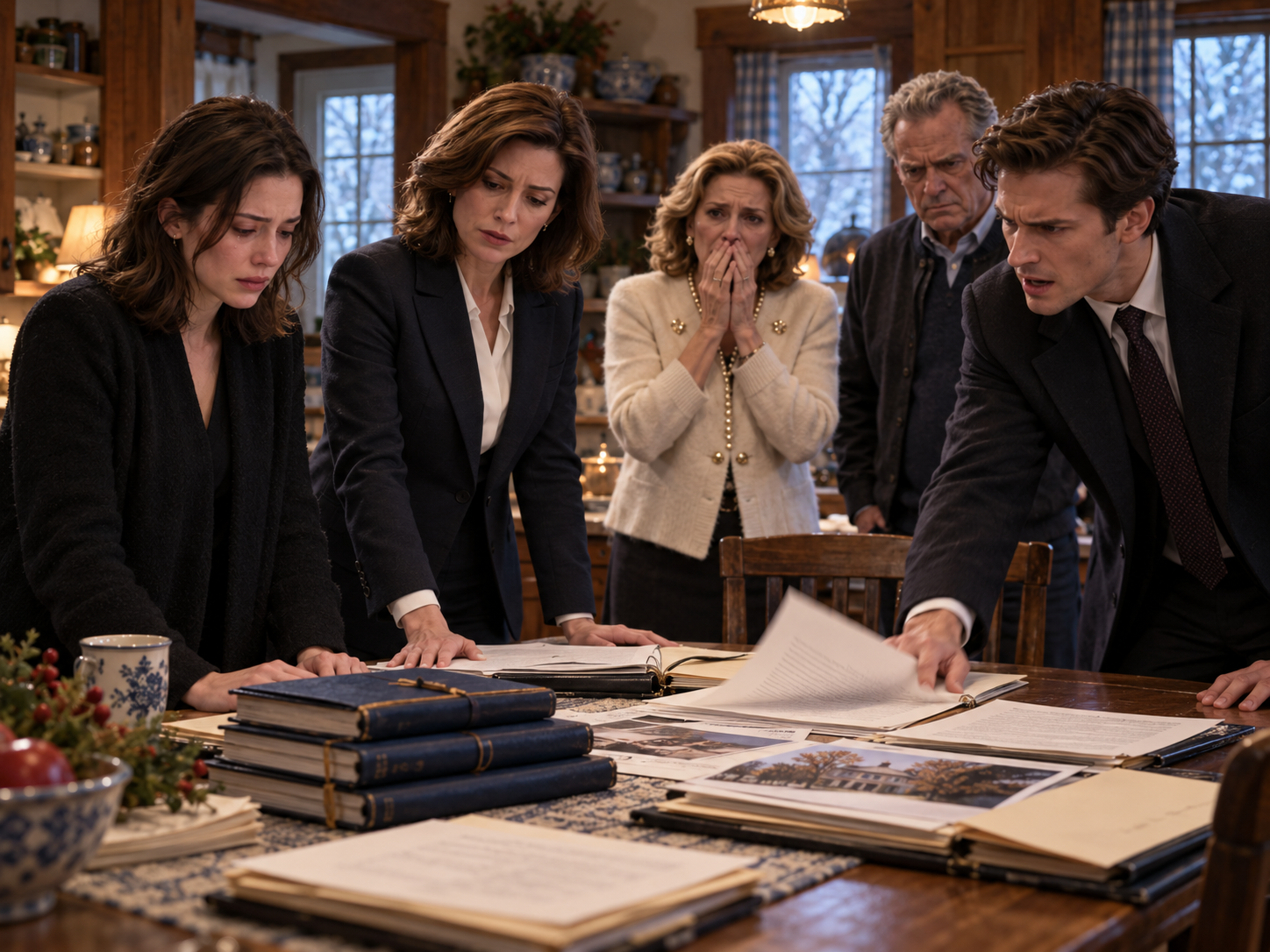
“They aren’t strangers.”
“They’re not family.”
I thought of Eleanor dying at twenty-seven.
Of Grandma riding buses in secret.
Of myself sitting beneath tables while adults discussed me as though I were defective furniture.
“They are someone’s family.”
Jonah threw the page down.
“This is insane.”
Then he said the thing that ended whatever sympathy I had left.
“Grandma should have put Eleanor in an institution. People did that back then. So what?”
My mother closed her eyes.
Dad whispered:
“Jonah.”
But it was too late.
I looked at him.
And saw exactly why Grandma had created the keys.
It was never a test of greed.
Not really.
It was a test of memory.
Could any of us understand what happens when a family decides one person is too inconvenient to love properly?
Jonah had just given his answer.
Three days later, he filed a second lawsuit.
This time, he wasn’t challenging Grandma’s competence.
He was challenging mine.
PART 4 — WHAT GRANDMA RECORDED
The petition was forty-two pages long.
According to Jonah’s attorney, I lacked the emotional stability, financial expertise, and independence necessary to act as trustee.
The wording was polished.
The implication was familiar.
Mara is different.
Therefore Mara is incapable.
I read it twice.
Then set it down.
Lydia expected anger.
Instead, I felt tired.
“They’re using my childhood records.”
“Yes.”
“How did they get them?”
“We’re determining that.”
I already knew.
Dad.
He had kept copies.
Old evaluations.
School notes.
Descriptions of meltdowns.
Speech difficulties.
Social problems.
Things written about me at six, seven, eight years old were now being attached to court documents as evidence that a thirty-three-year-old woman could not administer a trust.
I laughed when I reached the paragraph describing my “persistent fixation on organizational systems.”
Lydia looked up.
“What?”
“They’re arguing that being organized makes me incompetent to manage an estate.”
Her mouth twitched.
“I noticed that.”
“So Grandma left everything perfectly labeled to the person they’re criticizing for liking labels.”
“Your grandmother possessed a particular sense of humor.”
The hearing was scheduled for February.
Meanwhile, the family fractured.
Colin called me first.
Unlike Jonah, he didn’t threaten.
He asked to meet.
We chose a coffee shop halfway between Spokane and Boise.
He arrived twenty minutes early.
I arrived eleven minutes early.
Grandma would have approved.
For several minutes, neither of us spoke.
Then Colin pushed something across the table.
A silver key.
I stared at it.
“You kept yours?”
“No.”
He rubbed his face.
“I found it.”
“Where?”
“In the pocket of the coat I wore that night.”
I looked at him.
“I thought you threw it out.”
“So did I.”
He swallowed.
“Jonah threw his away. Mom tossed hers onto the table. Dad left his behind. Mine must’ve slipped into my coat.”
“Why are you giving it to me?”
“Because I went to Boise yesterday.”
My breath caught.
“You opened the unit?”
“Paul wouldn’t let me.”
Of course.
The court proceedings had restricted access.
“But he told me I should talk to Lydia. So I did.”
I waited.
Colin stared into his coffee.
“I read some of Grandma’s journals.”
“How?”
“Lydia showed me copies after I signed a confidentiality agreement.”
That sounded like Lydia.
Colin’s eyes were red.
“I didn’t know about Eleanor.”
“Neither did I.”
“I didn’t know about the adoption papers.”
I said nothing.
He looked at me.
“Mara, I knew you lived with Grandma. I knew Mom and Dad said it was because Boise had a school that was better for you.”
My stomach tightened.
“That’s what they told you?”
“Yes.”
I almost laughed.
Years of anger rearranged themselves again.
Colin hadn’t been old enough to understand.
Jonah had been thirteen.
Colin had been nine.
“I thought you wanted to live there.”
“I wanted to stop feeling unwanted.”
He stared at me.
“I’m sorry.”
I looked away.
Apologies are strange when you have imagined them for years.
You think the correct one will unlock something.
It doesn’t.
It simply opens a door.
You still have to decide whether to walk through.
“What are you sorry for?”
“For believing everything that was easiest to believe.”
That answer surprised me.
He continued.
“When you came home for holidays, Jonah and I treated you like a guest.”
“Yes.”
“And later, when you were quiet at dinners, we joked about it.”
“Yes.”
“I thought you were judging us.”
“I was usually trying to figure out when I was supposed to talk.”
He closed his eyes.
“Oh.”
One syllable.
Twenty years late.
And somehow it mattered.
Colin slid the key closer.
“I don’t want to challenge the trust.”
“Jonah says you’re part of the lawsuit.”
“I told my attorney this morning to remove my name.”
I studied him carefully.
“Why?”
“Because Grandma’s right.”
“About what?”
“I only cared once I heard five million.”
He swallowed.
“That’s not who I want to be.”
I took the key.
Not because I needed it.
Because I understood what he was offering.
The first honest thing between us.
Mom came next.
She didn’t apologize.
Not at first.
She came to Grandma’s house carrying a cardboard box.
Inside were photographs.
Mine.
Apparently she had kept more than I believed.
School picture.
A clay bird I made in second grade.
A spelling test with a perfect score.
A photograph of me asleep against Grandma’s shoulder.
“I thought you threw everything away,” I said.
“I didn’t.”
“You threw some things away.”
Her face tightened.
“Yes.”
We sat in the living room.
For twenty minutes, Mom said almost nothing.
Then:
“I was jealous of her.”
I looked at her.
“Grandma?”
“She knew how to calm you.”
Mom rubbed her hands together.
“She always knew whether you needed the lights lower or the television turned off. She knew not to touch you when you were upset. She knew what food you’d eat.”
“You could have learned.”
“I know.”
“You chose not to.”
“Yes.”
There was no excuse after it.
That mattered.
Mom looked at me.
“I told myself Ruth was making you dependent on special treatment.”
“She was accommodating me.”
“I know that now.”
“Why didn’t you know it then?”
“Because if she was right, I had to admit I was failing.”
There it was.
Not cruelty dressed as righteousness.
Fear dressed as certainty.
It didn’t erase anything.
But truth rarely erases.
It explains.
Mom began crying.
“I loved you.”
I looked down at my hands.
“I believe you.”
She seemed startled.
“But?”
“You loved me in a way that required me to stop being difficult for you.”
Her face crumpled.
I continued gently.
“Grandma loved me in a way that required her to learn who I was.”
Mom cried harder.
I didn’t comfort her.
That was new.
I let her own the pain.
Before leaving, she handed me her silver key.
“I found it under the couch.”
I almost smiled.
“Everyone is finding these now.”
“She would enjoy that.”
“Yes.”
At the door, Mom stopped.
“Jonah won’t stop.”
“I know.”
“He thinks you’re humiliating him.”
“This isn’t about him.”
“That’s why he’s angry.”
She looked at me.
“Your father gave his attorney your old records.”
I already suspected it.
Hearing it still hurt.
“Why?”
“He thinks if you’re removed as trustee, the court will appoint a professional and the foundation won’t receive everything.”
“Will he testify?”
Mom looked away.
“Yes.”
Court arrived on a gray Thursday morning.
Jonah wore a navy suit.
Dad sat behind him.
Mom sat on the opposite side of the aisle.
Colin sat beside her.
That alone surprised Jonah.
He stared at Colin.
Colin stared forward.
Lydia opened our case with financial professionals.
A trust administrator testified that I had attended every required meeting.
An accountant confirmed that I had signed no distributions to myself.
A fiduciary advisor testified that I had specifically requested safeguards preventing unilateral withdrawals.
Then Jonah’s attorney called Dad.
Watching my father swear to tell the truth felt surreal.
He described my childhood.
My difficulty adjusting to changes.
My discomfort in groups.
My dependence on Grandma.
Then the attorney asked:
“Mr. Carlile, do you believe your daughter is capable of objectively managing an estate of this size?”
Dad looked at me.
“No.”
One word.
Some wounds remain childish no matter how old you get.
Lydia stood for cross-examination.
“Mr. Carlile, what is Mara’s current occupation?”
Dad paused.
“She works in data management.”
“For whom?”
“A hospital network.”
“Her title?”
He hesitated.
“I’m not sure.”
Lydia checked a document.
“Senior Compliance Data Analyst?”
“Yes.”
“Does her work involve confidential records?”
“Yes.”
“Regulatory requirements?”
“Yes.”
“Financial reporting?”
“I assume so.”
“Have you ever visited her workplace?”
“No.”
“Have you ever spoken to her supervisor?”
“No.”
“Reviewed her performance records?”
“No.”
“Then your opinion regarding her professional capacity is based primarily on behavior she exhibited as a child?”
Their attorney objected.
The judge overruled.
Dad’s face flushed.
“I know my daughter.”
Lydia paused.
Then quietly asked:
“When is her birthday?”
Dad stared at her.
My chest tightened.
He knew.
Surely.
The silence lasted three seconds.
Four.
Five.
Mom closed her eyes behind him.
Dad gave the wrong date.
Not by a day.
By two weeks.
Lydia didn’t react.
“What did she study in college?”
He guessed psychology.
I studied information systems.
“Where did she complete graduate training?”
“I don’t remember.”
“Does she own or rent her home?”
“I believe she rents.”
I had owned my condominium for five years.
Each answer stripped something away.
Not my dignity.
His authority to define me.
Then Lydia asked:
“You testified that Mara was dependent on Ruth. When did Mara last receive financial assistance from Ruth?”
“I don’t know.”
“According to the trust records, the last payment Ruth made on Mara’s behalf was a community college textbook purchase when Mara was nineteen.”
Dad shifted.
Lydia looked at the judge.
“No further questions.”
Jonah’s case was collapsing.
Then his attorney played their strongest card.
A recording.
Grandma.
My breath stopped when her voice filled the courtroom.
The video had been recorded eight months before her death.
She looked frail.
Older than I remembered.
Jonah’s lawyer paused it after Grandma momentarily forgot a date.
“This,” he argued, “demonstrates cognitive deterioration.”
Lydia didn’t object.
That scared me.
The lawyer played another section.
Grandma asked someone off-camera to repeat a question.
Another pause.
Another moment of hesitation.
Then the lawyer stopped the video.
“An elderly woman who loses track of dates, needs questions repeated, and openly admits memory difficulty should not be allowed to transfer an estate through an elaborate psychological contest.”
The phrase sounded persuasive.
Almost.
Then Lydia stood.
“Your Honor, may we play the complete recording?”
Jonah’s attorney froze.
Apparently, he had not expected that.
The judge nodded.
The video resumed.
Grandma looked into the camera.
“I forgot whether Lydia said Tuesday or Thursday,” she said.
Then she smiled.
“If forgetting Thursdays makes someone incompetent, half my family should lose their driver’s licenses.”
A few people laughed.
Even the judge’s mouth moved.
Grandma continued.
“I know why this recording exists.”
She looked directly into the lens.
“If you’re seeing it in court, then somebody is arguing that I was a confused old woman.”
Jonah went still.
Grandma leaned forward.
“So let me help.”
She stated the date.
The president.
Her address.
Her physician’s name.
The exact approximate value of each major asset.
Then she said:
“I have three grandchildren and one daughter.”
My mother inhaled sharply.
“I love them all.”
Grandma paused.
“But love and inheritance are not the same obligation.”
Jonah’s face hardened.
“If Jonah is watching this, he is probably angry.”
A few heads turned toward him.
Grandma smiled sadly.
“He often becomes angry when consequences arrive after choices.”
Colin covered his mouth.
Then Grandma said my name.
“Mara, if you are watching, you are probably uncomfortable because everyone is looking at you.”
A laugh escaped me through tears.
She knew.
Of course she knew.
“I’m sorry about that, sweetheart.”
Then her expression changed.
Serious.
Tender.
“I did not choose Mara because she is perfect.”
My throat tightened.
“I chose her because when this family was told there might be something valuable behind a metal door, I believed she was the person most likely to open that door even if there was nothing valuable behind it.”
Grandma took a breath.
“She visits people when there is nothing to inherit.”
She keeps letters when there is nothing to gain.
She listens when silence would be easier.
“And if she decides to give every dollar away, that will be her decision.”
Jonah whispered something under his breath.
Grandma continued.
“There is one final provision.”
Lydia glanced at me.
I had not known.
Apparently neither had anyone else.
“Each person who received a key remains eligible for a direct distribution of two hundred thousand dollars.”
Jonah’s head snapped up.
Mom gasped.
Even I stared at Lydia.
Grandma held up one finger.
“One condition.”
Of course.
“Before receiving it, they must submit a signed statement explaining what they learned from Eleanor’s story, what they regret about Mara’s childhood, if anything, and what they intend to do differently with the people in their lives who are difficult to understand.”
The courtroom was silent.
“This statement need not flatter Mara.”
Grandma smiled.
“She dislikes flattery anyway.”
I laughed through my tears.
“It must simply be honest.”
Then Grandma leaned closer to the camera.
“If someone would rather forfeit two hundred thousand dollars than examine themselves honestly, then I have learned everything I needed to know.”
The video ended.
Jonah looked furious.
Dad looked broken.
Mom was crying.
The judge removed his glasses.
Then he ruled.
The trust stood.
I remained trustee.
The challenge was dismissed.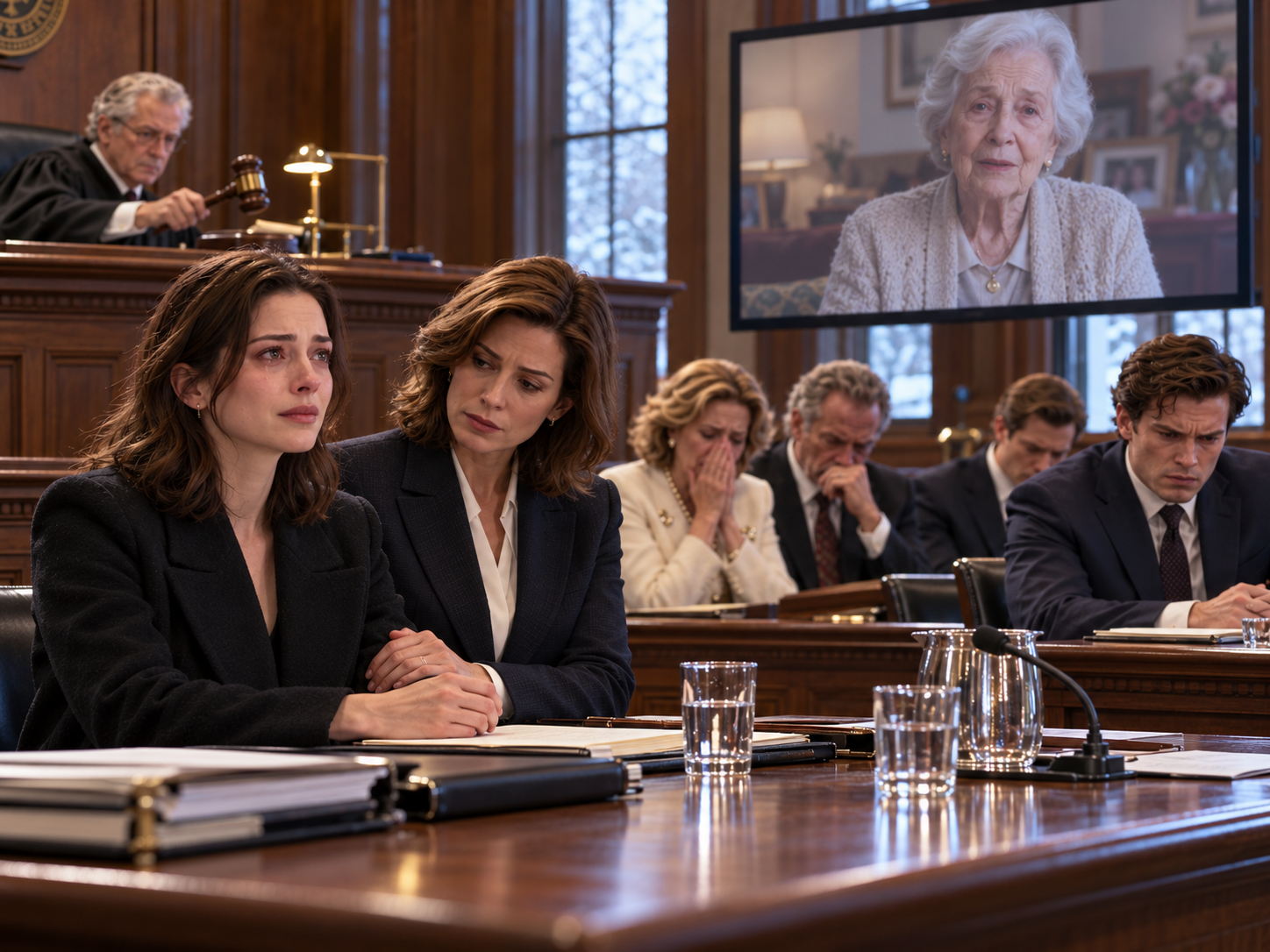
And before leaving the bench, he looked at Jonah.
“Mr. Carlile, your grandmother appears to have understood her family exceptionally well.”
Outside court, Jonah caught up with me.
“You knew about the two hundred thousand?”
“No.”
“Don’t lie.”
“I didn’t know.”
His jaw tightened.
“So you control whether I get it.”
“No.”
“Of course you do.”
“Read the trust.”
“I’m not writing some humiliating confession.”
“Then don’t.”
“That’s two hundred thousand dollars.”
“Yes.”
He stared at me.
“You don’t care?”
“I care whether you mean what you write.”
He laughed harshly.
“You really think you’re better than us now.”
“No.”
I looked back at the courthouse doors.
“I think Grandma was trying to give us one last chance to become better than we were.”
Then I walked away.
For the first time in my life, my brother had nothing to say.
PART 5 — THE HOUSE WITH THE BLUE DOOR
Jonah did not submit a statement.
Not that month.
Dad did.
It arrived through Lydia six weeks after the hearing.
Three pages.
The first paragraph sounded like a business memo.
The second sounded defensive.
Then, halfway down page two, his handwriting changed.
He had crossed out an entire sentence.
Underneath, he wrote:
I kept calling Mara difficult because it was easier than admitting I was impatient.
I stopped.
Read it again.
Then continued.
He wrote about the adoption papers.
About convincing himself that Grandma’s house was “better suited” for me.
About the relief he felt when the house became quieter.
And about the shame of recognizing that relief years later.
Then:
I told myself a good father makes practical decisions.
The truth is that sometimes a coward calls a selfish decision practical because he cannot bear to name it.
I cried at that sentence.
Dad did not ask me to forgive him.
That helped.
His final paragraph said:
I do not know whether I deserve a relationship with my daughter. I know money cannot purchase one. I will accept whatever distribution the trust allows, but I am donating half of it to Eleanor House whether Mara speaks to me again or not.
He received his distribution.
And he kept his promise.
Mom’s statement arrived two weeks later.
Eleven pages.
Of course Mom wrote eleven pages.
She described Eleanor.
Then me.
Then herself.
Some parts made me angry.
Some made me sad.
Some were the first time I had ever heard my mother speak honestly about how deeply she feared being judged as a bad parent.
Her final page contained one sentence underlined twice.
I kept waiting for my daughter to become easier to love when I should have been becoming better at loving her.
I folded the pages carefully.
Mom donated twenty-five thousand dollars from her distribution.
Colin donated fifty.
He also volunteered.
Not at first with children.
He admitted he was nervous.
Instead, he helped renovate the first property purchased through the foundation.
An old brick house in Boise.
Seven bedrooms.
Wide hallway.
Large backyard.
A detached garage we converted into a quiet activity room.
We painted the front door blue.
Grandma’s favorite color.
We called it Eleanor House.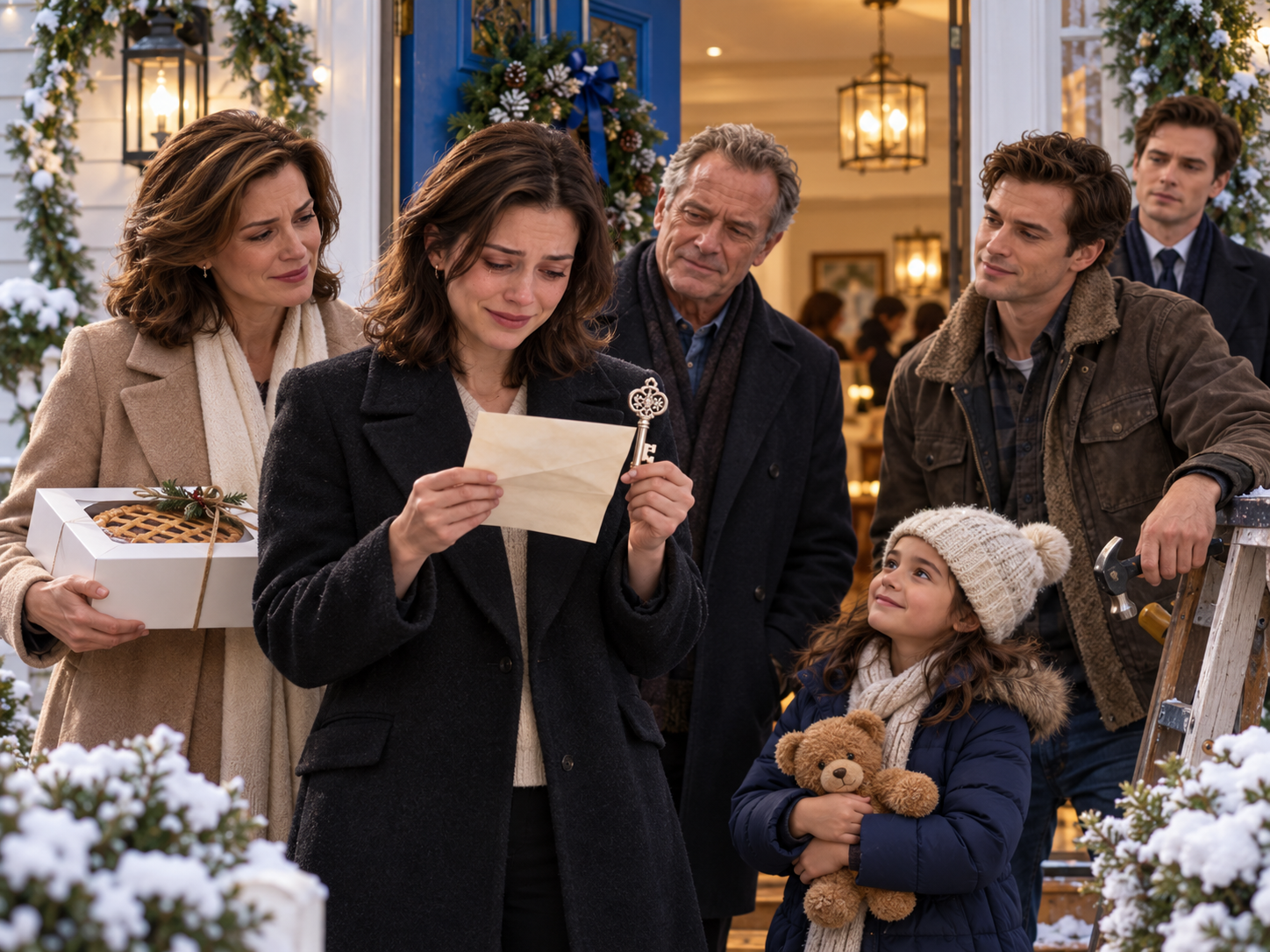
The foundation did not become some magical institution that solved every problem.
Grandma would have hated that kind of story.
Real help was messier.
We provided temporary housing for families in crisis.
Grants for evaluations.
Tutoring.
Sensory-friendly spaces.
Legal advocacy.
Training for foster parents.
Respite support for exhausted parents who loved their children but genuinely needed help.
The point was never to judge families for struggling.
The point was to give them options before struggle became abandonment.
That distinction mattered to me.
Because eventually I understood something about my parents that I could not understand as a child.
They had needed help too.
They simply chose denial instead.
Eleanor House existed so another family might make a different choice.
On opening day, thirty-seven people gathered in the backyard.
I hated giving speeches.
Grandma knew that.
Unfortunately, dying had not stopped her from assigning me one.
Lydia handed me a final envelope ten minutes before the ceremony.
“You’re kidding.”
“No.”
“She had another letter?”
“Yes.”
“How many letters did this woman write?”
Lydia smiled.
“A lot.”
I opened it.
Mara,
If Eleanor House exists, then you figured out the lighthouse.
I laughed immediately.
Paul, standing nearby, turned toward me.
He remembered.
Grandma continued.
Money is not treasure when it sits in a room.
It becomes useful when it keeps someone from crashing into rocks.
That is what I meant.
You do not owe this family forgiveness.
Please understand that.
Forgiveness demanded is simply another form of control.
But if any of them change honestly, I hope you allow yourself the freedom to notice.
You were never difficult to love.
Some of us were simply poorly equipped to love you well.
There is a difference.
I pressed the letter against my chest.
For several moments, I couldn’t continue.
Then I read the last lines.
And Mara?
Keep the silver key.
Not because it opens anything anymore.
Keep it because there will always be people who throw away things they do not understand.
Do not become one of them.
Love always,
Grandma
I stood in the backyard with the letter trembling in my hand.
Beyond the fence, children were playing.
One boy wore large headphones and carefully moved stones into straight rows.
His father sat nearby reading a book.
Nobody told the boy to stop.
Nobody told him to join the other children.
Nobody called him strange.
He was simply there.
Included without being corrected.
I looked toward the house.
Mom stood near the blue door.
She had started therapy.
She and I were not magically close.
Sometimes conversations still went wrong.
Sometimes she apologized too quickly because she wanted reassurance.
Sometimes I had to tell her:
“I’m not ready to make you feel better about that.”
To her credit, she was learning to accept those words.
Dad came to my apartment once a month for dinner.
The first three dinners were awful.
He tried too hard.
Asked prepared questions.
Filled every silence.
At the fourth dinner, I finally said:
“You know we don’t have to talk constantly.”
He stared at me.
Then laughed.
“I suppose I’m still learning.”
“So am I.”
That became something we could build on.
Colin surprised me most.
He became one of Eleanor House’s most reliable volunteers.
He installed cabinets.
Fixed sinks.
Built adjustable desks.
And one afternoon I overheard him tell another volunteer:
“My sister taught us that helping isn’t the same thing as fixing someone.”
I pretended I hadn’t heard.
But I cried in my car afterward.
Jonah stayed away.
For nearly nine months.
He criticized the foundation to relatives.
Called Grandma’s trust manipulative.
Complained about being robbed.
Then, one October morning, Lydia called.
“Jonah submitted his statement.”
I nearly dropped my coffee.
“What?”
“It’s only one page.”
“That sounds like Jonah.”
“You should read it.”
“No.”
Lydia paused.
“No?”
“If it meets the legal conditions, process it.”
“You have the right to review—”
“Grandma said honesty. She didn’t say he had to perform it for me.”
There was silence.
Then Lydia said softly:
“Ruth chose well.”
I hated hearing that.
It felt like pressure.
“Don’t.”
“I’m sorry.”
“Thank you.”
Jonah received his two hundred thousand dollars.
I expected nothing else.
Two months later, he came to Eleanor House.
No warning.
I was reviewing grant applications when Colin appeared in the doorway.
“You have a visitor.”
I knew immediately.
Jonah stood outside near the blue door.
Hands in pockets.
No suit.
No lawyer.
No smirk.
I opened the door but didn’t invite him in.
“Hi.”
“Hi.”
Long silence.
He looked older.
Or maybe simply less certain.
“I’m not here about money.”
“You already got the money.”
“Right.”
Another silence.
“What do you want?”
He looked past me into the hallway.
“I wanted to see it.”
“The house?”
He nodded.
I stepped aside.
Not because he deserved it.
Because I wanted to see what he would do.
He walked slowly.
Children’s art covered one wall.
The quiet room was occupied, so we didn’t enter.
In the kitchen, two parents sat with a social worker filling out paperwork.
Jonah lowered his voice.
“What happens here?”
I explained.
He listened.
Actually listened.
At the end of the tour, we sat on the back steps.
Finally, he said:
“I remember you under the dining table.”
I stared at the yard.
“So do I.”
“I used to think you were doing it for attention.”
“I was hiding because everyone was yelling during football.”
He nodded.
“I know that now.”
We sat quietly.
Then he said:
“I was thirteen when you left.”
“Yes.”
“I liked being the oldest kid in the house.”
I turned toward him.
He looked ashamed.
“When you were gone, Dad relied on me more. Mom bragged about me more.”
He swallowed.
“I liked it.”
I didn’t rescue him from the confession.
“I made jokes about you because everyone laughed.”
“Yes.”
“And when Grandma started spending more time with you, I told myself she preferred you because you were broken.”
My chest tightened.
He winced.
“I know how horrible that sounds.”
“It sounds accurate.”
He nodded.
“That’s what I wrote.”
His statement.
I finally understood.
“I’m not asking you to forgive me.”
“Good.”
A tiny smile crossed his face.
Grandma would have appreciated that too.
Jonah looked across the backyard.
“I spent part of the money.”
“That’s yours.”
“I donated the rest.”
I turned.
“To Eleanor House?”
“No.”
He shook his head.
“There’s a nonprofit in Washington that helps siblings of kids with disabilities.”
That surprised me.
“Why them?”
“Because I think sometimes siblings get angry at the wrong person.”
For the first time all afternoon, I didn’t know what to say.
Jonah stood.
“I should go.”
At the gate, he stopped.
“Mara?”
“Yes?”
“I’m sorry I called you broken.”
“You called me worse.”
“I know.”
He exhaled.
“I’m sorry for all of it.”
I nodded.
“I believe you.”
His eyes lifted.
“But believing you isn’t the same as everything being fixed.”
“I know.”
That answer mattered.
He left.
We did not become best friends.
That would have been dishonest.
But he came back three months later.
Then again.
Sometimes change arrives dramatically.
Usually it doesn’t.
Usually it looks like someone returning after being told they are not entitled to return.
It looks like apologies without demands.
Dinner without arguments.
Questions asked without already deciding the answer.
The following New Year’s, almost exactly one year after Grandma placed the silver keys on my parents’ coffee table, we gathered at Eleanor House.
Not everyone came.
Some relatives still thought the trust had been unfair.
Others suddenly claimed they had always supported Grandma.
Families rewrite history quickly when the original witnesses begin dying.
I stopped trying to correct all of them.
Mom brought pie.
Dad brought coffee.
Colin arrived with a box of cabinet hardware because apparently he had become incapable of attending any event without repairing something.
Jonah came late.
He brought nothing.
Which, strangely, felt right.
After dinner, Mom placed a small velvet box in front of me.
“What is this?”
“Open it.”
Inside was my silver key.
The original.
I had given it to Lydia months earlier for safekeeping.
Someone had polished it.
A small brass tag had been attached.
Two words were engraved into the metal.
I CAME.
My throat tightened.
Mom looked nervous.
“Too sentimental?”
“Yes.”
Her face fell.
I smiled.
“But I like it.”
Everyone laughed.
Even me.
Later that evening, after the others left, I stood alone on the porch.
Snow had started falling across Boise.
The house behind me was quiet.
Not empty.
Quiet.
There was a difference.
Through the window, I could see the colorful artwork along the hallway.
A lamp glowed near the blue door.
The key rested in my palm.
For most of my childhood, I believed families were places you earned your position by being easy enough to keep.
Grandma had spent years teaching me otherwise.
She never said family must accept everything.
Never said love meant tolerating cruelty.
Never pretended kindness could solve every problem.
She simply believed that people deserved to be understood before they were discarded.
Eleanor had never received that chance.
I almost hadn’t either.
So Grandma built one.
Not just for me.
For whoever came next.
I thought about the night she handed out the keys.
Everyone laughing.
Jonah tossing one toward the trash.
Dad barely looking.
Mom embarrassed by Grandma’s announcement.
And Grandma standing quietly in the middle of them.
Watching.
Waiting.
She had known exactly what she was doing.
The five million dollars had caught everyone’s attention eventually.
But the money had never been the inheritance.
The inheritance was the question.
What do you do with something—or someone—before you know what they are worth?
My family had answered badly once.
Some of them were learning to answer differently.
Maybe that was the beautiful thing about Grandma’s final plan.
She hadn’t used her money to punish us.
She had used it to create a door.
Some people walked through immediately.
Some needed a year.
Some might never come.
But the door existed.
And behind it was a house with a blue entrance, a quiet room, a backyard full of children, and enough space for people who had spent too much of their lives being told they were inconvenient.
I closed my fingers around the silver key.
Then I heard a small voice behind me.
“Ms. Mara?”
I turned.
A girl stood just inside the doorway.
Maybe eight years old.
She had arrived at Eleanor House with her father that afternoon.
She was holding both hands over her ears because the neighbors had begun setting off early fireworks.
“Too loud?” I asked.
She nodded.
I opened the door wider.
“The quiet room is downstairs.”
She hesitated.
“Am I allowed?”
The question hit me harder than anything that had happened in court.
I crouched slightly but didn’t move closer.
“You don’t have to ask permission to need quiet.”
She studied me.
Then slowly lowered one hand.
“Really?”
“Really.”
She went inside.
I stood there watching the blue door close behind her.
And suddenly I could hear Grandma’s voice as clearly as if she were standing beside me.
Some children come into the world a little sideways.
I smiled through my tears.
“No,” I whispered into the snowy darkness.
“Not wrong.”
Then I turned toward the warm light inside Eleanor House.
The silver key was still in my hand.
But I didn’t need it anymore.
The door was already open.
THE END