LUCY LETBY CASE ERUPTS AGAIN AS TWO KEY DEFENCE EXPERTS QUIT AMID SCIENTIFIC DISPUTE
LUCY LETBY CASE ERUPTS AGAIN AS TWO KEY DEFENCE EXPERTS QUIT AMID SCIENTIFIC DISPUTE
Two scientists who had supported challenges to Lucy Letby’s convictions have withdrawn from her defence team, raising fresh questions about the scientific arguments surrounding one of Britain’s most closely watched criminal cases.
The legal battle surrounding former neonatal nurse Lucy Letby has entered another extraordinary chapter after two experts who had previously contributed to efforts to challenge her convictions withdrew from her defence team.
Helen Shannon, a chemical engineering expert, and Professor Geoff Chase, a bioengineering academic from New Zealand, said they could no longer support certain arguments being advanced on Letby’s behalf.
Their decision has intensified an already fierce dispute over the medical and scientific evidence used to convict Letby.
But it does not mean that Letby’s convictions have been overturned — and it does not establish that the prosecution case was wrong.
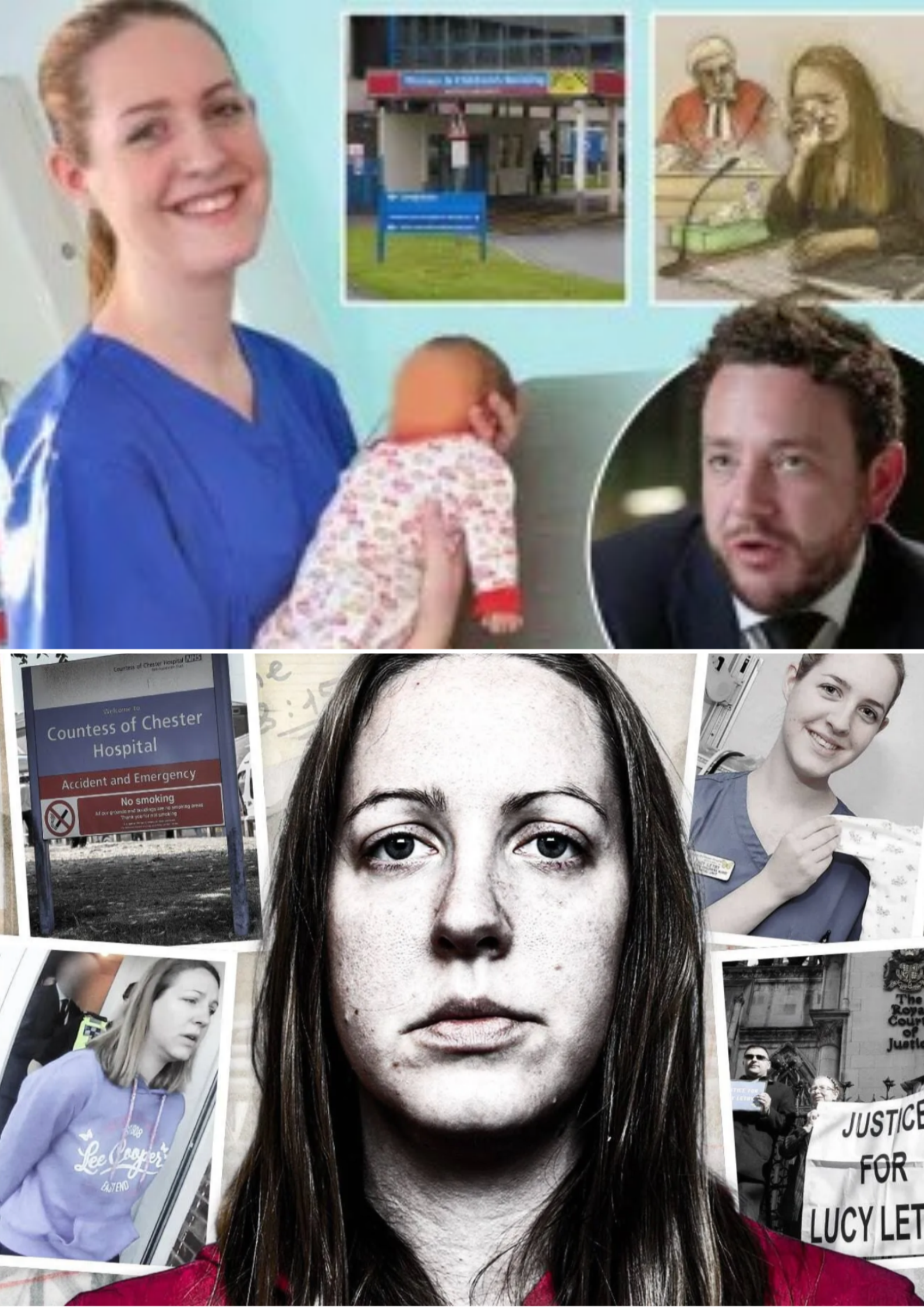
Letby continues to maintain her innocence and is serving 15 whole-life sentences after being convicted of murdering seven babies and attempting to murder seven others at the Countess of Chester Hospital.
 WHY DID TWO EXPERTS WALK AWAY?
The two experts said they continued to stand by their assessment that it was very unlikely that two babies at the centre of the insulin allegations had been poisoned.
However, they said some arguments being advanced more broadly in Letby’s defence were inconsistent with the available evidence, science and established physiology.
They said continuing to associate themselves with arguments they believed were inaccurate created serious professional and ethical concerns.
Their withdrawal has therefore created a complicated picture.
They have not simply reversed their earlier scientific conclusions about the two insulin cases.
Instead, they objected to other arguments being presented as part of the continuing challenge to Letby’s convictions.
THE SCIENCE AT THE HEART OF THE CONTROVERSY
One of the most important disputes concerns two babies identified during the original trial as Baby F and Baby L.
Prosecutors argued that both babies had been deliberately poisoned with insulin.
The prosecution’s case relied heavily on blood-test results and expert interpretation of insulin and related hormone levels.
But scientists supporting Letby’s appeal have challenged that interpretation.
Professor Geoff Chase was previously among experts who argued that the insulin and C-peptide results were not sufficient to establish deliberate poisoning and that alternative medical explanations needed to be considered.
Those arguments formed part of the new evidence submitted to the Criminal Cases Review Commission (CCRC).
 COULD SOME COLLAPSES HAVE HAD NATURAL EXPLANATIONS?
That question has become central to the wider controversy.
An international panel of 14 experts led by retired Canadian neonatologist Dr Shoo Lee previously reviewed medical evidence relating to babies involved in Letby’s convictions.
The panel argued that the babies’ collapses and deaths could be explained by natural causes or poor medical care and said it found no medical evidence supporting deliberate harm.
Those conclusions are strongly disputed by the prosecution case that resulted in Letby’s convictions.
Importantly, the expert panel’s conclusions are new defence evidence and expert opinion. They are not a court ruling overturning the convictions.
NEW HOSPITAL RECORDS HAVE ALSO COME UNDER SCRUTINY
Another major development emerged in July 2026, when the BBC reported that maternity notes relating to babies in Letby’s case had been seized by Cheshire Police but were not made available to the defence before the original trial.
The records reportedly contained information about pregnancies, labour and births.
Questions have since been raised about whether those records contained medical information that could have been relevant to alternative explanations for some of the babies’ conditions.
However, the existence of previously undisclosed or unreviewed material does not by itself establish that Letby was wrongly convicted.
Its significance must be assessed through the legal review process.
THE CCRC IS ALREADY REVIEWING THE CASE
The Criminal Cases Review Commission confirmed in February 2026 that it was reviewing Letby’s convictions.
The commission received a preliminary application in February 2025, followed by expert reports, legal submissions and further defence material over the following months.
The CCRC has stressed that its role is not to decide whether Letby is innocent or guilty.
Instead, it considers whether there is a real possibility that a conviction would not be upheld if new evidence or arguments were considered by an appeal court.
The commission has not announced that it has reached such a conclusion.
ANOTHER CONTROVERSY: A KEY PROSECUTION EXPERT
The scientific dispute has also expanded beyond the two experts who recently withdrew.
Earlier in 2026, the Guardian reported that Professor Peter Hindmarsh, a prosecution expert who gave evidence concerning the insulin allegations, had been under investigation by the General Medical Council during Letby’s trial.
The investigation involved allegations concerning his professional practice.
However, the GMC investigation was never completed because Hindmarsh voluntarily relinquished his medical registration in 2024.
There was therefore no final regulatory finding against him.
The disclosure has nevertheless prompted further questions from Letby’s supporters about the expert evidence heard by the original jury.
PROSECUTORS HAVE NOT ACCEPTED THAT THE CONVICTIONS ARE UNSAFE
While criticism of the medical evidence has intensified, Letby’s convictions remain legally valid.
The Crown Prosecution Service has previously defended the original case.
In January 2026, prosecutors also announced that they would bring no further criminal charges against Letby in relation to additional allegations concerning infant deaths and non-fatal collapses.
The CPS said the evidential test for murder or attempted murder was not met in those additional cases.
That decision concerned separate allegations and did not overturn the existing convictions.
WHAT HAPPENS NEXT?
The next major development depends on the CCRC.
The commission is continuing to assess the material submitted by Letby’s legal team, including expert reports and other evidence.
If the CCRC eventually concludes that there is a real possibility the convictions would not be upheld, it could refer the case to the Court of Appeal.
If it does not reach that threshold, the convictions will remain in place.
For now, neither outcome has been announced.
That leaves the case in an unusual position.
A convicted former nurse remains in prison under 15 whole-life sentences, while an expanding group of medical experts continues to challenge aspects of the scientific evidence that helped secure those convictions.
At the same time, two experts who previously supported elements of the defence case have now withdrawn over concerns about other arguments being advanced.
A LEGAL BATTLE FAR FROM OVER
The latest development does not provide a simple answer to the question that has divided experts, lawyers and the public.
It does, however, underline how intensely contested the medical evidence remains.
For Letby’s supporters, questions surrounding insulin testing, neonatal medicine, hospital records and alternative explanations remain central to their campaign for a further legal review.
For the prosecution, the existing convictions remain the result of a jury verdict that was subsequently upheld on appeal.
And for the CCRC, the task is narrower: to determine whether the new material creates a genuine possibility that the convictions might not stand if the case returns to the appeal courts.
Until that decision is made, the legal status remains unchanged.
Lucy Letby remains convicted — but the scientific and legal debate surrounding the evidence continues.