LUCY LETBY’S CASE IS BACK UNDER REVIEW — BUT WHAT DOES THE NEW EVIDENCE REALLY SHOW?
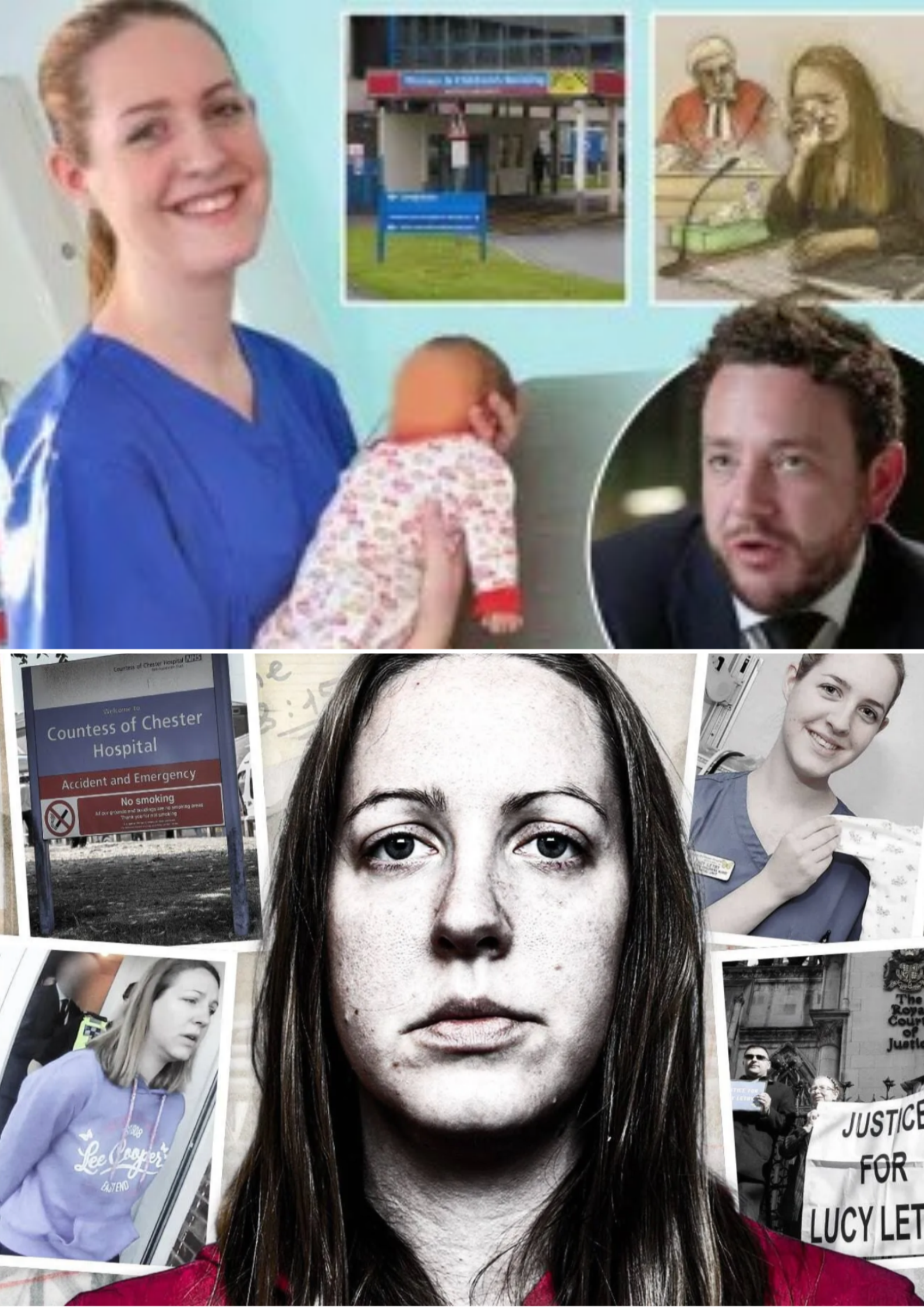
LUCY LETBY’S CASE IS BACK UNDER REVIEW — BUT WHAT DOES THE NEW EVIDENCE REALLY SHOW?
The Criminal Cases Review Commission is examining new expert material submitted on behalf of the convicted former nurse — as fresh questions continue to surround the medical evidence used at her trials.
Lucy Letby’s extraordinary legal saga is entering another chapter.
The former neonatal nurse remains behind bars serving 15 whole-life sentences after being convicted of murdering seven babies and attempting to murder seven others at the Countess of Chester Hospital.
But her legal team is now asking Britain’s miscarriage-of-justice watchdog to examine new evidence and arguments that they say could undermine the convictions.
And the review is officially underway.
The Criminal Cases Review Commission, or CCRC, confirmed in February 2026 that it had received a preliminary application on Letby’s behalf and was examining her convictions.
Since then, additional expert reports, legal submissions and defence material have been provided.
The CCRC’s own timeline shows that further expert reports arrived throughout 2025, defence files were received in December 2025 and additional submissions and expert reports were provided in January 2026.
But there is an important distinction.
The CCRC has not declared Lucy Letby innocent.
Nor has it announced that the prosecution evidence was fabricated.
The commission itself says determining guilt or innocence is a matter for the courts. Its role is to investigate whether new evidence or arguments create a real possibility that a conviction would not be upheld.
 WHY IS THE MEDICAL EVIDENCE BEING QUESTIONED?
One of the central issues surrounding Letby’s case is the medical evidence presented at trial.
There was no eyewitness who reported seeing Letby deliberately harm one of the babies, and the prosecution case relied heavily on medical records, clinical interpretation and expert evidence concerning how the babies deteriorated.
A group of experts supporting Letby has subsequently challenged aspects of those medical conclusions.
The Guardian previously reported that an international panel of experts had argued that the babies’ collapses and deaths could have resulted from natural causes or poor medical care rather than deliberate harm. Families of the babies have strongly disputed those arguments.
That disagreement is now part of the material being considered by the CCRC.
Whether the new evidence is strong enough to result in a referral back to the Court of Appeal remains unknown.
 THEN CAME THE THIRLWALL INQUIRY
The publication of the Thirlwall Inquiry report has added another layer to the controversy.
Published on September 15, 2026, the report was highly critical of the Countess of Chester Hospital.
Lady Justice Thirlwall described dysfunctional management and governance, a gulf between hospital leadership and clinicians and a failure to understand basic safeguarding responsibilities.
The inquiry found that there had been a complete failure to protect babies on the neonatal unit and that concerns raised by clinicians about Letby were not properly acted upon.
Senior nurses did not accept that doctors’ concerns were justified, while senior managers delayed involving police.
The inquiry also criticized internal and external reviews commissioned after concerns about Letby emerged, saying they failed to properly address whether deliberate harm might have occurred.
For the families involved, the findings were devastating.
Parents were kept in the dark for years about concerns surrounding their babies and were not properly informed about reviews or the possibility that deliberate harm was suspected.
But the inquiry made another point equally clear.
It was not a retrial of Lucy Letby.
Lady Justice Thirlwall specifically stated that her report was not an investigation into Letby’s criminal convictions or guilt and that it was not her role to second-guess the work of the CCRC.
SO, HAS THE ENTIRE CASE COLLAPSED?
No.
That claim is currently unsupported.
Letby has already lost two attempts to challenge her convictions at the Court of Appeal.
The first involved the convictions from her main trial, while a later appeal concerned the additional attempted-murder conviction obtained at a retrial.
The CCRC review is therefore significant, but it does not automatically reopen the convictions or guarantee another appeal.
The commission must first determine whether the material before it reaches the legal threshold for referral.
Only then could the Court of Appeal become involved again.
ANOTHER LEGAL DEVELOPMENT IS UNDERWAY
There is also a separate development that could keep the medical circumstances surrounding the babies under scrutiny.
In February 2026, a Cheshire coroner formally opened inquests into five babies — identified in the proceedings as C, E, I, O and P — whose deaths were among those for which Letby was convicted.
The coroner said there was “reason to suspect unnatural death.”
The inquests are separate from the criminal appeals and must operate within the legal limits imposed by Letby’s existing convictions.
That means several different processes are now examining different aspects of the wider story.
The Thirlwall Inquiry examined institutional failures.
The coroner is examining the circumstances surrounding specific deaths.
And the CCRC is considering whether new evidence or legal arguments could justify referring Letby’s convictions back to the Court of Appeal.
WHAT HAPPENS NEXT?
For now, the biggest question remains unanswered.
Will the CCRC find that the new medical evidence creates a real possibility that one or more of Letby’s convictions cannot stand?
The commission has not given a timetable for a final decision.
It has, however, confirmed that the review is active and that substantial additional material has been submitted.
That makes the coming months potentially significant for one of Britain’s most closely watched criminal cases.
But amid the enormous amount of speculation circulating online, one fact remains essential:
Lucy Letby’s convictions have not been overturned.
The CCRC has not declared the prosecution evidence fabricated.
And the Thirlwall Inquiry has not found that Letby was wrongly convicted.
What it has done is expose profound failures inside the hospital where the babies became seriously ill or died — while a separate legal review continues to examine the evidence behind Letby’s convictions.
The next major answer will come not from social media speculation, but from the evidence placed before the CCRC and, if the case is referred, the Court of Appeal.
Until then, the central question remains open:
Is the new evidence strong enough to change the legal history of Lucy Letby’s case — or will her convictions ultimately stand?