Odell Beckham Jr. Flight Dispute Escalates After Crew Calls Police and Orders Entire Plane to Deplane
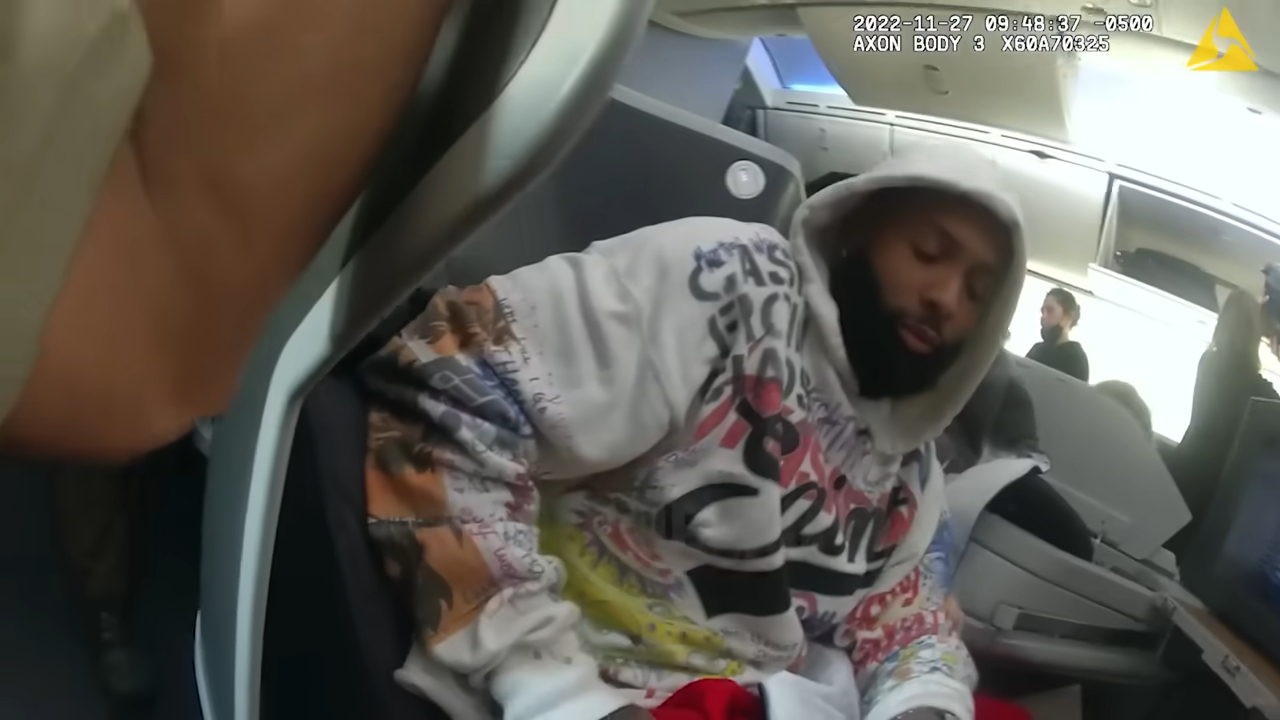
What began as a medical concern aboard an American Airlines flight quickly turned into an unusual confrontation involving police, fire rescue, flight attendants, the captain and ultimately every passenger on the aircraft.
On November 27, 2022, officers were dispatched to Miami International Airport after the crew of an American Airlines flight reported difficulty waking a passenger before departure.
That passenger was identified as NFL wide receiver Odell Beckham Jr.
According to the account in the footage, crew members had attempted to wake Beckham so he could fasten his seatbelt, but he appeared to be coming in and out of consciousness. Concerned that he could be seriously ill — and that his condition might worsen during the approximately five-hour flight — the crew requested assistance from police and fire rescue.
The initial call therefore did not begin as a disciplinary issue.
It began as a question about Beckham’s health.
“Do You Know Where You’re At?”
When emergency personnel approached Beckham, officers repeatedly tried to determine whether he was alert and oriented.
“You okay?” one person asked.
Another officer tried to get his attention before asking:
“You know where you’re at, sir?”
The question was repeated as rescue personnel evaluated his condition.
But after speaking with him, the medical assessment appeared relatively reassuring.
“He’s very tired,” one responder said.
“He looks good to me.”
From the perspective of fire rescue, there did not appear to be an obvious emergency at that moment. Beckham was awake, responding and appeared to understand where he was.
That might have been enough to end the medical portion of the incident.
It did not resolve the airline’s concerns.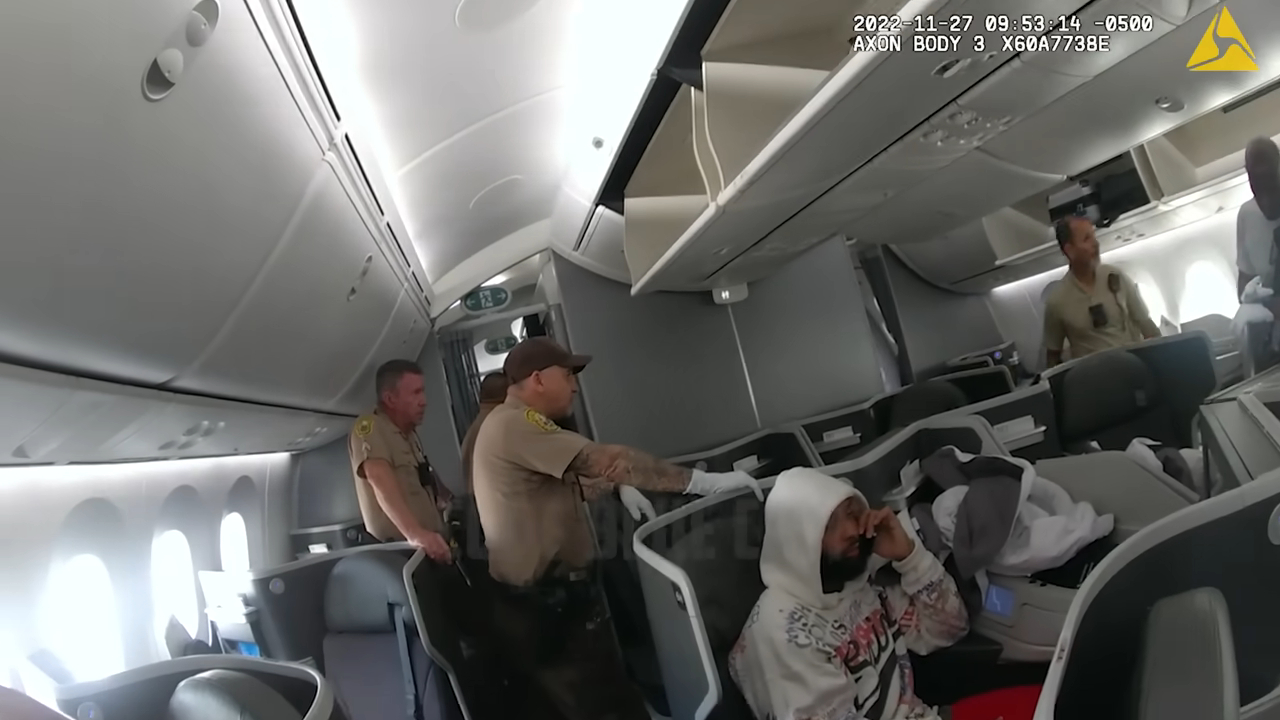
Medical Crew Says He Appears Fine
Several minutes later, emergency personnel discussed the situation with airline employees.
Their position was clear: if Beckham did not want a medical examination, they could not force him to undergo one.
“Medically, if he doesn’t want us to check him out, I can’t,” a responder explained.
The same responder added that he did not immediately see anything wrong and suggested Beckham could simply have been extremely tired after a long trip.
He also noted that Beckham had responded appropriately when asked where he was and appeared to know where he was traveling.
But whether he was medically cleared and whether the airline wanted him to remain on the aircraft were two different questions.
Emergency personnel told airline staff that the decision belonged to them.
“If you don’t want him to fly, that’s a decision that you guys are gonna have to make,” one responder said, adding that the captain would ultimately be involved.
At that point, the case shifted.
The central question was no longer whether Beckham needed emergency medical treatment.
It was whether the airline was comfortable allowing him to continue the flight.
Flight Attendants Ask Beckham to Leave
According to the narration in the footage, flight attendants eventually asked Beckham to exit the aircraft.
He did not immediately agree to leave.
That refusal changed the situation dramatically.
Airline staff explained that there was a procedure they would have to follow if he remained unwilling to exit.
“If he refuses to get off, you’re gonna have to deplane everybody,” one employee said.
The reason was operational and safety-related: before officers could deal with the situation further, the rest of the passengers might need to be removed from the aircraft.
Staff confirmed that Beckham did not want to come off the plane.
A supervisor was requested.
Then airline personnel began preparing for the possibility that everyone else would have to leave first.
It was a remarkable escalation.
A concern that had started with one passenger apparently being difficult to wake was now threatening to disrupt the travel plans of an entire aircraft.
Police Receive a More Detailed Briefing
As supervisors arrived, officers sought clarification about exactly what had happened before their arrival.
An airline representative explained that Beckham had reportedly been unresponsive before pushback when crew members tried to get him to fasten his seatbelt.
They had repeatedly tried to wake him and eventually called paramedics.
By the time medical personnel arrived, Beckham had become responsive.
But the crew no longer felt comfortable allowing him to remain on the flight because they were uncertain about what had caused the earlier episode.
The airline representative said Beckham could be placed on another flight departing roughly an hour and a half later.
The difficulty was that Beckham did not want to leave the aircraft.
That left the airline with its more disruptive option.
“Unfortunately, everybody,” the representative said.
The plan was to deplane the passengers first and then deal with Beckham after the cabin was cleared.
By this stage, officers appeared to recognize that the dispute was not primarily about police authority.
The airline had made the decision.
Their role was to help enforce it safely.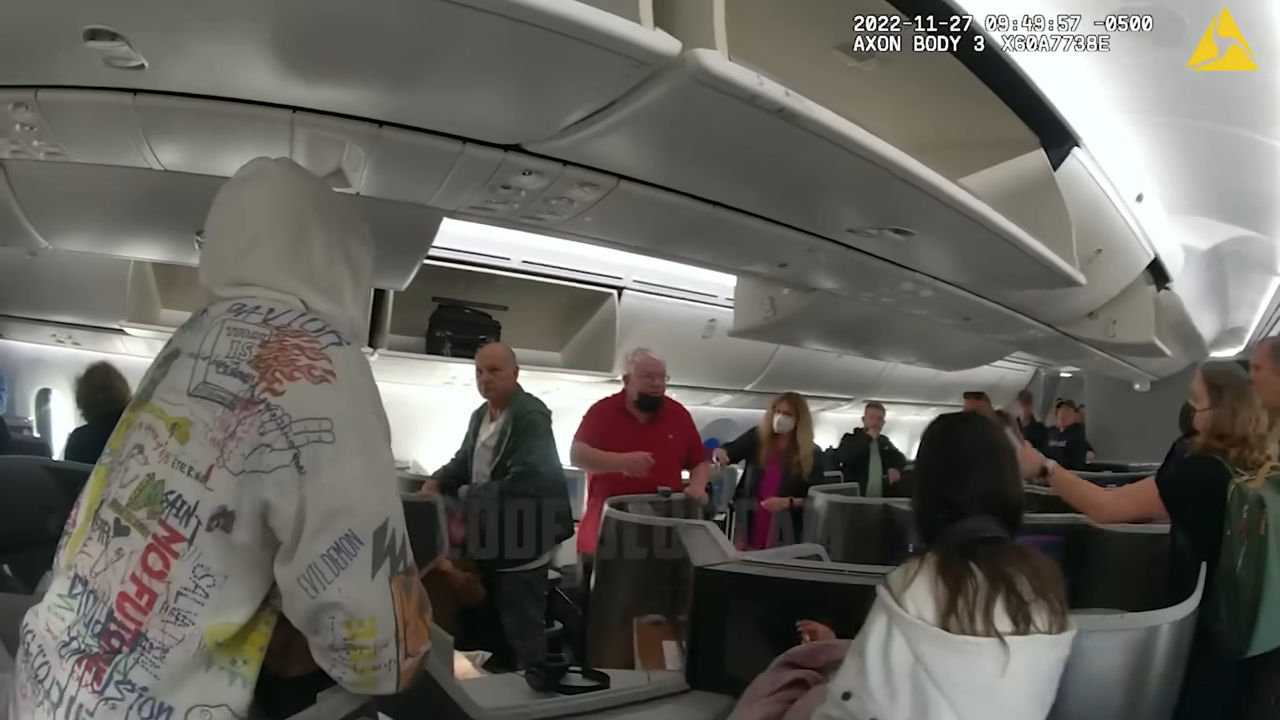
“This Is Not Our Decision”
A Miami-Dade Police sergeant then approached Beckham directly.
He introduced himself and immediately tried to make one point clear.
“Unfortunately, this is not our decision.”
The officer explained that the ultimate authority rested with the airline and, specifically, the captain.
Whatever concerns had caused the crew to lose confidence in continuing the flight with Beckham on board, the captain had made the final call.
The sergeant tried to frame the situation as a logistical inconvenience rather than a criminal confrontation.
He told Beckham that the airline planned to rebook him on the next available flight.
Then he explained what would happen if Beckham still refused to leave.
The airline would remove everyone else from the aircraft first.
After that, Beckham would still have to exit.
“The captain is the one that makes a final decision,” the sergeant told him.
Then came the bluntest statement of the encounter:
“We’re gonna have to deplane everybody on this plane, and then you’re still gonna get off.”
There was little ambiguity left.
Whether Beckham agreed with the airline’s reasoning or not, remaining on that particular flight was no longer an option.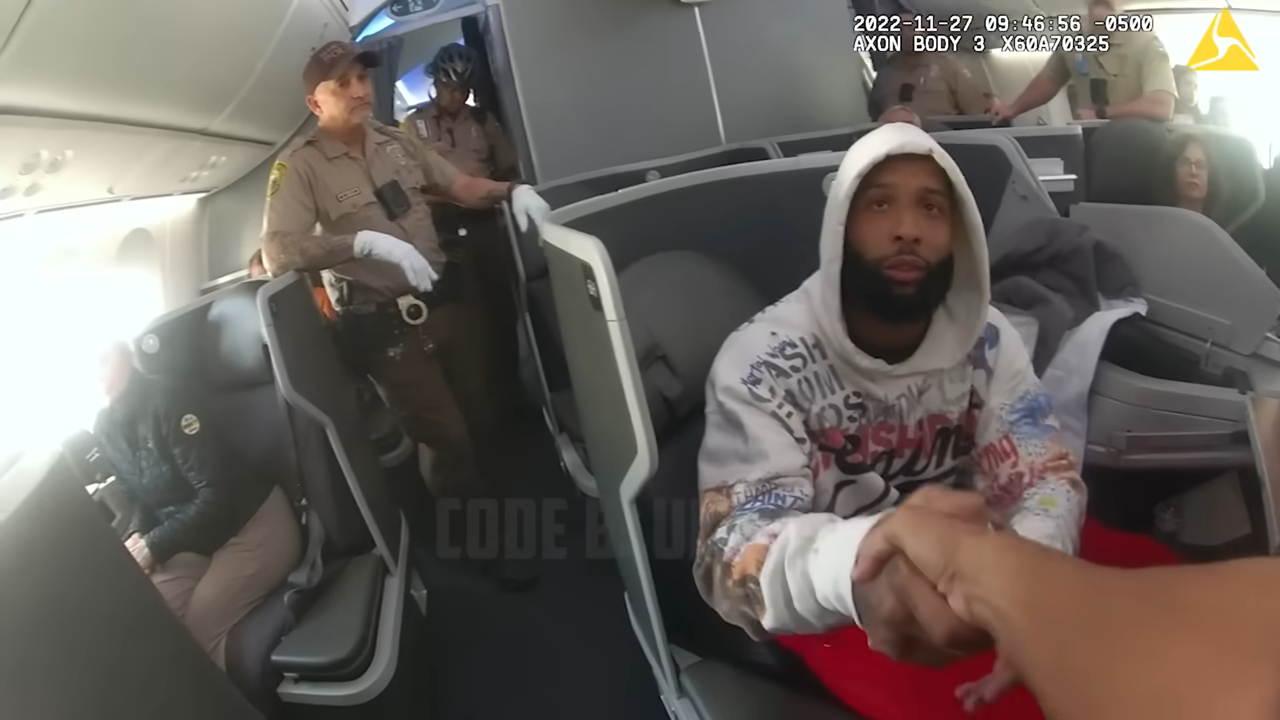
A Medical Call Becomes an Airline Standoff
The unusual nature of the incident came from how quickly its purpose changed.
Police and rescue had originally been called because crew members were worried Beckham might be experiencing a medical emergency.
Rescue personnel later found him responsive and said they did not see an obvious medical problem.
But that did not restore the crew’s confidence.
From the airline’s perspective, the earlier inability to wake him — combined with the uncertainty surrounding his condition before a long flight — was enough for the captain to decide that he should not continue on that aircraft.
And once Beckham resisted leaving voluntarily, the consequences expanded far beyond one passenger.
The entire plane was now preparing to empty.
The police had explained the captain’s decision.
The airline had offered to rebook Beckham.
And officers had warned him that even if every other passenger had to walk off first, the outcome would remain the same.
He would still have to leave.
What happened once the passengers began deplaning — including Beckham’s reaction to the people walking past him and how the confrontation was ultimately resolved — would make the situation even more contentious.