“SHE’S STILL HERE, BUT WE CAN SEE HER SLIPPING AWAY” — MARTIN FRIZELL SHARES A HEARTBREAKING UPDATE ON WIFE FIONA PHILLIPS’ ALZHEIMER’S BATTLE
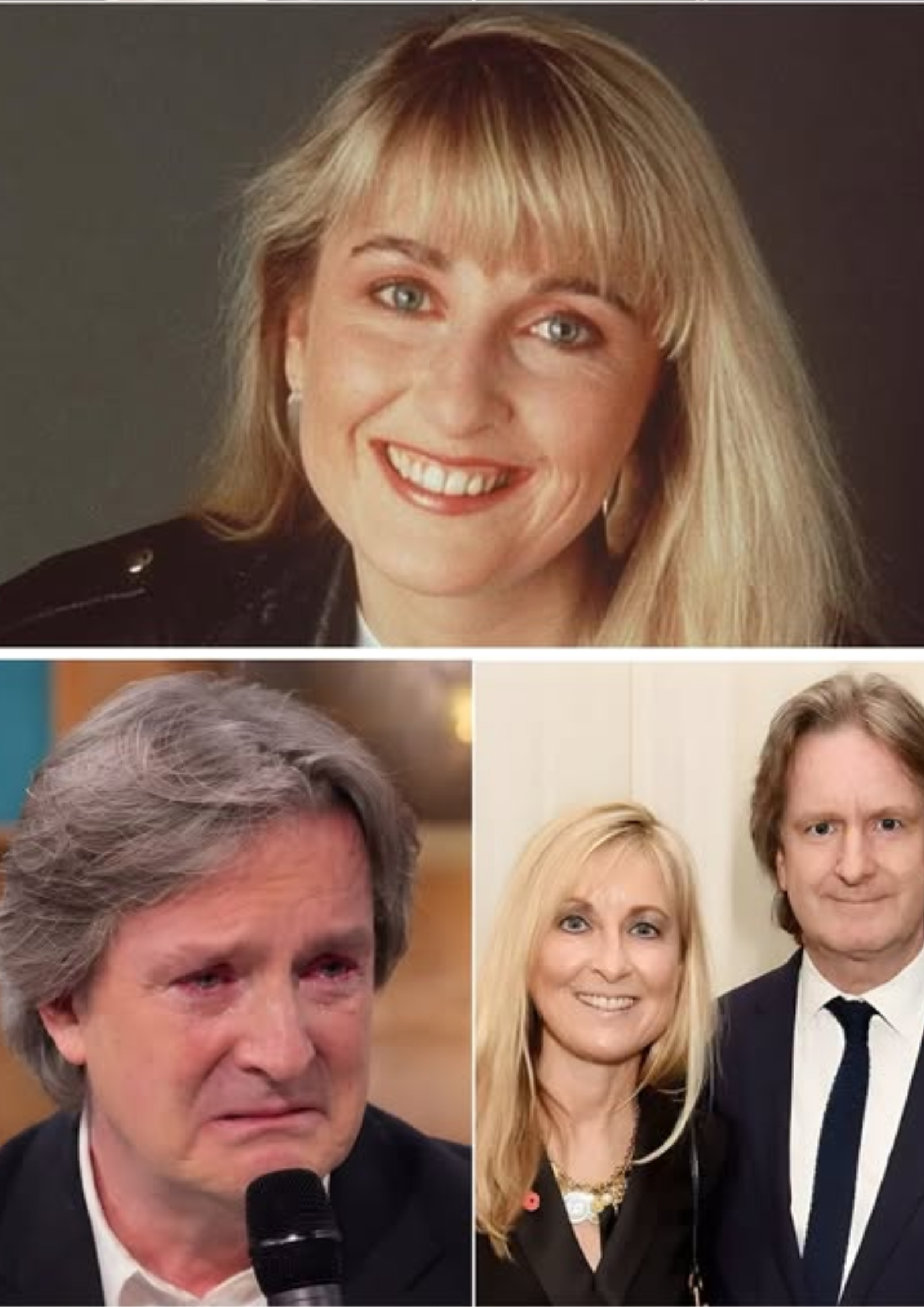
“SHE’S STILL HERE, BUT WE CAN SEE HER SLIPPING AWAY” — MARTIN FRIZELL SHARES A HEARTBREAKING UPDATE ON WIFE FIONA PHILLIPS’ ALZHEIMER’S BATTLE
The former GMTV star’s husband has opened up about the devastating impact of early-onset Alzheimer’s, revealing how the progressive illness is changing everyday life for the couple and their family.
For television presenter Fiona Phillips and her husband, Martin Frizell, the fight against Alzheimer’s has become a deeply personal journey—one marked by difficult changes, painful memories and the determination to make the most of the time they have together.
Fiona, one of Britain’s best-known breakfast television presenters, publicly revealed in 2023 that she had been diagnosed with early-onset Alzheimer’s disease. She was 61 when she shared the news, after initially believing that the brain fog, anxiety and changes in her mood that she had experienced might be related to menopause.
The diagnosis was especially devastating because Alzheimer’s had already affected several generations of her family. Both of her parents lived with the disease, leaving Fiona painfully aware of how profoundly it can affect a person’s memory, independence and relationships.
 A HUSBAND’S HEARTBREAKING ACCOUNT
In February 2026, Martin spoke candidly about his wife’s condition during television interviews, describing the emotional toll of watching the illness progress.
He explained that Fiona no longer remembered significant occasions, including Christmas and New Year. Everyday activities that once seemed straightforward had also become increasingly difficult.
Martin described how, during journeys outside the home, Fiona could repeatedly ask where they were going or what was happening. The experience could become overwhelming, leaving him struggling to balance the practical demands of caring for his wife with the emotional reality of what she was experiencing.
In an interview with Lorraine, he described the situation as “wretched,” explaining that the illness was painful not only for Fiona but also for the people who loved her.
Yet he has also stressed that the woman he knows and loves is still present in many ways.
“She’s still very much with us,” he said during a separate television appearance, reassuring viewers that Fiona’s personality has not simply disappeared because of her diagnosis.
Martin has described her as stubborn and recognisably herself, even as her memory and understanding have changed.
His words have resonated with many families who are navigating similar experiences with dementia, a condition that can affect not only the person diagnosed but also their partners, children and wider support network.
 WHY FIONA’S DIAGNOSIS WAS SO PAINFUL
Fiona’s symptoms did not initially lead her to believe that she had Alzheimer’s.
Like many people experiencing changes in memory, concentration and mood, she first considered other possible explanations. Menopause and long COVID were among the possibilities discussed as she and her family tried to understand what was happening.
However, doctors eventually confirmed that she had early-onset Alzheimer’s disease.
The term “early-onset” generally refers to Alzheimer’s that develops before the age of 65. Although the condition is more commonly associated with older adults, it can affect people in their 40s, 50s and early 60s.
Fiona’s family history made the diagnosis particularly difficult to process. She had watched her own parents experience the effects of the disease, and she understood the uncertainty that a diagnosis could bring.
Her experience has also highlighted how symptoms can be difficult to recognise in their early stages, particularly when they overlap with other physical or emotional changes.
THE IMPACT ON THEIR FAMILY
Fiona and Martin married in 1997 and have two sons, Nathaniel and Mackenzie.
Over the years, Fiona built a successful career in British television, becoming a familiar face to millions of viewers through her work on GMTV. Martin also established himself in television production, including his long tenure as the editor of ITV’s This Morning.
But the family’s priorities changed as Fiona’s condition progressed.
Martin stepped down from his role at This Morning in December 2024, explaining that he expected his family priorities to change. He has since spoken about the difficulty of caring for someone with a progressive illness while trying to preserve moments of normality.
He has also acknowledged that the emotional strain can affect carers themselves. Although his instinct has often been to focus entirely on Fiona, he has admitted that the experience has taken a toll on his own well-being.
His openness has drawn attention to a reality that many families face privately: caring for a loved one can involve grief, exhaustion, uncertainty and guilt, sometimes all at once.
FIONA IS USING HER STORY TO RAISE AWARENESS
Despite the challenges, Fiona has continued to contribute to conversations about Alzheimer’s.
With Martin’s support, she documented aspects of her experience in her memoir, Remember When, which explores her life and career alongside the impact of the disease.
The book also reflects on her family history and the difficult process of understanding her own symptoms. It offers readers an insight into the emotional experiences of both a person living with Alzheimer’s and the loved ones who support them.
Martin has also called for greater investment in Alzheimer’s research, arguing that more attention and funding are needed to improve understanding, treatment and support for people affected by the disease.
Alzheimer’s currently has no cure, although research continues into treatments that may help manage symptoms or slow aspects of the disease’s progression. Access to appropriate medical care, practical support and services for carers remains important for families living with the condition.
ARE THERE NEW TEST RESULTS OR A FURTHER MEDICAL CRISIS?
Recent social media posts have claimed that Martin broke down in tears after receiving new medical test results and that the family is facing the “most heartbreaking possibility” of Fiona’s illness.
However, no reliable report located for this article confirms those specific claims. Publicly reported interviews in February 2026 discussed the progression of Fiona’s Alzheimer’s and the effect on her family, but they did not establish that a new test had just revealed a fresh medical emergency.
It would therefore be misleading to present an alleged new test result, a sudden deterioration or a specific prognosis as confirmed fact.
What is clear from Martin’s public statements is that the family continues to face the emotional challenges of a progressive illness while trying to protect Fiona’s dignity and maintain their connection.
A STORY ABOUT LOVE, MEMORY AND THE PEOPLE WHO STAY
For viewers who remember Fiona as the energetic journalist who welcomed audiences into their homes each morning, the news of her diagnosis has been difficult to hear.
But her story is about more than the loss of memories. It is also about the people who continue to show up, the importance of understanding dementia and the need to support families long after a diagnosis is made.
Martin’s willingness to speak publicly has helped bring those experiences into the open. His message is not that every moment has been lost, but that the family must learn to live with changes they cannot fully control.
For Fiona, Martin and their sons, the journey continues one day at a time.
READ THE FULL STORY IN THE COMMENTS.