11 PEOPLE STILL MISSING AFTER BOAT CAPSIZES — SURVIVORS SUFFER SUSPECTED SHARK-BITE INJURIES IN TERRIFYING PACIFIC OCEAN ORDEAL
11 PEOPLE STILL MISSING AFTER BOAT CAPSIZES — SURVIVORS SUFFER SUSPECTED SHARK-BITE INJURIES IN TERRIFYING PACIFIC OCEAN ORDEAL
A desperate rescue operation brought 16 people to safety after a boat carrying 27 people capsized off Mexico’s Baja California coast. Several survivors suffered serious injuries consistent with shark bites. After nearly four days of searching, the U.S. Coast Guard has suspended its search for the 11 people still unaccounted for.
A terrifying maritime emergency in the Pacific Ocean has left families searching for answers after a boat capsized far offshore, throwing its passengers into the water and triggering a major international rescue operation.
The incident occurred on Friday, October 16, 2026, approximately 140 miles west of Ensenada, Mexico. A distress call alerted the U.S. Coast Guard that a vessel was taking on water, setting off a race to reach those aboard before conditions became even more dangerous.
Sixteen people were eventually rescued. But according to the Coast Guard, several survivors suffered severe injuries consistent with shark bites, adding another frightening element to an already desperate situation.
The survivors were transported to hospitals in San Diego for medical evaluation and treatment. Two people were reported to be in critical condition in early coverage.
Authorities initially launched an extensive search for the 11 people believed to remain missing. After 89 hours of operations, however, the Coast Guard announced on October 19 that the search had been suspended.
The decision marks a heartbreaking turning point for the families still waiting for news of their loved ones.
 A DISTRESS CALL IN THE EARLY HOURS
According to the U.S. Coast Guard, watchstanders at Coast Guard Sector San Diego received a radio distress call at approximately 1 a.m. local time on October 16.
Someone aboard the vessel reported that the boat was sinking about 140 miles west of Ensenada, well offshore in the Pacific Ocean.
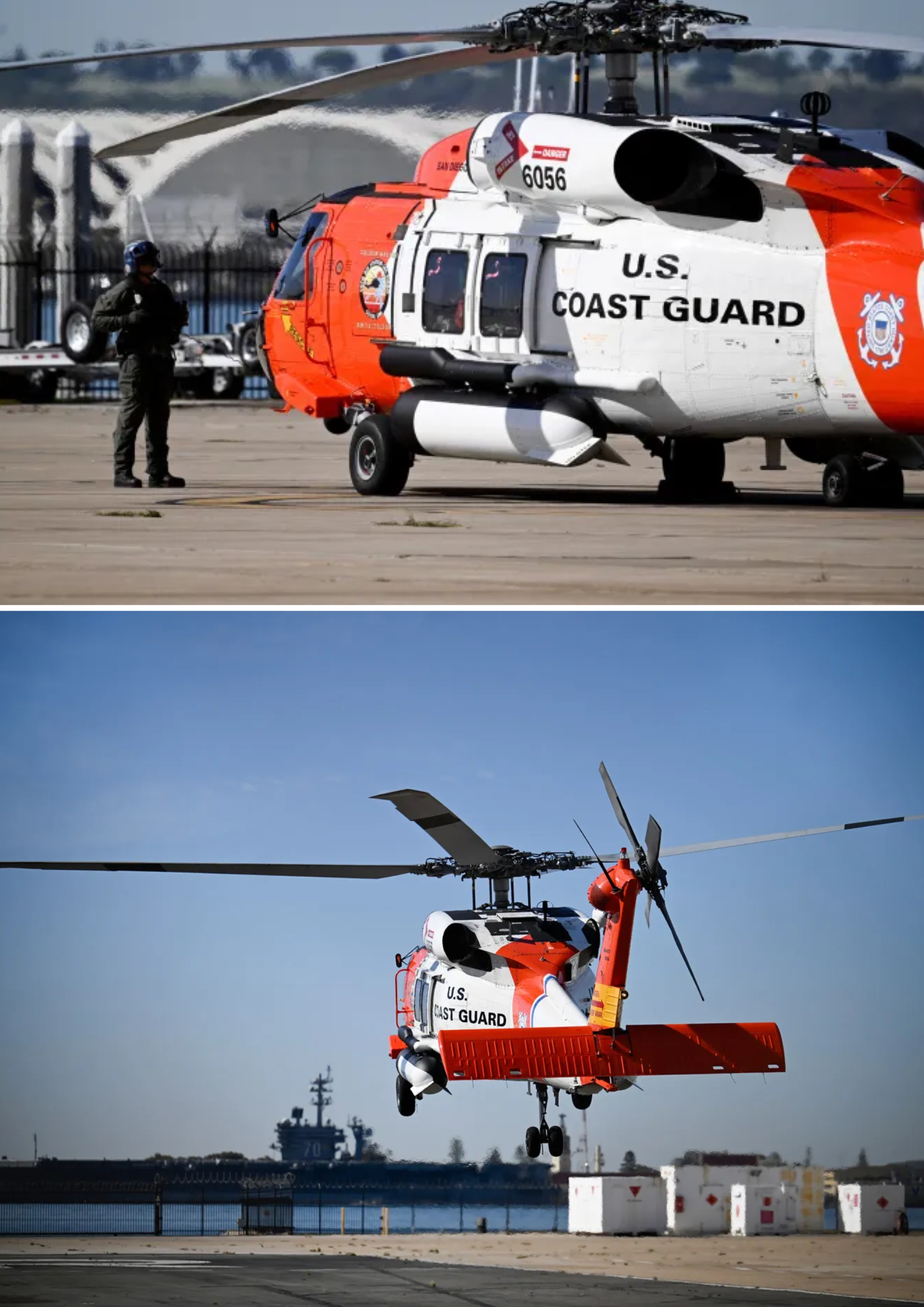
Rescue crews were dispatched to the reported location. A helicopter reached the area roughly two hours after the distress call, but by then the vessel itself was no longer visible.
Instead, rescuers encountered people in the water, some clinging to floating debris and trying desperately to remain above the surface.
The rescue was complicated by the distance from shore and the number of people who needed assistance. A rescue swimmer joined the operation, and it took approximately 90 minutes for the crew to bring all 16 survivors to safety.
Coast Guard Lieutenant Santiago Tamburini described how people had been holding onto one another and pieces of debris while struggling to stay afloat.
Their survival depended on staying above water long enough for help to arrive.
 SURVIVORS FACED MORE THAN ONE DANGER
The ordeal did not end when the survivors were located.
In a statement, the Coast Guard said several of the people rescued had severe injuries consistent with shark bites. The agency provided lifesaving first aid while transporting them toward San Diego.
USA TODAY subsequently reported that three survivors had sustained injuries consistent with shark bites.
The wording is important: officials described injuries consistent with shark bites, but the publicly available reports did not establish the exact circumstances of each injury or identify a shark species.
The passengers had already endured the shock of the vessel going down, the struggle to remain afloat and the uncertainty of whether rescuers would find them. For those injured, the situation became even more urgent.
Emergency personnel worked to provide medical assistance as the survivors were brought to shore.
All 16 people rescued were identified by the Mexican consulate in San Diego as Mexican nationals. They were taken to local hospitals for evaluation and treatment, with consular assistance also made available.
Two survivors were reported to be in critical condition in the initial coverage. Authorities had not provided a comprehensive public update on every survivor’s condition in the latest reports reviewed.
27 PEOPLE ABOARD — BUT ONLY 16 RESCUED
One of the most troubling details emerged from interviews with the survivors.
Authorities said the people rescued reported that approximately 27 individuals had been aboard the vessel.
That left 11 people unaccounted for.
The Coast Guard and its partners began searching a vast area of ocean, using multiple boats and aircraft. The operation involved the U.S. Coast Guard, the U.S. Navy and assistance from the Mexican Navy.
Search crews worked to locate additional survivors, looking for people in the water as well as floating debris that could help establish where the boat went down.
Officials said the search covered an extensive offshore area. The vessel itself was not located, and the precise circumstances of its sinking remained unclear.
For the families of the missing, the numbers carried a devastating meaning: 16 people had been brought to safety, but there was still no confirmation of what had happened to the remaining 11.
QUESTIONS ABOUT THE BOAT’S JOURNEY
Investigators have not publicly established the boat’s exact origin, destination or purpose.
The area where the vessel capsized is used by fishing and recreational boats, but authorities also described it as a route commonly associated with maritime smuggling operations.
That context has prompted questions about the journey and the conditions aboard the vessel. However, officials have not confirmed that this particular boat was involved in smuggling.
The Coast Guard also said it was unclear whether the vessel had experienced mechanical failure, become lost, been carried offshore or encountered another problem.
Some passengers were wearing life jackets, while others were not, according to the Associated Press’s reporting.
Customs and Border Protection interviewed survivors as authorities worked to establish what happened before the distress call.
Investigators will need to piece together the vessel’s movements, the conditions at sea and the sequence of events that led to the capsizing.
Until those details are confirmed, the precise cause of the incident remains unknown.
AN ENORMOUS SEARCH OPERATION
The response involved far more than a single rescue helicopter.
The Coast Guard and Navy deployed multiple aircraft and vessels, while Mexican authorities assisted with the search from their side of the border.
Crews covered more than 2,441 miles during the operation, according to the latest reports. The search continued for a combined 89 hours before being suspended on October 19.
Captain Joseph Meuse of the Coast Guard described the decision as difficult, noting that the operation had been particularly challenging because the incident occurred far offshore.
Suspending a search does not establish what happened to those still missing. It means the active operation has been halted after the time and resources devoted to looking for them.
For relatives, the announcement is unlikely to bring a sense of closure. The 11 people have not been accounted for, and the circumstances surrounding their disappearance remain deeply distressing.
WHY OFFSHORE RESCUES CAN BECOME SO DANGEROUS
The incident highlights the risks faced by people aboard small vessels far from land.
When a boat capsizes offshore, passengers may suddenly find themselves in open water without reliable flotation devices, communication equipment or immediate access to medical care.
Even when a distress call is received, rescuers may need considerable time to reach the location. Darkness, distance, waves and the difficulty of locating people in the water can make the operation more complex.
In this case, the helicopter reached the area approximately two hours after the call, and rescuers then needed around 90 minutes to bring the 16 survivors aboard.
The reported shark-bite injuries added another potential danger for those already struggling to survive.
The Coast Guard has warned that offshore conditions can quickly become life-threatening, particularly when a vessel carries a large number of passengers.
SEARCH SUSPENDED AFTER 89 HOURS
On October 19, the Coast Guard announced that it had suspended its search for the 11 missing people after 89 hours of operations.
The search had covered more than 2,441 miles and involved U.S. and Mexican agencies.
It was a difficult decision after an operation that had brought 16 people to safety but failed to locate the remaining passengers.
Authorities have not publicly confirmed the fate of the 11 people who remain missing. The suspension of the search should not be interpreted as confirmation that they have been found or that their status has been resolved.
The incident remains under investigation, and officials continue to face unanswered questions about the vessel, its journey and the events that led to the capsizing.
For those who survived, recovery will involve both medical treatment and the emotional aftermath of a frightening experience at sea.
For the families still waiting, the uncertainty is even more painful.
FAMILIES LEFT WAITING FOR ANSWERS
Behind the rescue figures are people whose loved ones boarded a boat and never came home.
Sixteen people survived the ordeal, but 11 remain unaccounted for. The reported injuries suffered by some of the survivors have added to the gravity of the incident.
Authorities have not publicly identified all the missing people or released a complete account of their individual circumstances.
The investigation must now establish as much as possible about what happened before the vessel sank and whether any further evidence can be recovered.
For now, many questions remain unanswered: Why did the boat capsize? What caused the passengers to end up in the water? What happened to those who have not been found?
The Coast Guard’s search may have been suspended, but the need for answers has not disappeared.
Sixteen people were rescued from the Pacific Ocean. Three survivors were reported to have injuries consistent with shark bites, and 11 people remain missing. After 89 hours of searching, authorities have suspended the operation, leaving families facing an agonising wait for answers.