“I’M NO LONGER CERTAIN”: Doctor Who Helped Raise Concerns About Lucy Letby Now Calls for Retrial
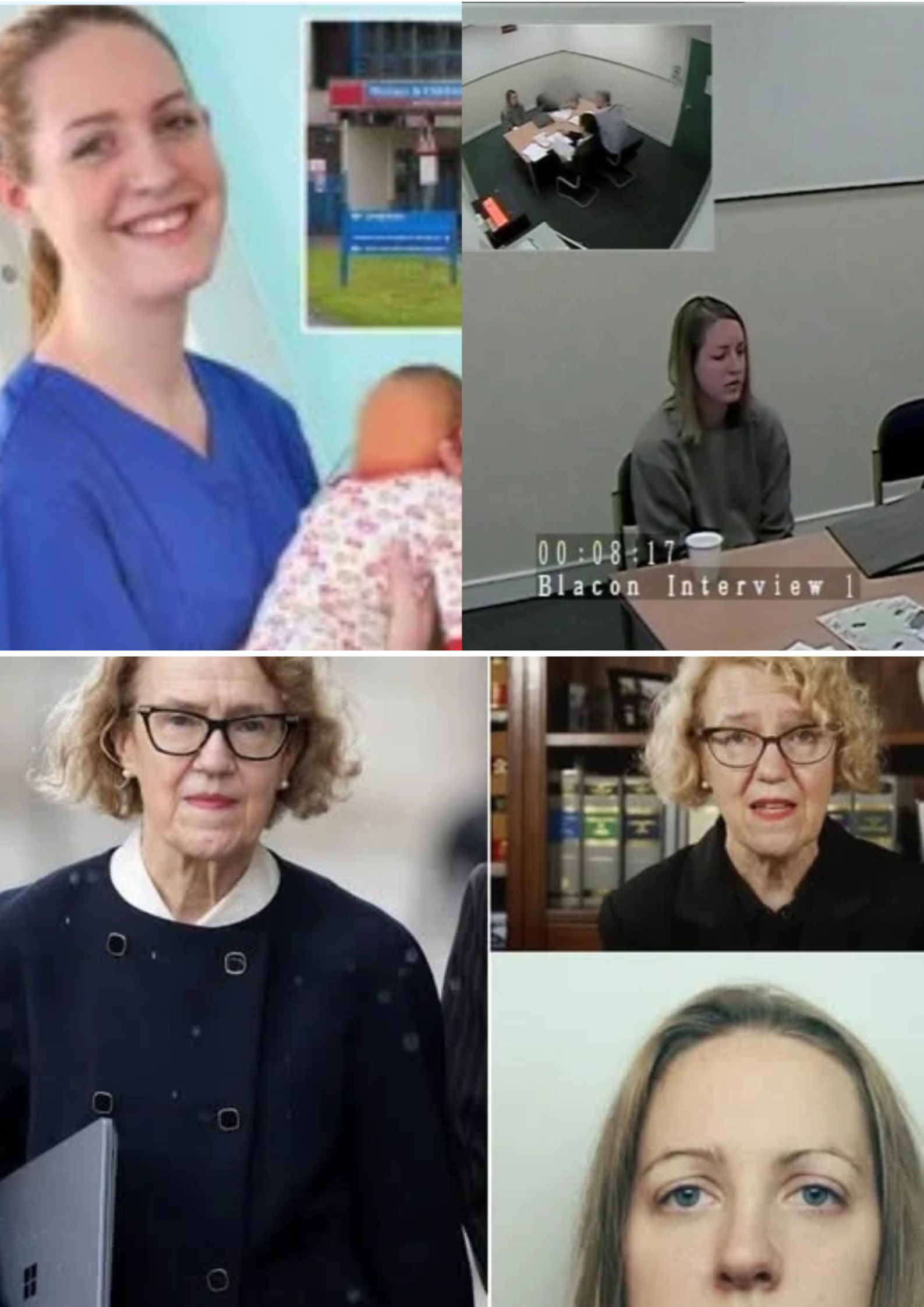
“I’M NO LONGER CERTAIN”: Doctor Who Helped Raise Concerns About Lucy Letby Now Calls for Retrial
Retired paediatrician Dr John Gibbs has publicly questioned whether deliberate harm was responsible for the deaths and collapses at the Countess of Chester Hospital, saying he is no longer certain Lucy Letby committed the crimes for which she was convicted. His intervention has renewed debate around one of Britain’s most controversial criminal cases—but her convictions remain in force.
A fresh development has brought renewed attention to the case of former neonatal nurse Lucy Letby after Dr John Gibbs, a retired paediatrician whose evidence helped support the prosecution, publicly expressed doubts about whether deliberate crimes had taken place.
In an interview published by The Sun on September 22, 2026, Gibbs said he was no longer certain that Letby had murdered babies at the Countess of Chester Hospital in England.
He also suggested that a retrial could be the most appropriate way to address the continuing questions surrounding the case.
His comments are significant because Gibbs was among the hospital consultants involved in raising concerns about the pattern of deaths and medical emergencies in the neonatal unit in 2015 and 2016.
However, his latest statements do not overturn Letby’s convictions, and no retrial has been ordered. Her case remains under review by the Criminal Cases Review Commission (CCRC).
 A DOCTOR RECONSIDERS HIS CERTAINTY
Gibbs’s comments have attracted attention because of his earlier role in the events that led to Letby’s prosecution.
During the period under investigation, he was one of several consultants who became concerned about the number of unexpected deaths and collapses among babies receiving care at the hospital.
Those concerns eventually contributed to police involvement and a criminal investigation.
But in his recent interview, Gibbs acknowledged that he no longer felt certain that Letby was responsible for the deaths and medical emergencies.
He described his concern that no deliberate harm may have occurred as “very small,” while warning that the possibility of a person serving a life sentence for crimes they did not commit would be deeply troubling.
He also said he did not believe another person must necessarily have been harming the babies if Letby was not responsible.
His position raises a central question in the case: whether the medical events were caused by deliberate actions, natural causes, failures in care or a combination of factors.
Those possibilities require careful examination of the evidence. Gibbs’s change in view is an important development in the public debate, but it is not, by itself, proof that the convictions were unsafe.
 WHY LUCY LETBY WAS CONVICTED
Letby, now 36, worked at the Countess of Chester Hospital’s neonatal unit, where premature and medically vulnerable babies received specialist care.
She was convicted across two trials in 2023 and 2024 of murdering seven babies and attempting to murder other infants. She received whole-life prison sentences and has consistently denied the allegations.
The prosecution presented medical evidence, hospital records, staff testimony and other material to argue that Letby had deliberately harmed babies in her care.
The defence challenged the prosecution’s interpretation of the evidence, while subsequent critics have questioned whether the medical events were sufficiently understood to establish deliberate harm.
Letby’s legal team has continued to pursue avenues for reviewing the convictions. Two previous appeals were rejected, and the convictions remain legally valid.
The debate has since expanded beyond the original trials, with medical specialists and commentators disagreeing about the interpretation of the clinical evidence.
THE PUBLIC INQUIRY EXPOSED SERIOUS HOSPITAL FAILINGS
The renewed debate comes after the Thirlwall Inquiry published its report into the circumstances surrounding the deaths and collapses at the hospital.
The inquiry identified serious failures in hospital leadership and in the response to concerns raised by medical staff. It examined how the hospital handled warnings, communicated with families and responded to the events in the neonatal unit.
Dr Gibbs told the BBC that the report made for “grim reading” and expressed regret that the consultants had not been more forceful in escalating their concerns to the police earlier.
The inquiry’s findings have intensified scrutiny of the hospital’s management and the way concerns were handled.
However, the inquiry was not a criminal appeal and did