“LOOK OUTSIDE, JEFF!” — THE CO-PILOT’S HAUNTING FINAL WORDS RAISE QUESTIONS ABOUT THE LEARJET’S TERRIFYING FINAL MOMENTS
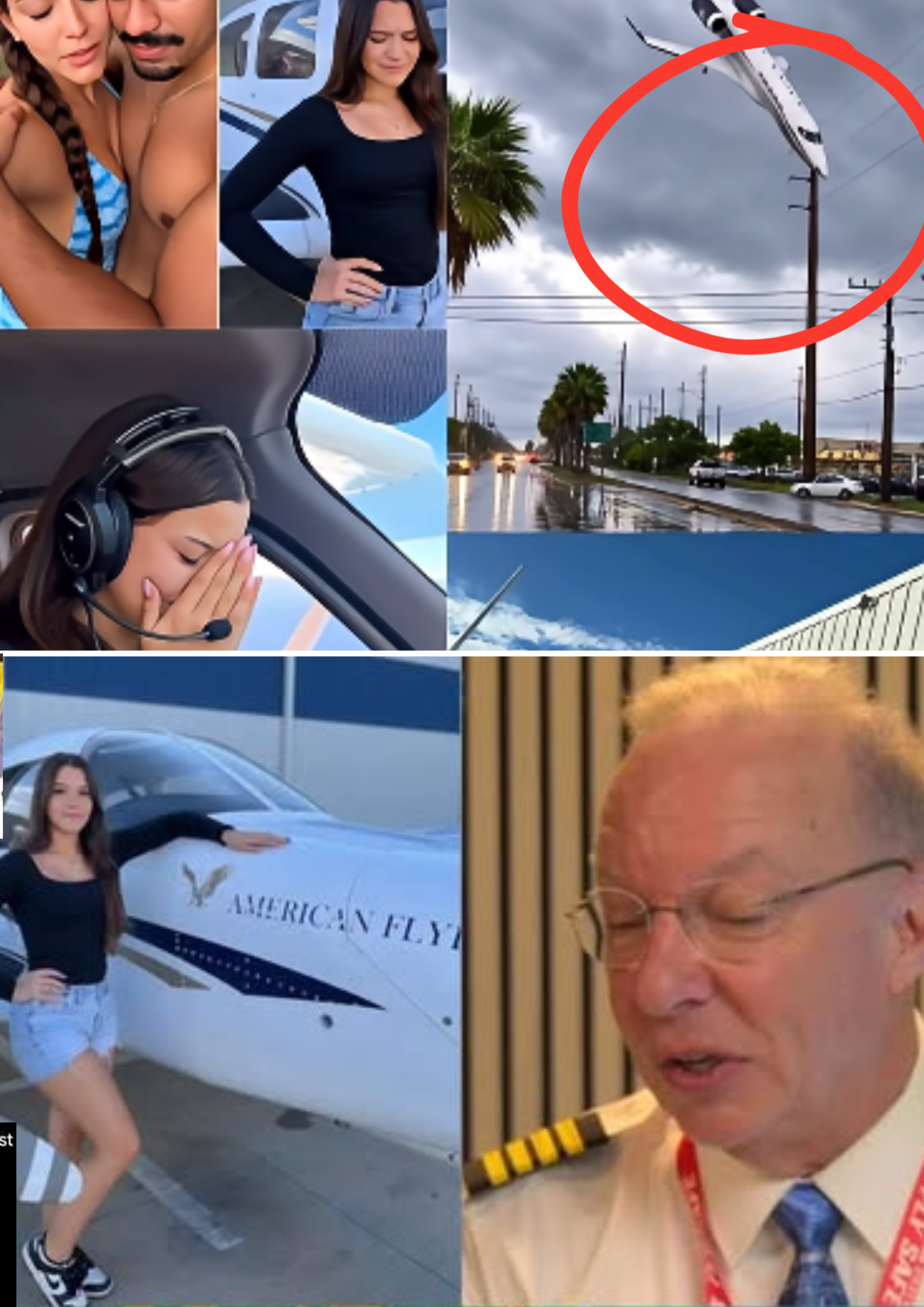
“LOOK OUTSIDE, JEFF!” — THE CO-PILOT’S HAUNTING FINAL WORDS RAISE QUESTIONS ABOUT THE LEARJET’S TERRIFYING FINAL MOMENTS
“Look outside, Jeff. Look outside.”
Those urgent words, heard in the final moments of a doomed Learjet 60 flight, have become one of the most haunting parts of the investigation into a crash that claimed nine lives near Greenacres, Florida.
The voice belonged to 20-year-old First Officer Nathalia Gadelha Filgueiras, who was flying alongside Captain Jeffrey Gregory when their aircraft suddenly plunged toward the ground on November 1, 2026.
But what was she trying to tell him?
Was she urging the captain to find a visual reference during a possible loss of spatial orientation? Was she reacting to something happening outside the aircraft? Or was there another emergency unfolding inside the cockpit?
For now, investigators have not provided an answer.
 A FLIGHT THAT TURNED INTO A NIGHTMARE
The Learjet 60, registered as N722BD and operated by Aurora Aviation, was traveling from Austin, Texas, to North Eleuthera in the Bahamas.
At approximately 35,000 feet, the crew reported light clear icing and moderate turbulence. They also told air traffic control that they were encountering precipitation and requested permission to climb to 37,000 feet.
The request was approved.
But within moments, the situation changed dramatically.
The crew reported that the aircraft was descending at approximately 8,000 feet per minute before issuing a mayday call. The reported descent rate increased to 10,000 feet per minute, then 20,000 feet per minute.
The crew also declared an overspeed emergency.
As the aircraft continued its rapid descent, a transmission reported a descent rate of approximately 22,000 feet per minute and a bank angle of around 60 degrees.
Then came the words that would capture the attention of aviation observers around the world:
“Look outside, Jeff. Look outside.”
Seconds later, another desperate statement was heard:
“We’re out of time.”
All nine people aboard the aircraft were killed.
 WHY WOULD A PILOT SAY “LOOK OUTSIDE”?
The phrase has prompted questions about a dangerous aviation phenomenon known as spatial disorientation.
Spatial disorientation occurs when a pilot’s perception of an aircraft’s position or movement does not match its actual flight path.
A pilot may feel that an aircraft is level when it is banking, or mistake a descent for level flight. Turbulence, clouds, darkness and poor visibility can make it especially difficult to recognize these sensory illusions.
In certain circumstances, pilots are trained to rely on their flight instruments rather than the sensations coming from their bodies.
Visual references outside the aircraft can also be important when conditions allow.
However, the words heard in this recording do not establish that Gregory was experiencing spatial disorientation. The co-pilot may have been reacting to another visual or flight-related concern.
Without the cockpit voice recorder analysis and a complete reconstruction of the aircraft’s movements, the meaning of her warning remains uncertain.
THE CLUES INVESTIGATORS ARE EXAMINING
The National Transportation Safety Board has been examining several possible factors, including weather conditions, aircraft performance, structural damage and the crew’s actions.
Investigators recovered portions of both wings, both engines, the flight deck and sections of the aircraft’s tail.
One particularly important discovery involved the left elevator, a control surface that helps move the aircraft’s nose up or down. Pieces of the component were found miles from the main impact site.
That raised a critical question: Did a structural failure contribute to the aircraft’s sudden descent, or did the extreme forces during the dive cause the component to separate?
Investigators have not established the answer.
The cockpit voice recorder was recovered at the initial impact site on November 9 and transported to the NTSB’s Vehicle Recorders Laboratory in Washington, D.C., for evaluation.
Its contents could provide important information about conversations inside the cockpit, warnings, crew coordination and the decisions made during the emergency.
REMEMBERING THE 20-YEAR-OLD CO-PILOT
For Nathalia’s family, the tragedy is not simply an aviation investigation. It is the loss of a young woman who had devoted herself to flying.
Her father, Allan Filgueiras, was also a pilot and helped teach his daughter to fly. He has spoken publicly about her final radio transmissions and the pride he felt in her accomplishments.
Nathalia had earned her commercial pilot and flight instructor credentials and was qualified to serve as a first officer on the Learjet 60.
Her final transmissions have drawn widespread attention, but her family has also asked that her experience and dedication not be overshadowed by speculation about the crash.
THE QUESTION THAT REMAINS
What happened inside that cockpit during the final seconds?
What did Nathalia see? What was she trying to communicate? And could the cockpit voice recorder reveal what the pilots were facing as the aircraft descended at an extraordinary rate?
Those questions remain with investigators.
The NTSB has not determined the probable cause of the crash. Until its analysis is complete, spatial disorientation, icing, turbulence and possible structural failure must remain investigative possibilities — not established explanations.
For now, one brief warning continues to echo through the investigation:
“Look outside, Jeff. Look outside.”