The Philadelphia “Basement of Horrors” Case: A Story of Unimaginable Cruelty and Justice Denied
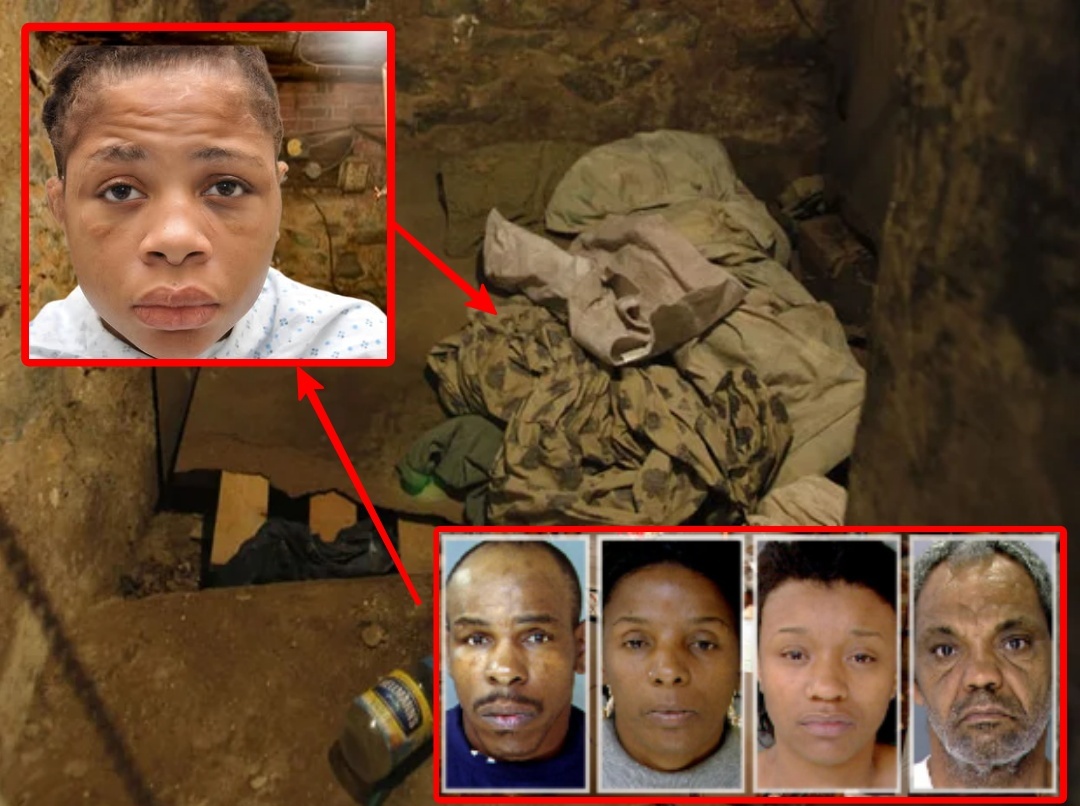
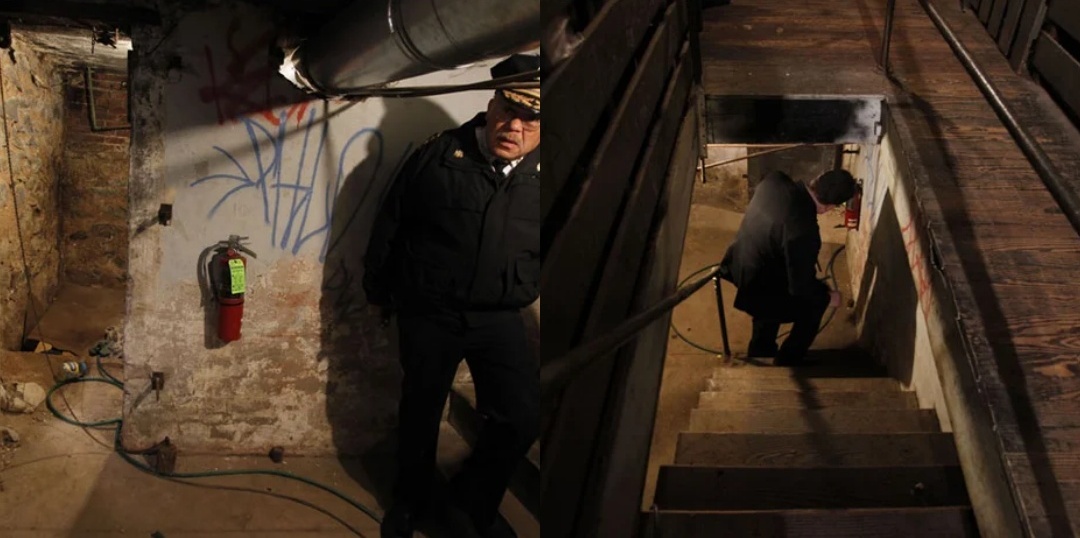
In 2011, a horrifying discovery was made in the Tacony section of Philadelphia, one that would go on to expose a web of human suffering and brutality beyond imagination. On October 15, 2011, a landlord went to inspect a steel door to a 10-by-15-foot sub-basement in his building. What he found behind that door would shock the entire nation.
Inside the dank, filthy space were four malnourished adults — three men and one woman — all locked behind a bolted barrier. They were living beside a broken boiler. They were drugged. They were starving. But more than that, they were prisoners in the hands of a woman who took control of their lives in the most depraved way possible.
That woman was Linda Weston.
For nearly a decade, Weston had been running one of the most disgusting and sinister criminal operations in modern American history. She had targeted adults with intellectual disabilities, those without strong family support, and turned their lives into a nightmare. Under the guise of acting as their “representative payee,” Weston stole over $212,000 in Social Security and disability benefits meant for these vulnerable individuals.
But money wasn’t enough for Linda Weston.
She didn’t just steal their money — she stole their humanity.
She abused and manipulated them in ways that are almost too horrific to comprehend.
Victims were:
Beaten with hammers, bats, and pistols.
Locked in closets, cabinets, and attics.
Sedated with drugs mixed into the minimal food they were given.
Forced into prostitution.
Coerced into sex to produce children, so she could claim higher government benefits.
Two women d𝚒𝚎𝚍 from the abuse they endured at Weston’s hands:
Donna Spadea — d𝚒𝚎𝚍 in 2005, in a basement, the result of years of brutal treatment.
Maxine Lee — d𝚒𝚎𝚍 in 2008 after being kept in a kitchen cabinet and attic, suffering untreated meningitis and starvation.
But Weston’s cruelty didn’t end there.
In one of the most chilling revelations, Weston had even placed her own niece, Beatrice, in her custody. This was despite a prior 1981 murder conviction. Beatrice spent 10 years under Weston’s control, enduring unimaginable torture, cigarette burns, and pellet gun wounds.
This wasn’t just a random act of evil. It was part of a systematic pattern of abuse and neglect. Weston didn’t just pick random victims — she targeted those who were most vulnerable, those who had no one to protect them. These were people who couldn’t fight back, couldn’t call for help, and whose cries for assistance were ignored by the very system meant to protect them. Weston took advantage of their vulnerability and used it to her advantage for years.
In 2015, after years of abuse, Linda Weston finally faced the consequences of her actions. She pleaded guilty to 196 federal charges, including racketeering, murder, sex trafficking, and kidnapping, in order to avoid the death penalty. The sentencing was a small measure of justice, but it hardly felt like enough after all the suffering she had caused.