Dramatic Naval Encounter After Submarine Targets U.S. Aircraft Carrier at Sea and the Unexpected Turn That Followed
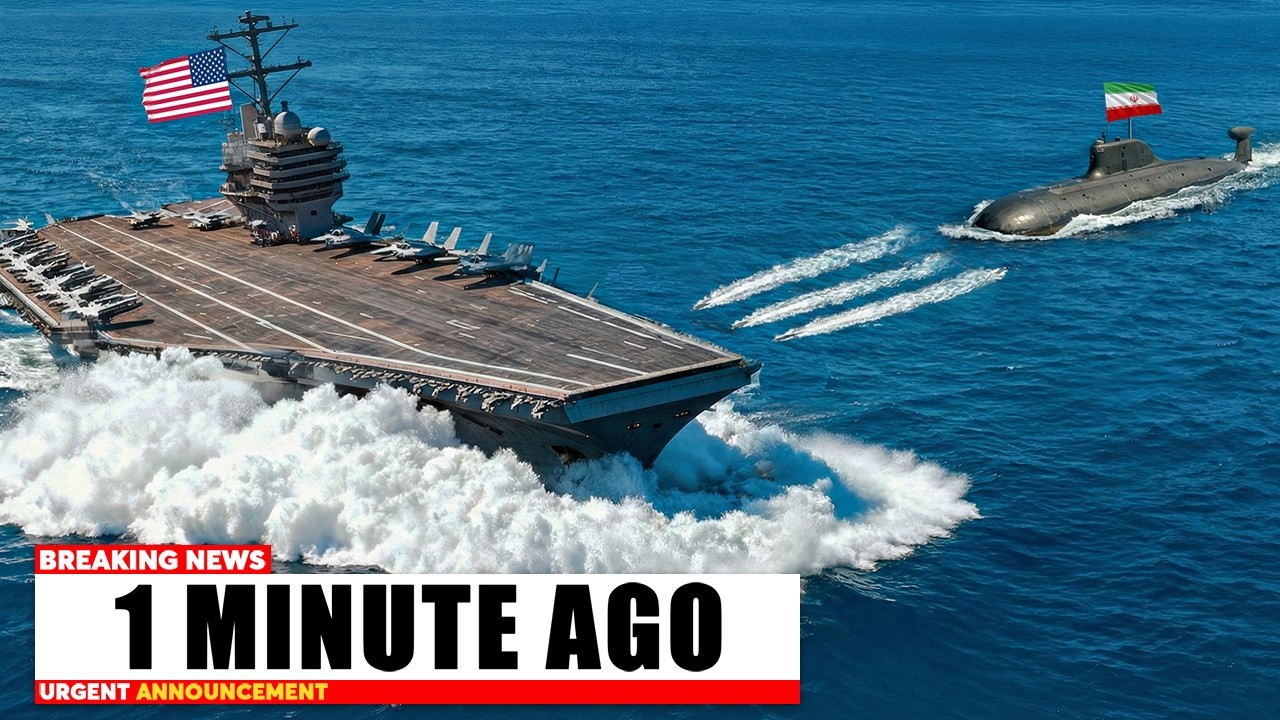
In a world where military engagements often make headlines, a recent underwater encounter near Iranian waters slipped under the radar.
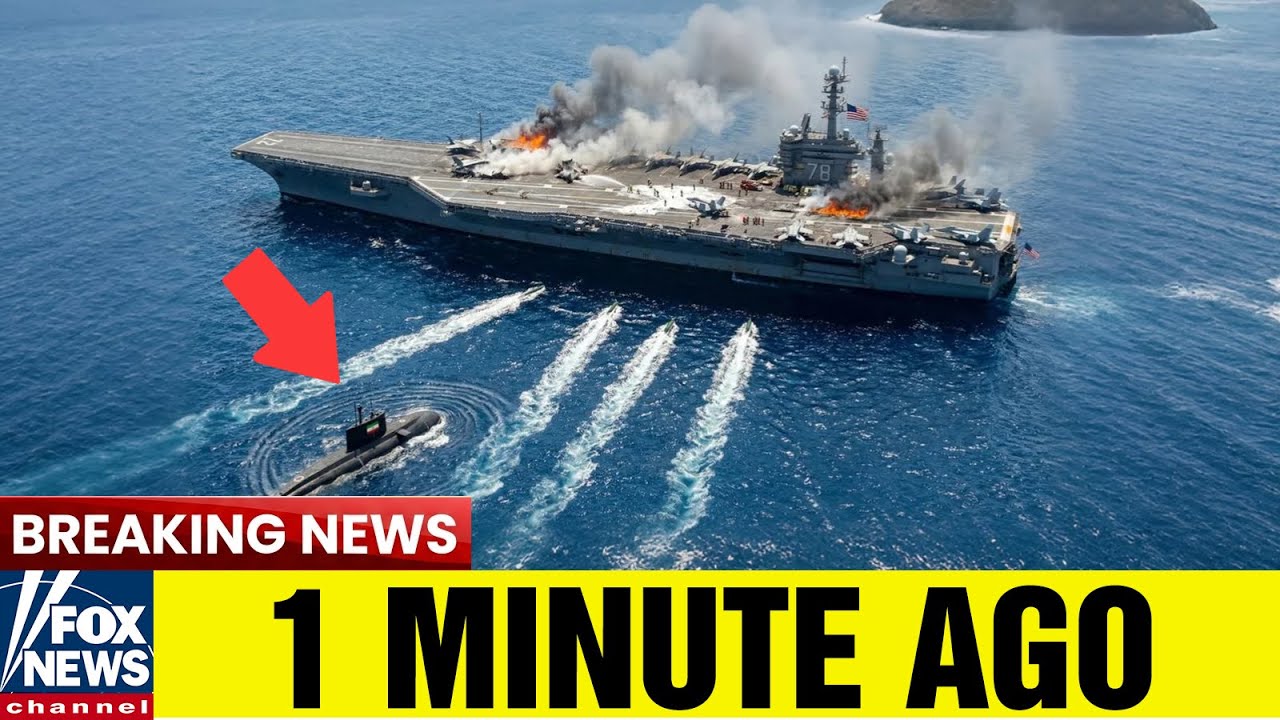
A submarine fired a torpedo at a U.S. aircraft carrier, igniting a sequence of events that would test the limits of naval strategy and decision-making.
What transpired was not a dramatic battle but rather a calculated display of tactical restraint and advanced naval technology.
This incident reveals the complexities of modern naval warfare, where detection and response can mean the difference between disaster and success.
As tensions rise in contested regions, understanding the intricacies of underwater engagements becomes crucial.
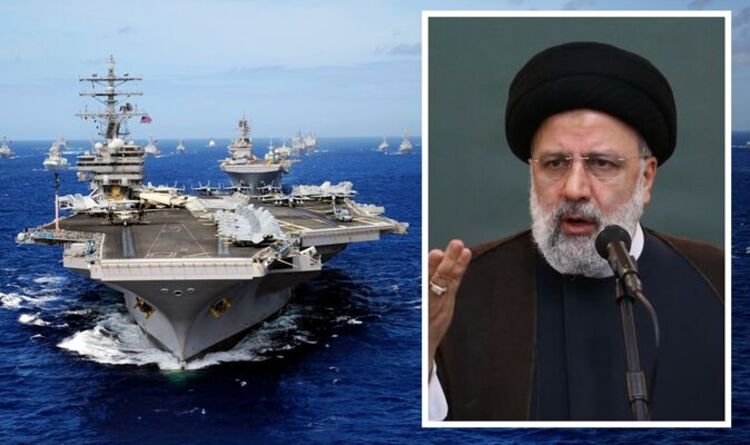
On a seemingly ordinary day in the Persian Gulf, a submarine launched a torpedo toward a U.S. aircraft carrier.
This act could have escalated into a significant military confrontation.
However, what followed was a masterclass in naval strategy and calm under pressure.
The U.S. Navy’s layered anti-submarine response, combined with advanced sonar detection systems, played a pivotal role in neutralizing the threat without any damage.
Modern naval sensor systems are designed to detect and track torpedoes with remarkable precision.
These systems utilize a combination of sonar technologies, including active and passive sonar, to identify underwater threats.
Active sonar emits sound waves that bounce off objects, while passive sonar listens for sounds made by submarines and torpedoes.
In this encounter, the U.S. Navy’s sophisticated sonar capabilities allowed them to detect the torpedo early, providing critical time for response.
When faced with an imminent threat, the instinct to react quickly can be overwhelming.
However, the U.S. Navy demonstrated that calm decision-making is often more effective than reflexive action.
In high-stakes situations like this, every second counts.
The decision to engage or refrain from action can have far-reaching consequences.
The U.S. Navy’s approach in this instance highlights the importance of strategic thinking over impulsive reactions.
The U.S. Navy employs a layered anti-submarine warfare (ASW) strategy to address underwater threats.
This multi-faceted approach involves various assets, including surface ships, submarines, and aircraft, all working in concert.
In this case, the carrier’s ASW capabilities were activated immediately upon detecting the torpedo.
This response included deploying sonar buoys and coordinating with nearby vessels to create a comprehensive defense network.
In moments of crisis, the ability to remain calm and make informed decisions is paramount.
The U.S. Navy’s response to the torpedo threat exemplifies this principle.
Rather than escalating the situation through aggressive maneuvers, naval commanders opted for a measured approach.
This decision not only prevented potential loss of life and equipment but also showcased the effectiveness of strategic restraint.
To gain a deeper understanding of this incident, we spoke with naval analysts who specialize in undersea warfare dynamics.
They emphasized that modern naval engagements are increasingly defined by technology and information warfare.
The ability to gather intelligence and communicate effectively can turn the tide in underwater confrontations.
Analysts noted that the U.S. Navy’s reliance on advanced technology and training played a crucial role in managing the situation.
This incident occurs against the backdrop of rising tensions in the Persian Gulf and surrounding regions.
As nations vie for influence and control, the stakes of naval engagements continue to grow.
The U.S. Navy’s ability to respond effectively to underwater threats is critical for maintaining stability in these contested waters.
This encounter serves as a reminder of the delicate balance of power in the region and the importance of strategic naval operations.