Scholars Reject Speculative Claims Surrounding Tutankhamun’s “Ka” Statues
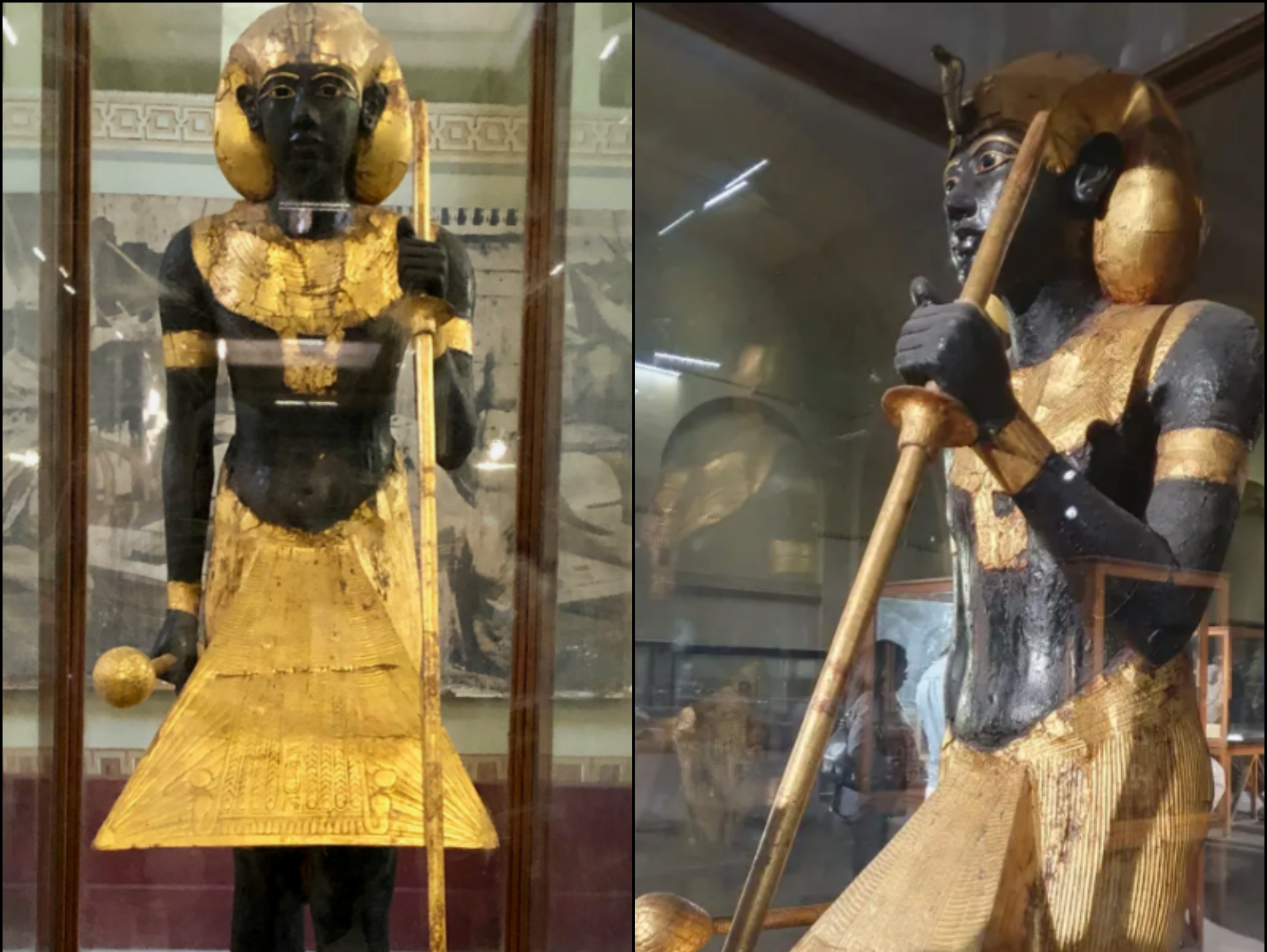
Renewed online speculation about the life-sized guardian statues discovered in the tomb of Tutankhamun is drawing attention from historians and scientists, many of whom caution against blending archaeological evidence with fictionalized scientific language.
The statues in question were uncovered in 1922 inside tomb KV62 by British archaeologist Howard Carter in Egypt’s Valley of the Kings. Positioned at the entrance to the burial chamber, the pair of black-and-gold figures are commonly referred to as “Ka statues,” representing the spiritual double of the king. Their striking appearance — jet-black surfaces contrasted with gold adornments — has long fascinated researchers and the public alike.
In recent months, however, online articles and videos have circulated suggesting that the statues contain rare extraterrestrial materials, advanced metallurgical technology, or hidden mechanical components. These claims reference unverified concepts such as “Xenon-Isotope Protocol,” “Cold-Fusion Gilding,” and “Project Serekh,” none of which appear in peer-reviewed Egyptological or scientific literature.
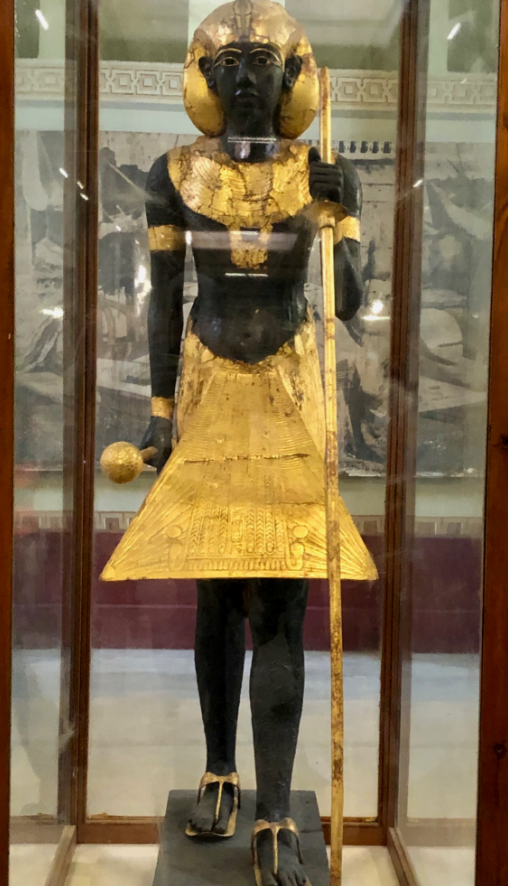
Mainstream Egyptology provides a far more grounded explanation. The statues are primarily constructed from wood, coated with black resin, and adorned with gold leaf. According to museum conservation reports, the black coloration is consistent with symbolic traditions of the 18th Dynasty. In ancient Egyptian belief, black was associated with fertility, rebirth, and the rich silt of the Nile River — themes closely tied to the afterlife.
Dr. Miriam El-Sharif, a conservation scientist specializing in New Kingdom artifacts, explained in a recent academic conference that “the resin coatings found on these statues align with known embalming and decorative practices of the period. There is no verified evidence of unusual metallic alloys or exotic elements beyond what is historically documented.”
Claims about iridium traces or advanced conductive substrates have not been supported by published laboratory data. While trace elements can occasionally appear in ancient materials due to environmental contamination or natural mineral composition, no credible study has concluded that the KV62 statues contain meteoritic or technologically anomalous substances.
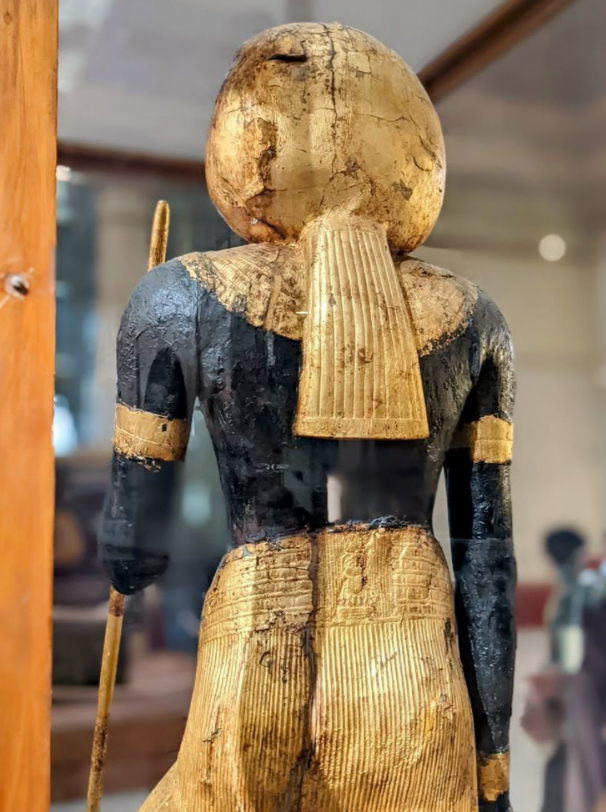
Similarly, suggestions that the statues were engineered as “biometric locks” or energy-conducting devices fall outside accepted archaeological interpretation. Experts emphasize that tomb iconography and sculpture in the New Kingdom followed religious and symbolic frameworks rather than technological functions.
The statues’ rigid stance — one foot forward, arms held close, holding symbolic staffs — reflects established royal artistic conventions. Their form echoes stylistic developments of the late 18th Dynasty, including influences from the Amarna period. However, art historians note that stylistic precision does not imply mechanical fabrication. Skilled artisans of the time were capable of producing highly symmetrical and refined works using traditional carving and gilding techniques.
“There is a tendency in modern media to reinterpret ancient craftsmanship through the lens of futuristic technology,” said Professor Daniel Hawthorne, an Egyptologist based in London. “But advanced artistry does not require advanced machinery. The ancient Egyptians were extraordinary craftsmen within the technological context of their time.”
The idea that the statues connect to so-called “star-descended architects” or hidden cosmic knowledge also lacks historical documentation. References to “Zep Tepi,” a mythological term referring to a primordial era in Egyptian cosmology, are often misunderstood. In scholarly research, Zep Tepi symbolizes a sacred beginning in mythic time, not evidence of external intervention or advanced lost science.
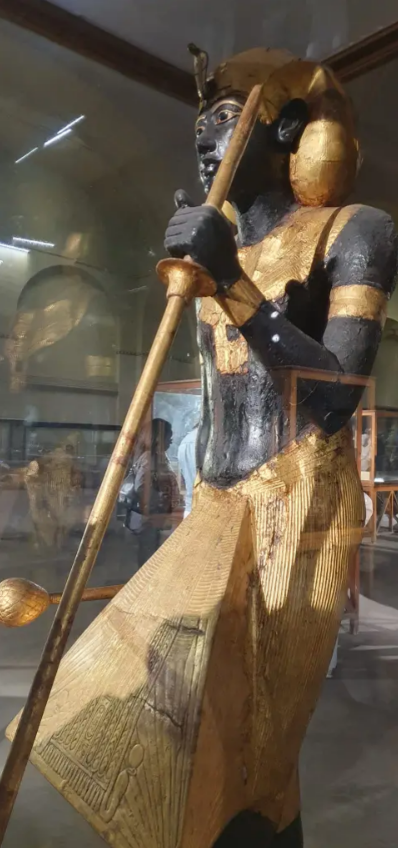
Archaeological records from the excavation of KV62, including Carter’s detailed field notes, describe the statues as ritual guardians intended to protect the king in the afterlife. Their placement flanking the sealed burial chamber reinforces this protective symbolism.
Modern imaging technologies, including X-radiography and conservation scans, have been used to study the statues’ internal structures. These examinations confirm wooden cores and traditional construction methods. No verified findings indicate hollow chambers designed for energy devices or crystalline mechanisms.
Historians also stress that fictional citations and references to “declassified dossiers” often mimic academic language without providing verifiable sources. Responsible scholarship relies on transparent methodology, peer review, and reproducible data.
The enduring fascination with ancient Egypt has long inspired imaginative interpretations. However, experts warn that blending mythic symbolism with speculative science can obscure genuine historical achievements.
“The real story is impressive enough,” Dr. El-Sharif noted. “These statues demonstrate a sophisticated understanding of materials, symbolism, and funerary theology. We do not need to attribute them to lost technologies to appreciate their brilliance.”
More than a century after their discovery, the Ka statues of Tutankhamun remain among the most iconic artifacts of ancient Egypt. Their power lies not in hidden machinery, but in their artistry, religious meaning, and the cultural worldview they embody.
As interest continues to grow online, scholars encourage the public to distinguish between evidence-based research and imaginative reinterpretation. The guardians of KV62 stand as remarkable examples of New Kingdom craftsmanship — grounded in history, not in speculative science.