The mystery of the “alien” mummy continues to shock with new discovery proving “impossible to be human”
One scientist tried to present these shocking findings to the Mexican Congress.
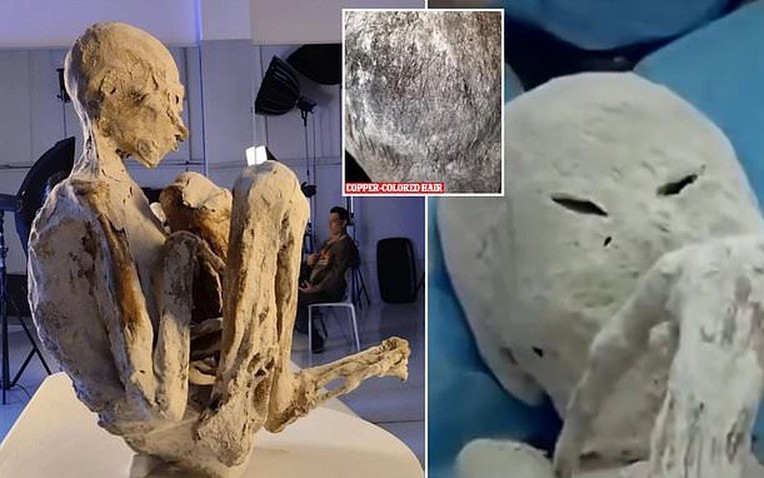
Recently, the case of mysterious “alien” mummies in Peru continued to cause controversy after two new creatures named Paloma and Antonio were announced. Both mummies are believed to have been found in the Nazca Desert, where the first mummy was discovered by journalist and UFO researcher Jaime Maussan 7 years ago.
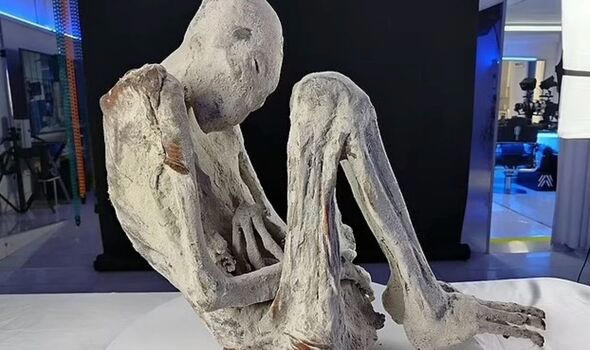
Paloma and Antonio also had three fingers like the previous mummies. However, they have small, slanted eyes and are described as being about the size of “a short adult”.
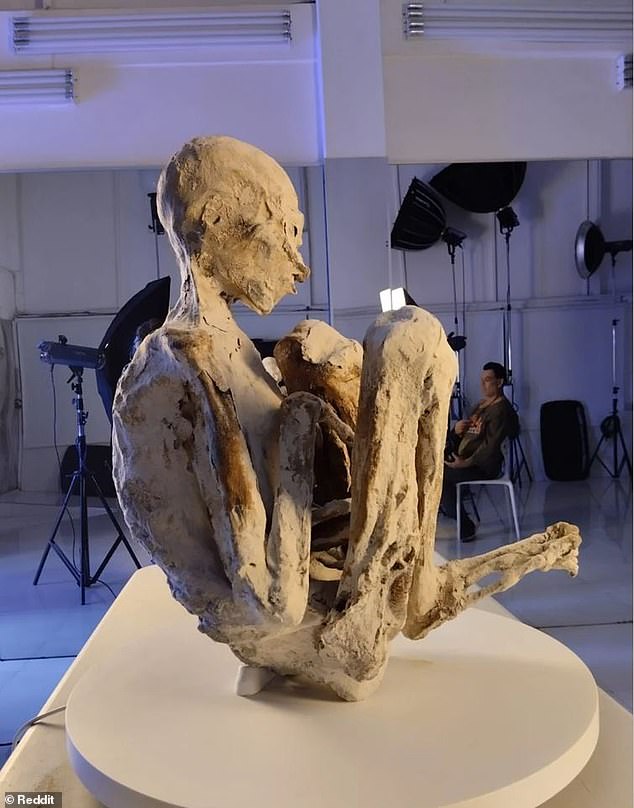
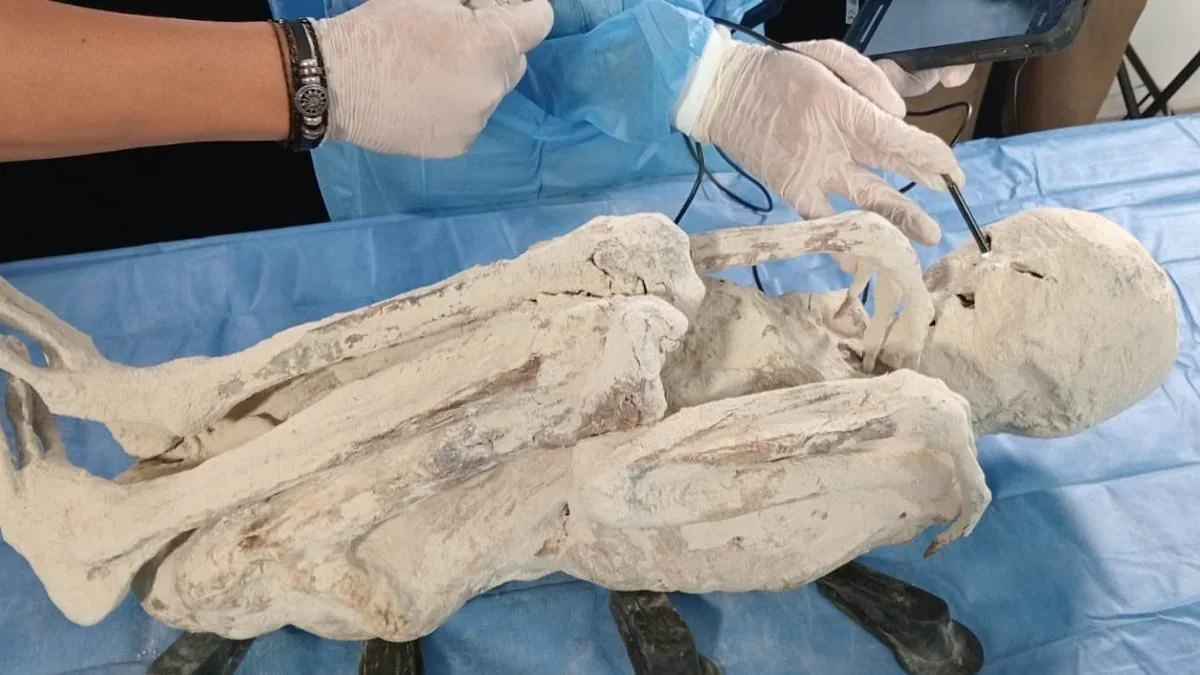
The mummies were recently analyzed by Dr. David Ruiz Vela, former president of the Peruvian Medical Association. He determined that they had human-like organs with visible brain structures. Dr. Ruiz claimed that Antonio had a stab wound to his chest, while Paloma had signs of hair — first found among the mummies. Both are believed to be 1,500 years old. The researchers believe that the mummies were fossilized by algae, which helped preserve them, along with an extremely toxic adhesive that was “not appropriate for that era”.
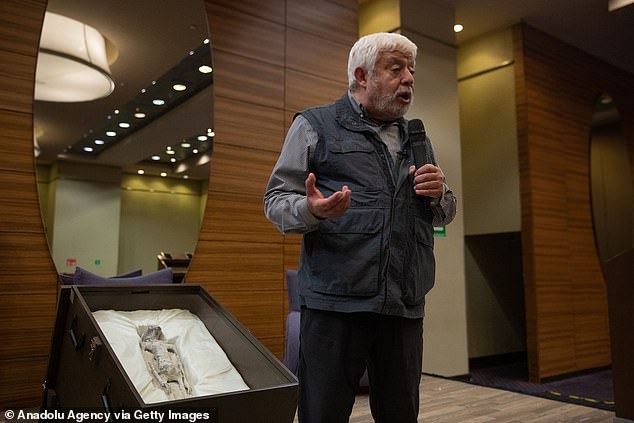
Maussan presented about a dozen such mummies, displaying many of them before the Mexican Congress as evidence of alien beings that once existed on Earth. While Maussan is adamant about his claims, experts still believe that these mummies are nothing more than dolls manipulated by grave robbers.
In 2018, a year after the discovery was announced, scientists concluded from at least four independent analyses of DNA samples and other mummy material that they were modified pre-Columbian mummies. But these claims have not deterred Maussan and other researchers from pursuing them. The latest discoveries are unlike the previous mummies that Maussan has found. Paloma and Antonio differed in facial features and size from earlier mummies.
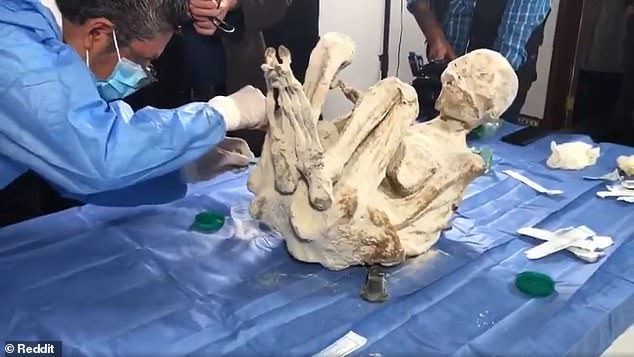
Dr. Ruiz Vela said in a video: “He had a wound that broke his ribs on the left side of his chest, penetrated his chest, abdomen, liver and completely penetrated inside him.” He believes Paloma lived to be 60 years old. Dr Ruiz Vela said: “This is the first time we have found a dry body with hair, hair with bronze characteristics.”
Journalist Jois Mantilla, who has dedicated himself to proving the alien mummies are real, said that “more will be revealed in 2025” about the creatures, especially the secret location where the mummies were found. The researchers said the site was kept secret from the public to avoid grave robbers. Mantilla said that the mummies found earlier had four different types of DNA, including one from Asia, two species of apes from Africa and an unknown type.
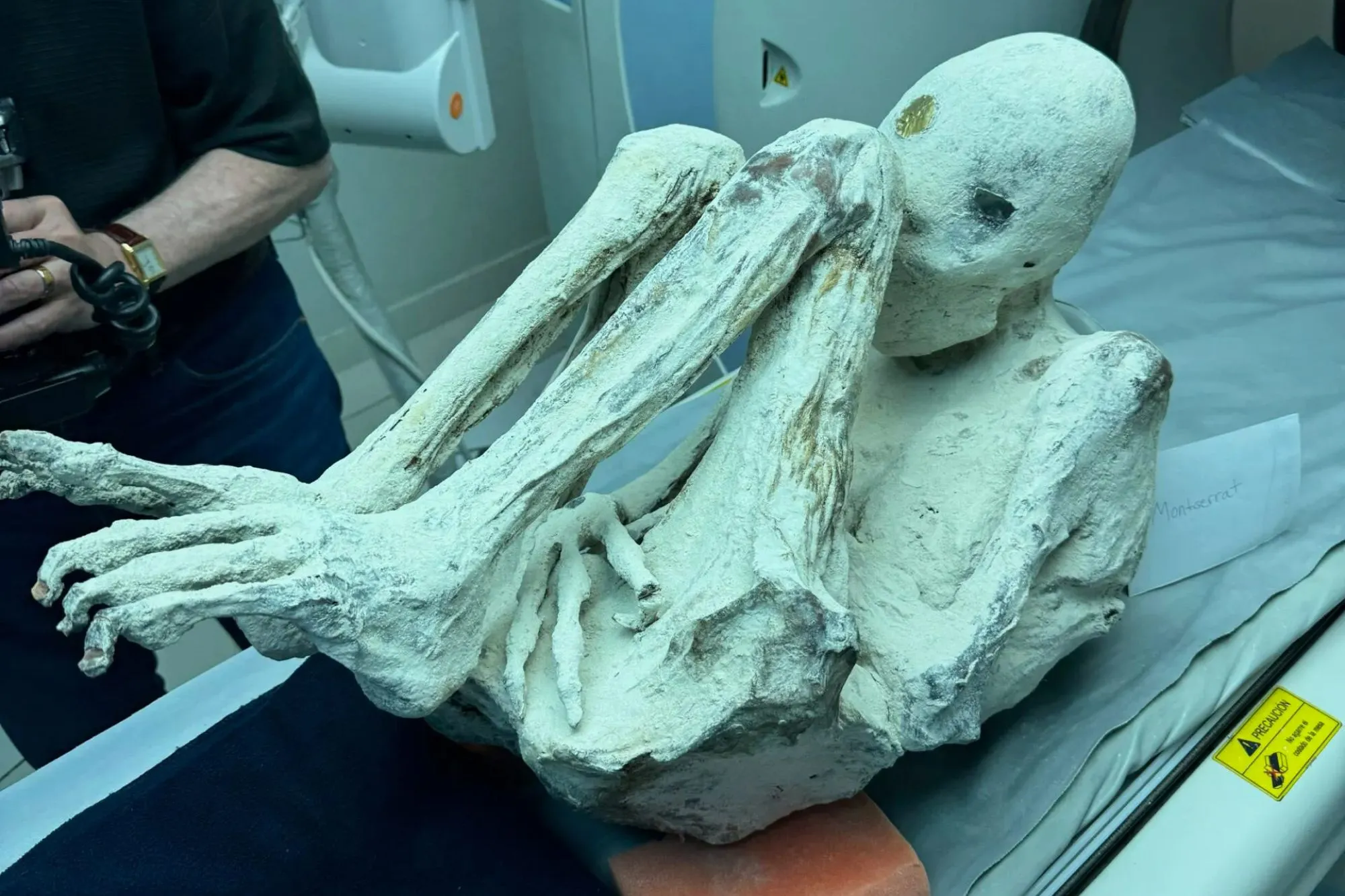
“That unidentified DNA is probably what gives it the three-finger characteristic,” he said. I have a theory that this DNA is the DNA of the people who created it. We humans don’t have the technological ability to combine DNA, and even with all the money in the world, we can’t combine an ape, a chimpanzee with a human.” Later, Mantilla claimed that these creatures were created in a laboratory at least 1,800 years ago.
A recent analysis of images on one of the humanoids named “Maria” shows that it has a biological resemblance to a human — but with “many differences in structure, morphology and anatomy.” The creature’s bones were observed to flow smoothly under the mummy’s sheath, in a way that is found throughout the human body. Its elongated skull shows no signs of artificial cranial deformity.
The team was also able to date the mummy as between 240 and 383 AD, “suggesting its coexistence with the ancient Nazca civilization,” they share in the study. The team conducted a magnification test, which allowed them to look inside and see that the mummy had no hair and outer ears — it only had the holes of the ear canal.
The study, published in the Journal of Social and Environmental Management, wrote: “The most remarkable feature of the skull is its significant elongation, with no outward signs of cranial compression from external agents. Specifically, it is the cranial arch that shows atypical growth and development, similar to the long head phenotype. In addition, the volume of the skull is 30% larger than that of the average person.”
Earlier, Maussan “caused a riot” in the Mexican Congress when he brought two mummies to argue about whether they belonged to this world. He invited a team of researchers to perform DNA analysis on the drawings that showed 30 percent “did not belong to any known species” and claimed that the drawings were “authentic,” including a single skeleton.
Maussan stated to the Mexican Congress in September: “These specimens are not part of our terrestrial evolution… These are not creatures found after a UFO crash. They were found in diatomaceous mines and then fossilized.”
He then added: “Whether they are aliens or not, we don’t know, but they are intelligent and they live with us. They should rewrite history. We are not alone in this vast universe; We should accept this reality.” Maussan brought with him a team of medical experts carrying a letter signed by 11 researchers from the National University of San Luis Gonzaga in Ica, Peru, claiming the same.
However, the letter made it clear that the team did not refer to the mummies as “aliens” but did not answer the origin of the remains. Argentine surgeon Celestino Adolfo Piotto also stood up to claim that he had reviewed the results of tests performed on the bodies and made the bizarre case that “they are the evolutionary version of today’s humans,” calling them “our descendants.”