Why the Final Words of Missing in Action Feel Like a Fateful Promise Today
Why the Final Words of Missing in Action Feel Like a Fateful Promise Today
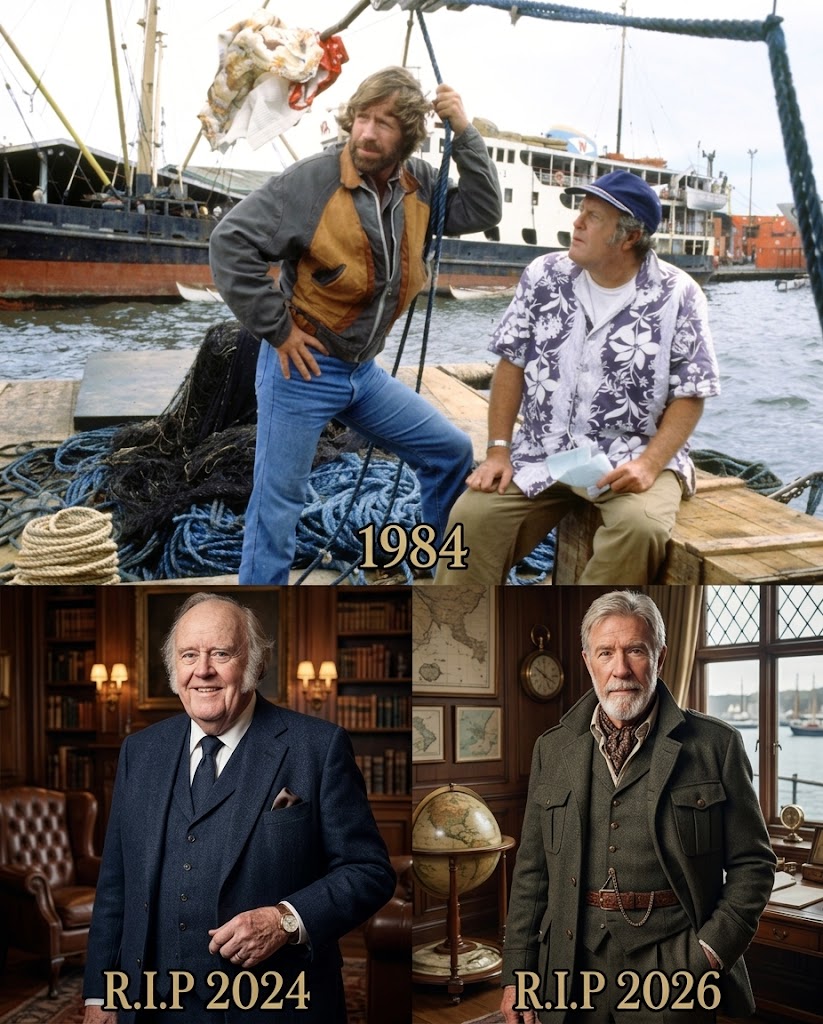
Amidst a dilapidated dock steeped in salt spray and the memories of war, two men stand gazing at each other as if they know a secret the rest of the world will never understand. More than forty years later, with both Chuck Norris and M. Emmet Walsh having passed away, viewers realize that their final words in Missing in Action sound more like a fateful promise than a line of dialogue. Some friendships do not need speeches, explanations, or grand emotional confessions. They are built in harder places than that, forged in exhaustion, danger, and the long silence after men survive something they were never meant to survive at all. One photograph from 1984 captures exactly that kind of unbreakable bond.
The setting is a battered dock somewhere deep in the tropical heat, with fishing nets tangled at their feet and rusted ropes hanging from weathered posts. A tired old boat floats behind them like it has already lived three lifetimes. Standing in the middle of all that heat, salt, and memory are two men who look as though they have already seen the worst the world can offer. On the left stands Chuck Norris as Colonel James Braddock, lean, watchful, carrying himself with the rigid alertness of a man who never truly relaxes. On the right is M. Emmet Walsh as Jack Tucker, a Hawaiian shirt loose at his collar, with a grin halfway between amusement and exhaustion.
In that moment, they are not action-movie archetypes. They are simply two old friends standing together beneath an unforgiving sun. That was the secret strength of Missing in Action. Beneath the explosions and jungle ambushes, the film understood something deeply human: men who survive war together carry a language nobody else can fully understand. Tuck brings warmth where Braddock brings discipline. Braddock carries guilt and unfinished duty; Tuck carries laughter loud enough for both of them. One man fights because he cannot stop. The other fights because he refuses to abandon a friend. Together, they become something larger than either could ever be alone.
That chemistry was not manufactured. Walsh possessed one of the most authentic, lived-in faces in American cinema, capable of comedy and heartbreak at exactly the same time. Chuck Norris represented something different, a mythic presence of quiet certainty and moral clarity. Norris understood he needed actors like Walsh beside him because Tuck made Braddock human. And then came that unforgettable farewell line: “I’ll see you in hell.” At the time, it was just one more tough-guy line delivered in the middle of chaos. But time changes dialogue. Years later, the words feel strangely tender, less like bravado and more like a promise between brothers.

M. Emmet Walsh passed away in 2024 at the age of 88, leaving behind one of the richest character-actor careers Hollywood ever produced. Just two years later, in 2026, Chuck Norris followed at the age of 86, as the lone wolf finally laid down the trail. Suddenly, that old dock from 1984 feels entirely different. The ropes still hang there in memory, and the sun still burns over the water. Somewhere beyond the noise of history, perhaps Tuck is still sitting on that dock in his faded Hawaiian shirt, grinning at the horizon, waiting for his old friend to arrive late one more time. Some movie friendships fade when the credits roll, but this one never did. The mission ended, the years passed, and the men are gone, but the friendship remains as immortal as the tide.