JUST BECAUSE OF A TINY INSECT BITE ON HIS HEAD, A 5-YEAR-OLD BOY TEMPORARILY LOST MOVEMENT AND WAS UNABLE TO SPEAK FOR 12 HOURS
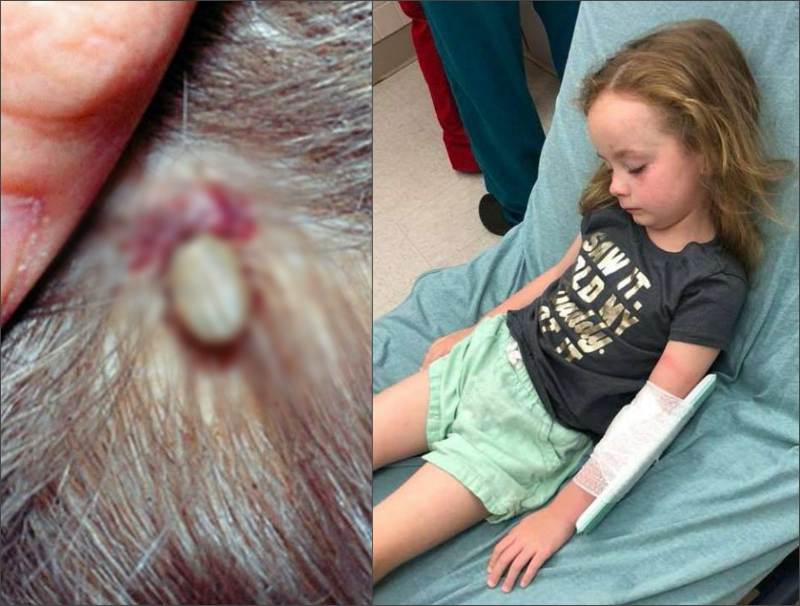
The five-year-old girl is Kailyn Kirk from Grenada. She was diagnosed with a temporary inability to walk or speak for 12 hours due to a tick bite on her scalp.
Kailyn’s mother, Jessica Griffin, recounted: “Last Wednesday morning (June 6th), when Kailyn woke up to get ready for school, she fell out of bed. Jessica recalled, ‘The night before, we had a softball game. Kailyn was perfectly fine. We came home, showered, washed her hair, cleaned her up, and did other things. At that time, I didn’t notice any tick.'”
The next morning, when Kailyn fell out of bed and couldn’t get up, Jessica wasn’t overly alarmed. She thought it was probably just because she was still sleepy.

However, when she brushed her daughter’s hair, Jessica discovered that Kailyn couldn’t speak normally. “I was brushing my daughter’s hair to tie it into a ponytail. I noticed she suddenly couldn’t speak clearly. When I parted her hair, I saw a tick. I was extremely worried and immediately called my husband, who was working in Iraq. I asked him what was happening. He told me I needed to catch the tick, put it in a zip-lock bag, and take her to the emergency room.”
Immediately, Jessica took her daughter to the emergency room. Doctors diagnosed her with temporary paralysis caused by a tick bite. The cause was a neurotoxin in the tick’s saliva. According to the doctor, Jessica’s family didn’t need to panic because once the tick was removed, Kailyn’s symptoms would fade on their own within 12-24 hours.
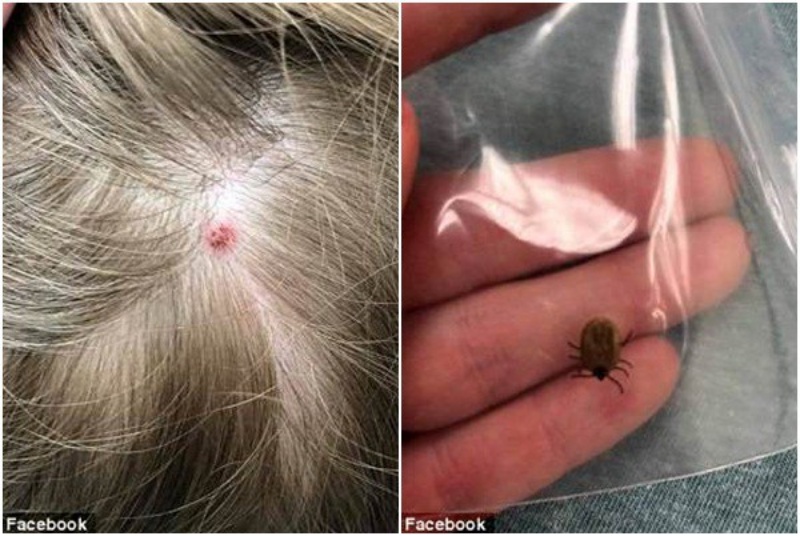
Regarding the reason for sharing this story, Jessica Griffin revealed that she hopes it serves as a timely warning to parents. Parents should check for the risk of tick bites in children because if not detected early enough, the consequences can include breathing difficulties. In some cases, it can become life-threatening: “Please check your children. Ticks are more common in children than in adults. Saying ‘fear’ is just an understatement!”
One of the most concerning illnesses linked to ticks is Lyme disease, which can affect the nervous system. According to the Lyme Disease Foundation, tick-related paralysis occurs when a neurotoxin from the tick’s saliva is transmitted to the person. Scientists believe that the toxin interferes with nerve function. Symptoms usually last from 2 to 7 days. Generally, symptoms begin with fatigue, numbness in the legs, and muscle pain, then can quickly progress to paralysis. The lower limbs are affected first, then it may spread upwards. If the tick is not found, the condition may affect the face and tongue. If removed early, the symptoms will ease and disappear within 12-24 hours.
The earliest and most common sign is the appearance of a pink or red rash around the bite site. The condition can develop 3 to 30 days after a person is bitten. Those affected may also experience flu-like symptoms, including fatigue, headache, and muscle or joint pain.

The U.S. Centers for Disease Control and Prevention (CDC) recommends showering within 2 hours of coming indoors to help reduce the risk of tick exposure. If hiking in the woods, wear long-sleeved clothing, tuck in your pants, use insect repellent, and check for bites before returning home.
Experts also warn of a potential increase in tick activity this summer that could lead to serious health issues in children. Because ticks aren’t only found in forests but can also appear in city parks, on tree branches in your backyard, and live on deer, dogs, or rodents like squirrels and mice… Therefore, parents need to be especially careful.