The Haunting Power Of Frozen Time: What Happens When Our Screen Heroes Finally Step Into The Shadow
The Haunting Power Of Frozen Time: What Happens When Our Screen Heroes Finally Step Into The Shadow
There is something strangely heartbreaking about old movie stills once enough years have passed. At the time the camera captured them, nobody on the set thinks about mortality. Nobody imagines the photograph will someday become a memorial disguised as entertainment. The actors are simply doing their jobs. The lights are hot. Someone off-screen is holding a reflector. The jungle set smells of dirt, smoke, and wet fabric. Dialogue is repeated between takes. Coffee grows cold nearby. And somewhere inside that ordinary working day, time quietly freezes forever.
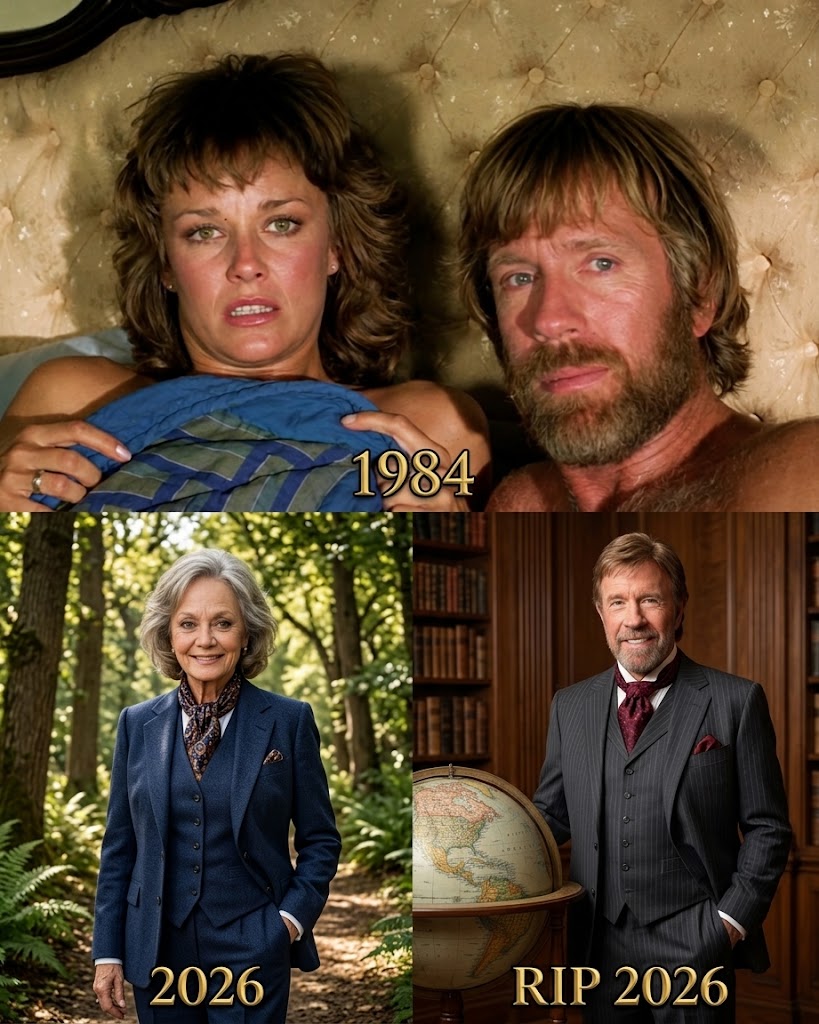
That is what this image from Missing in Action became. Chuck Norris and Lenore Kasdorf standing together in 1984—two performers caught inside the machinery of an action film that was never intended to become emotional history. Yet decades later, the photograph carries a completely different weight. What once looked like another scene from an 80s war thriller now feels like a doorway into another era entirely. The camera stopped rolling long ago, but the feeling never really left.
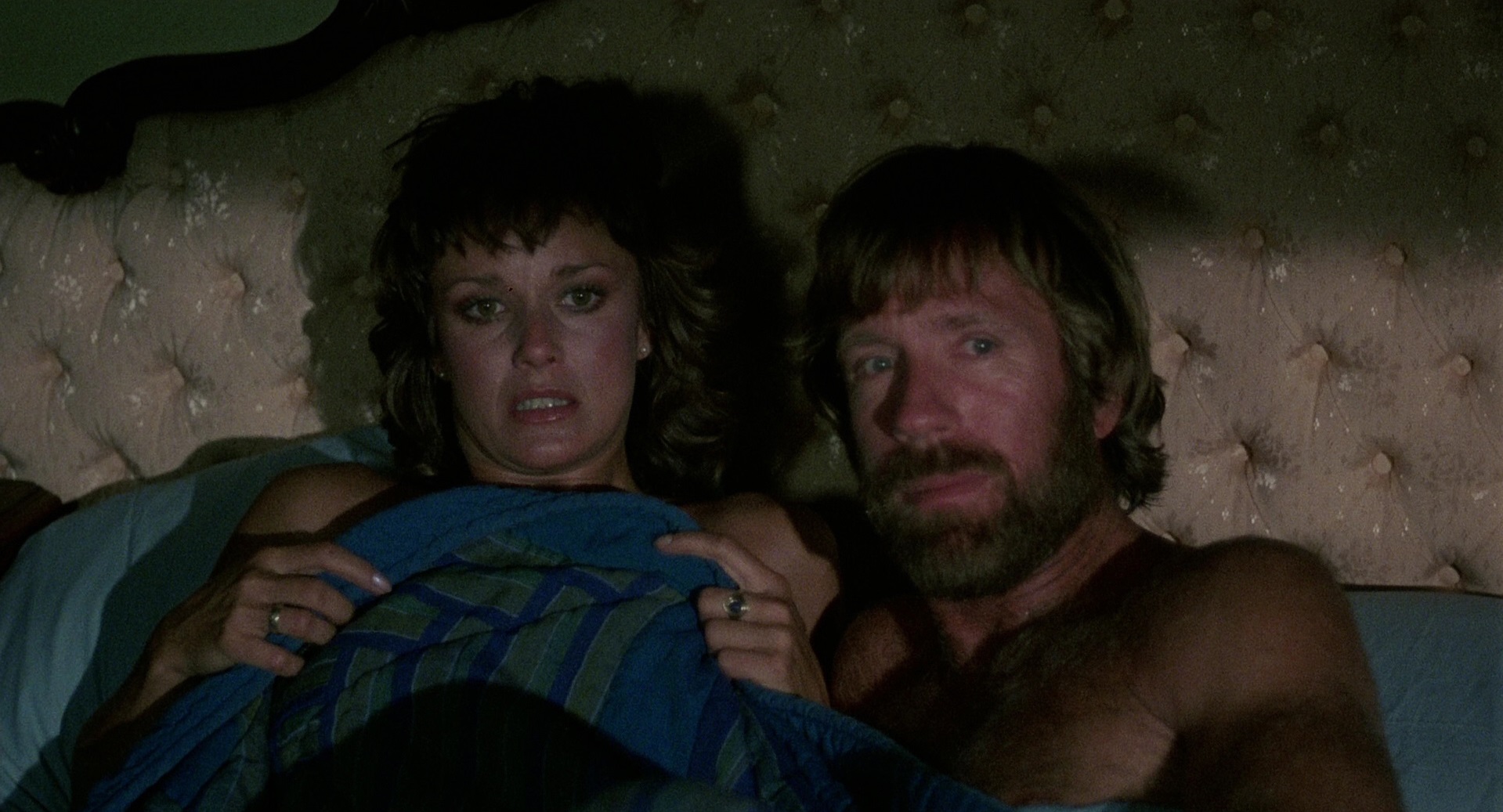
In 1984, Missing in Action arrived during the peak of the American action-film explosion—a period where audiences wanted heroes who did not hesitate, did not doubt themselves, and did not stay down after being hit. America wanted strength. Simplicity. Certainty. And few actors embodied that certainty more completely than Chuck Norris. He was not complicated onscreen. That was the point. Chuck Norris represented reassurance. The broad shoulders. The steady eyes. The calm voice before violence erupted. Audiences entered theaters already understanding the contract: no matter how dangerous the mission became, he would keep going. He would fight through jungles, explosions, ambushes, prisons, and impossible odds. And somehow, by the final scene, he would bring people home.
For millions of viewers, that reliability became comforting in ways difficult to explain today. But revisiting films like Missing in Action decades later reveals something else that time often hides: the emotional grounding provided by the actors around him. Lenore Kasdorf brought humanity into a genre that frequently rushed past it. She was never merely decorative background for the hero. Long before this film, she had already built a respected career through television dramas and emotionally grounded performances that gave her an authenticity audiences instinctively trusted. In Missing in Action, she helped make the danger feel personal instead of abstract. That mattered, because action films only truly work when the audience believes someone inside the chaos is emotionally real. Kasdorf understood that instinctively.
Now forty-two years separate the original film frame from the photographs taken in 2026. Time transformed both faces differently, but not unfairly. Lenore Kasdorf, now in her late seventies, still carries the composed elegance of someone who always knew exactly who she was. The same intelligence remains visible in her expression. The same calm presence. The same quiet strength that once allowed her to stand naturally beside one of the biggest action stars on Earth without disappearing inside his shadow.
And then there is Chuck. The years that once seemed unable to touch him finally did. On March 19, 2026, Chuck Norris passed away in Hawaii at the age of 86, surrounded by family. For a generation raised on his films, the news felt surreal at first—almost impossible to process. Chuck Norris had become more than an actor over time. He had evolved into a cultural myth. An internet legend. A symbol of indestructibility wrapped inside humor, martial arts, patriotism, and old-school action cinema. People joked that Chuck Norris could never die because part of the world genuinely wanted to believe it.
And perhaps that is why photographs like this hurt so deeply now. Not because they show death directly, but because they show life continuing forward. A frame from 1984. A jungle. Two actors. A moment nobody thought would matter this much later. And then suddenly forty years vanish. One person is still here, carrying memory quietly into old age. The other has become part of cinema history itself.
That is the real power of “then and now” photographs. They remind us that films preserve people at the exact moment they seemed permanent. Inside Missing in Action, Chuck Norris is forever moving through smoke and gunfire with unstoppable certainty. Lenore Kasdorf is forever standing beside him, grounding the story with humanity and warmth. The jungle never changes. The soundtrack never changes. The hero still fights his way home.
But we watch differently now. Because the man on the screen is no longer somewhere out there growing older alongside us. The distance between audience and memory suddenly becomes painfully visible. And yet there is comfort in that too. What they created together in 1984 still exists untouched by time. The performances remain. The feeling remains. The old scenes still flicker alive whenever someone presses play late at night, searching not only for entertainment, but for the strange comfort that old movies sometimes provide.
For a few hours, the hero still survives everything. For a few hours, the story never ends. And somewhere inside that frozen frame from 1984, Chuck Norris is still walking through the jungle beside Lenore Kasdorf—fearless, determined, and carrying the quiet promise that somehow, against all odds, he will make it home again. Forever.