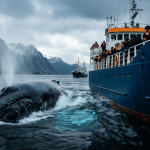
END OF STORY? “TIMMY” – DEAD HUMPBACK WHALE BECOMING A PRESSURE TIME BOMB
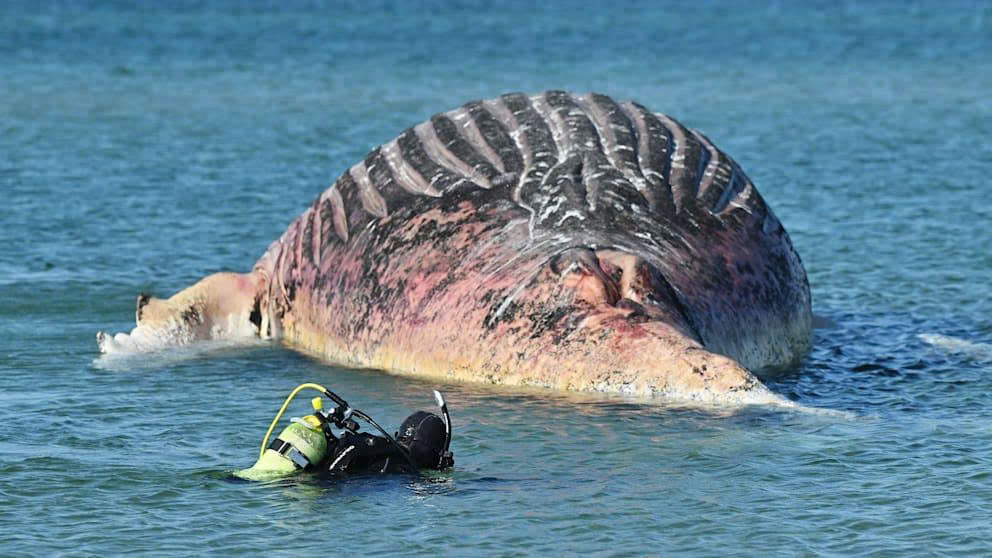
END OF STORY? “TIMMY” – DEAD HUMPBACK WHALE BECOMING A PRESSURE TIME BOMB
A massive humpback whale named Timmy has washed ashore dead, and authorities are warning that the carcass is rapidly swelling due to dangerous gases building up inside from decomposition. Experts caution that the whale’s thick blubber is trapping pressure with almost no escape, causing the body to expand hour by hour, creating a serious safety hazard.
Rising heat is making conditions more unstable. Scientists and emergency responders note that warmer temperatures accelerate decomposition, which in turn increases the buildup of gases such as methane and hydrogen sulfide — both potentially explosive and toxic if released suddenly.
A previous recovery attempt was halted due to extreme safety risks. Now, emergency teams are preparing a new operation, but authorities stress that the situation is becoming increasingly critical.
Why this is unusual and dangerous:
- Large whales present unique challenges due to their size and thick blubber, which can trap gases and create internal pressure.
- Climate change and rising coastal temperatures are accelerating decomposition globally, increasing the likelihood of incidents like this.
- Human impacts, including ship strikes, entanglement in fishing gear, and pollution, continue to contribute to whale mortality and create challenges for safe removal.
Public safety and environmental concerns: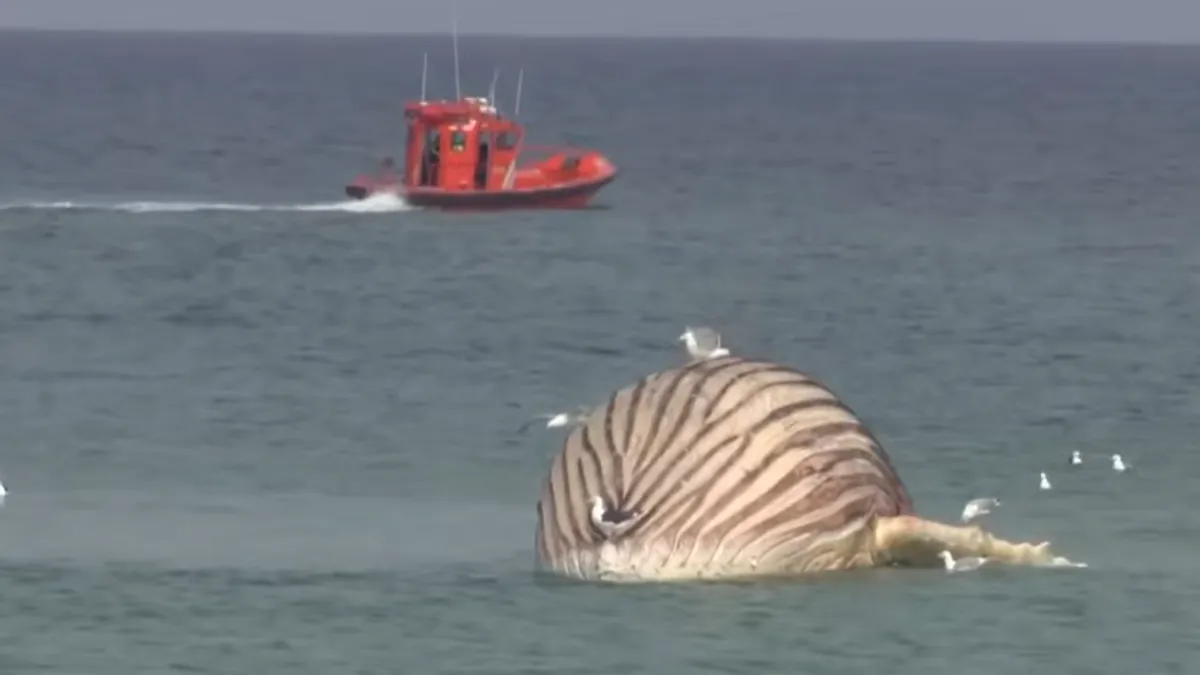
Authorities are urging residents and visitors to stay well clear of the carcass. Reports should be made immediately to local emergency services, and all official guidance regarding beach closures and safety precautions should be followed.
A quiet coastline becomes a high-risk incident:
What appears to be a calm stretch of coast has turned into a live biological hazard, drawing attention from scientists, conservationists, and the public. Timmy’s situation underscores the complexity of large marine mammal recovery, even after death, and highlights the risks of environmental change combined with human impacts on marine life.
The world is watching as the situation unfolds in real time, a stark reminder of the unseen hazards that decomposition and climate change can bring to coastal communities.