Heracleion — Egypt’s Lost Underwater City Rediscovered After More Than 1,000 Years
Heracleion — Egypt’s Lost Underwater City Rediscovered After More Than 1,000 Years
For centuries, the ancient city of Heracleion was considered little more than legend — a lost port said to have once stood near the mouth of the Nile before vanishing beneath the Mediterranean Sea.
Then, in the early 2000s, underwater archaeologists confirmed that the city was real.
Discovered beneath the waters of Abu Qir Bay near Egypt, Heracleion — also known as Thonis in ancient Egyptian records — emerged as one of the most important underwater archaeological finds in modern history.
A Major Gateway of the Ancient World
Before the rise of Alexandria, Heracleion served as a vital trading hub connecting Egypt with the Mediterranean world. Ancient ships carrying goods, grain, precious metals, and luxury items passed through its ports for centuries.
The city was also an important religious center, home to massive temples dedicated to Egyptian gods, including Amun.
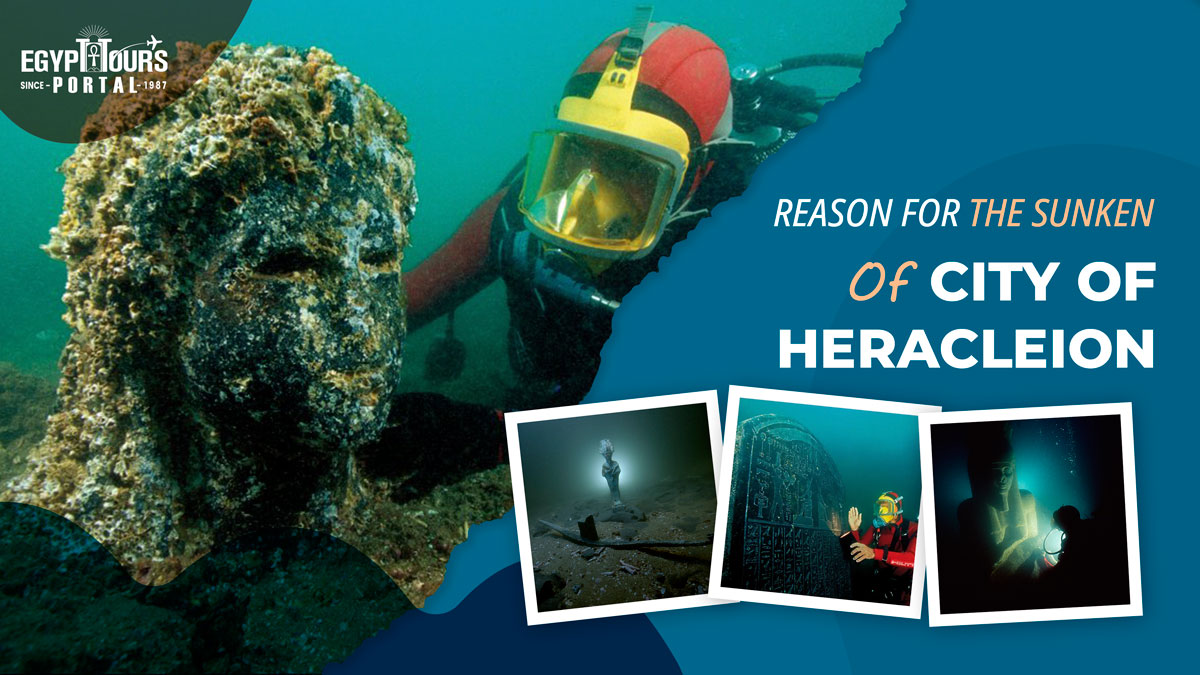
What Archaeologists Found Beneath the Sea
Underwater surveys revealed astonishing remains preserved beneath layers of mud and sediment, including:
- Giant stone statues over 5 meters tall
- Temple ruins and ceremonial structures
- Ancient shipwrecks
- Gold coins and jewelry
- Stone inscriptions and religious artifacts
Researchers also uncovered dozens of ancient vessels buried around the harbor area, providing valuable evidence about maritime trade and shipbuilding in the ancient Mediterranean.
Why the City Sank
Scientists believe Heracleion gradually disappeared due to a combination of natural disasters, rising sea levels, earthquakes, and soil liquefaction — a process in which water-saturated ground loses stability during seismic activity.
Over centuries, parts of the city slowly collapsed into the sea and were eventually covered by sediment.
A City Preserved by the Ocean
Ironically, the same waters that swallowed Heracleion also helped preserve it. Buried beneath thick layers of mud, many structures and artifacts remained remarkably intact for more than 1,000 years.
Modern sonar mapping, underwater excavation, and robotic imaging technologies allowed archaeologists to reconstruct large portions of the submerged city.
Myth, History, and Discovery
For generations, references to Heracleion appeared in ancient texts and legends, leading some historians to question whether the city truly existed. Its rediscovery confirmed that parts of Egypt’s ancient coastline and trading world had literally vanished beneath the Mediterranean.
Today, Heracleion stands as one of the clearest examples of how entire cities can disappear through natural geological processes — and remain hidden for centuries beneath the sea.