The Lost City of Heracleion — Egypt’s Atlantis Beneath the Mediterranean
The Lost City of Heracleion — Egypt’s Atlantis Beneath the Mediterranean
For centuries, the ancient city of Heracleion was considered a myth. Mentioned in ancient Greek and Egyptian records, it was believed to have once stood at the edge of the Nile Delta before vanishing beneath the sea. Modern archaeology later confirmed that the city was real — and remarkably well preserved underwater.
A Powerful Port of Ancient Egypt
Heracleion, also known by its Egyptian name Thonis, was once one of the most important port cities in ancient Egypt. Located near the Mediterranean coastline, it served as a major gateway for trade between Egypt and the wider ancient world.
Ships carrying goods such as grain, papyrus, gold, and luxury items passed through its harbors. The city also played a key religious role, hosting temples dedicated to major Egyptian deities, including Amun.
Why It Was Forgotten
Over time, Heracleion disappeared from historical memory. The reasons were not sudden or mysterious, but likely the result of a combination of natural forces:
- Rising sea levels
- Earthquakes
- Soil liquefaction
- Gradual coastal subsidence
These processes caused parts of the city to slowly sink into the Mediterranean, eventually becoming completely submerged and buried under layers of sediment.
Rediscovery Beneath the Sea
In the early 2000s, underwater archaeologists using sonar and diving technology rediscovered the lost city beneath Abu Qir Bay. What they found stunned researchers.
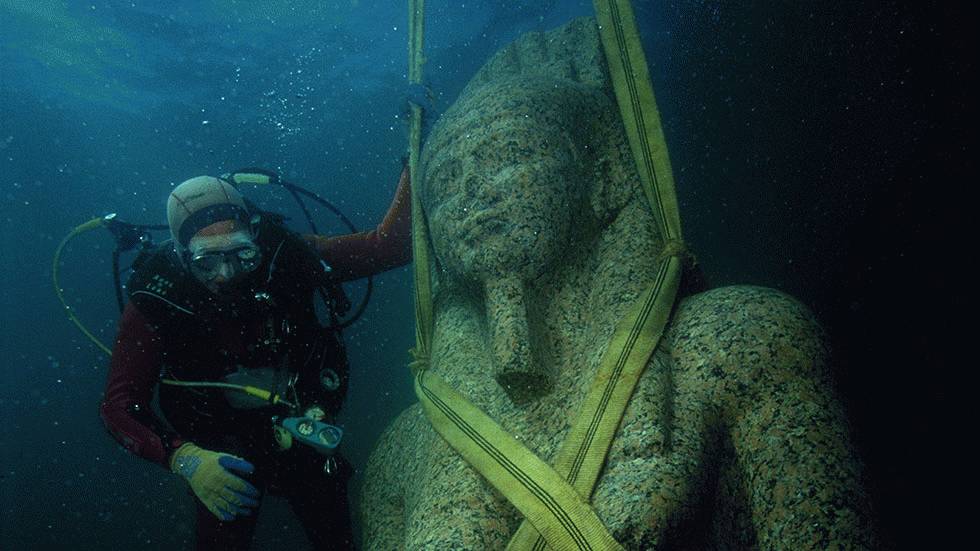
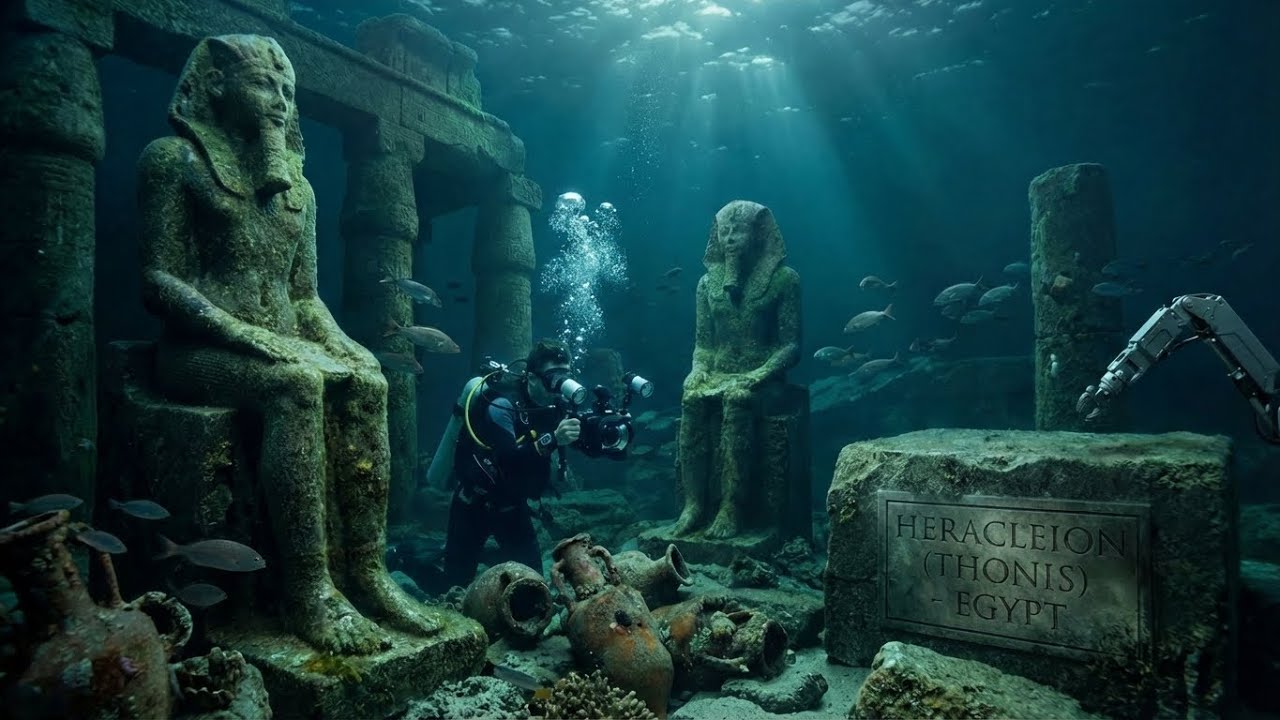
Massive statues, temple ruins, inscriptions, and dozens of ancient shipwrecks were preserved in remarkably good condition due to the protective layer of mud and sand covering the site.
Some statues still stand upright on the seafloor, while others lie broken among collapsed buildings and harbor structures.
What the City Reveals
The discoveries at Heracleion have provided invaluable insight into:
- Ancient Egyptian maritime trade
- Religious practices and temple architecture
- Shipbuilding and harbor engineering
- Cultural exchange in the Mediterranean
The site has also helped confirm references found in ancient texts that once seemed exaggerated or symbolic.
Not a Myth — A Lost Reality
While often referred to as “Egypt’s Atlantis,” Heracleion is not a myth but a historically verified city whose disappearance can be explained through natural geological processes.
Its rediscovery highlights how entire civilizations can be lost to the sea and remain hidden for thousands of years, only to reappear through modern exploration.
A City Frozen in Time
Today, Heracleion stands as one of the most extraordinary underwater archaeological sites ever discovered. Preserved beneath the Mediterranean, it offers a rare glimpse into a vibrant ancient world that once thrived along Egypt’s shifting coastline — and then slowly slipped beneath the waves.