Heracleion — Egypt’s Lost Underwater City Rediscovered After More Than 1,000 Years
Heracleion — Egypt’s Lost Underwater City Rediscovered After More Than 1,000 Years
For centuries, the ancient city of Heracleion existed only in legends, scattered references in ancient texts, and the imaginations of historians. Once one of the most important ports in the Mediterranean, the city mysteriously vanished beneath the sea and remained lost for more than a thousand years.
Its remarkable rediscovery in the waters of Abu Qir Bay near Egypt is now considered one of the greatest underwater archaeological finds of modern times.
Egypt’s Forgotten Gateway to the Mediterranean
Known to the Egyptians as Thonis and to the Greeks as Heracleion, the city served as a major commercial and religious center between the Nile Delta and the Mediterranean Sea.
Before the founding of Alexandria, Heracleion was one of Egypt’s busiest ports. Merchant ships from across the ancient world arrived carrying goods, precious metals, wine, ceramics, and luxury products destined for Egyptian markets.
The city was also home to magnificent temples dedicated to Amun and other Egyptian deities, making it an important spiritual center as well as a trading hub.
A City Swallowed by the Sea
Scientists believe Heracleion disappeared gradually due to a combination of natural disasters and geological instability.
Several factors likely contributed:
- Earthquakes
- Rising sea levels
- Soil liquefaction
- Subsidence of the Nile Delta
Over centuries, large sections of the city slowly sank beneath the Mediterranean and were eventually covered by thick layers of mud and sediment.
The Discovery That Stunned Archaeologists
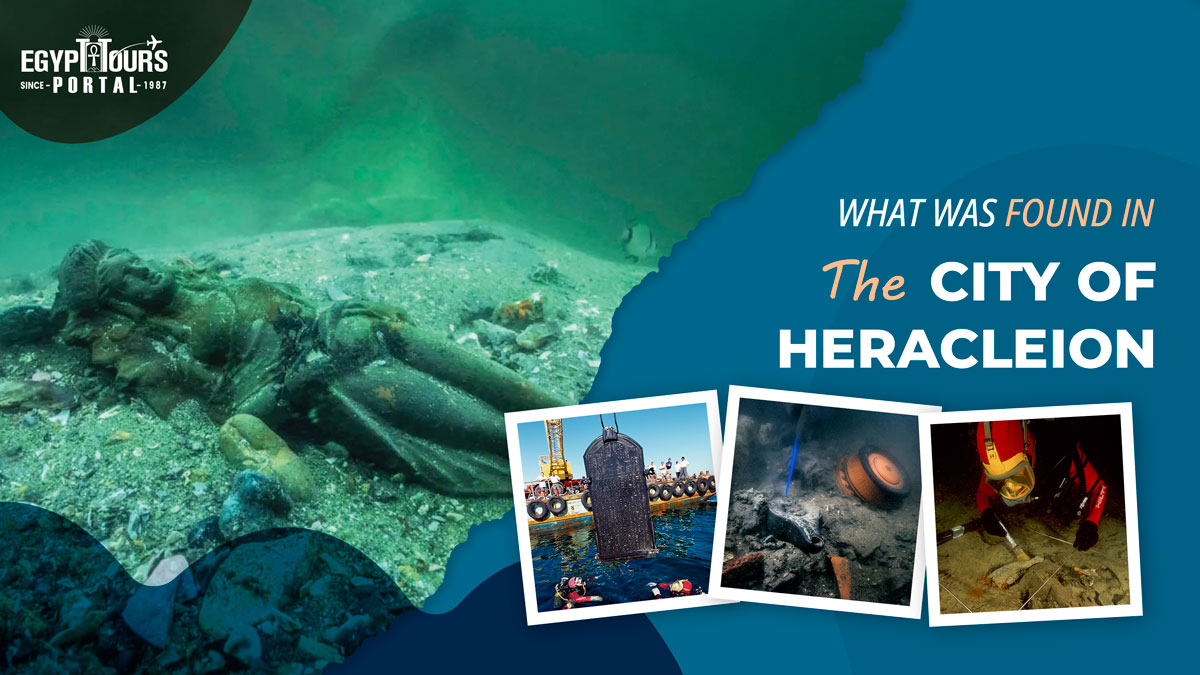
In the early 2000s, underwater surveys led by marine archaeologists uncovered the remains of the lost city.
What they found was extraordinary:
- Massive stone statues standing over 5 meters tall
- Temple ruins and ceremonial structures
- Ancient anchors and harbor installations
- Gold jewelry and coins
- Dozens of shipwrecks preserved beneath the seabed
Many artifacts remained remarkably intact thanks to the protective layer of sediment that shielded them from erosion for centuries.
A Window Into Ancient Egypt
The discoveries at Heracleion have transformed understanding of ancient Egyptian maritime trade and international commerce.
Researchers have uncovered evidence of how goods moved between Egypt, Greece, and the wider Mediterranean world, revealing a sophisticated network of trade that connected civilizations thousands of years ago.
The city has also provided valuable information about religious rituals, harbor engineering, and daily life in one of Egypt’s most important coastal centers.
Egypt’s Real-Life Atlantis
Because an entire city disappeared beneath the sea, Heracleion is often called “Egypt’s Atlantis.” Unlike the legendary Atlantis, however, Heracleion is a verified historical city supported by extensive archaeological evidence.
Its rediscovery demonstrates how real cities can vanish through natural geological processes and remain hidden for centuries before modern technology brings them back into the light.
More than 1,000 years after it disappeared beneath the Mediterranean, Heracleion continues to reveal new secrets—offering one of the most fascinating glimpses into the lost world of ancient Egypt.