Submerged Temple Found Off Alexandria Sparks Atlantis Speculation
Submerged Temple Found Off Alexandria Sparks Atlantis Speculation
A submerged archaeological structure discovered off the coast of Egypt near the historic city of Alexandria has sparked renewed public interest and speculation about lost civilizations and legendary sunken cities.
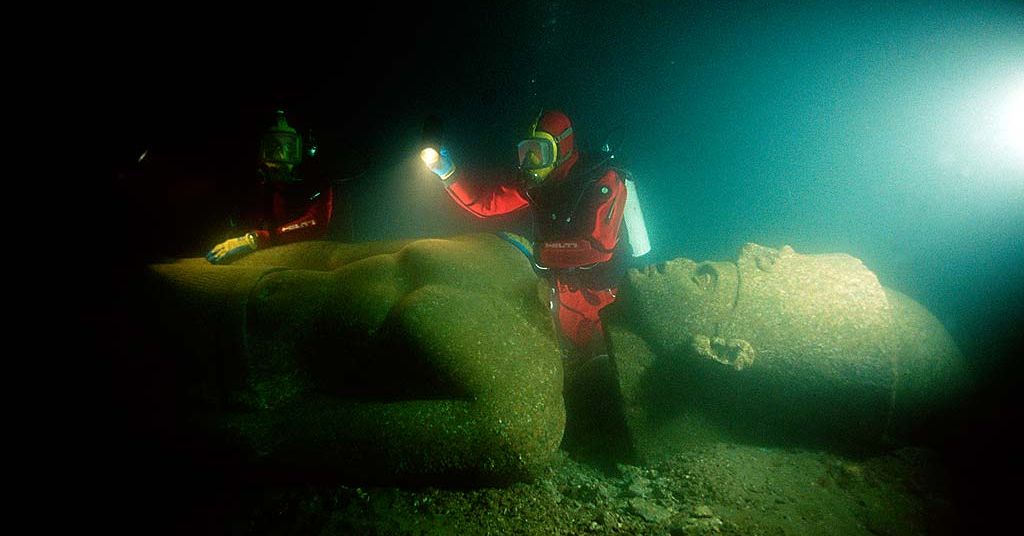
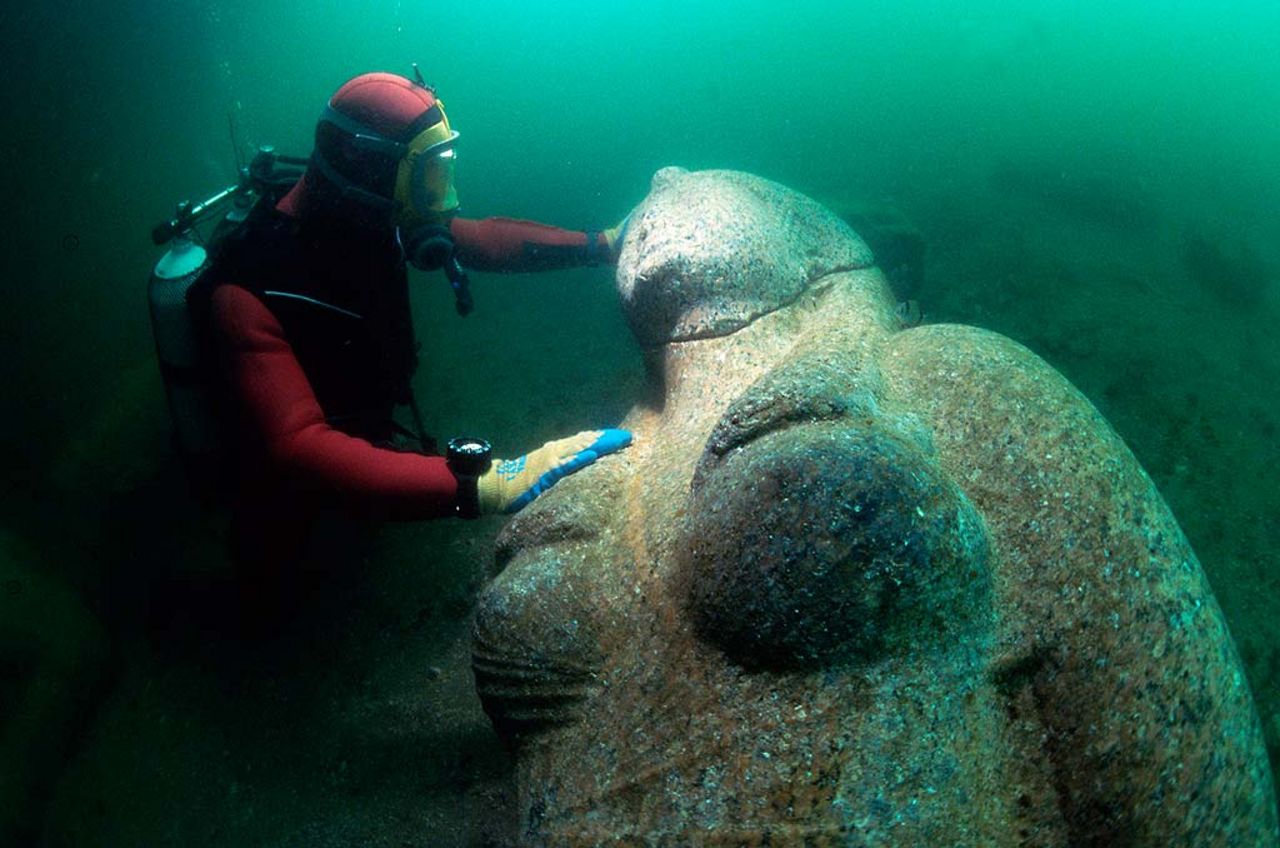
Divers and marine archaeologists exploring the Mediterranean seabed have identified remains of what appears to be an ancient temple complex, including stone blocks, architectural fragments, and carved structures lying beneath layers of sand and sediment.
While the discovery is still under study, its dramatic setting beneath the waves has quickly drawn comparisons to myths of Atlantis and other legendary submerged cities.
What Was Found
Preliminary reports describe:
- Large carved stone blocks
- Fragmented columns and foundations
- Possible temple-like layout
- Scattered artifacts consistent with ancient construction
- Evidence of long-term submersion and marine erosion
Researchers believe the site may be part of an ancient coastal settlement or religious structure that was gradually submerged due to natural geological processes.
A Region Rich in Sunken History
The waters near Alexandria are already known to contain significant archaeological remains. Ancient harbor zones, shipwrecks, and parts of royal districts have been discovered underwater in previous decades.
Scientists attribute this to a combination of:
- Coastal subsidence
- Earthquakes
- Rising sea levels over centuries
- Sediment shifts along the Nile Delta coastline
These processes have caused parts of ancient coastal cities to slowly sink beneath the Mediterranean.
Why Atlantis Comparisons Spread Quickly
Whenever submerged structures are discovered, online discussions often link them to the myth of Atlantis described by Plato.
However, historians emphasize that Atlantis is a philosophical story rather than an archaeological target. There is no verified evidence linking any underwater site in the Mediterranean—or elsewhere—to Plato’s described civilization.
What Experts Actually Think
Archaeologists caution that submerged temples are not unusual in coastal regions with long histories of settlement. Over thousands of years, many ancient cities were partially or fully inundated by changing sea levels and tectonic activity.
Until full excavation and dating are completed, the Alexandria structure cannot be confirmed as a temple, city complex, or ritual site.
Natural Processes, Not Lost Civilizations
Most researchers currently interpret the site as part of a known pattern of submerged cultural landscapes in the eastern Mediterranean rather than evidence of a lost advanced civilization.
Even so, the discovery remains scientifically valuable, offering insight into how ancient societies built along dynamic and shifting coastlines.
A Fascinating but Cautious Discovery
While the imagery of stone ruins beneath the sea naturally fuels Atlantis speculation, experts stress that extraordinary claims require strong evidence. At present, the submerged structure near Alexandria is an intriguing archaeological find—but not proof of any mythical lost city.
As investigation continues, researchers hope the site will reveal more about ancient coastal life in one of the most historically significant regions of the Mediterranean.