I didn’t learn the truth about Beau “Padlock” Miller for almost nine months.
- LongVo
- June 29, 2026
I didn’t learn the truth about Beau “Padlock” Miller for almost nine months.
At first, there wasn’t much to learn.
No last name that led anywhere useful. No viral post. No local news story about a “hero biker at a gas station.” Nothing that made it feel real enough for the world to care the way I did.
Just a memory my sister carried like it might break if she told it too often.
Emma, though—she never forgot.
She added details the way children do when something matters: the exact sound of his boots on concrete, the way he didn’t touch the car, the way he called her “partner” like she was part of a team instead of a problem.
And always the same sentence at the end:
“He wasn’t scary, Aunt Anna. He looked like someone who had already been through something bad and decided not to become it.”
It was only when I started digging through public motorcycle club records—nothing official, just old community posts and local ride announcements—that I saw the patch again.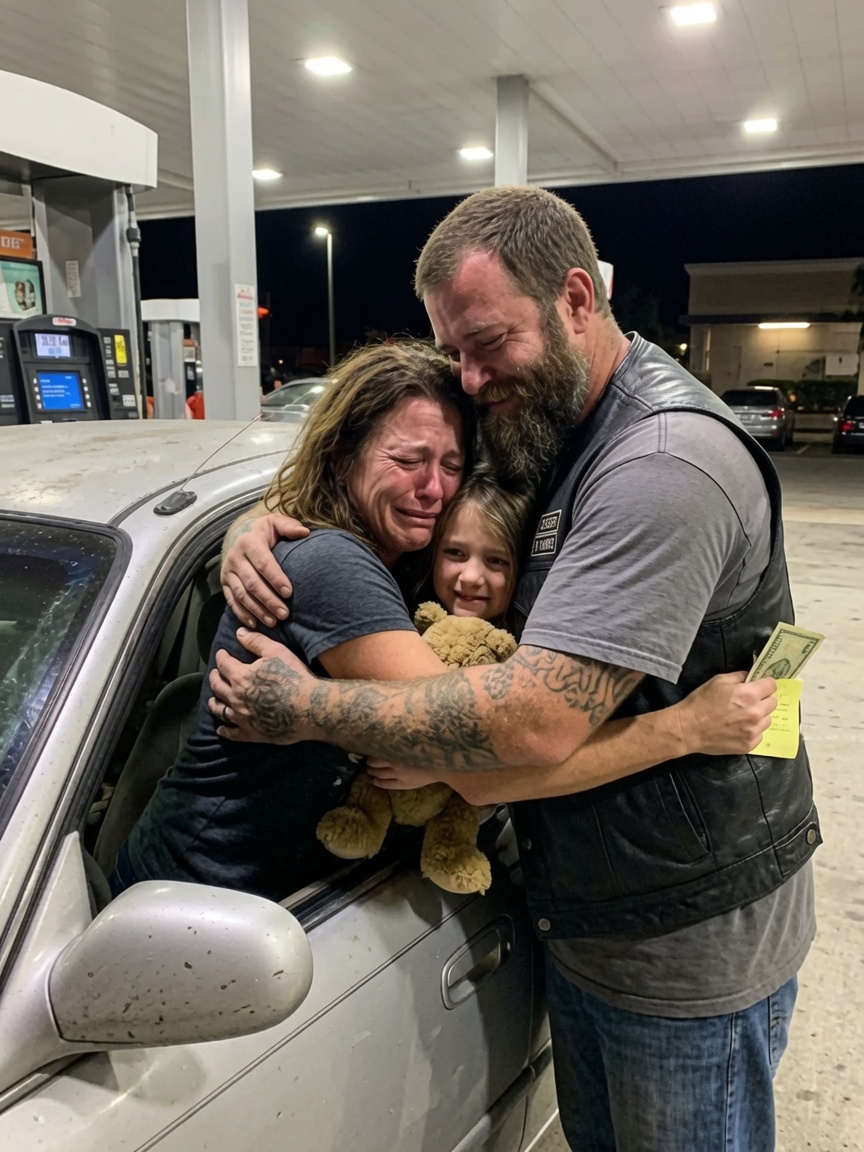
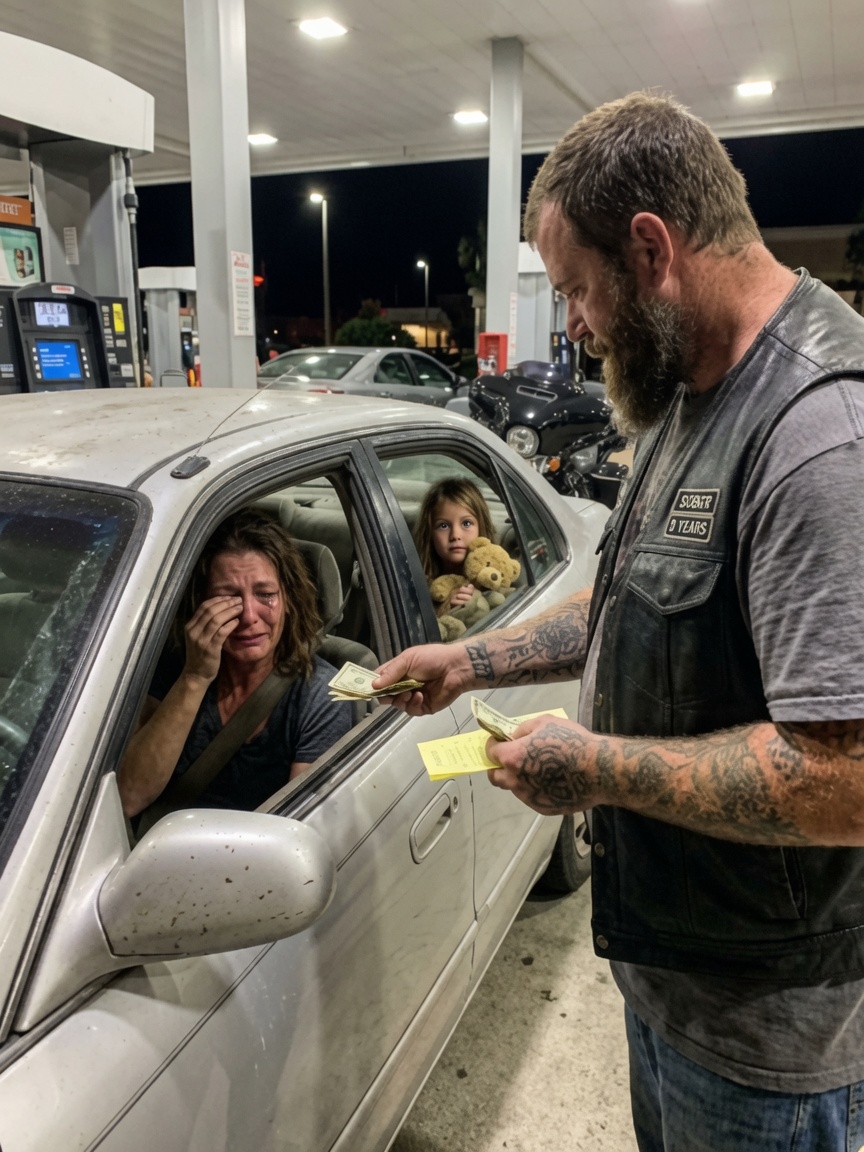
SOBER 9 YEARS.
Then a memorial page.
Not for him.
For someone else.
A woman named Carla Miller.
Wife.
Lost four years earlier.
The post was short, but one line stayed with me longer than anything else:
“She never made it out the second time.”
I didn’t understand it then.
Not fully.
But I was starting to.
The gas station Emma remembered wasn’t random.
It was a route.
A habit.
A place he passed every time he rode south.
And Carla… had tried to leave her own situation once too.
But she hadn’t made it to a shelter.
She hadn’t made it to a sister’s house.
She hadn’t made it to morning.
That was the part nobody put in bold.
That was the part that didn’t make flyers or tributes.
And suddenly, Padlock’s actions that night didn’t look like coincidence anymore.
They looked like memory.
Grief.
And preparation.
Because I later learned he had started carrying that folded yellow notepad page after Carla died.
Not one address.
Dozens.
Updated, checked, confirmed.
Women’s shelters in every county he rode through.
And he didn’t just know them.
He visited them.
Dropped supplies.
Asked questions he never told anyone about.
Made himself useful in ways that didn’t require applause.
The night Sarah met him, he had just come from something no one knew about yet.
A late-night call from a shelter coordinator two towns over.
A woman had escaped an abusive situation with a child and no transportation.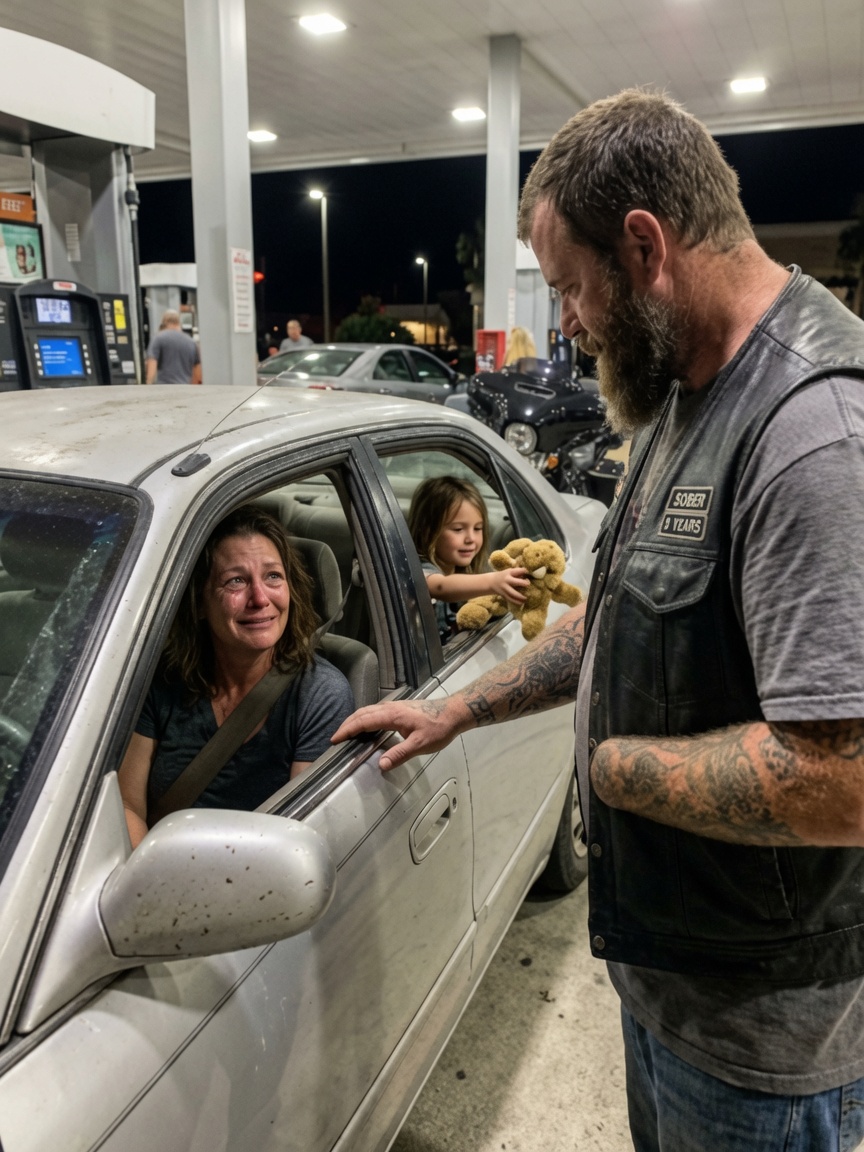
She never made it.
Car broke down on a side road.
By the time help arrived, it was too late.
They found her daughter alive in the back seat for hours afterward, refusing to leave the car.
That was the call that put Padlock on the road that night.
Not fate.
Not coincidence.
Practice.
So when he saw Sarah crying at pump three, it wasn’t just concern.
It was recognition.
The same pattern.
The same danger.
The same narrow window where a life either changes direction—or doesn’t.
And Emma waving?
That wasn’t just a child being friendly.
That was the thing that broke the pattern.
Because in all his years riding that route, Padlock had told himself one rule:
“I’m not God. I’m just passing through.”
But that night, when he looked at Emma’s small hand pressed to the glass…
he didn’t see a stranger.
He saw Carla.
Not as she died.
But as she was before anyone helped her.
The version he couldn’t reach in time.
That was the moment he got off his bike.
Not because it was heroic.
Because it was late.
Too late, once before.
And he wasn’t willing to learn that lesson twice.
The next time I saw him wasn’t in person.
It was in a photo.
A local shelter fundraiser had posted it without much explanation: a tall, tattooed man handing out gas cards in a parking lot, face half-turned away like he didn’t want recognition.
Under it, a caption written by someone who clearly knew him better than most:
“He still rides that same route. He just stops more often now.”
Emma keeps that journal still.
The last page has one sentence she wrote when she was nine:
“I think the biker was scared too, but he helped us anyway.”