Beyond the Mirror: How Genetics Separated a Rare Set of Biracial Twins After Eighteen Years
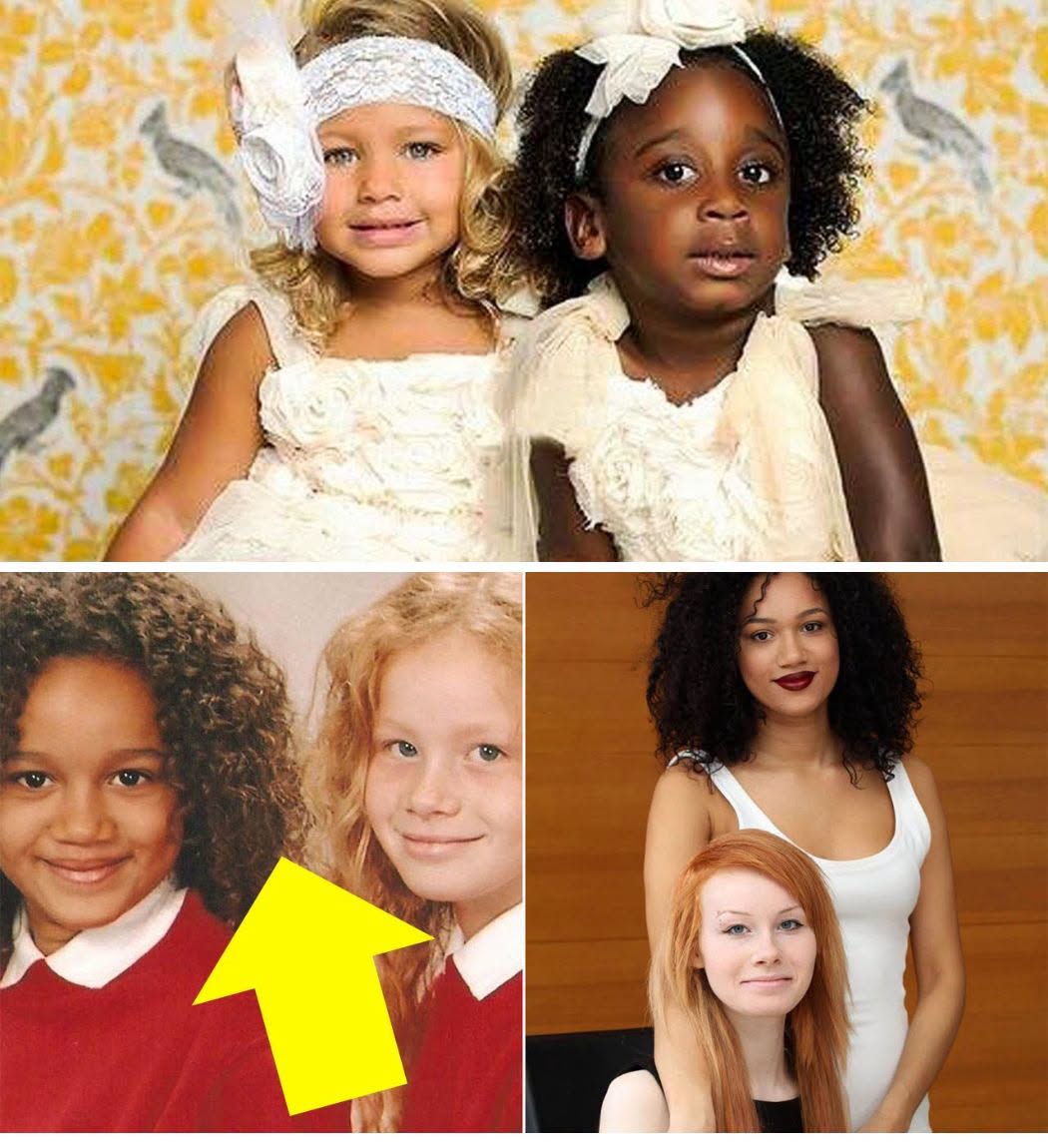
Beyond the Mirror: How Genetics Separated a Rare Set of Biracial Twins After Eighteen Years
The traditional concept of twins almost always evokes images of striking similarities: identical facial structures, shared mannerisms, and coordinated outfits. Even in fraternal twins, a visible thread of sibling resemblance usually binds them together in a crowd. However, the extraordinary case of the Aylmer twins completely shatters the conventional understanding of genetics, proving that nature can sometimes create the most unexpected narratives of individuality within the exact same womb.
In 1996, Donna and Vince Aylmer of Gloucester, England, were a busy working-class couple preparing to expand their family of five. Donna, a warehouse worker, and Vince, a scaffolder, were already experienced parents to three children—George, Chyna, and Jordan. When a routine ultrasound revealed that Donna was expecting twins, the couple felt a mixture of nervous anticipation and profound joy. They were fully prepared for the logistical challenges of raising two babies at once, but they were entirely unprepared for the genetic marvel that would unfold on delivery day.
On January 16, 1997, Donna gave birth to two healthy baby girls. The moment the midwife handed her the infants, the delivery room fell into a stunned, confused silence. The twins looked absolutely nothing alike. One baby, whom they named Lucy, possessed a striking snow-white complexion, vibrant ginger hair, and deep blue eyes. The other baby, named Maria, was born with sparkling brown eyes, a rich dark complexion, and thick, curly brown hair.
This astonishing variation was the result of a rare genetic phenomenon. Because Donna is biracial—with both English and Jamaican heritage—and Vince is white, the girls were fraternal twins born from two separate eggs fertilized by two different sperm cells. By a rare roll of the genetic dice, Lucy inherited the genes for fair skin and light hair, looking distinctly European, while Maria inherited the traits reflecting her Afro-Caribbean ancestry.
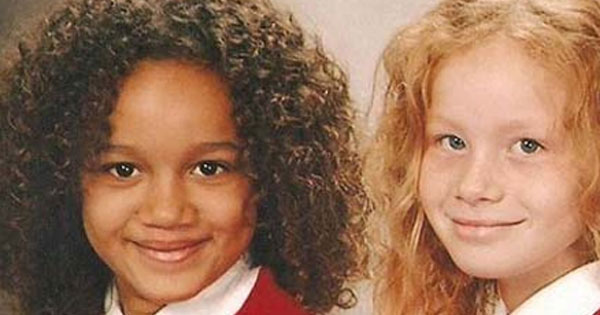
As the girls grew, Donna initially followed the maternal tradition of dressing her twins in matching outfits. However, this only heightened the confusion of onlookers. Strangers on the street would openly stare, unable to comprehend how these two drastically different children could be sisters, let alone twins. By the age of seven, the girls made a definitive choice. Recognizing that they shared virtually no physical traits, they asked their mother to stop dressing them alike, marking the official beginning of their separate identities.
Navigating school brought a unique set of experiences. Unlike identical twins who could famously swap places to prank teachers or complete each other’s schoolwork, Lucy and Maria were instantly recognizable as individuals. While they missed out on the typical mischief enjoyed by other twins, they gained a fierce sense of self. Today, at eighteen years old and beyond, the physical divide has only grown more pronounced, yet their unique bond remains unshakeable—proving that brotherhood and sisterhood are defined by the heart, not just the mirror.