BABY BORN WITH COMPLETE HEART 𝖡𝖫𝖮𝖢𝖪 IS SAVED AFTER A RARE CONDITION STOPPED HER TINY HEART BEFORE SHE HAD THE CHANCE TO START LIFE
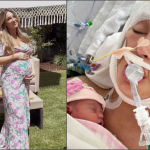
At 28 weeks pregnant, Kaya Williams thought she was having a normal pregnancy. But after a scan suggested her baby might have a heart condition, Williams decided to seek a second opinion. At a prenatal appointment, she learned her baby’s heartbeat didn’t sound normal.
That’s when the 23-year-old suddenly found herself being rushed to The Women’s Hospital at Jackson Memorial, surrounded by specialists urgently preparing for a high-risk delivery.
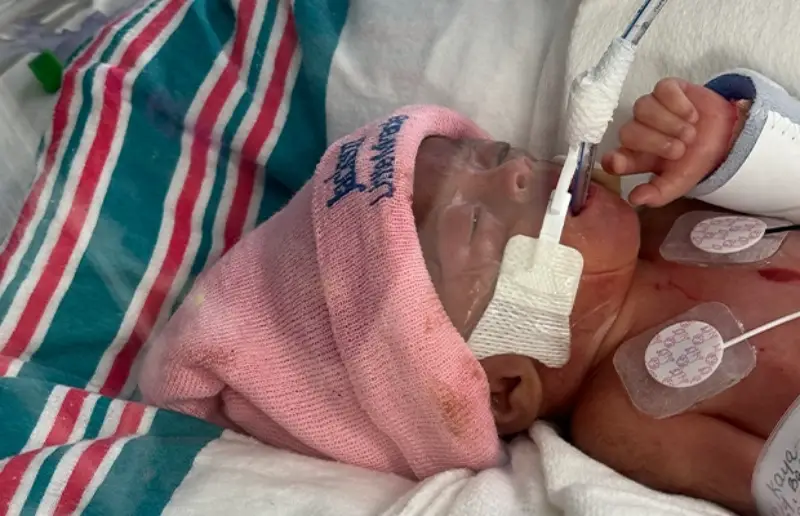
“I kept hearing doctors come in and out, telling me they were worried about the baby’s heart,” Williams said. “I was panicking. I didn’t know if it would be me or my baby, or both of us. It was the scariest moment of my life.”
On January 28, at just 28 weeks and one day, Williams underwent an emergency C-section.
“As soon as the baby came out, they told me her heart had stopped beating properly,” she said. “The team spent more than 20 minutes helping stabilize her tiny heart.”
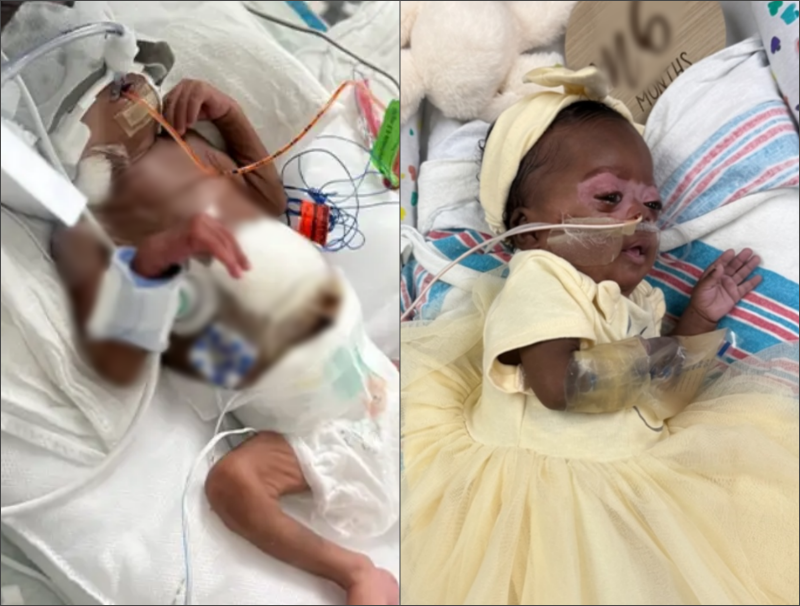
Her newborn daughter, Aryanna Armani Bateman, barely weighed two pounds. She was diagnosed with complete heart block, a rare condition in which the heart’s electrical signals cannot travel normally. She also had a patent ductus arteriosus (PDA) — an opening in the heart — that required surgery.
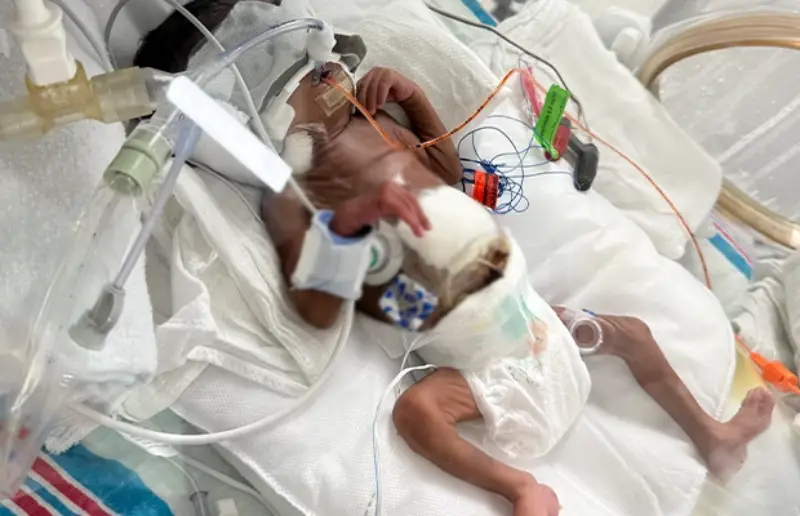
Later that day, pediatric cardiothoracic surgeons implanted an external pacemaker, a life-saving procedure rarely performed on such a premature baby.
After the procedure, Aryanna was cared for in the Level IV neonatal intensive care unit (NICU) at Holtz Children’s Hospital, Florida’s largest and highest-rated NICU. The team monitored her heart, supported her fragile lungs, and guided her through multiple procedures, including the placement of an internal pacemaker.
“Aryanna faced a serious heart condition, and she faced it at an extremely premature age,” said Steven Fishberger, MD, program director of pediatric electrophysiology at Holtz Children’s. “Usually, the internal pacemaker is designed for adults, but our team adapted it for premature babies, and the procedure was a success.
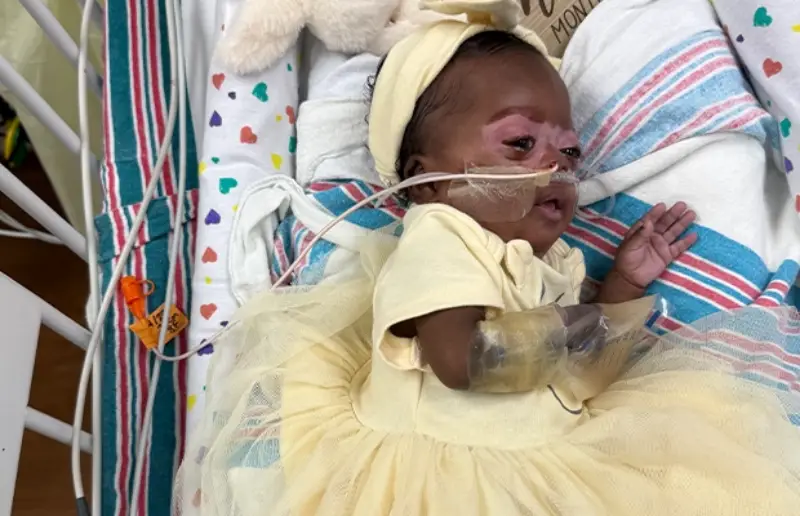
“What made Aryanna’s journey possible was the immediate recognition of her condition, the rapid coordination between our fetal, surgical, and NICU teams, and her own remarkable strength.”
Williams still remembers how gentle and honest Dr. Fishberger was during the hardest conversations.
“The day before her procedure, Dr. Fishberger told me he didn’t know what the outcome would be,” she said. “But the next morning, when he walked into the room smiling, I knew she had made it through. He was so proud of her.”
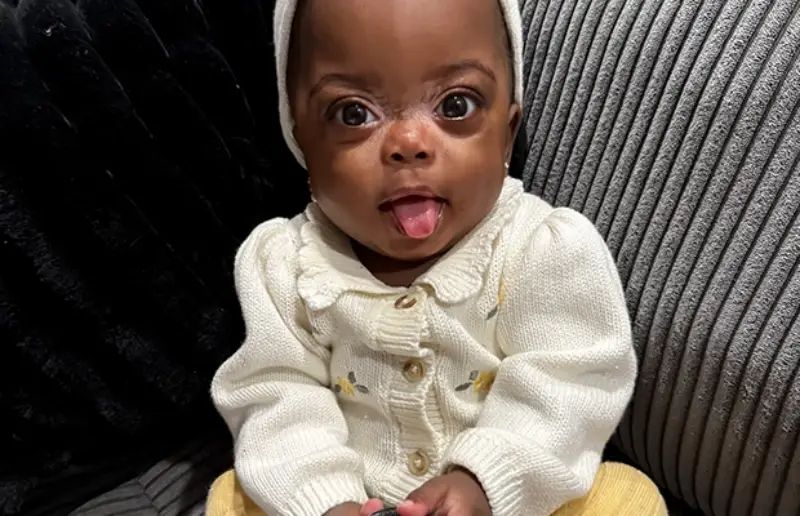
Aryanna spent four months and four days in the NICU, overcoming several different challenges. Despite the obstacles, every milestone mattered: opening her eyes, moving her hands, graduating from the incubator, taking her first bottle, and being held by her mom for the first time.
“It was the end of April when I first held her,” Williams said. “She had so many cords; she wasn’t ready to be held for such a long time. But one of our NICU nurses, Melissa, came in and said, ‘You’re going to hold your baby today.’ I will never forget that moment.”
By the time Aryanna was discharged on June 5, she had grown into a strong, 10-pound baby girl.
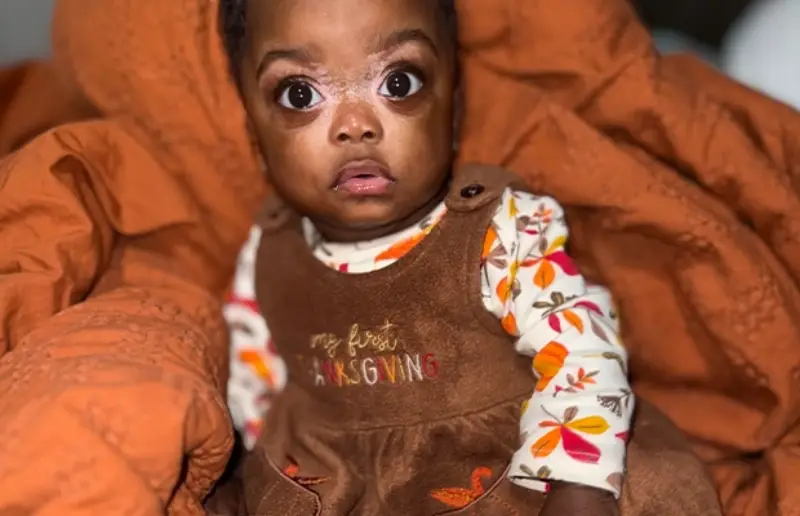
Today, she continues to thrive at home. She sees her cardiologist regularly, and her pacemaker will be adjusted as she grows, with routine battery changes every few years.
To her mother, every moment feels like a gift.
“She’s a warrior and a miracle all in one,” Williams said. “Jackson gave her a chance at life. The doctors, the nurses, the caseworkers—they didn’t just care for her. They cared for me, and they gave my daughter a future.”
Source: UHealth Jackson Children’s Care