
Some television interviews are forgotten the moment they end.
Others become unforgettable—not because of controversy or drama, but because they reveal something deeply human.
One of those rare moments happened when Hollywood legend Kevin Costner appeared on a live television program, expecting nothing more than another friendly conversation about movies, career highlights, and life in Hollywood.
Instead, a single handwritten letter changed the entire atmosphere.
No one in the studio saw it coming.
A Letter That Had Nothing to Do With Fame
As the host reached for an envelope, the audience assumed it contained another fan question about Costner’s iconic films or his decades-long career.
It didn’t.
The letter came from a seven-year-old child.
There were no questions about awards, celebrity life, or blockbuster movies.
Instead, the child wrote something remarkably simple:
“Why do grown-ups forget how to listen to each other? And why is being kind so hard?”
The words were innocent.
Unpolished.
Yet they carried a weight that no carefully prepared interview question ever could.
Within seconds, the studio grew completely silent.
The Hollywood Star Suddenly Had No Script
Kevin Costner has spent more than forty years portraying unforgettable characters.
He’s played fearless heroes, devoted fathers, determined dreamers, and leaders who always seemed to know exactly what to say.
But this time, there was no script.
No director.
No second take.
For a few quiet moments, Costner simply lowered his head.
His hand rose gently toward his face as he gathered his thoughts, visibly moved by the child’s words.
When he finally spoke, his response was almost a whisper.
“That’s something we adults haven’t heard in a very long time.”
It wasn’t a polished speech.
It wasn’t meant to inspire headlines.
It was simply honest.
And perhaps that honesty made it unforgettable.
When Silence Said More Than Words
Television thrives on energy.
Quick jokes.
Fast-paced conversations.
Perfect timing.
But in that moment, everything stopped.
The host didn’t interrupt.
The audience didn’t laugh.
No one rushed to fill the silence.
Instead, the room seemed to pause together, allowing the meaning behind those few simple words to settle.
For a brief moment, it no longer felt like a television interview.
It felt like a room full of strangers reflecting on something they had quietly forgotten: the importance of listening.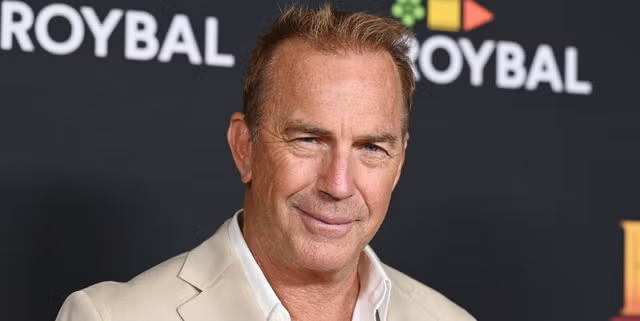
A Message That Reached Far Beyond Hollywood
After collecting himself, Costner looked toward the camera with a warm smile, almost as if he were speaking directly to the child who had written the letter.
He thanked them.
Then he shared a thought that resonated with many viewers.
Sometimes, he said, children ask the questions adults spend their entire lives avoiding.
Their honesty reminds us of truths we’ve buried beneath busy schedules, endless responsibilities, and everyday distractions.
It wasn’t a grand lesson about success or fame.
It was a reminder that empathy often begins with something incredibly simple—taking the time to truly hear another person.
Why This Moment Continues to Resonate
There were no shocking revelations.
No emotional outbursts.
No viral publicity stunt.
Yet the interview spread widely because it offered something increasingly rare: authenticity.
In a world where conversations often become louder and faster, one child’s quiet question reminded millions that listening may be one of the greatest acts of kindness we can offer.
Sometimes people don’t need advice.
They don’t need solutions.
They simply need someone willing to stop, pay attention, and hear them.
The Real Legacy of That Conversation
Kevin Costner didn’t become a hero because of a blockbuster film that day.
He became relatable because he allowed himself to be vulnerable.
He didn’t pretend to have the perfect answer.
He simply admitted that the question mattered.
And perhaps that’s why this brief television moment continues to touch so many people.
Because every once in a while, the most powerful stories don’t begin with dramatic speeches or extraordinary events.
They begin with one sincere question…
…and someone willing to truly listen.