For 80 Years, the Children of a Small Dutch Town Have Kept a Promise to Soldiers They Never Knew
Some promises last a day.
Some last a lifetime.
And then there are promises so powerful they are passed from one generation to the next for nearly a century.
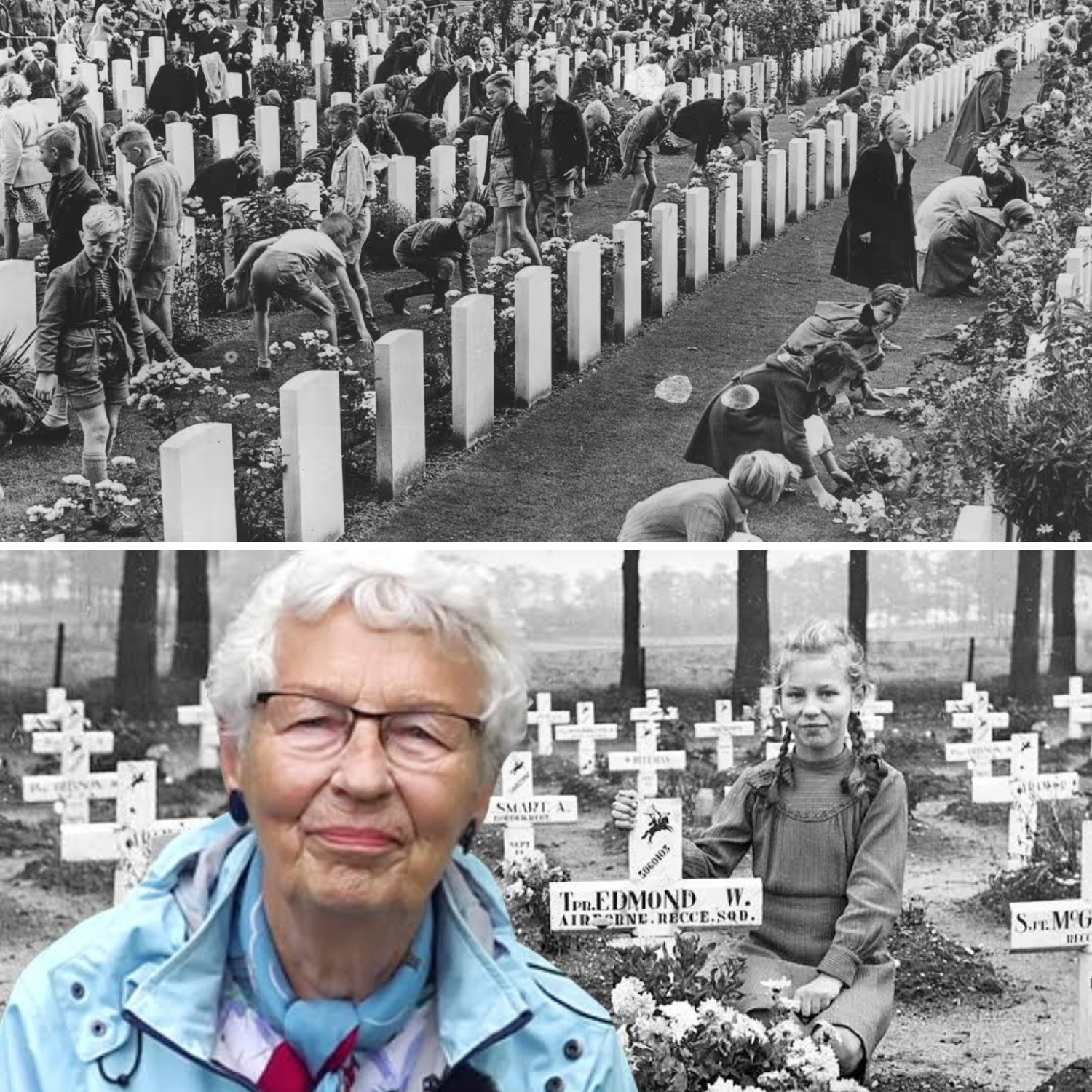
In the quiet Dutch town of Oosterbeek, a remarkable tradition has endured for 80 years. Every year, children who never witnessed World War II—and never met the men buried beneath rows of white headstones—continue to honor them with flowers, gratitude, and remembrance.
It’s a story that proves kindness doesn’t end with a generation. Sometimes, it becomes a legacy.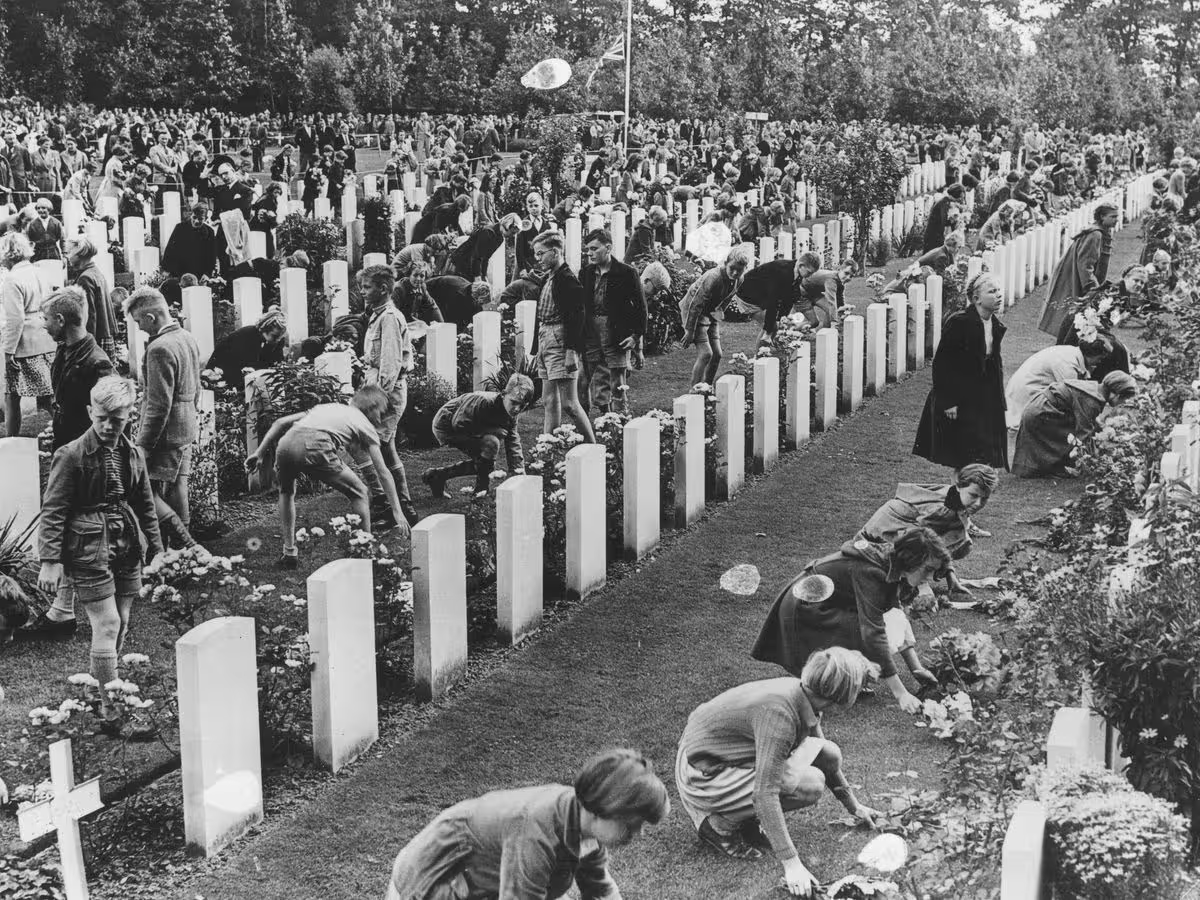
A Cemetery Where Silence Speaks Volumes
Nestled among peaceful trees lies the Arnhem Oosterbeek War Cemetery, where 1,759 Allied soldiers rest side by side.
Most lost their lives during Operation Market Garden in September 1944, one of the boldest—and costliest—Allied operations of World War II.
These young men came from Britain, Poland, Canada, and many other countries. They crossed oceans to fight for the freedom of people they had never met, and many never made it home.
For countless families, visiting the graves of their loved ones in another country was nearly impossible.
But something extraordinary happened in Oosterbeek.
A Promise Born From Gratitude
When the war finally ended, the people of Oosterbeek made a quiet promise.
They would never allow these soldiers to be forgotten.
It wasn’t a promise written into law or celebrated with grand ceremonies. It was a simple commitment born from gratitude—a belief that those who sacrificed everything deserved to be remembered forever.
To make sure that promise would survive long after the wartime generation was gone, they entrusted it to their children.
And that’s exactly what happened.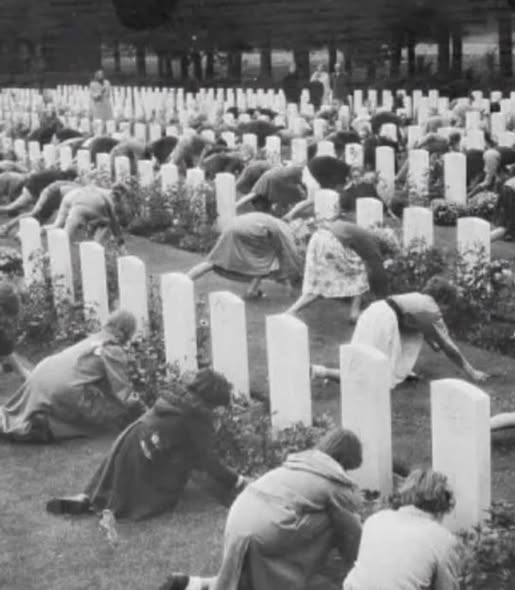
Every Child Is Given a Name to Remember
Since 1945, local schoolchildren have participated in a unique adoption program.
Each child is assigned a soldier’s grave.
They learn who that soldier was, where he came from, how old he was, and how he lost his life. They discover stories about ordinary young men whose dreams were cut short by war.
A name carved into stone becomes a real person.
A grave becomes someone’s son, brother, husband, or friend.
History becomes deeply personal.
The “Flower Children” of Oosterbeek
Every year during the town’s annual remembrance ceremony, children walk quietly through the cemetery carrying fresh flowers.
One by one, they place them on the graves.
There are no loud speeches.
No dramatic performances.
Just children standing silently before the resting place of someone they never knew, offering a simple gesture of thanks.
Locals affectionately call them the Flower Children.
For eight decades, each new generation has carried on the same tradition, ensuring that not a single grave is left without remembrance.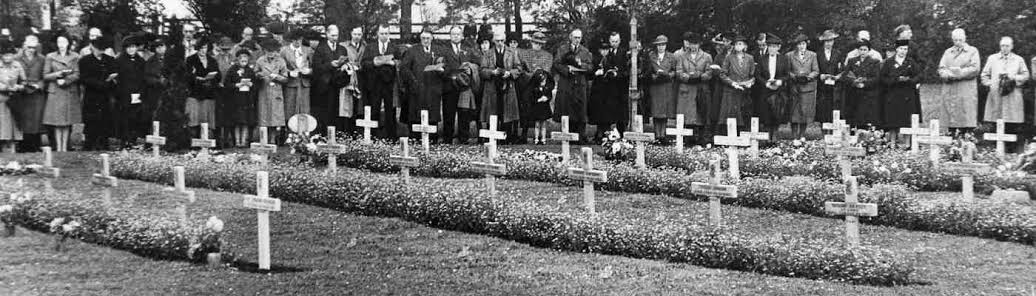
Teaching History Through Humanity
For the children of Oosterbeek, World War II isn’t just something they read about in textbooks.
It’s the story of the young pilot who was only 20 years old.
The soldier who had just gotten engaged.
The father who never met his newborn child.
These aren’t statistics.
They’re lives.
And by learning their stories, children gain something far more valuable than historical facts—they gain empathy.
They understand that freedom always comes with a price.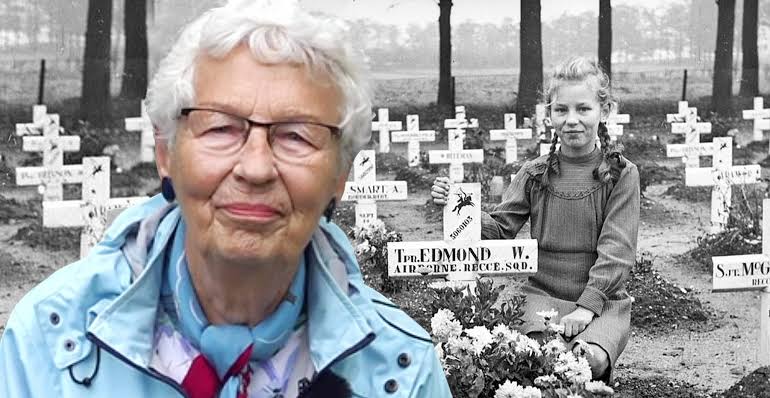
Eighty Years Later, the Promise Lives On
This year marks 80 years since the tradition began.
Remarkably, it has never been interrupted.
Parents who once carried flowers as children now watch their own sons and daughters do the very same thing.
No one forces them.
There are no rewards.
They simply believe that remembering those who sacrificed everything is the right thing to do.
In a world that often moves too fast to pause and reflect, this quiet act of remembrance has become one of the most powerful lessons a community can pass on.
Gratitude Knows No Borders
Perhaps the most touching part of this story is that these soldiers were strangers.
They weren’t relatives.
They weren’t fellow citizens.
Many never even spoke the same language as the people who now care for their graves.
Yet, for 80 years, the people of Oosterbeek have treated their memory as a shared responsibility.
It’s a beautiful reminder that gratitude doesn’t recognize borders, passports, or nationalities.
Human kindness has always spoken a universal language.
Keeping Memories Alive
Time has a way of fading even the greatest stories.
The generation that witnessed World War II is disappearing.
But in Oosterbeek, memory refuses to fade.
Not because of monuments alone.
Not because of history books.
But because every year, small hands gently place fresh flowers on white headstones, reminding the world that true sacrifice should never be forgotten.
Sometimes, preserving history doesn’t require grand speeches or massive memorials.
Sometimes, all it takes is one flower, one child, and one promise that refuses to be broken.
And after 80 years, that promise is still blooming.