Snooki Shares Tearful Recovery After Hysterectomy: “It’s Scary, and It’s Okay to Be Scared”

Nicole “Snooki” Polizzi had tried to prepare herself for the operation.
She reminded herself to stay positive. She told herself that everything would be fine. But as hospital workers wheeled her toward the operating room, the reality of what was about to happen suddenly became overwhelming.
Her heart began racing. Her body started shaking. Then she burst into tears.
Six months after revealing that she had been diagnosed with stage 1 cervical cancer, the 38-year-old Jersey Shore star underwent a hysterectomy to treat the disease. In an emotional video shared on Saturday, Aug. 1, Polizzi documented the fear before the procedure, the pain that followed and the hope carrying her through recovery.
The surgery removed her uterus, cervix, fallopian tubes and portions of vaginal tissue to ensure that the affected area was fully addressed. Her ovaries were preserved, allowing her to avoid immediately entering premature menopause.
For Polizzi, the procedure represented more than a medical treatment. It was also a deeply personal loss—one she struggled to describe without crying.
A Family Goodbye Before the Hospital
Polizzi’s day began at home, where she received hugs from her husband, Jionni LaValle, and their three children: sons Lorenzo Dominic and Angelo James and daughter Giovanna Marie.
She then traveled to the hospital early that morning with her mother and father.
Despite the seriousness of the situation, the longtime reality television personality initially used humor to steady herself. Wearing her hospital gown and surgical cap, she joked that the outfit made her look like an alien.
That lightheartedness continued as she recorded parts of the journey toward surgery. But beneath the jokes, her fear was building.
As she approached the operating room, Polizzi said she became increasingly nervous and anxious. She tried to reassure herself internally, but the full meaning of the procedure hit her all at once.
She was about to undergo major surgery. Several reproductive organs were going to be removed. She did not know how much pain she would feel afterward or exactly what recovery would be like.
The realization left her crying uncontrollably.
Polizzi recalled feeling frightened as she climbed onto the operating table. Nurses and doctors reassured her that she would be all right, and medication delivered through her IV eventually helped calm her.
Even in that moment, she found room for humor, wondering why the calming medication had not been given to her earlier.
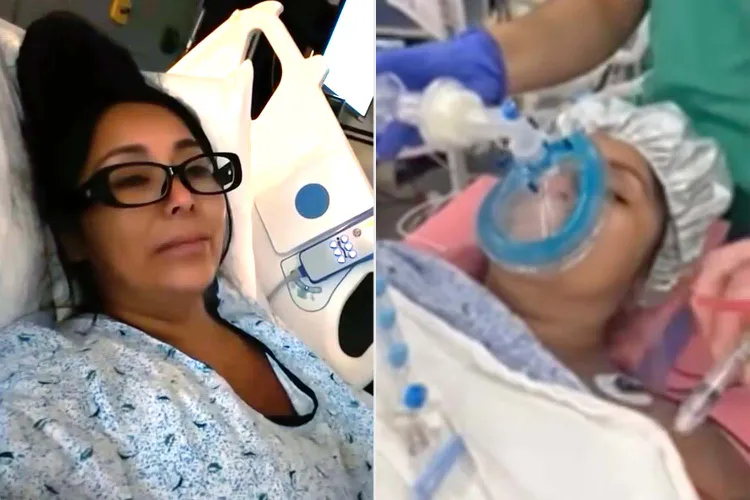
The Reality of Recovery
After surgery, Polizzi spoke candidly about the physical toll of the procedure.
She has never considered herself someone who handles pain well, she explained, and the early stages of recovery were difficult. Doctors performed the hysterectomy through an incision similar to the one used for a cesarean section, contributing to the soreness she experienced afterward.
The surgery removed her uterus and cervix, along with her fallopian tubes and additional tissue. Her medical team kept her ovaries intact so that she would not immediately experience hormonal changes associated with early menopause.
As Polizzi described the extent of the operation, her emotions surfaced again.
She paused the recording before returning in tears and apologizing, saying that the experience had simply been a lot to process.
Still, she emphasized that she was trying to remain optimistic.
Her first attempt to walk after surgery was intensely painful. The second was slightly easier, giving her a small but meaningful sign that recovery had already begun.
Polizzi told followers that the first few days could feel unbearable, but she believed the pain would gradually improve. She also expressed gratitude for the nurses, doctors and hospital staff who cared for her throughout the procedure.
Doctors Repaired Another Condition During Surgery
While Polizzi was on the operating table, doctors also treated her diastasis recti, a condition involving separation of the abdominal muscles.
She explained that the condition developed after she gave birth to three children. Her abdominal muscles had become significantly separated, so the surgeon repaired them while completing the hysterectomy.
That additional work added another source of discomfort during recovery.
Polizzi said she was now dealing not only with the removal of her reproductive organs but also with the pain of having her abdominal muscles brought back together.
The operation even included one moment of competition.
After hearing that many patients only count to three before anesthesia causes them to lose consciousness, Polizzi decided she wanted to last longer. She managed to count all the way to 10 and later included video evidence in her post.
It was a small, playful detail inside an otherwise frightening day—one that reflected her effort to remain herself even while confronting cancer and major surgery.

A Diagnosis That Began With a Pap Smear
Polizzi first disclosed her stage 1 cervical cancer diagnosis on Feb. 20.
The cancer was discovered after an abnormal Pap smear led to further testing and multiple biopsies. Those procedures revealed severe cancerous cells on her cervix.
The diagnosis brought frightening questions for Polizzi and her family. Her son Lorenzo, then 13, even asked whether she was dying when she explained what was happening.
Doctors determined that a hysterectomy would be necessary. Polizzi later said she expected to need no additional cancer treatment after the surgery, a development for which she felt deeply grateful.
But knowing the operation could successfully address the cancer did not remove its emotional weight.
Before surgery, Polizzi admitted that the thought of losing an organ frightened her. Although she and LaValle had completed their family and she did not plan to have more children, permanently losing the physical ability to do so still affected her.
The uterus felt connected to her identity as a woman and mother. Having it removed made the experience feel larger than a routine medical procedure.
She understood that the surgery was necessary. She also allowed herself to grieve what it meant.
Why She Chose to Show the Pain
Polizzi described the video as one of her most vulnerable public posts.
She had already spoken openly about her diagnosis and decided that hiding the reality of surgery would feel incomplete. Many women face similar procedures, she said, yet the fear, pain and emotional complexity surrounding them are often discussed quietly or not at all.
By recording herself before and after the operation, Polizzi hoped to create space for those conversations.
She had read messages from followers preparing for their own surgeries, including women scheduled to undergo similar procedures within days. She wanted them to see an honest version of the experience—not only the hospital gown and recovery bed, but also the tears, anxiety and first painful steps.
Her message was not that there was nothing to fear.
It was that fear was normal.
Polizzi told women facing the same journey that being scared did not make them weak. Surgery was painful, and recovery required medication, rest and patience. But the operation would end, and the hardest days would eventually pass.
She also found reasons to look forward.
Once recovered, she would no longer have periods or need birth control. Most importantly, she hoped the procedure had removed the cancer.

Moving Forward With Hope
The road immediately ahead remains focused on healing.
Polizzi must manage the pain from the hysterectomy, the abdominal incision and the repair of her separated muscles. But the surgery she had feared for months is now behind her.
Her video ended not with another joke, but with affection and a direct reminder to the women watching.
She thanked her followers for staying with her through the experience and urged them to receive regular Pap smears—the screening that first revealed something was wrong in her own body.
For years, audiences have known Snooki as one of reality television’s loudest and most recognizable personalities. This time, she appeared without the usual armor, allowing viewers to see a frightened patient, a mother leaning on her family and a woman trying to remain hopeful after losing parts of her body to cancer.
She cried. She admitted the pain was terrible. She confessed that she did not know what would happen when she entered the operating room.
Then she woke up, took her first difficult steps and began moving forward.
The fear had not disappeared. But the surgery was over, recovery had begun and Polizzi was holding on to the outcome that mattered most: the possibility that she could soon call herself cancer-free.