A Kentucky Miner Had Just 18 Cents—So He Built His Sick Wife a Hospital Bed From Discarded Orange Crates
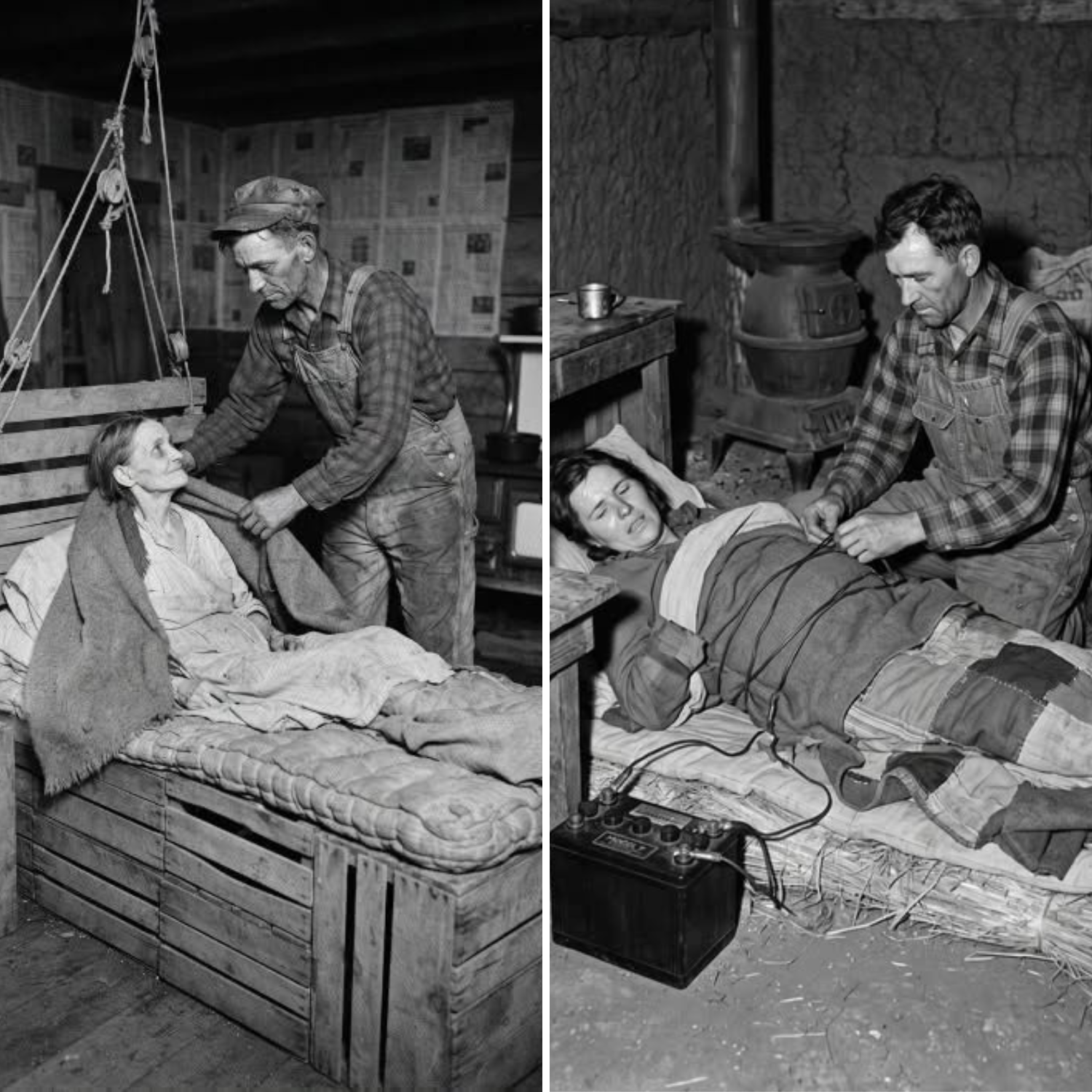
Silas Miller could not give his wife the medical care she desperately needed. He could not afford a hospital stay, and the few coins in his pocket were nowhere close to the $25 payment required for treatment.
What he could do was build.
In the early 1930s, with the Great Depression crushing families across the country, the unemployed Kentucky coal miner gathered discarded orange crates, borrowed tools from neighbors and spent three days constructing something his wife Martha could not otherwise have: a raised bed where she could rest with greater comfort and dignity.
It was a simple solution born from extreme poverty. But over the difficult months that followed, that handmade bed became the center of an extraordinary act of devotion.
A Family Caught in the Depression
Silas and Martha lived in Harlan County, Kentucky, a mountain community where coal mining shaped both the economy and everyday life.
Mining had never been easy work. Men spent long hours underground surrounded by heavy machinery, coal dust and the constant possibility of accidents. Families depended heavily on the wages miners brought home.
Then the Great Depression made an already difficult existence even harder.
As demand for coal fell, mines cut operations and workers lost their jobs. Silas was among those laid off. With his income gone, even basic necessities became difficult to obtain.
The couple lived in a one-room shack with few possessions and little furniture. Straw mattresses on the floor served as beds.
Under ordinary circumstances, such conditions were uncomfortable. For Martha, they became dangerous.
She was already battling tuberculosis, a serious and often devastating illness during that era. Then she suffered a fall that badly injured her hip.
She needed careful attention and a place where she could rest without putting unnecessary pressure on the injury.
Silas knew she needed help. The problem was paying for it.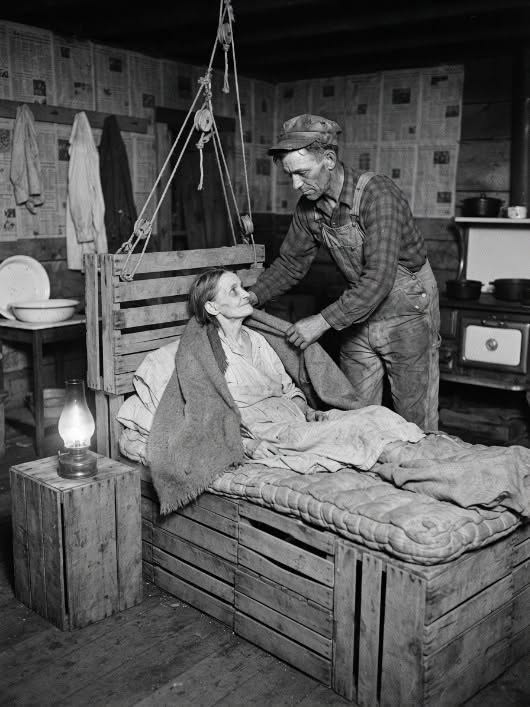
A $25 Bill He Could Not Pay
When Martha was taken for medical attention, Silas encountered a reality familiar to impoverished families of the era.
The required upfront payment was $25.
He had 18 cents.
For a man without a job or savings, there was no realistic way to close that gap. Martha was examined, but Silas could not afford the care she needed.
Instead, he returned home with basic instructions.
Martha needed to be kept clean and comfortable, and pressure had to be kept off her injured hip.
Those instructions sounded straightforward until Silas considered their living conditions.
His sick wife was sleeping on a straw mattress on the floor. They had no hospital equipment, no adjustable bed and no money to purchase one.
So Silas began thinking about what he could create from the materials available to him.
Eight Miles for Eleven Orange Crates
Unable to buy a proper bed, Silas decided to make one himself.
He walked eight miles to Harlan.
Behind a grocery store, he found discarded wooden orange crates. They were ordinary shipping containers that had outlived their intended purpose and were waiting to be thrown away.
To Silas, however, the wood represented possibility.
He gathered 11 crates and brought them home. Because he did not own everything required for the job, he borrowed tools from his neighbors.
Then he went to work.
Silas was a coal miner, not a trained furniture maker. But years of physical labor had taught him how to work with his hands, and necessity supplied the rest.
For three days, he measured, cut and assembled the salvaged wood.
What emerged was more thoughtful than a simple platform.
Silas raised the bed above the floor, giving Martha a more suitable place to rest. He constructed a headrest and devised a rope system that allowed him to adjust her position while trying to avoid causing additional pain to her injured hip.
It was crude compared with professional medical equipment, but it addressed the problems directly in front of him.
For Martha, it meant she no longer had to endure her illness on a mattress laid against the floor.
For Silas, the construction project was only the beginning.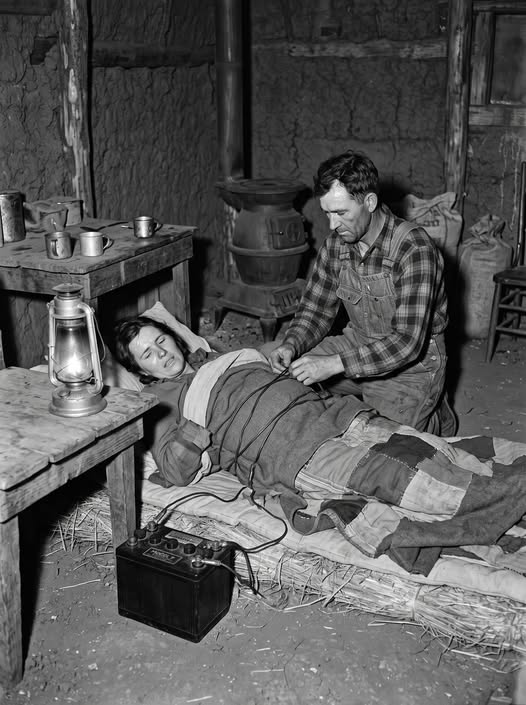
He Became Her Caregiver
Martha’s health problems did not disappear once the bed was finished.
Tuberculosis continued to weaken her, while the hip injury made movement more difficult. She required constant assistance, and Silas increasingly took on responsibilities that would normally have fallen to nurses or hospital staff.
For more than two years, he cared for her.
He helped clean and reposition her. He prepared whatever food he could provide despite their poverty. When she was uncomfortable at night, he stayed awake with her.
During the long periods when illness confined Martha to bed, he read to her and talked with her.
There was no salary for the work and little opportunity for rest. Silas had already lost the livelihood that once allowed him to support the household in the conventional sense.
Now caring for Martha became his work.
His contribution was measured not in money but in repeated, ordinary acts: bringing water, adjusting her position, preparing food and simply remaining beside her.
The couple could not escape the economic disaster surrounding them. Silas could not suddenly restore his mining job or purchase sophisticated medical treatment.
But within the narrow limits of what remained available to him, he could make sure Martha was cared for.
28 Months That Doctors Had Not Expected
Martha’s condition was serious.
Tuberculosis alone posed an enormous threat, and her hip injury added another complication. Her prospects were poor, and doctors did not expect her to survive for long.
Yet Martha lived for another 28 months after her condition worsened.
Those months were not easy. They were defined by illness, financial hardship and the physical demands of daily care.
But Martha did not face them alone.
The handmade bed built from discarded crates remained a physical reminder of what Silas had been able to provide when almost every conventional option had been closed to him.
Its materials had cost virtually nothing. Its importance had nothing to do with monetary value.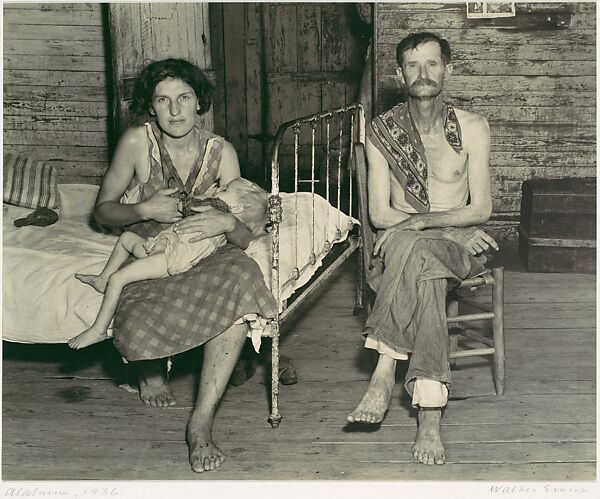
A Different Story of the Great Depression
The Great Depression is often remembered through enormous numbers: unemployment, collapsing banks, shuttered businesses and families losing homes and livelihoods.
But those statistics were experienced one household at a time.
For families in places like Harlan County, an economic crisis could become intensely personal. Losing a mining job could mean losing access not only to food and housing security but also to medical treatment when someone became sick.
Silas could not control any of those forces.
He could only respond to what was happening inside his own small home.
He found wood that other people considered useless. He carried it home. He borrowed the tools he lacked. Then he transformed those materials into something specifically designed around his wife’s needs.
The bed did not cure Martha’s tuberculosis or erase the injury to her hip. It could not remove the poverty surrounding the couple.
What it offered was comfort, care and dignity.
Silas Miller never became famous for what he did. He was simply an unemployed miner confronting a problem he could not afford to solve in the usual way.
Yet his response captured something that can disappear when history is reduced to dates and statistics.
At one of the hardest moments of the Great Depression, a man with only 18 cents found another way to care for the woman he loved.
Eleven discarded orange crates became a bed.
And for 28 difficult months, that bed became part of a promise Silas kept through his actions every day: whatever poverty had taken from them, Martha would not have to face her suffering alone.