For 15 Minutes, Millions of Strangers Formed a Human Chain Across America
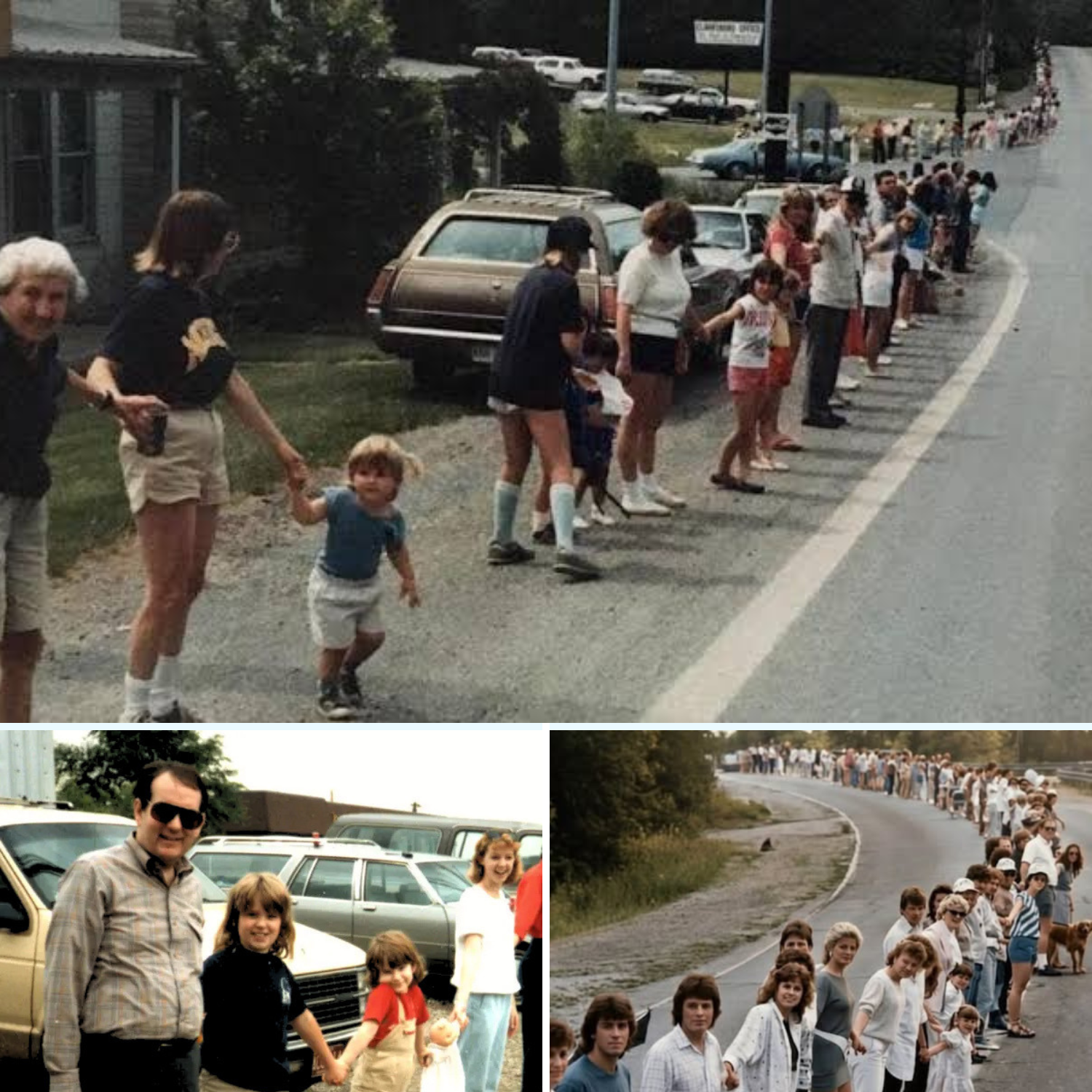
On a Sunday afternoon in 1986, Americans stepped onto sidewalks, roadsides and open stretches of land with an unusual assignment.
They were not gathering to support a candidate or protest a policy. Many had never met the people standing beside them. Some did not even know their neighbors’ names.
Yet at the appointed moment, they reached out and joined hands.
For 15 minutes on May 25, more than six million people became part of Hands Across America, an ambitious attempt to form a human chain stretching from New York City to Long Beach, California. Families, workers, students, farmers and retirees stood along a route that crossed cities, small towns, highways and rural communities.
The physical chain could not solve hunger or homelessness by itself. But for those few minutes, it offered a vivid picture of what could happen when ordinary people accepted responsibility for one another.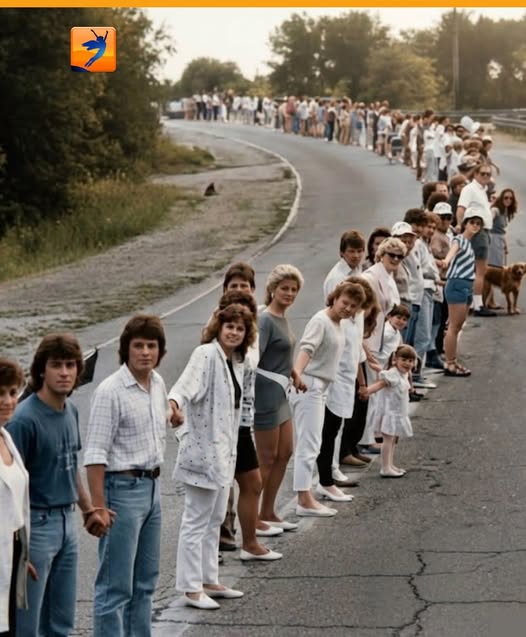
An Enormous Idea Born From a National Problem
During the mid-1980s, poverty, hunger and homelessness were affecting communities across the United States. Families were struggling financially, and organizations were searching for ways to focus national attention on people whose hardships were often ignored.
Hands Across America was created to raise awareness and money for efforts addressing those problems.
The concept was easy to understand but extraordinarily difficult to organize: place enough people along a coast-to-coast route to create one enormous line of human connection.
America spanned thousands of miles. Participants had to arrive at designated locations and be ready at the same time. Volunteers needed to coordinate groups across state lines, crowded cities and sparsely populated areas.
Every person would serve as a link. Each empty space threatened to interrupt the chain.
That challenge was also central to the event’s meaning. No participant was expected to solve poverty alone. Each person was simply being asked to occupy one place, hold two hands and contribute a small part to something much larger.
One gesture might appear insignificant.
Repeated millions of times, it could become history.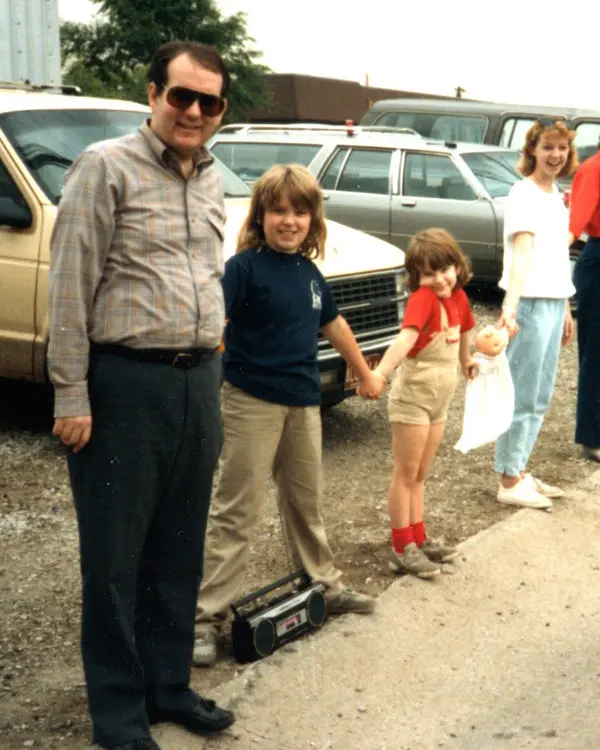
Strangers Took Their Places
As May 25 arrived, communities prepared for an event unlike anything they had experienced.
Parents brought their children. Elderly residents came outside to participate. Friends traveled together, while strangers arrived separately and searched for their assigned places. Volunteers helped organize the lines along roads and through communities.
The people standing side by side often knew almost nothing about one another.
A teacher might find a mechanic on one side and a student on the other. A farmer could stand beside someone from a city. A grandmother might hold the hand of a child she had never seen before.
Their backgrounds, occupations and beliefs could be entirely different. None of that prevented them from taking part in the same act.
When one person extended a hand, another person accepted it.
That simple exchange was repeated across the country until millions of individual decisions became one national moment.
Celebrities and other public figures helped draw attention to Hands Across America, but its power came primarily from people who would never appear on television or have their names recorded in history.
They were workers, parents, neighbors and volunteers. They did not participate for applause or personal recognition. They joined because the cause felt larger than any single individual.
Their presence carried a clear message: hunger and homelessness were not distant problems belonging only to unfamiliar communities. They affected human beings who were part of the same society.
The Moment the Chain Came Alive
When the countdown ended, hands connected across the route.
For 15 minutes, millions of people stood linked to strangers. Someone in one community became part of a chain that continued through other towns, cities and states, reaching people hundreds or thousands of miles away.
Participants cheered and smiled. Some were overcome with emotion.
The event did not eliminate the political, cultural or economic differences separating Americans. It did not ask people to pretend that those disagreements did not exist.
Instead, it demonstrated that differences did not make cooperation impossible.
For a brief period, the distance between communities seemed smaller. People who would ordinarily have passed one another without speaking were suddenly part of the same public expression of compassion.
One participant later recalled seeing a worker on one side and a mother with a young child on the other. Their lives appeared completely different, yet they were connected by the same purpose.
Scenes like that became the heart of Hands Across America.
The chain was memorable not because everyone in it was alike, but because they were not.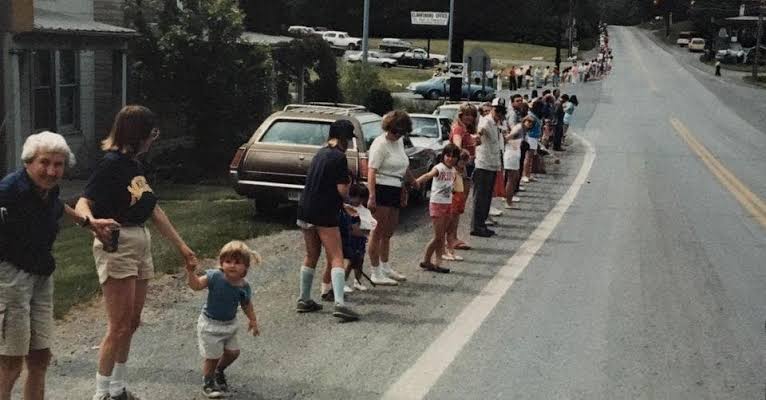
More Than a Symbolic Gesture
Holding someone’s hand requires little effort. The message represented by the action demanded much more.
Hands Across America encouraged people to recognize that those experiencing hunger or homelessness should not be treated as invisible or separate from society. Their hardship concerned the entire community.
The human chain therefore represented responsibility as well as unity.
It suggested that stronger communities are created when people refuse to turn away from suffering. Compassion becomes meaningful when it influences how individuals respond to neighbors in need.
The event raised millions of dollars and increased public attention around hunger and homelessness. But its most enduring effect may have been the memory it gave those who participated.
They could remember where they stood, whose hands they held and how it felt to be surrounded by strangers who had chosen to show up for the same reason.
Many could say they had briefly become part of something larger than themselves.
Unity Before Smartphones and Social Media
The scale of the event becomes even more striking when viewed from the modern era.
There were no social media platforms capable of spreading an invitation instantly. Participants could not follow real-time updates on smartphones or document every moment for an online audience.
Organizing millions of people required traditional communication, local volunteers and trust.
People received the message, traveled to their positions and participated without the digital systems now used to coordinate large public events.
They did not merely share an image of solidarity. They physically placed themselves beside other people and created it.
Modern technology can send information around the world within seconds, yet instant communication does not always produce genuine closeness. Hands Across America offered a different kind of connection—one created through presence, physical contact and a willingness to depend on strangers.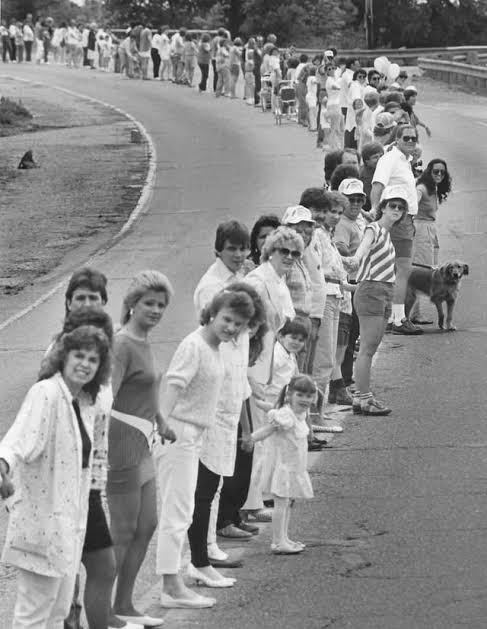
A Chain Built One Person at a Time
A human chain works only when its individual links cooperate.
The people at the beginning matter. Those in the middle matter. Those standing near the end matter. No one person forms the chain, yet every participant contributes to its strength.
That principle extended beyond the event itself.
Communities also depend on individual choices. A person who offers help, notices someone struggling or refuses to ignore suffering can influence others. Small actions accumulate, just as millions of joined hands formed a national symbol.
Hands Across America did not permanently unite the country, nor did it end the problems that inspired it. Its power came from showing what was possible, even briefly.
On May 25, 1986, millions of Americans reached beyond their familiar circles and accepted the hands of people they did not know.
For 15 minutes, strangers became links in the same chain.
Decades later, the image remains unforgettable because it captured a simple truth: unity is not created by speeches alone. It begins when individuals choose to close the distance between them—and when one human hand reaches out, trusting that another will reach back.