Caitlin Clark Responds as Sophie Cunningham’s Transgender Remarks Divide WNBA Fans
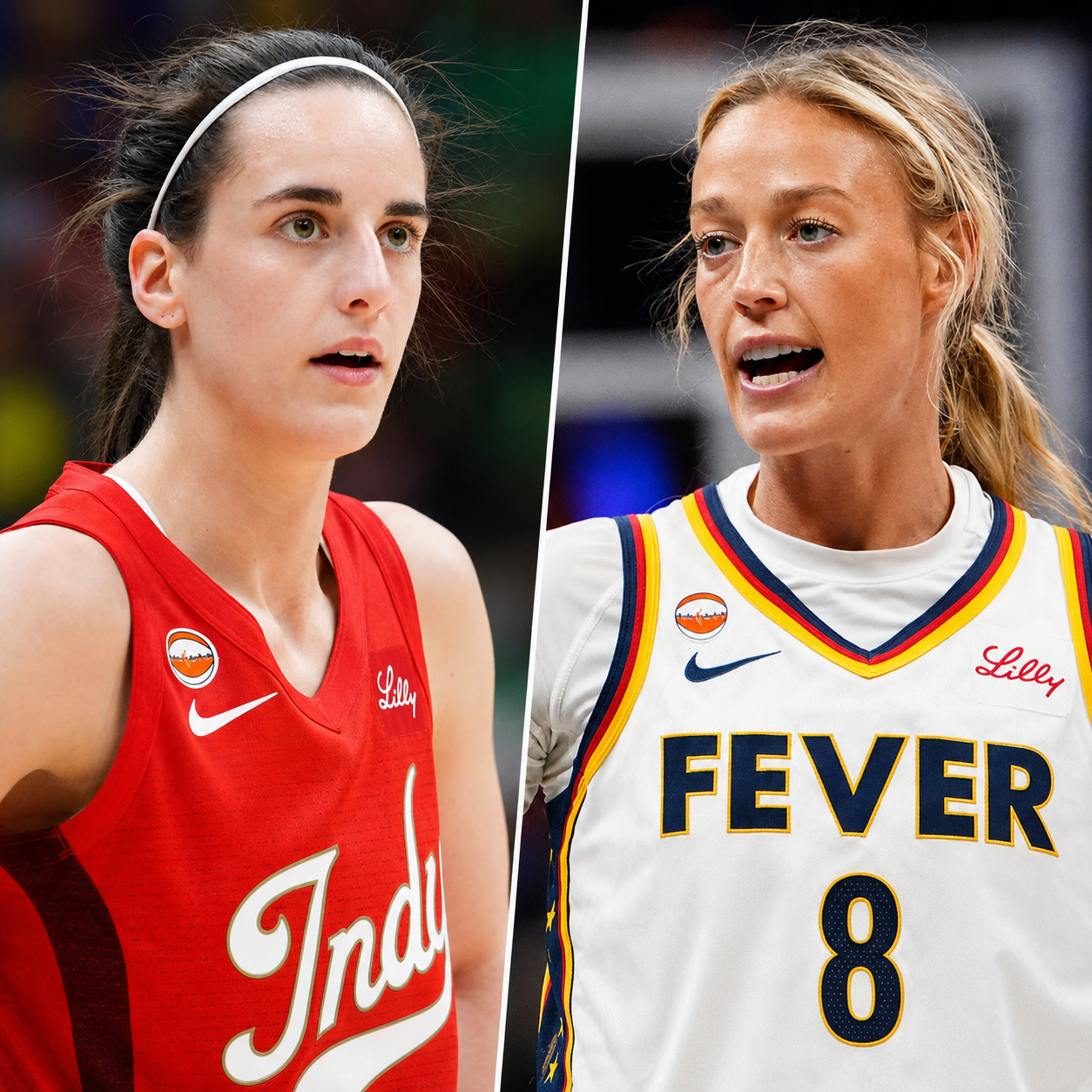
Caitlin Clark had just walked away from a difficult loss when the conversation shifted from basketball to a controversy surrounding one of her Indiana Fever teammates.
Following the Fever’s 108–100 defeat against the Minnesota Lynx on Sunday, Aug. 2, Clark was asked about Sophie Cunningham’s public comments regarding transgender athletes in women’s sports. The issue had already sparked protests, messages of support and heated debate around the WNBA.
Clark, 24, chose a measured response.
Rather than directly endorse or condemn Cunningham’s position, the Fever star said leagues and governing organizations should work with athletes to develop solutions. She then turned her attention back to the team’s performance, emphasizing that the players were focused on basketball and finding ways to win.
On that night, Clark said, the Fever had failed to accomplish that goal.
Her comments marked the first time she had publicly addressed the growing controversy involving Cunningham, 29, whose statements had drawn both criticism and praise in the days leading up to the game in Minneapolis.
Cunningham Defends Her Position
Cunningham first discussed the subject during an interview with ESPN in July.
The Fever guard said she had received substantial negative feedback from people who believed she hated transgender individuals. Cunningham rejected that characterization, arguing that she had never expressed hatred toward transgender people.
She described herself as someone motivated by love but said that love, in her view, also required honesty.
Cunningham then explained that she wanted to protect girls in locker rooms and athletic competitions. She argued that young female athletes should not be required to compete against people she described as biological males.
The remarks quickly moved beyond an individual interview and became part of a much larger cultural argument. Supporters praised Cunningham for saying what they believed many athletes were afraid to express publicly. Critics viewed her language as harmful to transgender athletes and children.
As the reaction intensified, the controversy followed Cunningham and the Fever into their matchup against Minnesota.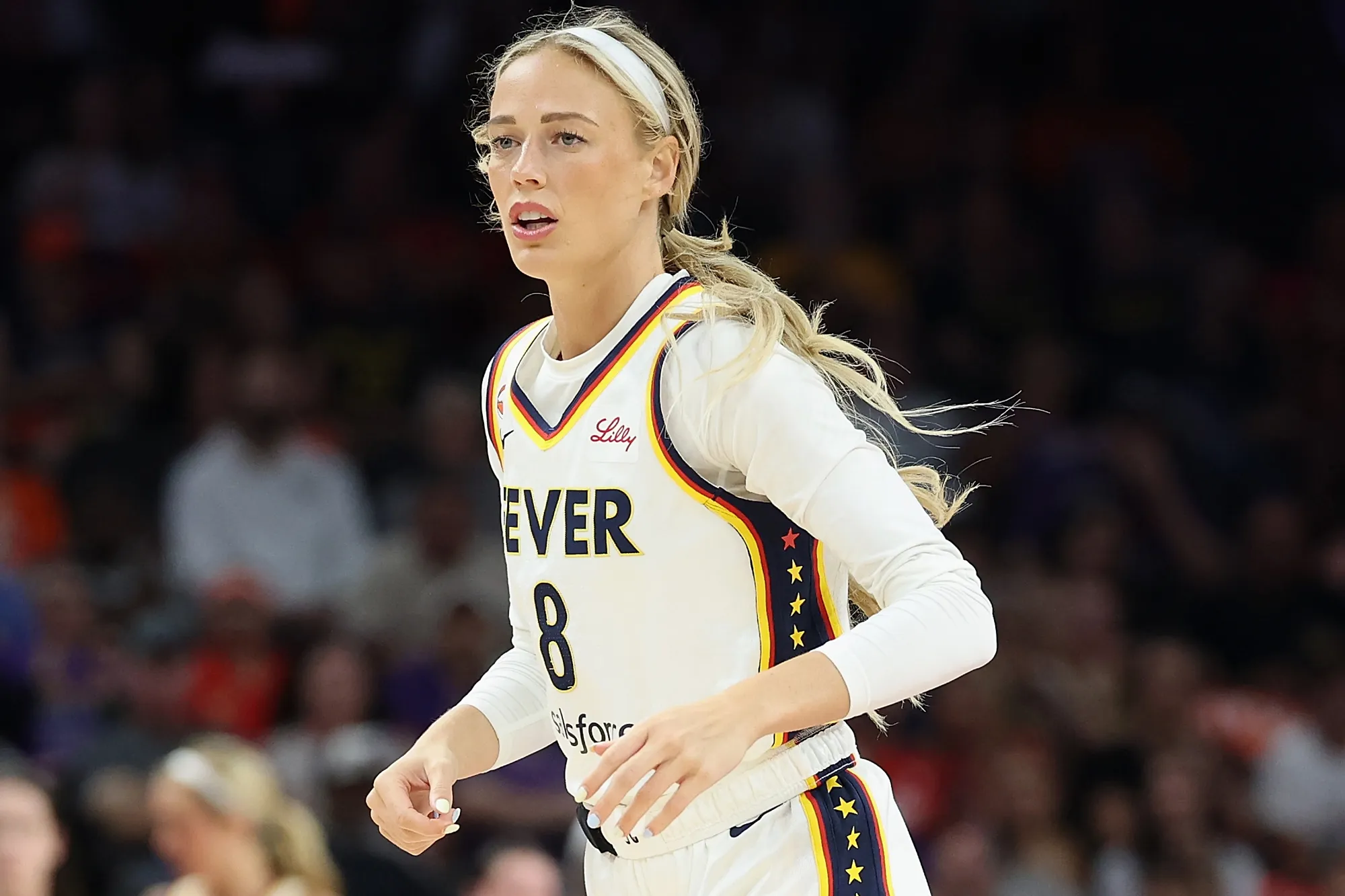
Competing Messages Fill the Arena
The divide was visible before the game even began.
Inside the Minneapolis arena, some fans wore shirts carrying the message “Trans kids belong in sports.” Outside, other spectators displayed signs supporting Cunningham, including messages that read “Love is truth” and “Thank you Sophie.”
The scene reflected how sharply the issue had split the audience.
One group wanted transgender young people to feel welcomed and represented in athletics. Another believed Cunningham was speaking in defense of fairness and privacy for girls and women.
The debate was no longer confined to interviews or social media. It had become part of the atmosphere surrounding an actual WNBA game.
Minnesota Lynx coach Cheryl Reeve also made her position visible by wearing a “Trans kids belong” shirt.
Before tipoff, Reeve, 59, met Cunningham at midcourt. The two were seen having an animated conversation, creating one of the most closely watched moments of the evening before either team had begun playing.
After the game, Reeve declined to reveal the full details of their discussion. She did, however, say both women understood that they had public platforms and shared an interest in educating others.
Reeve acknowledged that they found some common ground while also disagreeing on certain parts of the issue. For her, the encounter demonstrated that the way people manage disagreement can matter as much as the disagreement itself.
She also suggested that speaking face-to-face had been valuable.
Cunningham Receives Public Support
After the game, Cunningham appeared with conservative blogger Riley Gaines and former Levi’s executive Jennifer Sey.
Both women wore shirts expressing opposition to transgender participation in female sports. Cunningham also held a sign belonging to Gaines that thanked her and was signed from the perspective of a mother raising a girl.
The appearance reinforced Cunningham’s connection to people who considered her comments an important defense of women’s athletics.
At the same time, it ensured that the controversy would continue.
Cunningham has maintained that her position comes from concern rather than hostility. Speaking on Friday, July 31, she described herself as loving, upbeat and devoted to the people around her.
She also pointed to her love of basketball and her desire to inspire younger generations positively.
For Cunningham, the criticism created a gap between how she sees herself and how some members of the public interpreted her words. She rejected the accusation that her comments reflected personal hatred, even as opponents continued to object to the way she discussed transgender athletes.
Cunningham also said the controversy had not become a distraction inside the Fever locker room. According to her, the issue was not something she or her teammates were dwelling on as they prepared to compete.
Clark Keeps the Focus on Basketball
Clark’s response followed a similarly team-centered approach.
As one of the WNBA’s most recognizable players, her opinion carried unusual weight. Any direct declaration from her could have intensified the debate or been interpreted as speaking for the Fever organization and its players.
Instead, Clark placed responsibility on the institutions that establish athletic policies.
Her answer suggested that questions involving eligibility and participation should not be resolved through individual players trading public statements. She said leagues and governing bodies should engage with athletes and do the work of finding solutions.
Clark then returned to the immediate problem facing Indiana: winning games.
The Fever had allowed Minnesota to score 108 points, and Clark emphasized that the team needed to identify where it could improve. Her message separated the players’ daily responsibility on the court from the broader policy decisions being debated around them.
That distinction did not make the controversy disappear. However, it made Clark’s priorities clear.
A Debate Larger Than One Team
The events in Minneapolis showed how quickly a teammate’s personal remarks could become a league-wide issue.
Cunningham’s interview prompted public criticism, visible support and demonstrations from fans holding opposing beliefs. It also led to a direct conversation between Cunningham and an opposing coach who had publicly displayed a different position.
Clark’s comments added another perspective—not by choosing one side, but by arguing that sports institutions must take responsibility for addressing the conflict.
The controversy remains emotionally charged because it involves competing ideas about inclusion, fairness, safety and identity. Those questions extend far beyond one player, one locker room or one Sunday game.
For Cunningham, the response has become a test of whether she can defend her position while continuing to present herself as someone guided by love.
For Clark, the challenge has been navigating questions about a teammate’s polarizing remarks while keeping the Fever centered on its season.
And for the WNBA, the moment has revealed the difficulty of separating sport from a cultural debate that has already reached the stands, the court and the conversations between players and coaches.
Clark may have redirected attention toward basketball, but the scenes in Minneapolis made one thing clear: the league is now facing a discussion that cannot be settled by the final score.