Robert Downey Jr.’s Remarkable Second Act: From Prison and Addiction to Iron Man and an Oscar

By the time Robert Downey Jr. stepped onto the set of *Iron Man*, Hollywood already knew how talented he was. The question was whether anyone could still trust him.
Years earlier, Downey had been an Academy Award nominee, praised as one of the most naturally gifted actors of his generation. Then came a devastating cycle of drug addiction, arrests, failed rehabilitation attempts and incarceration. His problems became so serious that even after he returned to acting, hiring him could be viewed as a financial risk.
Yet the actor who once struggled to remain employable would eventually become the face of one of the biggest movie franchises in history.
And decades after his lowest point, he would stand on the Academy Awards stage holding the first Oscar of his career.
### A Gifted Actor Headed Toward Trouble
Downey was acting long before Tony Stark made him a global superstar. The son of filmmaker Robert Downey Sr., he appeared in movies as a child and gradually built a reputation as an unusually charismatic performer.
By the early 1990s, his talent was impossible to ignore.
His portrayal of Charlie Chaplin in Richard Attenborough’s 1992 film *Chaplin* brought him an Academy Award nomination for Best Actor. Downey was still in his twenties, and the performance suggested that he could become one of Hollywood’s defining actors.
But away from the screen, addiction was increasingly taking control of his life.
The consequences became dramatically public in June 1996, when authorities stopped Downey for speeding on Pacific Coast Highway in Malibu. Investigators said cocaine, heroin and an unloaded .357 Magnum were found in his vehicle. Criminal charges followed.
Weeks later came another disturbing episode. Downey entered a neighbor’s home and fell asleep in a child’s bed while under the influence. The family did not pursue trespassing charges, but the incident became one of the most widely remembered symbols of how far his life had unraveled.
Courts repeatedly attempted to steer him toward treatment. There were rehabilitation programs, probation requirements and drug testing.
The cycle continued.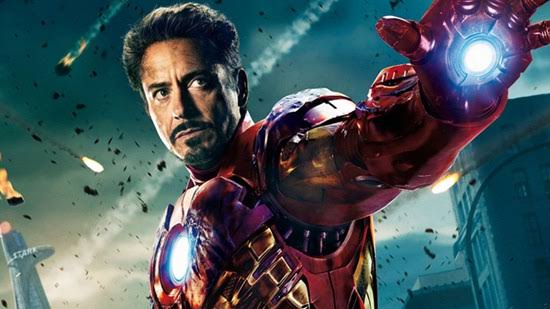
### When Hollywood’s Rising Star Went to Prison
By 1999, the legal system had run out of patience.
After Downey violated probation by missing required drug testing, a California judge sentenced him to three years in state prison. The judge said the court had exhausted its alternatives after numerous attempts at rehabilitation.
It was an extraordinary collapse for an actor who had recently been nominated for Hollywood’s highest acting honor.
Downey ultimately served about a year before being released in 2000.
Almost immediately, his talent again became apparent. He joined the hit television series *Ally McBeal*, playing attorney Larry Paul, and received widespread praise. His performance earned him a Golden Globe.
For a moment, it appeared that the comeback had already arrived.
It had not.
In April 2001, Downey was arrested again after police encountered him in Culver City and suspected that he was under the influence of a controlled substance. Soon afterward, he was removed from *Ally McBeal*.
The professional consequences were becoming almost as severe as the legal ones. Talent could still get Downey noticed, but it could no longer guarantee that studios would take the risk of employing him.
His career needed more than another good performance.
His life needed stability.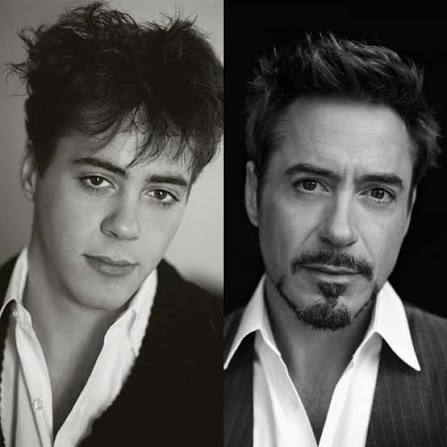
### The Slow Road Back
What followed was not one spectacular Hollywood rescue but a gradual rebuilding process.
Downey has said he became sober in 2003. As he worked to establish reliability again, filmmakers and colleagues began giving him opportunities.
One important supporter was Mel Gibson, who helped Downey return to a substantial film role in *The Singing Detective*. From there, Downey began assembling a series of projects that reminded audiences and the industry what he could do when his personal troubles were no longer overwhelming his work.
Films including *Kiss Kiss Bang Bang*, *Good Night, and Good Luck*, *A Scanner Darkly* and *Zodiac* helped restore his standing during the 2000s.
He was no longer simply a former star attempting a comeback. He was becoming a working actor with momentum again.
Then Marvel came calling.
### The Gamble That Changed Marvel—and Downey
In the mid-2000s, Marvel Studios was preparing *Iron Man*, a movie centered on Tony Stark, the brilliant, wealthy and deeply flawed weapons manufacturer who becomes the armored superhero.
Director Jon Favreau saw something in Downey that went beyond conventional casting.
Downey had the intelligence, humor and charisma required for Stark. More importantly, there was an unmistakable authenticity in casting an actor who understood what it meant to damage his own life and then attempt to rebuild it.
The decision was far from obvious at the time.
Downey’s history made him a risky choice for a movie intended to launch something much larger. But Favreau pushed for him.
It became one of the most consequential casting decisions in modern Hollywood.
*Iron Man* opened in 2008 and transformed Downey’s career almost overnight. His fast-talking, funny and vulnerable Tony Stark became the film’s center of gravity.
The movie was a major success, and Marvel had found the foundation for what would become the Marvel Cinematic Universe.
Years later, Marvel Studios president Kevin Feige described casting Downey as one of Hollywood’s greatest decisions and acknowledged that the studio’s extraordinary future might not have existed without him.
The symbolism was difficult to miss.
Tony Stark was brilliant but self-destructive, arrogant yet capable of change. His story was about confronting the consequences of his choices and becoming something more than the person he had been.
Downey never needed to be Tony Stark for the parallels to resonate.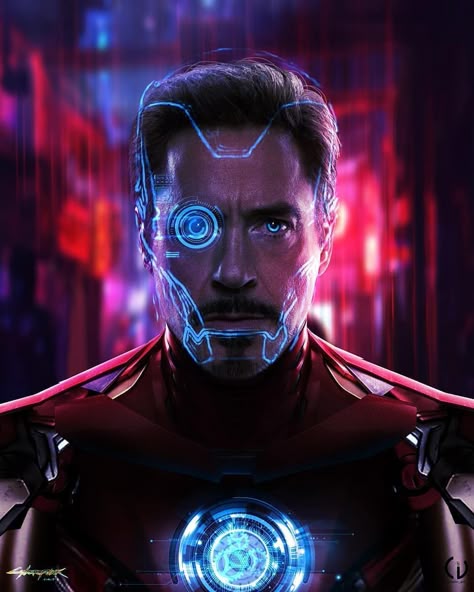
### From Risky Hire to the Face of a Generation
Over the next 11 years, Downey’s Stark became a pillar of the MCU.
He returned for *Iron Man 2*, *The Avengers*, *Iron Man 3*, *Avengers: Age of Ultron*, *Captain America: Civil War*, *Spider-Man: Homecoming*, *Avengers: Infinity War* and *Avengers: Endgame*.
By the time Tony Stark’s story reached its emotional conclusion in *Endgame* in 2019, Downey was no longer the actor studios feared hiring.
He was one of Hollywood’s most recognizable movie stars.
But his career still had another transformation ahead.
Christopher Nolan cast him as Lewis Strauss in *Oppenheimer*, giving Downey a role far removed from the swaggering superhero persona that had defined him for more than a decade.
The performance earned extraordinary awards-season recognition.
On March 10, 2024, more than 30 years after his first Academy Award nomination for *Chaplin*, Robert Downey Jr. won the Oscar for Best Supporting Actor for *Oppenheimer*. It was his first Academy Award.
The moment gave his comeback a new dimension.
*Iron Man* had proven that Downey could become a blockbuster superstar. *Oppenheimer* reaffirmed that underneath the fame, the franchises and the superhero armor was the actor whose talent Hollywood had recognized decades earlier.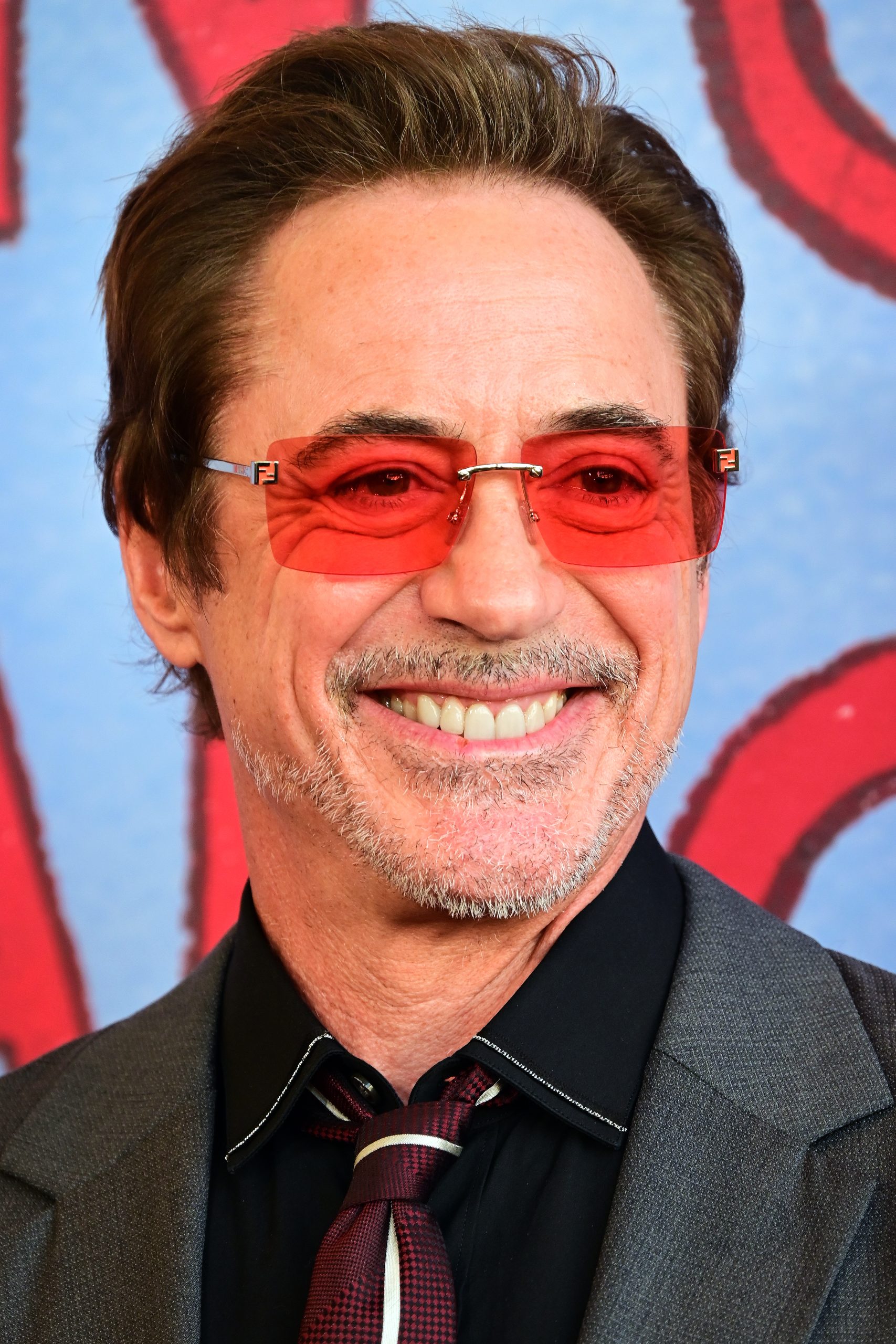
### A Comeback Bigger Than One Movie
Downey’s story can easily be reduced to a neat Hollywood formula: talented actor falls, gets sober, becomes Iron Man and conquers the world.
The reality was far messier.
There were repeated relapses. Court appearances. Lost opportunities. Prison. Rehabilitation attempts that did not immediately work. A television comeback that collapsed almost as quickly as it began.
That history is precisely what makes the second half of his career so striking.
His recovery did not erase what happened before it. Instead, it allowed him to build something after it.
And his connection with Marvel has continued evolving. After Tony Stark’s departure, Downey was announced to return to the MCU in a radically different capacity: Doctor Doom, one of Marvel’s most famous villains, in *Avengers: Doomsday*.
It is another unlikely chapter in a career filled with them.
In the 1990s, Robert Downey Jr. looked like a cautionary tale about extraordinary talent being consumed by addiction.
By 2008, he had become the man inside the Iron Man suit.
By 2024, he was an Academy Award winner.
The most powerful part of his comeback is not that Hollywood eventually welcomed him back. It is how much had to happen before he was capable of walking through that door—and how far he traveled once it opened.