“SHE WASN’T THE SAME ANYMORE” — LINDSAY CLANCY’S HUSBAND DESCRIBES THE TRAGIC CHANGES BEFORE JANUARY 2023
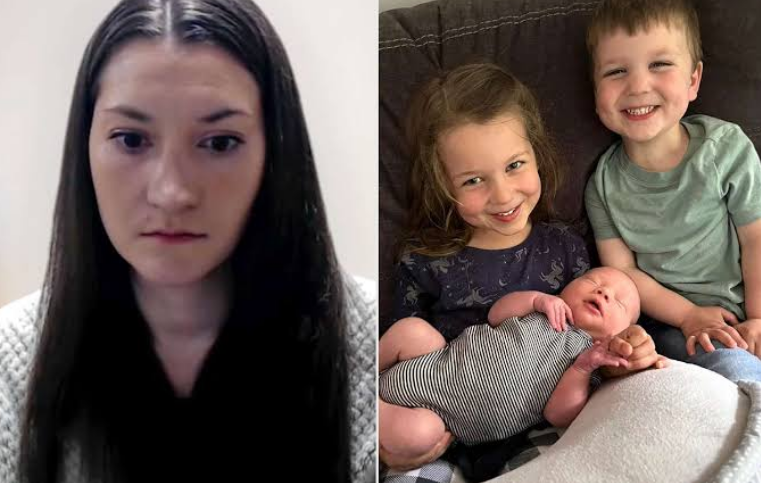
“SHE WASN’T THE SAME ANYMORE” — LINDSAY CLANCY’S HUSBAND DESCRIBES THE TRAGIC CHANGES BEFORE JANUARY 2023
As the Lindsay Clancy case continues to draw intense attention, testimony and statements from her husband have become central to the debate over her state of mind before the deaths of their three children. The defense has argued that Clancy experienced a severe postpartum psychiatric crisis, while prosecutors have presented a different interpretation of the evidence. At the center of the dispute is a difficult question: what happened to the woman her family believed they knew?
A FAMILY TRAGEDY THAT BEGAN WITH A 25-MINUTE ABSENCE
 On January 24, 2023, Lindsay Clancy’s husband, Patrick Clancy, reportedly left their Duxbury, Massachusetts, home for a short period to pick up food.
When he returned, he encountered the devastating aftermath that would change the family forever.
Their three children—Cora, Dawson and their infant son Callan—had been seriously harmed.
The events that followed became the subject of a major criminal investigation and an intensely watched legal case.
“SHE WASN’T THE WOMAN I KNEW”
One of the most important themes surrounding the case has been the dramatic change relatives say they observed in Lindsay Clancy after the birth of her children.
The defense has argued that she was experiencing a severe postpartum psychiatric condition, including psychosis.
Her attorneys have sought to portray a mother whose perception of reality had become profoundly distorted rather than someone acting from ordinary motives.
That argument has been strongly contested by prosecutors.
THE MEDICATION QUESTION
The role of medication has also received significant attention.
Public reporting and courtroom evidence have discussed Clancy’s use of multiple psychiatric medications during the period before the tragedy.
Online claims sometimes describe this as “13 different psychiatric medications,” but the precise medication history and its medical significance are more complicated than that phrase suggests.
Medication use alone does not establish that a person will become violent or lose contact with reality.
Doctors, psychiatrists and other experts must consider dosage, combinations, underlying conditions, symptoms and the patient’s clinical history.
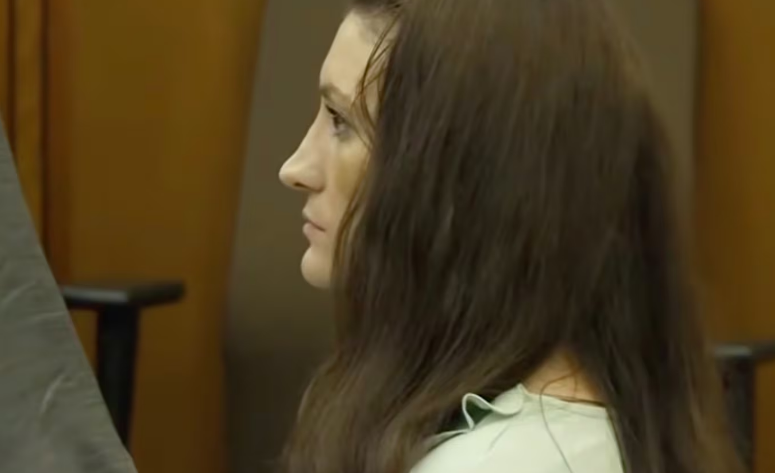 POSTPARTUM PSYCHOSIS AT THE CENTER OF THE DEFENSE
The defense has argued that Clancy experienced postpartum psychosis, a rare but extremely serious psychiatric condition that can involve hallucinations, delusions, confusion and profound changes in perception.
The condition is considered a psychiatric emergency.
But its presence—or alleged presence—in a particular case must be established through medical evidence.
That is why expert testimony has become so important in the Clancy proceedings.
THE PROSECUTION’S DIFFERENT INTERPRETATION
Prosecutors have challenged the defense’s explanation of what happened.
Their case has focused on evidence that they say demonstrates intentional conduct rather than an episode in which Clancy lacked meaningful control over her actions.
Jurors therefore face competing interpretations of the same devastating events.
One side emphasizes psychiatric illness and an altered state of mind.
The other focuses on evidence prosecutors say points toward deliberate actions.
WHAT DID PATRICK CLANCY ACTUALLY KNOW?
Another difficult issue concerns what Patrick Clancy and other family members understood about Lindsay’s condition before January 24.
People close to someone experiencing a psychiatric crisis do not always recognize the severity of what is happening.
Symptoms can fluctuate.
A person can appear calm at one moment and severely distressed at another.
That makes retrospective interpretation particularly difficult.
Statements made after a tragedy may provide important context, but they must be considered alongside contemporaneous medical records and other evidence.
THE 25 MINUTES THAT CHANGED EVERYTHING
The brief period Patrick was away from the house has become one of the most haunting elements of the case.
A routine trip for food became the dividing line between an ordinary family evening and an unimaginable tragedy.
Investigators and prosecutors have examined what occurred during that period and the events immediately before and after it.
The exact timeline has therefore become central to understanding the case.
A HUSBAND’S VIEW OF A WOMAN HE THOUGHT HE KNEW
For Patrick, the case has involved more than a legal battle.
It has also meant trying to reconcile the woman he knew with what happened inside their home.
The defense has emphasized the changes in Lindsay’s behavior and mental state.
Those claims do not erase the devastating consequences of the deaths.
But they are relevant to the legal question of her mental state and responsibility.
THREE CHILDREN AT THE CENTER OF THE CASE
Whatever interpretation ultimately prevails in court, the human cost is undeniable.
Cora.
Dawson.
Callan.
Three young children died in a tragedy that has left their family and community devastated.
Their deaths have also raised broader questions about postpartum mental health, access to psychiatric care and how families can recognize when a loved one may be experiencing a severe psychiatric emergency.
THE QUESTIONS JURORS MUST CONSIDER
The case ultimately requires more than an emotional reaction.
Jurors must weigh the evidence and determine:
What was Lindsay Clancy’s mental state at the time of the deaths?
Was she experiencing postpartum psychosis or another severe psychiatric condition?
What role, if any, did her medications and treatment history play?
What does the timeline show about her actions and intentions?
How should conflicting medical and behavioral evidence be interpreted?
These are questions for the court—not social media.
A STORY WITHOUT AN EASY ANSWER
The tragedy has generated powerful opinions on both sides.
Some see a mother responsible for an intentional act.
Others see a woman experiencing a catastrophic psychiatric breakdown.
The legal process exists to examine those competing claims through evidence.
And whatever the final outcome, the case is likely to remain part of a much larger conversation about postpartum psychiatric illness and the warning signs that can precede a crisis.
Behind the headlines is a family trying to understand how a seemingly ordinary evening could end in the deaths of three children.
Three young lives were lost.
A husband is left to reconcile devastating memories with the evidence presented in court.
And jurors must determine what was happening inside Lindsay Clancy’s mind when the tragedy occurred.
Independent commentary based on publicly reported courtroom information. Claims about psychiatric diagnoses, medications, intentions and individual statements should be understood in the context of the evidence presented in court and should not be treated as established facts beyond the court’s findings.