Kevin Costner’s Robin Hood Was Rushed, Mocked and Recut — Then Became One of 1991’s Biggest Movies
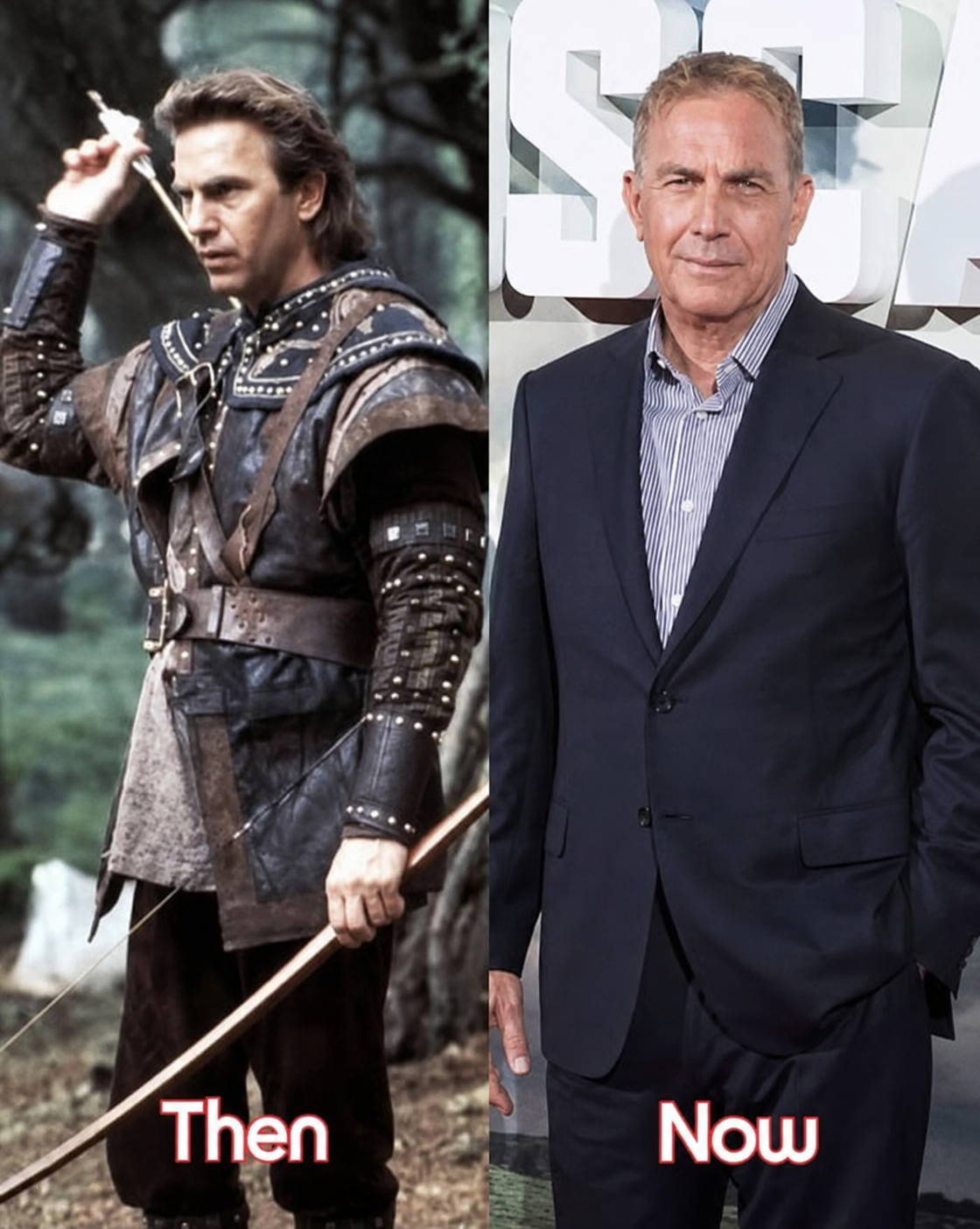
By the time Robin Hood: Prince of Thieves reached theaters in June 1991, plenty of people were already prepared to make fun of it.
Kevin Costner’s English accent had become a talking point before audiences had even seen the finished movie.
Behind the scenes, the situation was considerably messier.
The production had been rushed because rival Robin Hood projects were racing toward the screen. Director Kevin Reynolds and the people behind the film fought over the final cut. Alan Rickman thought parts of the screenplay were so bad that he secretly recruited friends to help rewrite some of his dialogue.
And Reynolds ultimately walked away during post-production.
It sounds like the making of a disaster.
Instead, audiences turned the movie into a gigantic hit.
Hollywood Was Suddenly Full of Robin Hoods
The trouble began before Costner ever picked up a bow.
In 1990, several studios were developing competing versions of the Robin Hood legend. When Morgan Creek landed Costner for Prince of Thieves, the Los Angeles Times reported that the move immediately put pressure on rival projects.
Everybody understood the problem.
Moviegoers might want one Robin Hood.
They probably did not want three of them in the same summer.
So speed mattered.
The production moved aggressively, leaving Reynolds with a compressed preparation period. Accounts of the production describe roughly 10 weeks of preproduction before a difficult shoot in England, where weather and shortening winter days added even more pressure.
Costner himself had initially rejected the project. One of the things that changed his mind was learning Reynolds would direct it. The two had worked together before, and Reynolds had also helped shoot material for Costner’s Dances with Wolves.
That relationship would not survive the movie intact.
Then Came the Accent
If there is one thing people still joke about when discussing Prince of Thieves, it is Kevin Costner’s voice.
The question was there during production: Should this very American movie star attempt an English accent?
Costner wanted to use one.
Reynolds worried that forcing the accent would distract audiences.
The result was an inconsistent approach that changed from scene to scene. Entertainment Weekly reported at the time that rumors were already circulating before the movie was finished that Costner sounded considerably more Los Angeles than medieval England.
It became one of the most famous criticisms of the performance.
Two years later, Mel Brooks’ Robin Hood: Men in Tights would even build a joke around the idea of a Robin Hood who could actually speak with an English accent.
But the accent was hardly the biggest problem happening behind the camera.
The Director Eventually Walked Away
Reynolds and Costner had started the movie as trusted collaborators.
By the end, tensions had erupted.
According to Entertainment Weekly’s reporting at the time, a last-minute re-edit was undertaken to strengthen Costner’s presence in the film. That decision helped create a major conflict between Reynolds and the producers.
Reynolds walked out before the movie opened.
Years later, when the two men reunited for the notoriously difficult production of Waterworld, Entertainment Weekly looked back at Prince of Thieves as an earlier warning sign: the pair had already fought over the accent, screenplay and editing, and reportedly stopped speaking after Reynolds left the project.
But while the filmmakers were fighting over how much Robin Hood audiences should see, another actor was quietly stealing the movie.
Alan Rickman Thought the Script Needed Help
Alan Rickman had already created one legendary villain as Hans Gruber in Die Hard.
His Sheriff of Nottingham would be something completely different.
Rickman did not play the Sheriff with restraint.
He exploded.
He sneered.
He turned threats into punch lines and treated practically every scene as an opportunity to push the character further.
Years later, Rickman revealed that some of the material was not even in the screenplay he had originally been given.
He thought the script needed better lines.
So he asked playwright Peter Barnes for help.
According to Rickman’s recollection, they worked over the material while eating at a Pizza Express. Comedian and writer Ruby Wax contributed another addition to one sequence. Rickman then brought the secretly altered material to Reynolds, who agreed to film it without broadly announcing what they were doing.
Rickman knew the material was working when he could see crew members struggling not to laugh behind the camera.
It is difficult to imagine a more perfect behind-the-scenes origin for the Sheriff’s wonderfully excessive performance.
Critics Saw the Imbalance Immediately
When the movie opened, reviews were mixed.
Costner’s performance and accent attracted criticism, while Rickman repeatedly emerged as the actor reviewers wanted to talk about.
Entertainment Weekly’s contemporary review argued that the energy missing from Costner’s Robin could be found in Rickman’s villain.
The contrast became part of the movie’s identity.
Robin Hood was supposed to be the hero.
The Sheriff was the character many viewers remembered.
Rickman eventually received perhaps the clearest validation possible: he won the 1992 BAFTA for Supporting Actor for the performance.
His acceptance speech contained a perfectly Rickman-like acknowledgment of what had happened. He joked that the award was a reminder that subtlety was not everything.
And Audiences Came Anyway
This is the part that makes the story so much fun 35 years later.
None of the chaos stopped the movie.
Robin Hood: Prince of Thieves opened to more than $25 million in the United States and ultimately earned about $165.5 million domestically. Box Office Mojo lists its worldwide total at approximately $390.5 million against a reported $48 million production budget.
At the domestic box office, only Terminator 2: Judgment Day finished 1991 above it among that year’s releases.
Audiences simply did not care that the movie was imperfect.
Maybe they even liked it because it was imperfect.
There was Morgan Freeman as Azeem.
Mary Elizabeth Mastrantonio as Marian.
Christian Slater as Will Scarlett.
A surprise appearance by Sean Connery.
Michael Kamen’s sweeping score.
And Bryan Adams’ enormously successful “(Everything I Do) I Do It for You.”
Then there was Rickman, apparently operating in a slightly different movie from everyone else and enjoying every second of it.
Maybe the Mess Is Why It Survived
Nobody would call Robin Hood: Prince of Thieves a flawless movie.
Even its fans tend to know exactly what is ridiculous about it.
The accent.
The geography.
The tonal swings.
The enormous performances.
But 35 years later, people are still talking about it.
That is more than can be said for plenty of technically smoother blockbusters from the same era.
The movie arrived after a rushed race to production. Its star became an easy target. Its director left during post-production. Its villain secretly rewrote material with friends.
And somehow all of those competing ingredients produced something audiences wanted to watch.
Hollywood spent the production trying to make Robin Hood: Prince of Thieves work.
Alan Rickman apparently decided to have fun instead.
Audiences rewarded them both.