GIANT BLUEFIN TUNA CAUGHT IN NORTH SEA FOR FIRST TIME IN NEARLY 90 YEARS
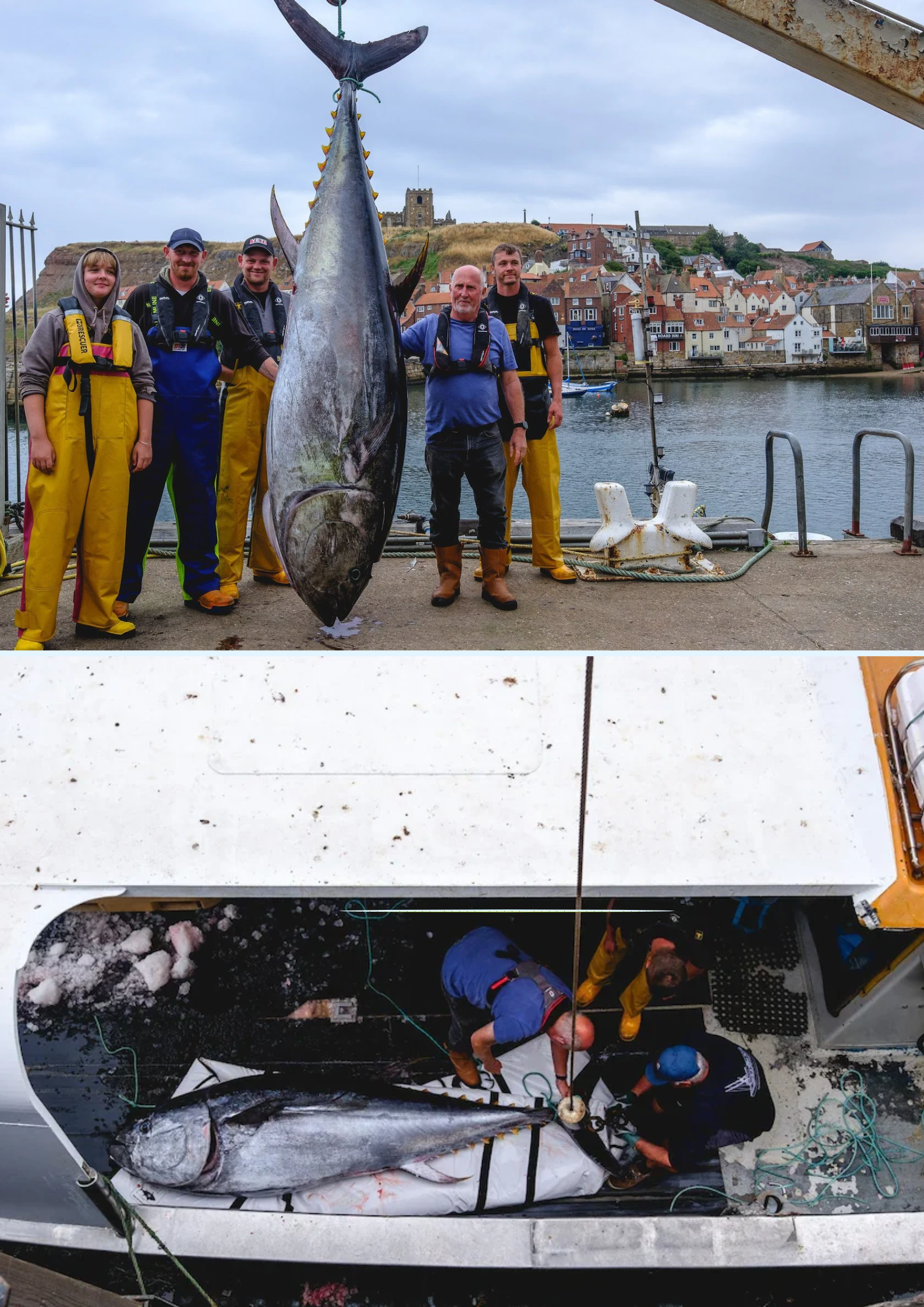
GIANT BLUEFIN TUNA CAUGHT IN NORTH SEA FOR FIRST TIME IN NEARLY 90 YEARS
WHITBY, ENGLAND — A giant Atlantic bluefin tuna weighing an astonishing 746 pounds has been landed at Whitby, marking what is believed to be the first time the species has been brought into the historic Yorkshire harbor since 1939.
The enormous fish was caught by the crew of the Whitby fishing vessel Dominator and brought ashore Sunday, creating a remarkable moment for a port that was once famous around the world for big-game tuna fishing.
 A GIANT FROM A LOST ERA
The bluefin weighed approximately 53 stone, or 746 pounds, making it an extraordinary catch by modern standards.
Whitby and the surrounding Yorkshire coast once attracted wealthy sportsmen and celebrities hoping to battle enormous “tunny,” as bluefin tuna were traditionally known in Britain.
The region’s big-game fishing boom reached its height during the 1930s. Whitby even holds a historic British rod-and-line record for a bluefin weighing 851 pounds, caught in 1933.
Then the giants disappeared.
WHY DID THE BLUEFIN VANISH?
The decline was closely linked to the collapse of the herring stocks that provided an important food source for the tuna.
Overfishing dramatically altered the North Sea ecosystem, and bluefin tuna eventually disappeared from British waters.
For decades, seeing one of these enormous predators in the region became an increasingly distant memory.
Now, that story appears to be changing.
 A SIGN OF A HEALTHIER NORTH SEA?
Scientists say the return of Atlantic bluefin tuna could be an encouraging sign for the marine environment.
Researchers from the University of Exeter have been studying the return of bluefin to waters off northeast England and have begun tagging fish to understand where they travel and where they originate.
Dr. Lucy Hawkes, who leads the research, described bluefin as top predators whose presence can indicate that the ecosystem beneath them is healthy.
The recovery of herring and other marine life may be helping create conditions capable of supporting the return of these powerful fish.
BUT SCIENTISTS STILL HAVE A BIG QUESTION
The return of the bluefin is exciting—but researchers still do not know exactly where these fish are coming from or how they are using British waters.
That is why scientists are attaching electronic tags to the tuna.
The devices can record information such as temperature, depth and light conditions, allowing researchers to build a clearer picture of the fish’s movements over time.
That information could eventually help scientists better understand the recovery of bluefin populations and inform future fisheries management.
A CATCH THAT TELLS A MUCH BIGGER STORY
The 746-pound tuna is more than an extraordinary fishing story.
Its arrival in Whitby represents a dramatic reversal from the decades when bluefin disappeared from the North Sea.
The species’ return also comes at a time when scientists are documenting other signs of marine recovery, including increased sightings of whales and dolphins along parts of Britain’s coast.
For a harbor that once welcomed giant tuna and famous visitors chasing them, the sight of another enormous bluefin being brought ashore is a striking reminder of what can happen when marine ecosystems begin to recover.
Nearly 90 years after the last comparable landing, one of the ocean’s most powerful predators has returned to Whitby—and scientists are now watching closely to see whether this giant is a one-off visitor or the beginning of a remarkable comeback.
Read the original Telegraph report