“I THINK HE’S GOING TO KI// ME”: WOMAN’S FINAL WARNING BEFORE STALKER HUSBAND M2RDERED HER AND HER MOTHER
“I THINK HE’S GOING TO KILL ME”: WOMAN’S FINAL WARNING BEFORE STALKER HUSBAND MURDERED HER AND HER MOTHER
 SOLIHULL, ENGLAND — Raneem Oudeh had already told people close to her that she feared her abusive husband would kill her.
In the weeks and hours before she and her mother were murdered, she repeatedly sought help from police and warned family members about the danger she believed she faced.
Her fears would tragically become reality.
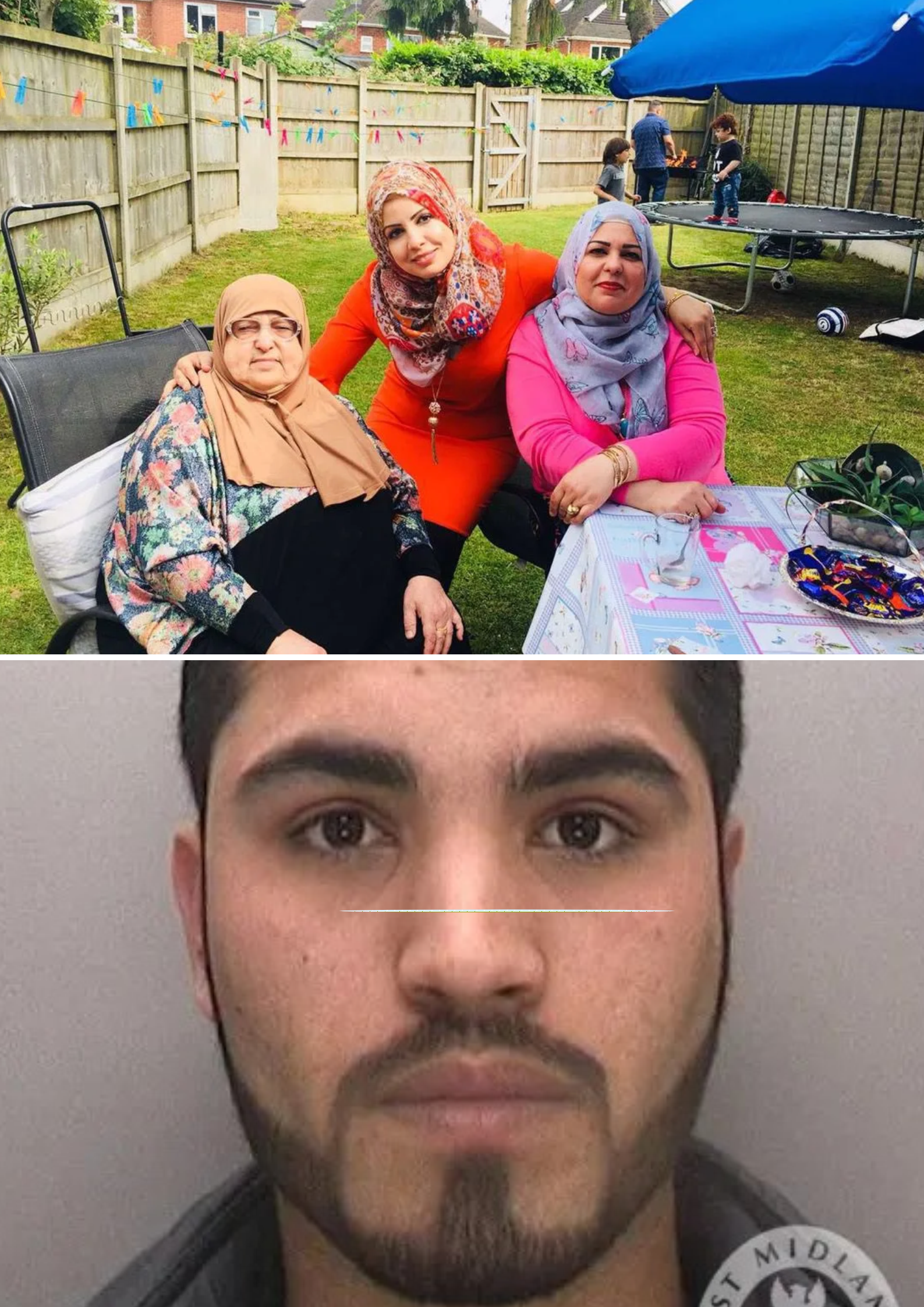
Raneem, 22, and her 49-year-old mother, Khaola Saleem, were stabbed to death outside their home in Solihull in August 2018 by Raneem’s abusive ex-husband, Janbaz Tarin.
“I THINK HE’S GOING TO KILL ME”
Raneem’s aunt, Nour Norris, later recalled how frightened her niece had become.
According to Norris, Raneem told her: “Auntie, I think he’s going to kill me.”
Raneem had already reported Tarin to police, but she feared authorities were not taking her warnings seriously.
The relationship had become increasingly controlling and violent. Raneem eventually obtained a non-molestation order against Tarin and moved in with her mother for protection.
But the order did not stop him.
THE NIGHT EVERYTHING WENT WRONG
On August 26, 2018, Raneem and her mother spent the day together before visiting a sheesha bar in Birmingham.
Tarin allegedly followed them.
Inside the venue, CCTV captured him confronting Raneem and her mother. He attacked Khaola, took Raneem’s phone and threatened her.
Raneem called police.
Later that night, she made another desperate call as she and her mother returned home.
Authorities eventually advised them to go inside and lock their doors.
Unknown to them, Tarin was allegedly waiting nearby.
 THE FINAL ATTACK
As Raneem approached her home, Tarin emerged from the bushes and launched a violent attack.
Raneem was stabbed.
Her mother intervened in an attempt to protect her daughter and was also fatally attacked.
The killings were witnessed by Raneem’s teenage step-sister, who was only 15 years old at the time.
Tarin fled the scene and became the subject of a three-day manhunt before police found him hiding in a Birmingham shop.
He was later sentenced to life imprisonment with a minimum term of 32 years.
POLICE FAILURES PUT UNDER SCRUTINY
The tragedy sparked a major examination of how authorities handled Raneem’s repeated pleas for help.
An inquest later concluded that 33 police officers had materially contributed to the deaths.
Nine West Midlands Police officers were issued misconduct notices, while the police watchdog described the circumstances as profoundly disturbing.
The case has since become a powerful example of the potential consequences when repeated warnings from victims of domestic abuse are not acted upon effectively.
A FAMILY’S LOSS — AND A WARNING
Raneem had fled war-torn Syria with her family and had hoped to build a safe future in Britain.
Instead, her family says she became trapped in a relationship characterized by threats, control and violence.
Her aunt now works as a counsellor and supports other families affected by murder and domestic abuse.
Raneem’s story has also been featured in ITV’s documentary “Murder UK: Married to Your Stalker.”
Her final warnings are now among the most haunting parts of the case.
She had told her family she was afraid.
She had contacted police.
She had sought protection.
And yet, on that August night, the danger she had repeatedly warned about reached her front door.
For those left behind, the question is not simply what happened to Raneem and Khaola — but whether their deaths could have been prevented if their warnings had been heard sooner.